Turquoise Tanager: The Colorful History of a Tropical Gem
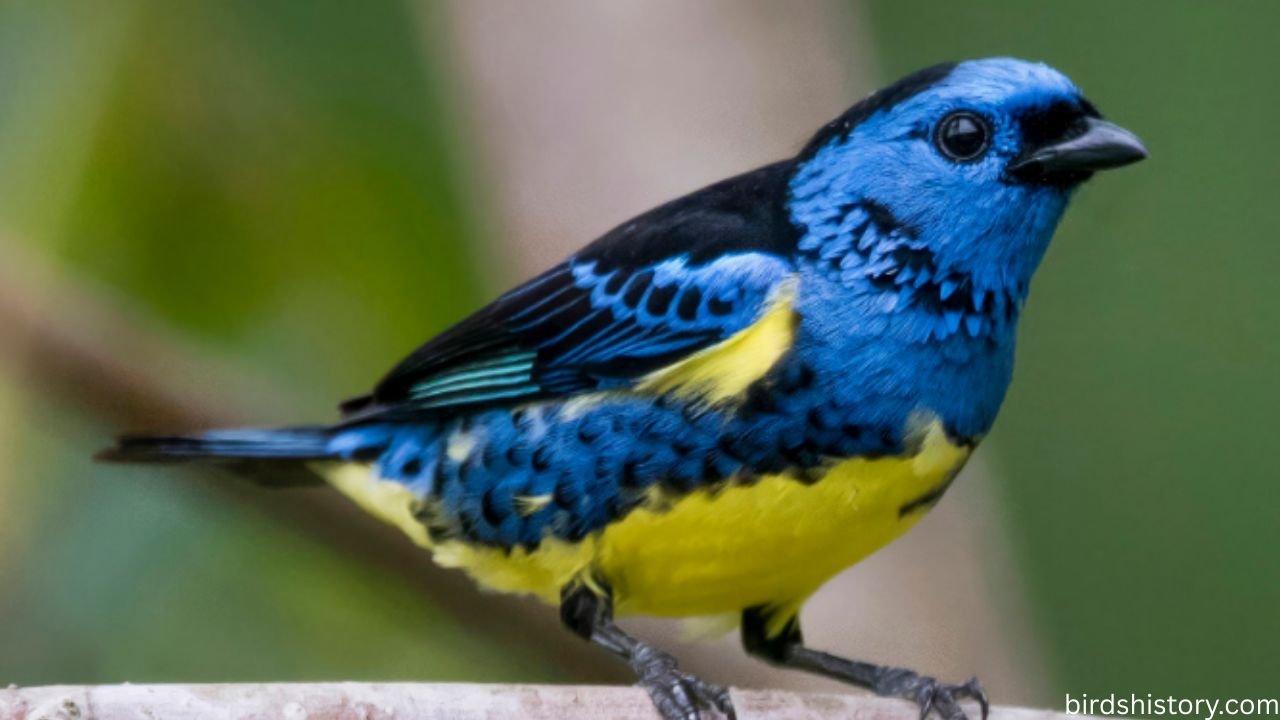
Few birds brighten up the rainforest canopy quite like the Turquoise Tanager (Tangara mexicana). With its brilliant blue-green plumage, lively song, and social behavior, it’s one of the most eye-catching songbirds in South America. While it may not be as widely known as toucans or macaws, the Turquoise Tanager has earned its place as a favorite among birdwatchers who venture into the tropics.
This bird is remarkable for both its beautiful coloration and its ability to adapt to different environments. From the lush Amazon Basin to coastal forests in the Guianas and northern Brazil, the Turquoise Tanager thrives in diverse environments. Here’s an interesting tidbit: although its scientific name is mexicana, the Turquoise Tanager doesn’t actually live in Mexico. Its range is purely South American!
Let’s dive into everything you need to know about this feathered gem—its classification, lifestyle, diet, and why it plays such an important role in tropical ecosystems.
Turquoise Tanager Taxonomy / Classification
The Turquoise Tanager belongs to one of the most dazzling bird families in the Neotropics.
- Common Name: Turquoise Tanager
- Scientific Name: Tangara mexicana
- Family: Thraupidae (the tanager family)
- Order: Passeriformes
- Class: Aves
Also read: /the-green-oropendola/
The Thraupidae family is a huge group of birds with more than 370 species, the majority of which are vibrantly colored and found only in the Americas. Tanagers are known for their beauty and variety, and the Turquoise Tanager stands out as one of the most striking.
Turquoise Tanager Physical Description
The Turquoise Tanager is small but striking, typically about 13–14 cm (5–5.5 inches) long and weighing around 18–22 grams.
Key Features:
- Head and back: Glossy black to dark blue.
- Underparts: Pale yellow to white, depending on subspecies.
- Wings and tail: A mix of deep blue, turquoise, and green hues that shimmer in sunlight.
- Beak: Short, dark, and slightly curved—adapted for both fruit and insect feeding.
- Eyes: Dark, giving it a curious and alert look.
Male vs Female:
Males are slightly brighter, while females tend to have duller tones. However, both sexes share the same overall turquoise-and-black color pattern. Juveniles often look duller, with more grayish tones, before acquiring their adult plumage.
Its vibrant colors and glossy sheen make it one of the most beautiful songbirds in South America.
Habitat and Range
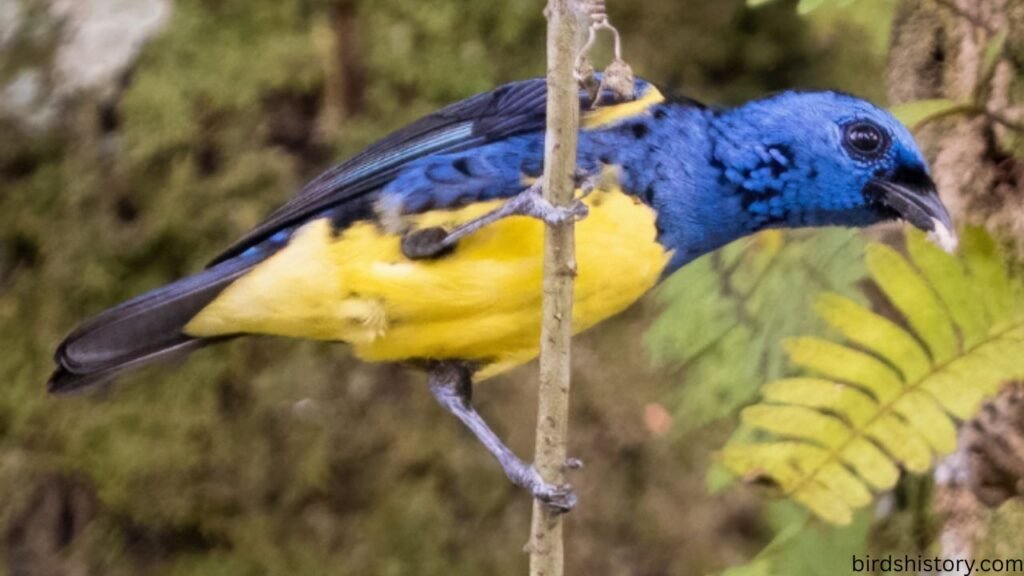
The Turquoise Tanager’s range is broad, but it is always tied to tropical and subtropical forests.
Where it Lives:
- Continent: South America
- Countries: Brazil, Venezuela, Colombia, Ecuador, Peru, Bolivia, Guyana, Suriname, French Guiana, and Trinidad.
- Habitats:
- Lowland tropical rainforests
- Secondary growth forests
- Forest edges and riverine habitats
- Occasionally gardens and plantations near forests
Migration:
This species does not migrate and remains in the same area throughout the year. However, it may make local movements in response to fruiting seasons or food availability.
Diet and Feeding Habits
The Turquoise Tanager is an omnivore with a strong preference for fruit but supplements its diet with insects.
Diet Breakdown:
- Fruits and berries: The bulk of their diet, often eaten in flocks at fruiting trees.
- Insects: Caterpillars, beetles, and other small arthropods.
- Seeds and nectar: Occasionally consumed, especially in mixed flocks.
Feeding Behavior:
- They forage in small flocks of 4–10 individuals.
- They often join mixed-species flocks, moving actively through the canopy.
- Agile and quick, they pluck fruit while perched or make short hovering flights to grab insects.
Their role as fruit-eaters makes them vital seed dispersers, helping maintain the health of tropical forests.
Behavior and Lifestyle
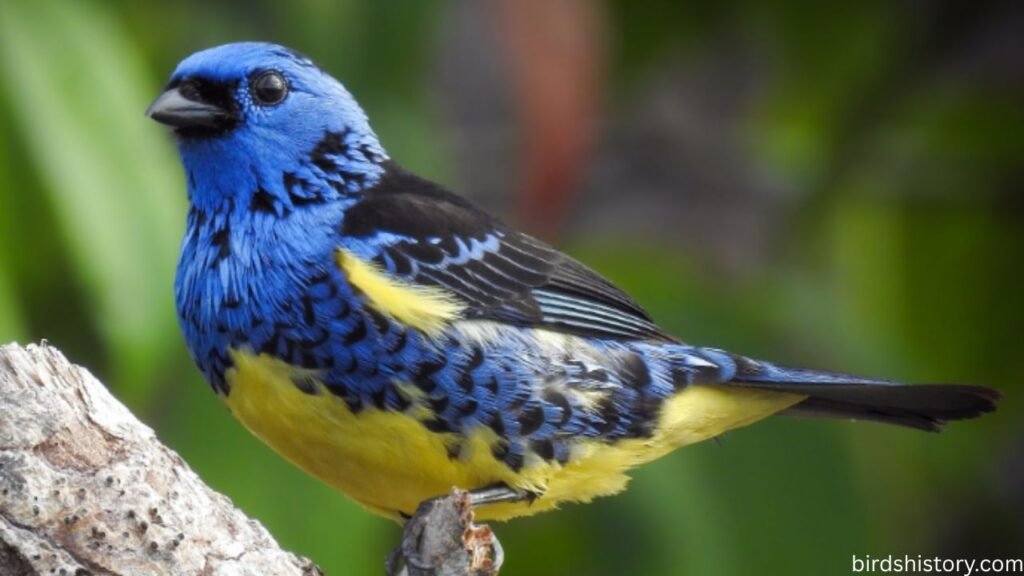
The Turquoise Tanager is both social and vocal.
- Social Structure: Seen in pairs or flocks, rarely alone.
- Foraging Behavior: Active, constantly moving through the canopy in search of food.
- Vocalizations: A series of high-pitched, sharp “tsip” or “tsee” notes, often repeated in rapid succession. Their song is soft but persistent, serving as contact calls within flocks.
- Flight Style: Quick, direct, and slightly undulating.
You Must Read: /mute-swan-history/
Mating Behavior:
Courtship displays are subtle. Males sing softly and may perform short flights near females, showing off their shimmering plumage.
Reproduction and Lifespan
The reproductive cycle of the Turquoise Tanager reflects the typical habits of tropical songbirds.
- Breeding Season: Often during the rainy season when food is abundant (varies by region).
- Nest: Small cup-shaped nest made of plant fibers, placed in shrubs or low trees.
- Eggs: Usually 2–3 eggs, pale with small dark spots.
- Incubation: Around 12–14 days, mostly by the female.
- Chicks: Fed by both parents; fledge within 2–3 weeks.
Lifespan:
In the wild, they may live 6–8 years, though predators and environmental challenges often shorten this. In captivity, they can live longer under safe conditions.
Predators and Threats
Despite their agility, Turquoise Tanagers face several threats.
Natural Predators:
- Snakes (nest raiders)
- Raptors (hawks and falcons)
- Small mammals (opossums, monkeys) that raid nests
Environmental Threats:
- Deforestation: A major concern in the Amazon and Guianas.
- Habitat fragmentation: Limits flock movements and food sources.
- Climate change: Alters fruiting patterns, disrupting food supply.
Turquoise Tanager Conservation Status
The Turquoise Tanager is currently listed as Least Concern by the IUCN Red List.
Why?
- It has a large range across South America.
- Populations remain relatively stable, although local declines are possible due to deforestation.
Conservation Efforts:
- Protected areas in the Amazon Basin help safeguard populations.
- Birdwatching tourism in countries like Trinidad and Guyana indirectly promotes protection of their habitats.
Though not threatened, continuous habitat loss could eventually impact their numbers if not managed.
Interesting Facts About Turquoise Tanager
- The Turquoise Tanager is sometimes called the “rainforest jewel” due to its shimmering blue-green plumage.
- Despite its name, it does not occur in Mexico, highlighting how scientific names can be misleading.
- It is highly valued by birdwatchers in Trinidad, where it is relatively easy to see compared to its secretive Amazonian cousins.
- They play a critical role in seed dispersal, ensuring forest regeneration.
- Their flocks often join with other tanagers and honeycreepers, creating a colorful spectacle in the canopy.
Conclusion
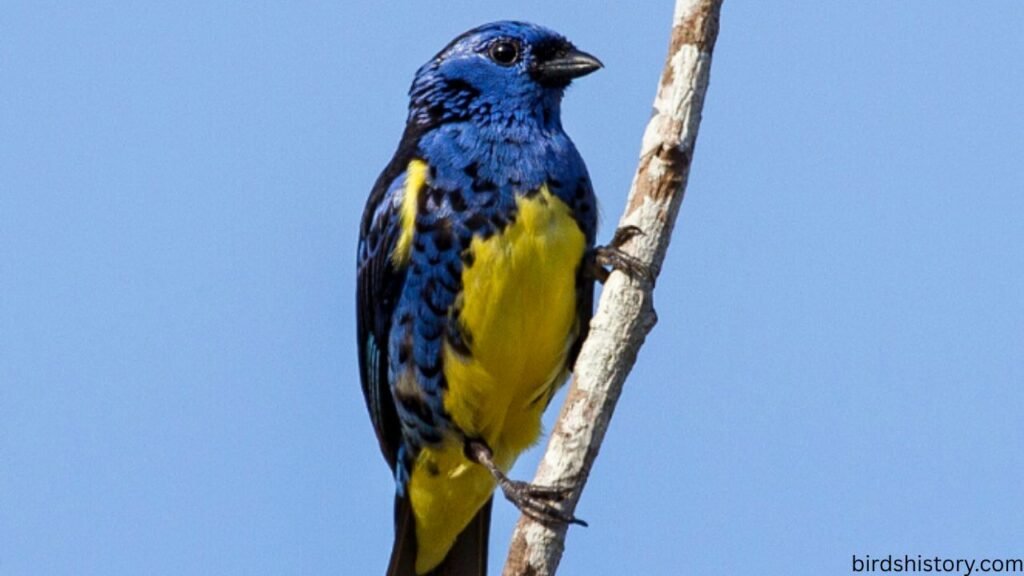
The Turquoise Tanager is a bird that perfectly represents the beauty and importance of tropical biodiversity. Its vibrant plumage, lively social flocks, and role as a seed disperser make it an integral part of the ecosystems it inhabits.
While it is not currently endangered, the ongoing threat of deforestation reminds us that even common species need healthy forests to thrive. Observing a Turquoise Tanager in the wild is not just a treat for the eyes but also a reminder of how interconnected our natural world is.
For bird lovers and conservationists, the Turquoise Tanager is proof that even the smaller, less famous birds deserve attention and protection. After all, every jewel, no matter how small, adds sparkle to the rainforest.
FAQs About Turquoise Tanager
1. What is the scientific name of the Turquoise Tanager?
Tangara mexicana.
2. Where can the Turquoise Tanager be found?
In tropical forests of South America, including Brazil, Colombia, Venezuela, and Trinidad.
3. Why is it called “mexicana” if it’s not found in Mexico?
The name is based on early misclassification; the species is entirely South American.
4. What does the Turquoise Tanager eat?
Primarily fruits and insects, making it an important seed disperser.
5. Is it a migratory bird?
No, it is resident and stays in its tropical range year-round.
6. How does the Turquoise Tanager nest?
It builds a cup-shaped nest in shrubs or trees, laying 2–3 eggs.
7. How long do they live?
Around 6–8 years in the wild, sometimes longer in captivity.
8. What predators does it face?
Snakes, raptors, and small mammals that raid nests.
9. What is its conservation status?
While currently classified as being of “Least Concern,” the species still faces a threat from the loss of its natural habitat.
10. Why is this bird important to the ecosystem?
It helps disperse seeds, maintaining forest health and regeneration.