
Top 10 Highest Flying Birds in the World- Which Bird Flies the Highest?
Look up at the sky and it feels endless, yet some birds travel far beyond what most people imagine. Many readers ask a simple but fascinating question: which bird flies the highest? The answer opens a window into extreme survival, powerful biology, and breathtaking journeys across the planet. Among the highest flying birds in the world, certain species climb into regions of the atmosphere where oxygen thins, temperatures drop sharply, and winds grow fierce. These are not casual flights.
They are carefully timed movements shaped by evolution, instinct, and necessity. From birds flying over the Himalayas to birds flying higher than planes, these champions of the air redefine what flight means. Understanding which bird flies the highest also helps explain migration, climate adaptation, and the limits of animal life. This article explores the science, the records, and the remarkable species that dominate the upper skies, revealing why high-altitude flight remains one of nature’s most impressive feats.
Highest Flying Birds in the World
Picture the sky as layers, not empty space. Most birds stay close to the ground. However, a rare group of birds that fly the highest regularly enter the birds in the upper troposphere, where conditions resemble the top of Mount Everest. At these heights, air resistance at high altitude drops, making movement easier but breathing far harder.
Highest Flying Birds and Their Recorded Altitudes
| Bird Species | Maximum Flight Height (Feet) | Maximum Flight Height (Meters) | Notable Evidence |
|---|---|---|---|
| Rüppell’s Vulture | 37,100 feet | 11,300 meters | Aircraft collision over Ivory Coast |
| Common Crane | 33,000 feet | 10,000 meters | Migration across Asia and Himalayas |
| Bar-Headed Goose | 29,000 feet | 8,800 meters | GPS-tracked Himalayan crossings |
| Whooper Swan | 27,000 feet | 8,200 meters | Radar-confirmed migration flight |
| Alpine Chough | 26,500 feet | 8,000 meters | Observed near Mount Everest |
| Bearded Vulture | 24,000 feet | 7,300 meters | Historical alpine observations |
| Andean Condor | 21,300 feet | 6,500 meters | Soaring studies in Andes |
| Mallard | 21,000 feet | 6,400 meters | Aircraft strike in Nevada |
| Bar-Tailed Godwit | 20,000 feet | 6,000 meters | Long-distance ocean migration |
| White Stork | 16,000 feet | 4,800 meters | African migration records |
For readers in the United States, it helps to compare these flights to planes. Some species are known for birds flying higher than planes, reaching or exceeding commercial aircraft cruising height. These astonishing records are not accidents. They reflect precise biological tuning, from lung structure to wing shape, that allows birds flying above 30,000 feet to survive.
What Are the Highest Flying Birds in the World?
So, what qualifies a bird as one of the highest flying birds in the world? Scientists rely on verified sightings, radar data, GPS trackers, and rare but dramatic bird strike with aircraft events. These records reveal record flying altitude birds that consistently outperform others during migration or soaring.
Importantly, occasional sightings don’t tell the full story. True high altitude flying birds repeatedly reach extreme heights as part of seasonal bird migration or hunting behavior. That consistency separates legends from verified champions and helps establish the real maximum flying height of birds.
How High Can Birds Fly?
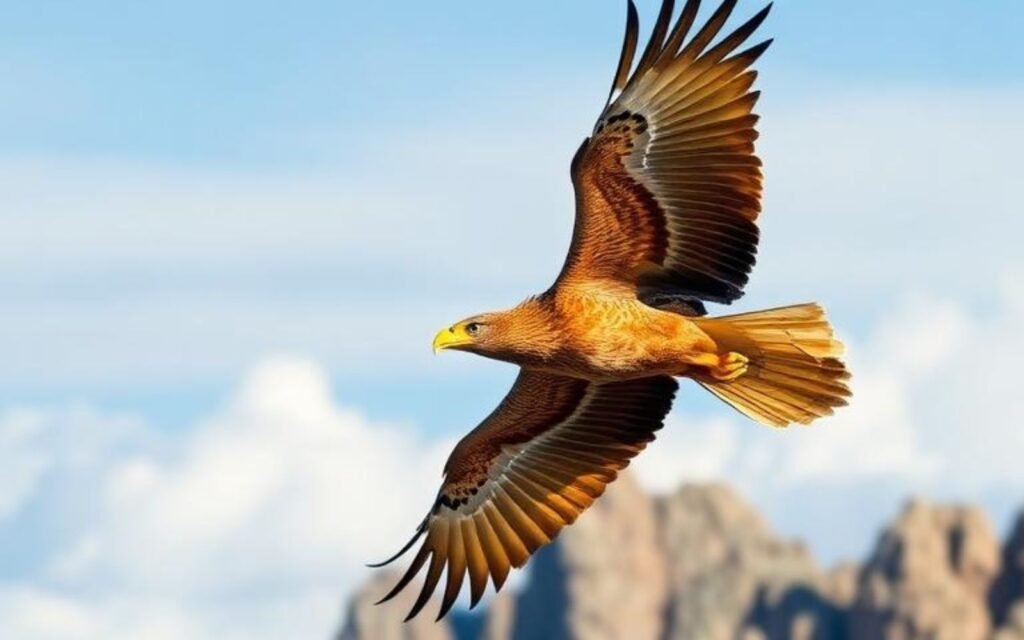
The question how high can birds fly has a surprising answer. Some species exceed 30,000 feet, placing them above most weather systems and even above many small aircraft. In terms of altitude in meters and feet, the highest confirmed record stands at over 11,000 meters, which equals more than 37,000 feet.
To put this into perspective, this is higher than a Mount Everest height comparison, whose peak reaches 8,849 meters. At those elevations, atmospheric pressure effects make breathing incredibly difficult. Yet these birds manage sustained flight, proving that vertebrate survival at high altitude is not limited to mammals.
How Birds Are Able to Fly at Extreme Altitudes
Flying high isn’t just about wings. It’s about internal engineering. These birds possess remarkable avian physiology, including specialized hemoglobin that binds oxygen more efficiently in an oxygen-poor atmosphere. This trait boosts oxygen absorption efficiency when every breath counts.
Their bodies also excel at heat management. Muscle heat generation in birds, combined with dense feather insulation, protects them from freezing temperatures at altitude. Add in thermal updrafts and soaring, and these birds turn deadly skies into energy-saving highways, mastering gliding vs flapping flight to conserve strength.
Rüppell’s Vulture – The Highest Flying Bird Ever Recorded
When discussing which bird flies the highest, the answer remains clear. The Rüppell’s vulture highest flying bird title is backed by hard evidence. In 1973, a jet flying over Africa struck a vulture at 11,300 meters. That incident confirmed the astonishing Rüppell’s griffon vulture altitude beyond any doubt.
This species thrives where others fail. It soars using thermal updrafts and soaring, scanning vast landscapes for food. Its unique blood chemistry enables survival in an oxygen-poor atmosphere, making it the undisputed king among birds flying at extreme altitudes and the benchmark for flight height records.

Bar-Headed Goose – Flying Over the Himalayas
Few stories sound as dramatic as the bar-headed goose flying over Everest. This goose migrates across Asia, routinely flying over the Himalayas during its seasonal journey. GPS studies show it reaching heights above 8,000 meters, often at night when air density improves.
What makes this even more impressive is endurance. This species performs long-distance migration while flapping continuously in flying in thinner air. Its lungs and muscles support a powerful hypoxic ventilatory response, allowing sustained flight where most animals would collapse within minutes.
Common Crane – A Long-Distance High-Altitude Flier
The common crane flight height surprises many people. During migration between Europe and Asia, cranes reach nearly 10,000 meters. These migratory birds flying high use altitude as protection, avoiding predators at altitude such as eagles.
Their success lies in timing and navigation. Cranes exploit migratory flyways, selecting weather windows that reduce effort. This combination of intelligence and physical adaptation places them firmly among the highest flying birds in the world, especially during crossing mountain ranges.

Whooper Swan – Powerful Flight at Great Heights
Large and heavy, the whooper swan doesn’t look like a sky champion. Yet whooper swan migration altitude records show radar-confirmed flights above 8,000 meters. These birds ride strong winds, achieving energy-efficient flight over long distances.
Their mass actually helps. Powerful wingbeats combined with wingspan and flight mechanics allow stability in turbulent air. For many scientists, whooper swans demonstrate that size does not limit birds flying at cruising altitude, as long as design matches demand.
Andean Condor – High Soaring with the Largest Wingspan
The Andean condor soaring height reaches around 6,500 meters, impressive given its enormous size. With one of the largest wingspans on Earth, the condor relies almost entirely on thermals over land vs sea to stay aloft.
Instead of flapping, it glides for hours, reducing energy loss. This strategy shows how conserving energy during flight matters as much as oxygen access. The condor may not beat the vulture’s record, but its efficiency makes it a standout among high altitude flying birds.

Bearded Vulture – Mountain Specialist and High Glider
Gliding like a shadow along rugged peaks, the bearded vulture thrives where mountains scrape the sky. Records place the bearded vulture flight altitude above 7,300 meters, a level where thin air and low oxygen levels challenge even seasoned climbers. This bird specializes in alpine environments, using height as a strategic advantage.
Rather than brute force, it relies on finesse. Long wings support thermal updrafts and soaring, allowing smooth travel across cliffs. Its lifestyle reflects avian adaptation to extreme environments, proving that mastery of altitude comes from intelligence as much as strength.
Alpine Chough – Living and Flying in Thin Air
The alpine chough lives its entire life where oxygen thins. Sightings of the alpine chough Mount Everest flights confirm altitudes exceeding 8,000 meters. Few birds match this comfort with height. Nesting sites appear higher than any other known species.
This bird’s success comes from flexibility. Strong lungs, efficient muscles, and social behavior allow survival in an oxygen-poor atmosphere. Its presence highlights how flying in thinner air becomes routine when evolution fine-tunes every system.
Bar-Tailed Godwit – High-Altitude Migration Champion
Among endurance athletes of the sky, the bar-tailed godwit stands unmatched. The bar-tailed godwit migration height often surpasses 6,000 meters during non-stop long-distance migration across oceans. Some journeys last more than a week without rest.
These birds exploit weather systems masterfully. By riding pressure zones, they reduce effort and increase range. This strategy demonstrates how air resistance at high altitude and smart routing combine to support astonishing endurance.
White Stork and Other Notable High-Flying Birds
The white stork migration altitude usually stays lower than record holders, yet confirmed flights reach nearly 4,800 meters. During migration, flocks circle upward on warm air, showcasing classic energy-efficient flight techniques used worldwide.

Other species deserve mention. The mallard flight altitude record shocked aviation experts after a collision above 6,400 meters. Studies also confirm black kite migration altitude above 6,200 meters and notable golden eagle flying height exceeding 6,000 meters. These birds expand understanding of maximum recorded altitude across species.
FAQs About High-Flying Birds
Which bird can fly very high?
The Rüppell’s vulture can fly the highest of all birds. It has a confirmed record above 37,000 feet, which is higher than most commercial airplanes.
Which bird can fly over Everest?
The bar-headed goose is famous for flying over the Himalayas. GPS tracking shows it regularly crosses passes near Mount Everest during migration.
Which bird can fly the longest distance?
The bar-tailed godwit holds the record for the longest nonstop flight. One migration covered over 8,000 miles without landing.
How high can an eagle fly?
Golden eagles can soar up to about 20,000 feet. They usually fly high while searching for prey or using mountain thermals.
What bird can fly the 2nd highest?
After the Rüppell’s vulture, the common crane is considered the second highest flyer. It has been recorded near 33,000 feet during migration.
Can an eagle fly higher than any bird?
No, eagles cannot fly higher than all birds. Vultures, cranes, and bar-headed geese are known to reach much greater altitudes.
Why do planes not fly over Everest?
Planes avoid Everest because of severe turbulence, thin air, and limited emergency landing options. Mountain waves can be extremely dangerous for aircraft.
Can a bird sleep while flying?
Yes, some birds can sleep while flying. Species like frigatebirds use one half of their brain at a time to rest during long flights.
What bird can fly for 4 years?
No bird can fly continuously for four years. However, alpine swifts and frigatebirds can stay airborne for months at a time without landing.
Conclusion
After exploring the evidence, the answer to which bird flies the highest becomes clear. The Rüppell’s vulture stands above all others, holding the highest verified flight ever recorded. Yet focusing only on one species misses the bigger story. The highest flying birds in the world represent different strategies for survival, from soaring effortlessly on warm air to powering through thin skies during long migrations.
Species like the bar-headed goose, common crane, and alpine chough prove that birds that fly the highest do so for reasons tied to food, safety, and efficiency. These flights reveal how nature solves challenges humans struggle with, such as low oxygen and freezing cold. By understanding which bird flies the highest, you gain insight into evolution at its extreme edge. These birds don’t just fly high. They redefine what life can achieve when pushed to its absolute limits.