Toco Toucan The Vibrant Giant of the Rainforest
The Toco Toucan is one of the most recognizable birds in the world, famous for its oversized orange beak and striking plumage. Native to South America, it has become a symbol of the tropics and often features in travel posters, cartoons, and even cereal boxes. But beyond its flashy appearance, this bird plays an important role in rainforest ecosystems.
The Toco Toucan is interesting not just because of its looks, but also because of its unique behaviors and adaptations. For example, despite having such a massive beak, it’s surprisingly lightweight, thanks to its hollow structure. This beak helps the bird eat fruit, reach food in tricky places, and even regulate body temperature.
One fun fact? The Toco Toucan is the largest of all toucan species, making it a true standout among its relatives. Let’s dive deep into the life of this fascinating bird.
Toco Toucan Taxonomy / Classification
- Common Name: Toco Toucan
- Scientific Name: Ramphastos toco
- Family: Ramphastidae
- Order: Piciformes
- Class: Aves
Also read: /dwarf-cassowary/
The Toco Toucan belongs to the Ramphastidae family, which includes around 40 species of toucans. Among them, the Toco Toucan is the most widespread and iconic.
Toco Toucan Physical Description
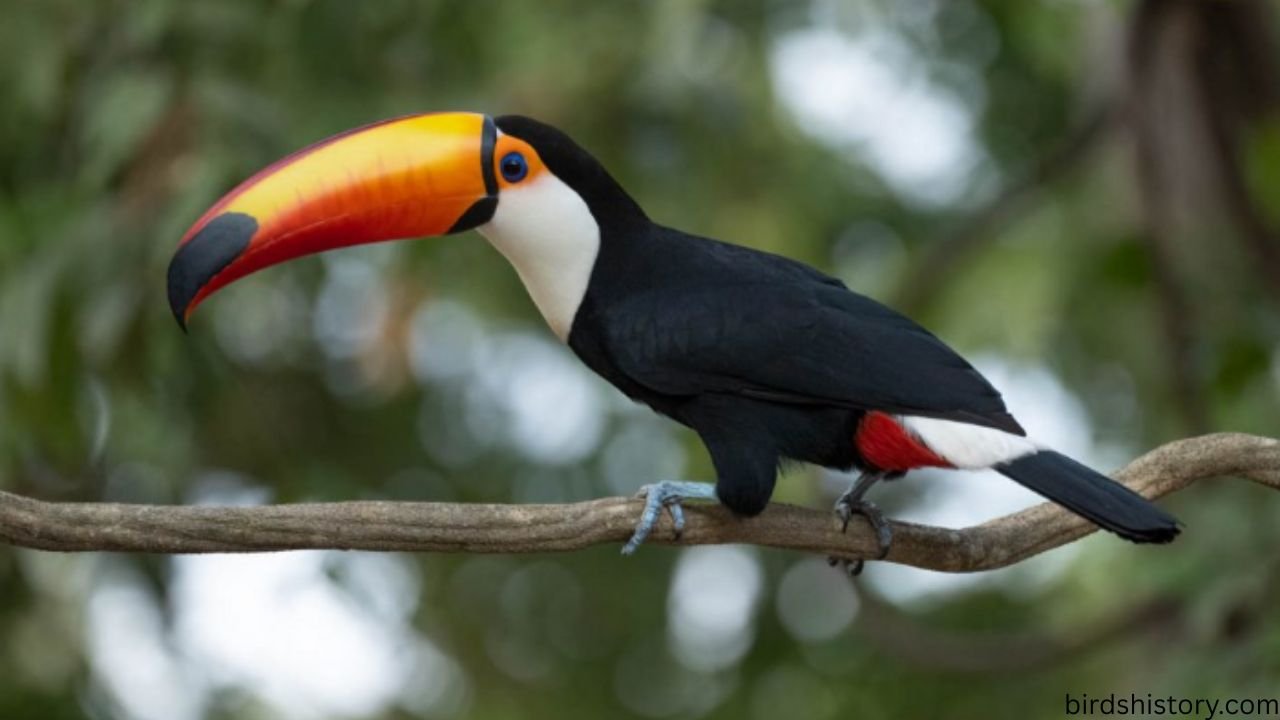
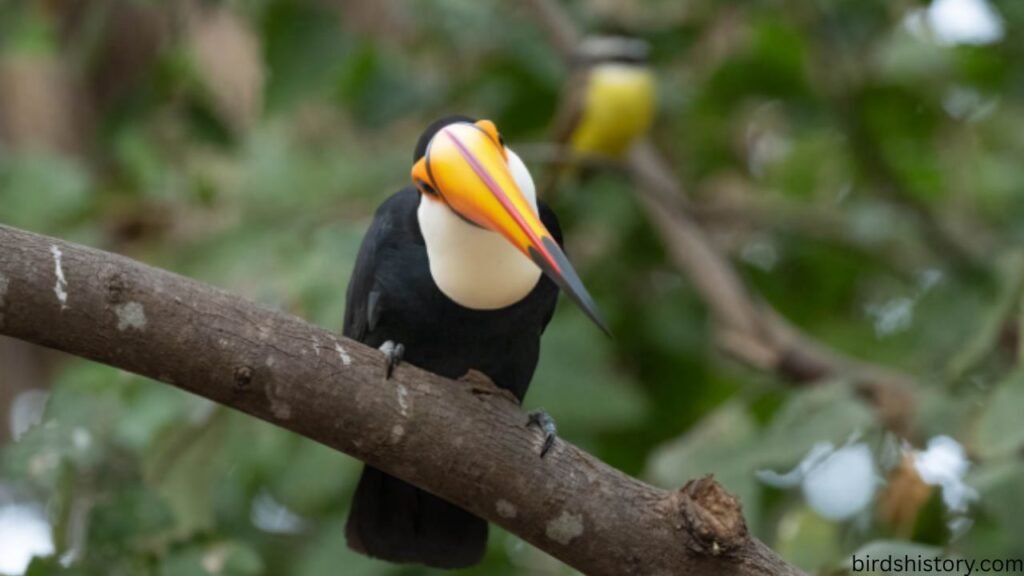
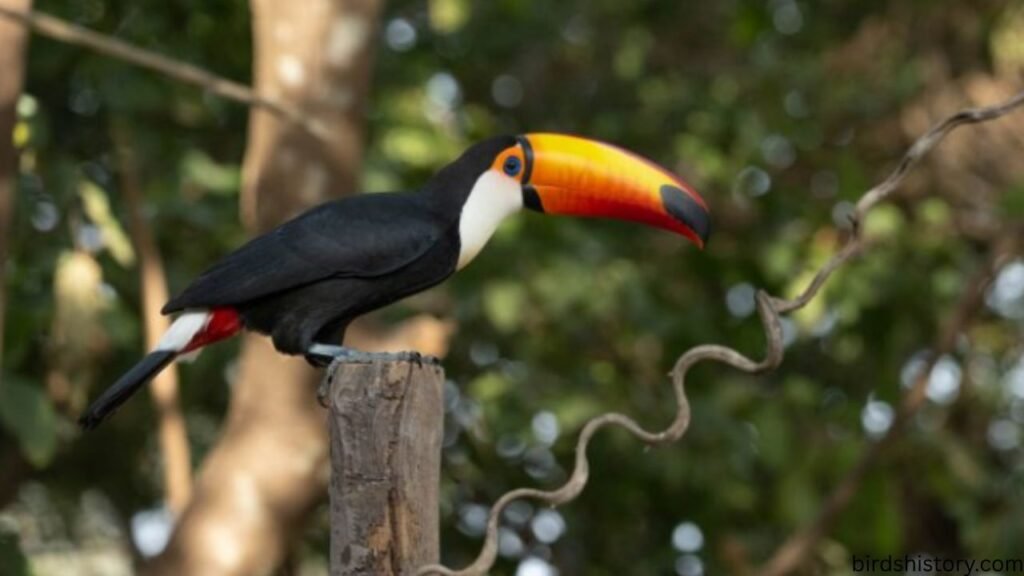
The Toco Toucan is instantly recognizable thanks to its enormous orange beak, which can grow up to 7.5 inches long—almost one-third of its body length. Despite its intimidating size, the beak is very light because it’s made of keratin with a honeycomb-like structure inside.
- Size: 22 to 26 inches long (56–66 cm)
- Weight: 1.1 to 1.9 pounds (500–860 g)
- Wingspan: Around 40 inches (100 cm)
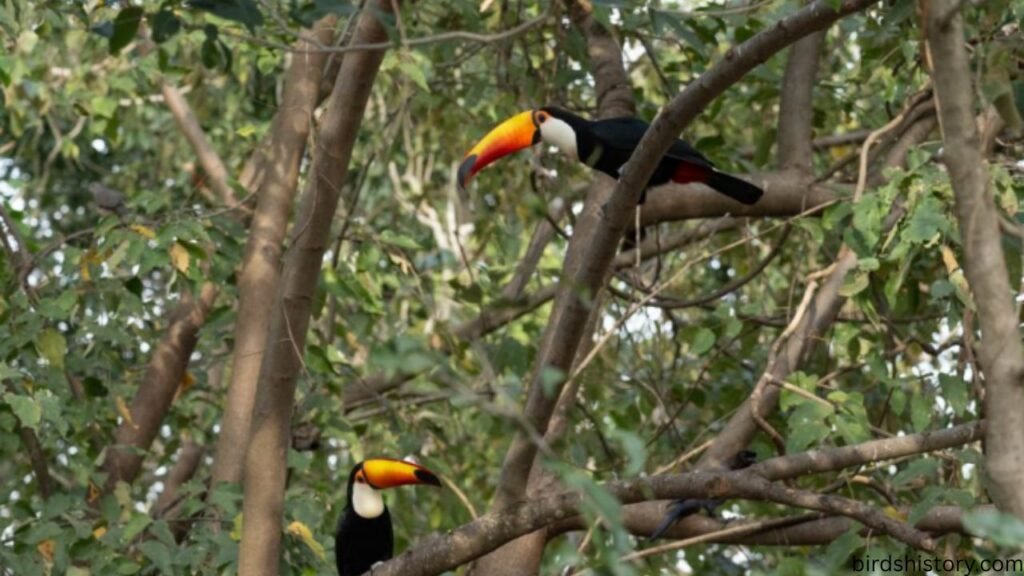
Their bodies are mostly black, contrasted by a bright white throat and chest. The eyes are surrounded by striking blue skin with an orange ring around it.
Males and females look very similar, though males may be slightly larger with longer bills. The Toco Toucan’s tail is square, and its wings are short but strong, designed for quick flights between trees.
Unique physical trait: The beak isn’t just for show. It helps regulate heat, making it a natural cooling system for the bird.
Habitat and Range of Toco Toucan
The Toco Toucan is found across a wide range of South America, including:
- Countries: Brazil, Argentina, Paraguay, Bolivia, Guyana, and Suriname
- Habitats: Tropical and subtropical forests, savannas, and open woodlands. Unlike some toucans that stick to dense rainforests, the Toco Toucan often ventures into more open areas.
They are non-migratory birds, usually staying within their range year-round. Because they are adaptable, Toco Toucans sometimes appear near human settlements or plantations.
Must Read: /plum-throated-cotinga-history/
Diet and Feeding Habits
The Toco Toucan is primarily frugivorous, meaning fruit makes up most of its diet. Its large beak allows it to reach fruit on branches too small to support its weight.
- Main diet: Figs, guavas, papayas, and other tropical fruits.
- Occasional foods: Insects, small lizards, eggs, and even nestlings of other birds.
- Feeding behavior: They use the tip of their bill to pluck fruit, toss it in the air, and swallow it whole.
Interestingly, they play an important role in seed dispersal, helping maintain rainforest biodiversity by spreading fruit seeds.
Behavior and Lifestyle
Toco Toucans live in groups of at least six, as they are very social birds. They are not strong fliers but rather hop between trees using short, quick flights.
- Social habits: They spend much of the day feeding, preening, and playing.
- Vocalizations: Their calls are surprisingly loud and croaking, often described as frog-like. This helps them communicate across distances in the forest.
- Mating displays: Pairs engage in playful “bill fencing,” where they touch or toss fruit to one another.
They are mostly diurnal, active during the day, and spend nights roosting in tree cavities.
Reproduction and Lifespan
Breeding for this species usually occurs during the spring and summer months, which in South America is from September to March.
- Nesting: They nest in tree hollows, often in cavities created by woodpeckers.
- Eggs: The female lays 2–4 white eggs.
- Incubation: Both parents share incubation duties for about 16–20 days.
- Chicks: Hatchlings are born blind and featherless. They rely entirely on parents for food.
- Fledging: Young toucans leave the nest after about 6–8 weeks.
In the wild, Toco Toucans live around 12–20 years, while in captivity they can reach up to 25 years.
Predators and Threats
Despite their size, Toco Toucans have natural predators, including:
- Raptors like hawks and eagles
- Large snakes
- Jaguars (occasionally preying on nests)
Major environmental threats include deforestation, logging, and habitat loss. They are also captured for the pet trade, although this is regulated in many countries.
Toco Toucan Conservation Status
- IUCN Red List: Least Concern
- Population trend: Stable, though localized declines exist due to deforestation.
Because of their wide distribution and adaptability, Toco Toucans are not currently endangered. However, ongoing rainforest destruction poses long-term risks. Conservation efforts focus on habitat preservation and wildlife protection laws.
Interesting Facts About the Toco Toucan
- Their beak can absorb and radiate heat, acting like a built-in air conditioner.
- They are excellent seed dispersers, vital for rainforest regeneration.
- The Toco Toucan is the most recognizable of all toucans and often appears in tourism ads for Brazil.
- Indigenous cultures sometimes used toucan feathers in rituals and decorations.
- Their cartoon-like appearance has made them popular in media, from mascots to cereal brands.
Conclusion
The Toco Toucan is more than just a tropical icon. Its vibrant beak, social lifestyle, and role in rainforest ecosystems make it a truly fascinating bird. Learning about creatures like the Toco Toucan reminds us why biodiversity and habitat protection are so important.
By understanding this bird’s habits, challenges, and significance, we can better appreciate the delicate balance of nature it helps maintain.
FAQs About Toco Toucan
1. What is the Toco Toucan’s scientific name?
Ramphastos toco.
2. Where can you find Toco Toucans?
They live in South America, mainly in Brazil, Argentina, Paraguay, and Bolivia.
3. What do Toucans eat?
They primarily eat fruit but also insects, eggs, and small reptiles.
4. How long do they live?
Wild toucans live for approximately 12 to 20 years, while those in captivity can live up to 25 years.
5. Are male and female toucans different?
They look very similar, but males are slightly larger with longer bills.
6. Why is their beak so big?
It helps them eat fruit, reach food, defend themselves, and regulate body temperature.
7. Do Toucans migrate?
No, they are non-migratory and usually stay in the same area year-round.
8. Are Toco Toucans endangered?
No, they are listed as “Least Concern,” though habitat loss is a threat.
9. What sounds do Toucans make?
They make croaking, frog-like calls that are surprisingly loud.
10. Do toucans make good pets?
They are sometimes kept as pets, but they require special care, large spaces, and are best left in the wild.