The Northern Pintail: Graceful Migrant of the Wetlands
When you picture elegance in the bird world, the Northern Pintail (Anas acuta) surely comes to mind. This species of duck represents elegance in motion, characterized by its slender neck, sleek body, and long, pointed tail feathers. Unlike some ducks that appear stocky, pintails look refined—like the ballerinas of the wetlands.
What makes them fascinating isn’t only their looks but also their global reach. Northern Pintails are found across North America, Europe, and Asia, making them one of the most widely distributed duck species. They are also impressive travelers, with some populations migrating thousands of miles between their breeding and wintering grounds.
Here’s one surprising fact: The pintail is among the earliest migratory ducks to arrive at northern breeding grounds in spring, often settling in while ice and snow are still melting. Their endurance and timing show just how well-adapted they are to a life on the move.
Northern Pintail Taxonomy / Classification
Like every species, the Northern Pintail has a clear place in the avian tree of life.
- Common Name: Northern Pintail
- Scientific Name: Anas acuta
- Family: Anatidae (ducks, geese, swans)
- Order: Anseriformes
- Class: Aves
Also read: /agami-heron/
The genus Anas includes many well-known dabbling ducks, and the pintail is among the most distinctive because of its long, pointed tail feathers, which give the bird its name.
Northern Pintail Physical Description
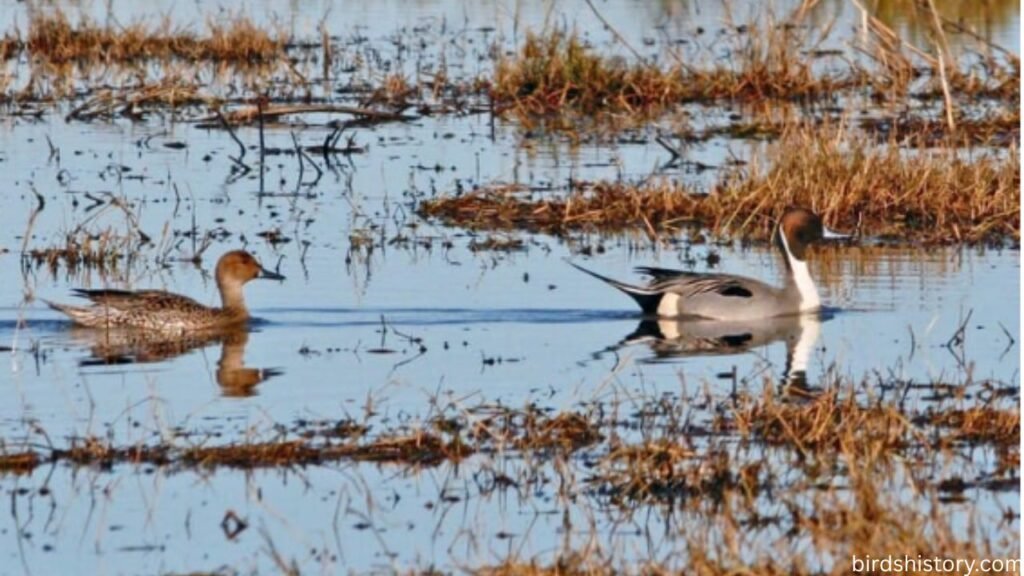
The Northern Pintail is a large and slender dabbling duck. Its streamlined body makes it stand out from many other ducks.
- Length: 51–76 cm (20–30 inches)
- Wingspan: 80–95 cm (31–37 inches)
- Weight: 450–1,360 g (1–3 lbs), depending on sex and season.
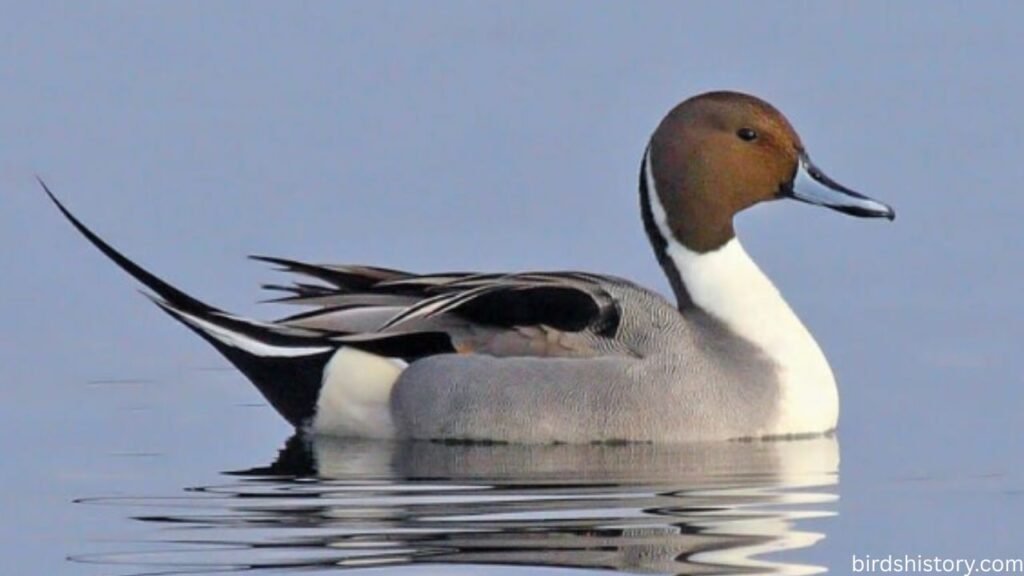
Male Pintails (Drakes)
- Sleek chocolate-brown head.
- White neck stripe that extends down the chest.
- Grayish body with fine markings.
- Long, pointed central tail feathers that can extend up to 10 cm (4 inches).
- Striking pale blue-gray bill with a black stripe.
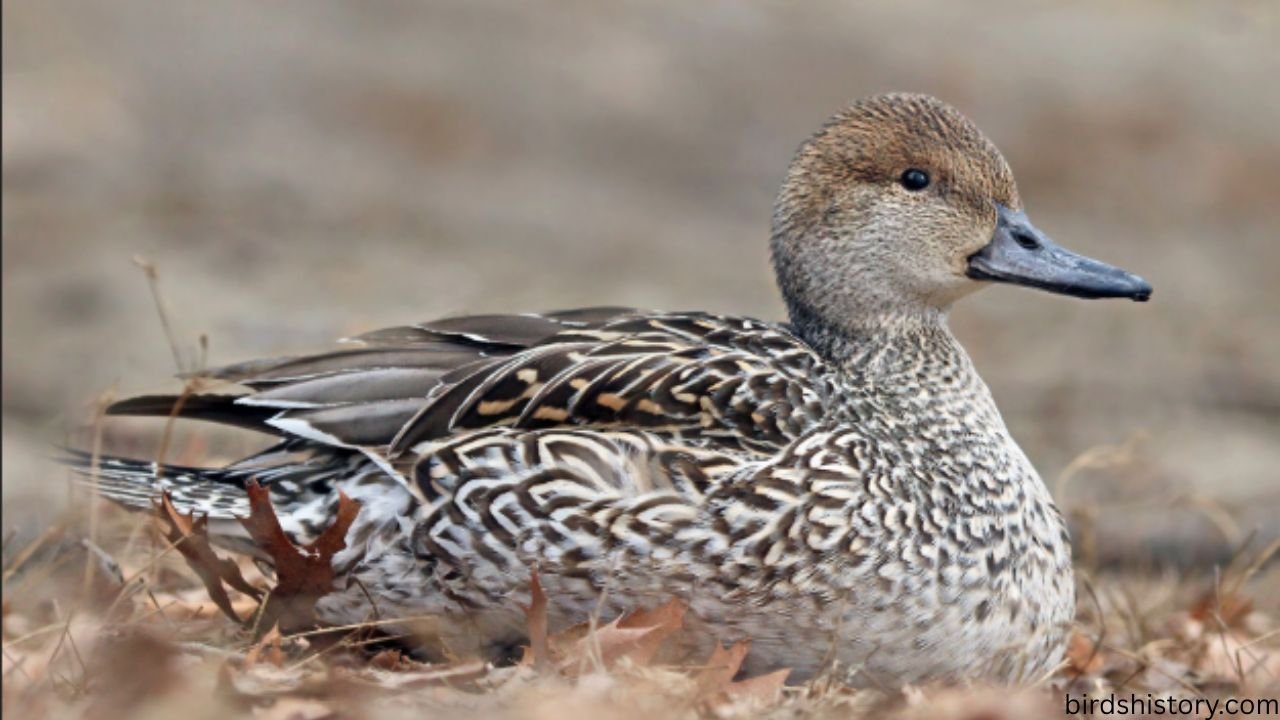
Female Pintails (Hens)
- More subdued, with mottled brown plumage for camouflage.
- Shorter, less pointed tail.
- Subtle beauty that blends with marsh vegetation.
The sharp contrast between males and females reflects the pintail’s strategy of attracting mates while keeping nesting females hidden from predators.
Habitat and Range of Northern Pintail
The Northern Pintail has one of the broadest ranges of any duck species.
- Breeding Grounds:
- Northern North America (Alaska, Canada, northern U.S.)
- Across northern Europe and Asia.
- Wintering Grounds:
- Southern U.S., Mexico, Central America.
- Sub-Saharan Africa, Indian subcontinent, Southeast Asia.
- Preferred Habitats:
- Shallow freshwater wetlands.
- Marshes, ponds, lakes, rice paddies, and estuaries.
Migration
Northern Pintails are long-distance migrants. Birds from Alaska and Canada fly south to California, Texas, and Mexico, while Eurasian pintails head to Africa, South Asia, and the Mediterranean. Some individuals may travel more than 10,000 km (6,200 miles) in a single migration cycle.
Diet and Feeding Habits
Pintails are dabbling ducks, meaning they feed at the water’s surface or tip forward rather than diving deep.
- Plant-based foods: Seeds, aquatic plants, rice grains, grasses.
- Animal-based foods: Aquatic insects, snails, worms, and crustaceans.
Feeding Behavior
- Often seen up-ending in shallow waters, with tails sticking up as they reach for submerged plants.
- They forage in fields and wetlands, especially during migration and winter.
- This bird has adapted to agricultural areas, where it forages for leftover grain in places like rice paddies and cornfields.
Behavior and Lifestyle
The Northern Pintail is a well-known bird due to its social, elegant, and nomadic nature.
- Social behavior:
- Often forms large flocks, especially during migration.
- Mixed groups with other dabbling ducks are common.
- Flight style:
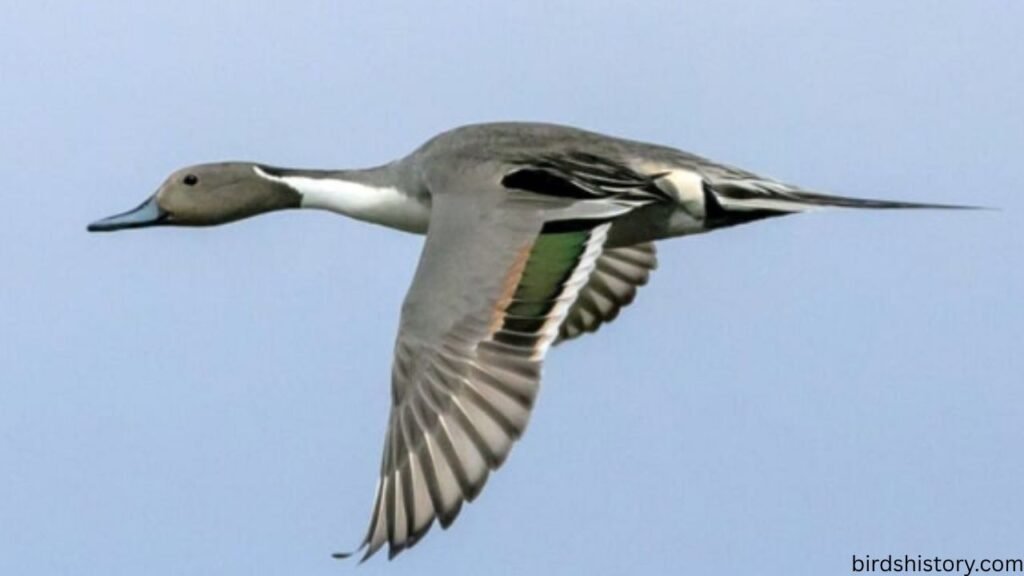
- Fast and agile, with a wingspan that allows long-distance travel.
- They fly in flocks with coordinated movements.
- Vocalizations:
- Males make a soft whistling “peep.”
- Females produce a lower, raspier quack.
- Mating rituals:
- Male Northern Pintails perform courtship displays by bowing their heads, dipping, and making whistling sounds.
- Courtship flights often involve multiple males chasing a female.
Reproduction and Lifespan
Breeding Season
- Begins in late spring in northern habitats (May–June).
- Pintails are among the earliest ducks to return to nesting grounds after winter.
Nesting
- Nests are typically constructed on the ground, concealed within grass or other vegetation located near bodies of water.
- The female insulates her nest with down feathers.
Eggs
- Clutch size: 7–10 eggs.
- Color: Olive-green to creamy.
- Incubation: 22–24 days, done entirely by the female.
Lifespan
- In the wild: 5–10 years.
- Longest recorded lifespan: Around 22 years.
Predators and Threats
Like many ducks, pintails face natural and human-caused challenges.
- Natural predators:
- Eggs and chicks: Foxes, skunks, crows, gulls.
- Adults: Hawks, eagles, owls.
- Environmental threats:
- Loss of wetlands due to agriculture and urban development.
- Drought conditions in breeding areas.
- Human impact:
- Overhunting in some regions.
- Pesticides and pollution affecting food sources.
Northern Pintail Conservation Status
The Northern Pintail is currently listed as Least Concern on the IUCN Red List, but its populations have been declining.
- Population estimates:
- North America: Around 2–3 million individuals.
- Global population: Several million, but numbers fluctuate yearly.
- Conservation efforts:
- Wetland protection programs by organizations like Ducks Unlimited.
- Hunting regulations and monitoring by wildlife agencies.
- Habitat restoration in key breeding and wintering grounds.
Conservationists remain cautious since the species is sensitive to habitat changes and climate variability.
Interesting Facts About Northern Pintails
- Due to their quick and graceful flight, they have earned the nickname “the greyhound of the air.”
- Pintails can take off directly from water without running along the surface—an impressive ability for a duck.
- Unlike some waterfowl, pintails are early nesters, often arriving on breeding grounds while snow still lingers.
- They are one of the most widely hunted duck species in North America, though strict regulations help maintain sustainable populations.
- Pintails have cultural significance in Indigenous communities and feature in traditional stories across different regions.
Conclusion
The Northern Pintail is more than just a beautiful duck—it is a symbol of migration, resilience, and wetland health. Its slender body, pointed tail, and extensive migrations symbolize a combination of elegance and endurance.
Learning about pintails reminds us how interconnected ecosystems are. Protecting wetlands not only helps pintails thrive but also benefits countless other species, from amphibians to humans. The next time you see a pintail gliding across a marsh or flying in formation, you’ll know you’re watching one of nature’s most remarkable travelers.
FAQs About Northern Pintail
1. Why are they called Northern Pintails?
Because of their long, pointed central tail feathers and northern breeding distribution.
2. Where do Northern Pintails live?
They breed in the northern regions of North America, Europe, and Asia, and migrate for the winter to areas as far south as Africa, Central America, and South Asia.
3. Do pintails migrate long distances?
Yes, some populations migrate more than 6,000 miles between breeding and wintering grounds.
4. What do Northern Pintails eat?
Seeds, aquatic plants, insects, and small invertebrates.
5. How do you identify a male pintail?
By its chocolate-brown head, white neck stripe, and long pointed tail feathers.
6. Are Northern Pintails endangered?
No, they are listed as “Least Concern,” but their populations are declining.
7. What predators threaten pintails?
Eggs and ducklings are vulnerable to foxes and crows, while adults may fall prey to hawks and eagles.
8. How many eggs do pintails lay?
Typically 7–10 eggs per clutch.
9. How long do pintails live?
They live 5–10 years in the wild, though some can survive over 20 years.
10. Why are pintails important to ecosystems?
They disperse plant seeds, control insect populations, and serve as indicators of wetland health.