The Horned Screamer: Nature’s Loud and Unique Bird
If you’ve never heard of the Horned Screamer, you’re in for a fascinating discovery. This unusual bird, native to South America, is famous for two things: its ear-splitting calls and the bizarre horn-like structure that grows from its head. Unlike most birds, this “horn” isn’t made of feathers but of cartilage, making it a distinctive feature in the avian world.
The Horned Screamer is often overlooked compared to colorful parrots or flashy toucans, but once you learn about it, you’ll see why birdwatchers and researchers find it so remarkable. It’s found in wetlands and marshes, where its booming call can carry for miles. And here’s a fun fact: despite being the size of a goose, it’s more closely related to ducks.
Let’s take a closer look at this fascinating bird—its classification, lifestyle, and the unique quirks that make it stand out.
Horned Screamer Taxonomy / Classification
- Common Name: Horned Screamer
- Scientific Name: Anhima cornuta
- Family: Anhimidae
- Order: Anseriformes
- Class: Aves
Also read: /the-black-collared-hawk/
The Horned Screamer belongs to a small family of birds called Anhimidae, which only includes itself and two other species, the Northern and Southern Screamers. All are native to South America and share similar traits, but the Horned Screamer is the only one with the prominent “horn” on its head.
Horned Screamer Physical Description
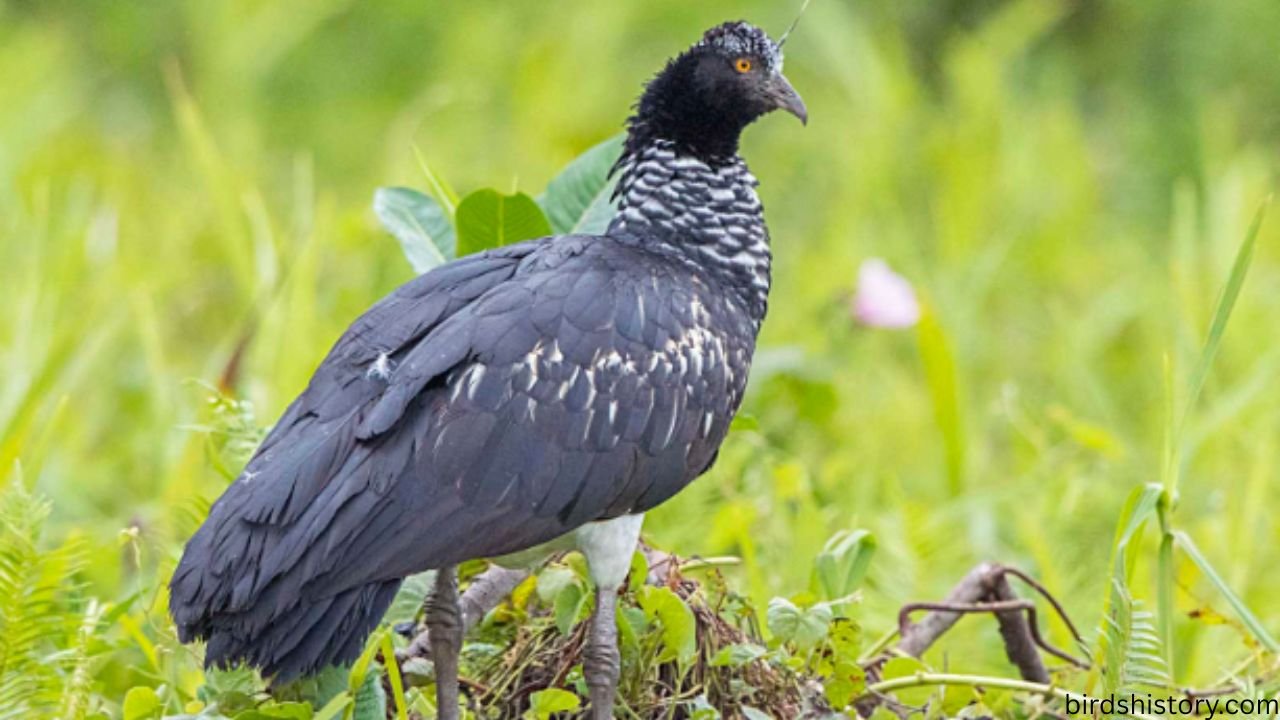
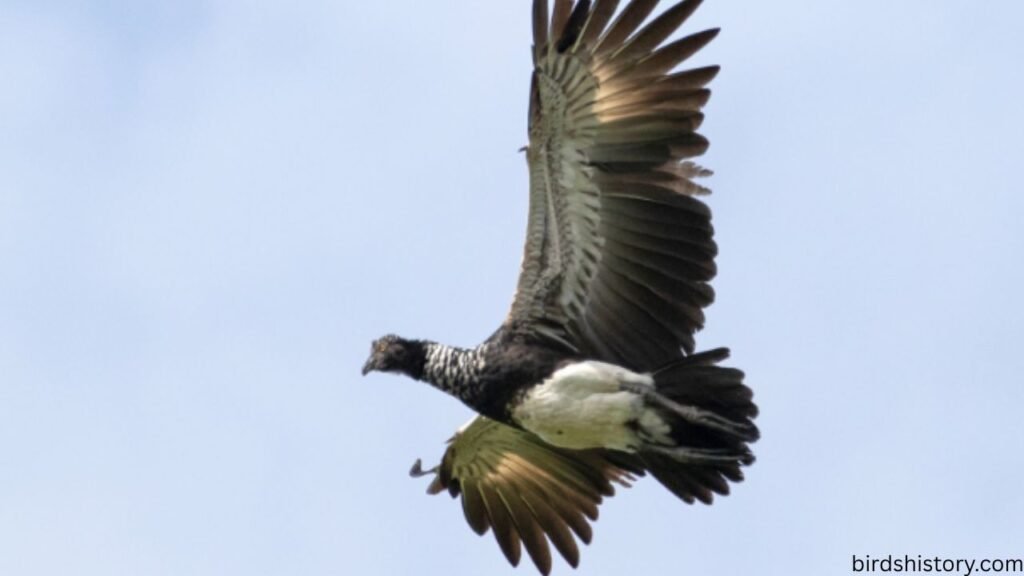
The Horned Screamer is a sizable bird, with a length of approximately 84–95 cm (33–37 inches) and a weight of 3–4.5 kg (6.6–10 lbs). Its wingspan can reach nearly 2 meters (over 6 feet), making it an impressive sight in flight.
- Plumage: Mostly black with a glossy greenish sheen. Its underparts are lighter, with white markings on the neck and belly.
- Horn: The most unusual feature is the slender, spiky “horn” of keratin and cartilage protruding from the crown of its head, sometimes growing up to 15 cm (6 inches) long. Unlike horns in mammals, it’s brittle, fragile, and can break off—but it regrows.
- Beak: Short and hooked, adapted for plant-eating rather than hunting.
- Wings: Another unique trait—its wings are equipped with sharp, spiny projections near the wrist, which it uses as weapons in territorial disputes.
- Sexual dimorphism: Males and females look alike, with no striking differences in size or plumage.
At first glance, it resembles a cross between a goose and a pheasant, but once you notice the horn and wing spurs, you know you’re looking at something special.
Habitat and Range of Horned Screamer
The Horned Screamer is native to northern South America, ranging across countries like:
- Colombia
- Venezuela
- Brazil
- Ecuador
- Peru
- Bolivia
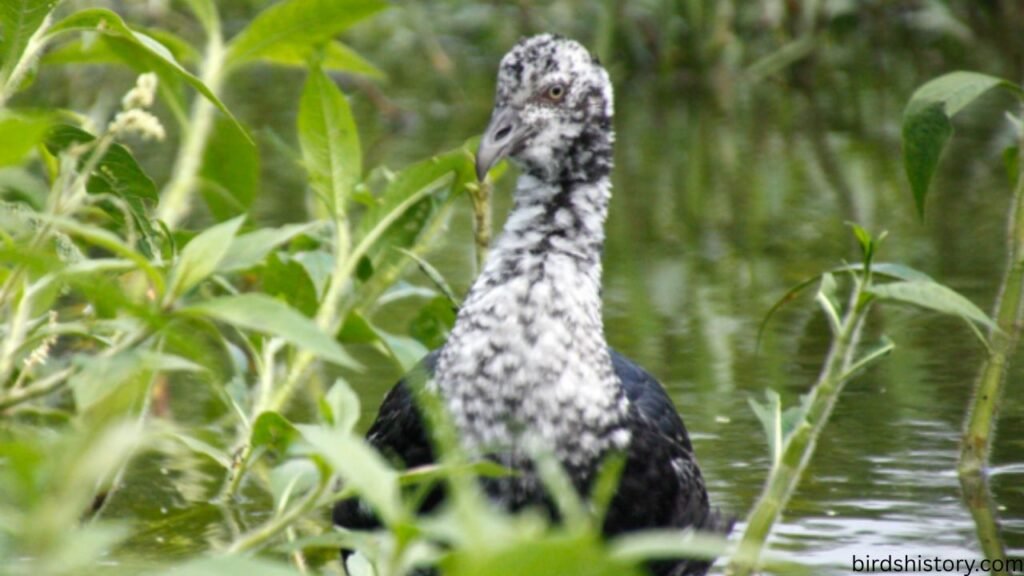
It thrives in wetland environments, such as marshes, swamps, lagoons, and flooded grasslands. These habitats provide the aquatic vegetation that makes up its diet and the shallow waters it prefers for nesting.
Unlike many migratory birds, the Horned Screamer is sedentary, staying in its preferred range year-round, though it may move locally in response to water levels.
Diet and Feeding Habits
Unlike raptors or fish-eating birds, the Horned Screamer is a herbivore. Its diet is composed mainly of:
- Aquatic plants
- Grasses
- Water weeds
Using its powerful, hooked beak, the bird clips and grazes on plants in shallow, watery areas. Because of its plant-based diet, it plays an important ecological role in maintaining wetland ecosystems by controlling vegetation growth.
Feeding is usually done in pairs or small groups, though larger flocks may gather in areas with abundant food.
Behavior and Lifestyle
The Horned Screamer’s behavior is as unique as its appearance:
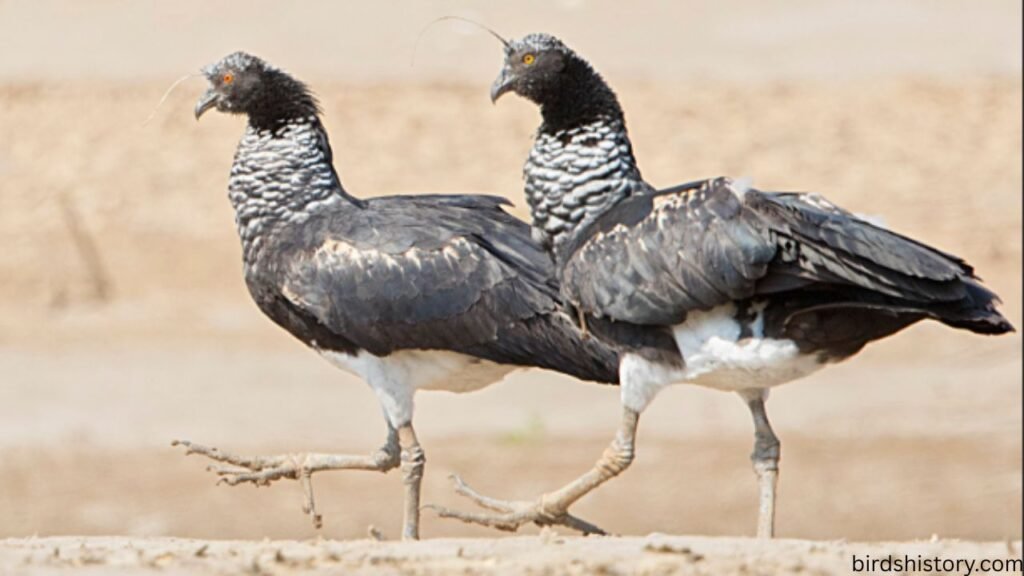
- You can typically find them living in pairs or small family units. Larger flocks may form, especially outside breeding season.
- Even though they are large, Screamers are powerful flyers. They tend to glide through the air using deep, slow wingbeats, which is similar to how herons fly.
- Vocalizations: Their name says it all. TTheir vocalizations are loud, trumpet-like screams that can be heard from a great distance. These calls serve to mark territory and communicate within groups.
- Nesting Habits: They build large nests of sticks, reeds, and aquatic plants, usually over water to avoid predators.
- Aggression: When threatened, they use their sharp wing spurs to defend themselves. These spurs can cause serious injuries.
Also Read: /rufous-necked-puffbird-history/
The Horned Screamer may look peaceful while grazing, but it’s not a bird you want to provoke.
Reproduction and Lifespan
The Horned Screamer’s breeding habits are fascinating:
- Breeding Season: Typically coincides with the rainy season, when wetlands are most productive.
- They construct large, substantial nests in marshes or on top of floating plants. Sometimes these nests are reused for multiple years.
- Eggs: A female usually lays 2–7 eggs, which are white or pale in color. Both parents share incubation duties.
- Chicks: Once hatched, the chicks are precocial, meaning they are well-developed and mobile from the start, though they remain dependent on their parents for guidance and protection.
- Lifespan: In the wild, Horned Screamers can live up to 10–15 years, and potentially longer in captivity.
Predators and Threats
Like all species, the Horned Screamer faces natural and human threats:
- Predators: Eggs and chicks are vulnerable to snakes, caimans, and birds of prey. Adults, thanks to their size and wing spurs, have fewer natural predators.
- Habitat Loss: Wetland drainage for agriculture and development reduces their available habitat.
- Human Activity: While they are not heavily hunted (their meat reportedly tastes bad), they may be disturbed by habitat encroachment.
Also Read: /mute-swan-history/
Horned Screamer Conservation Status
The IUCN Red List has categorized the Horned Screamer as a species of Least Concern. Its wide distribution across South America and stable population numbers keep it relatively safe for now.
However, ongoing threats like wetland destruction and climate change could impact local populations in the future. Conservation efforts are aimed at safeguarding wetland ecosystems, which helps not only the Horned Screamer but also countless other species.
Interesting Facts About Horned Screamer
Here are some quirky and fun facts about the Horned Screamer:
- Its horn has no known function—scientists aren’t sure why it evolved.
- Unlike most water birds, screamers have hollow bones, which makes them lighter and better suited for flying.
- Their calls are so loud that they can be mistaken for mechanical noises in the distance.
- Despite being water birds, their feet are not fully webbed, a trait unusual for their order.
- In some regions, locals call them “camungo” or “anhima.”
- They serve as excellent “watchdogs” in rural areas because their screams alert humans to intruders.
Conclusion
The Horned Screamer is a truly unique kind of bird. From its bizarre horn to its booming voice, it captures the imagination of anyone who encounters it. Found across the wetlands of South America, it thrives as a plant-eating giant with impressive defensive adaptations.
While it may not be as famous as eagles or parrots, the Horned Screamer plays an important role in wetland ecosystems. Protecting its habitats ensures not only the survival of this extraordinary bird but also the health of countless other species that depend on wetlands.
By learning about creatures like the Horned Screamer, we expand our appreciation of nature’s diversity and the strange, wonderful adaptations that make life on Earth so fascinating.
FAQs About Horned Screamer
1. Why is it called the Horned Screamer?
Because it has a horn-like structure on its head and is known for its piercing, loud calls.
2. Where can the Horned Screamer be found?
In wetlands and marshes of South American countries like Colombia, Brazil, and Venezuela.
3. Is the horn made of bone?
No, it’s made of cartilage and keratin, and it regrows if broken.
4. Do both males and females have horns?
Yes, both sexes have the distinctive horn.
5. What does the Horned Screamer eat?
It feeds mainly on aquatic plants and grasses.
6. How does it defend itself?
With sharp wing spurs that can inflict painful injuries.
7. Is the Horned Screamer endangered?
No, it is currently listed as Least Concern by the IUCN.
8. How long do they live?
In the wild, they have a lifespan of about 10–15 years, and they can live even longer when in captivity.
9. Do they migrate?
No, they are non-migratory and stay within their native wetlands year-round.
10. Why are they important?
They help maintain healthy wetlands by controlling vegetation and serve as indicators of ecosystem health.