The Green Oropendola: A Fascinating Bird of the Tropics
The Green Oropendola (Psarocolius viridis) is one of South America’s most striking and intriguing birds. With its vibrant plumage, unique hanging nests, and loud, gurgling calls, it has fascinated birdwatchers and scientists alike. This tropical bird is not just beautiful—it also plays an important role in rainforest ecosystems as a seed disperser and insect predator.
Found primarily in the Amazon Basin, the Green Oropendola is a bird you’re more likely to hear before you see. Its unusual vocalizations echo through the canopy, while its massive colonies of woven hanging nests dangle from tall trees like natural ornaments. Here’s a detailed look into this fascinating species—from its physical traits and lifestyle to its conservation status and cultural importance.
Taxonomy / Classification
- Common Name: Green Oropendola
- Scientific Name: Psarocolius viridis
- Family: Icteridae (the blackbird family)
- Order: Passeriformes
- Class: Aves
Also read: /the-black-collared-hawk/
Oropendolas are part of the Icteridae family, which includes blackbirds, orioles, and grackles. The Green Oropendola is one of several species in the Psarocolius genus, which are known for their large size, bright colors, and complex social behavior.
Physical Description
The Green Oropendola is among the larger members of the blackbird family, and it certainly stands out:
- Size: Adults measure about 38–42 cm (15–17 inches) in length.
- Weight: Roughly 300–400 grams.
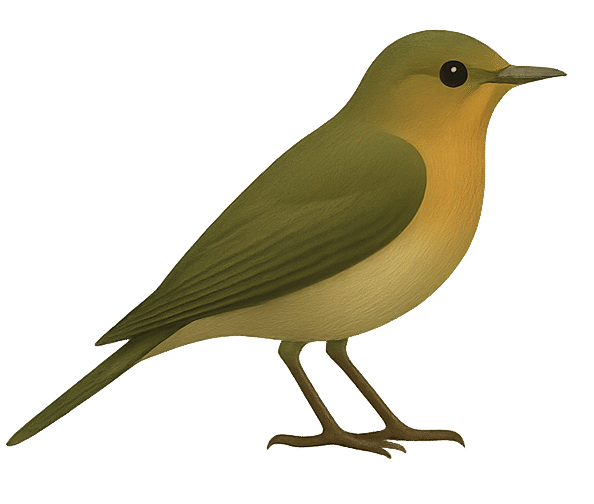
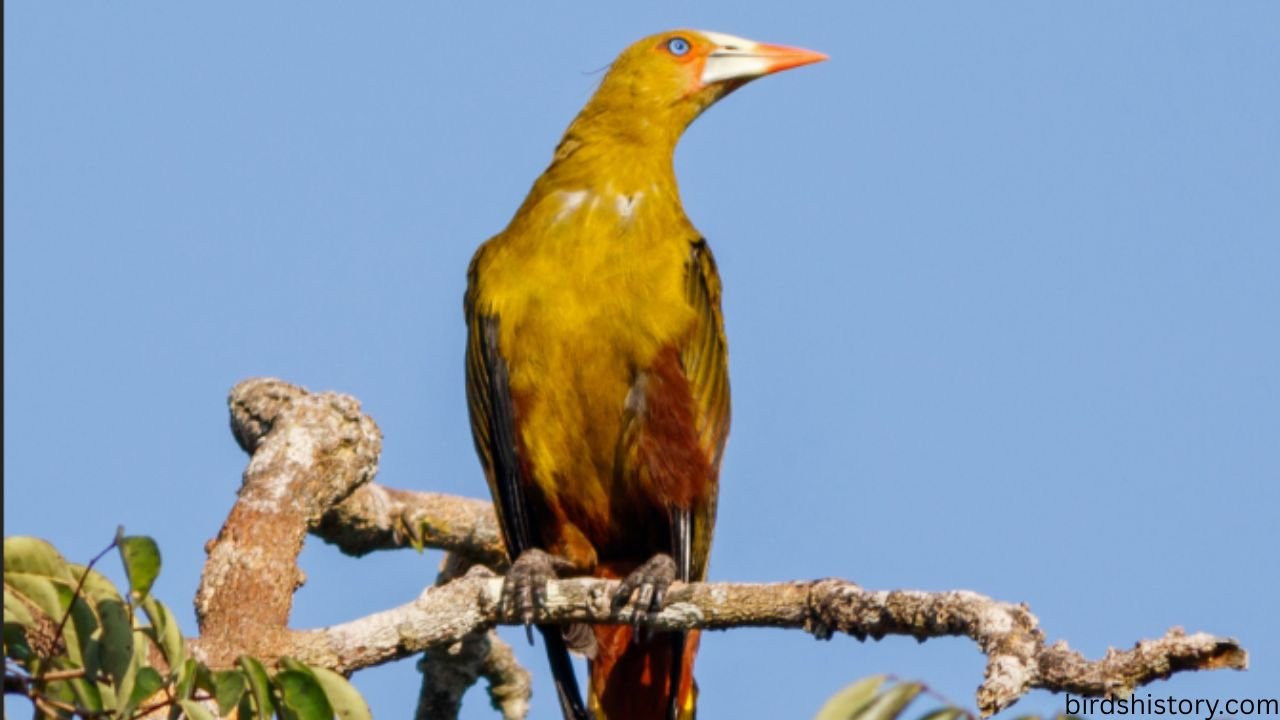
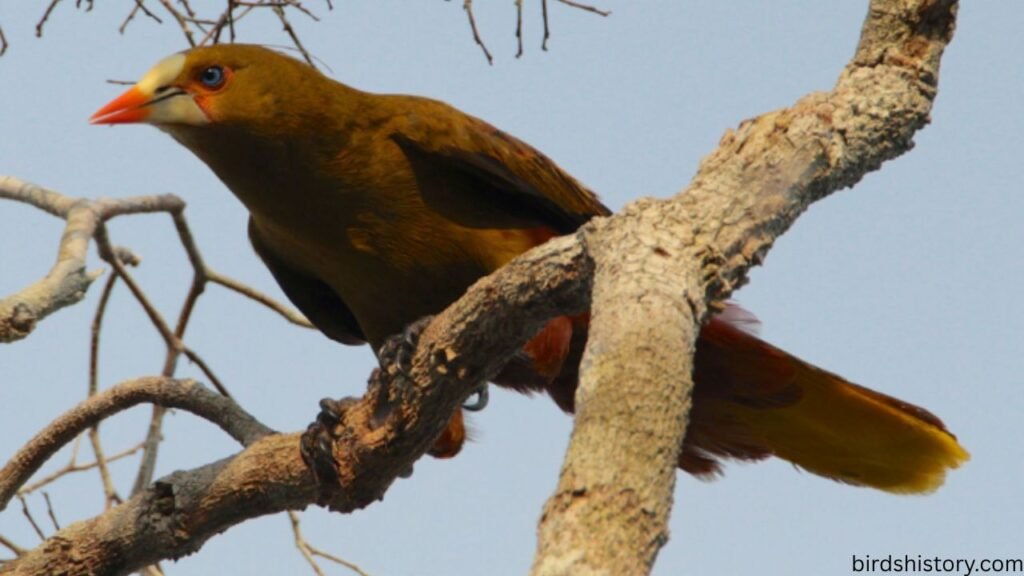
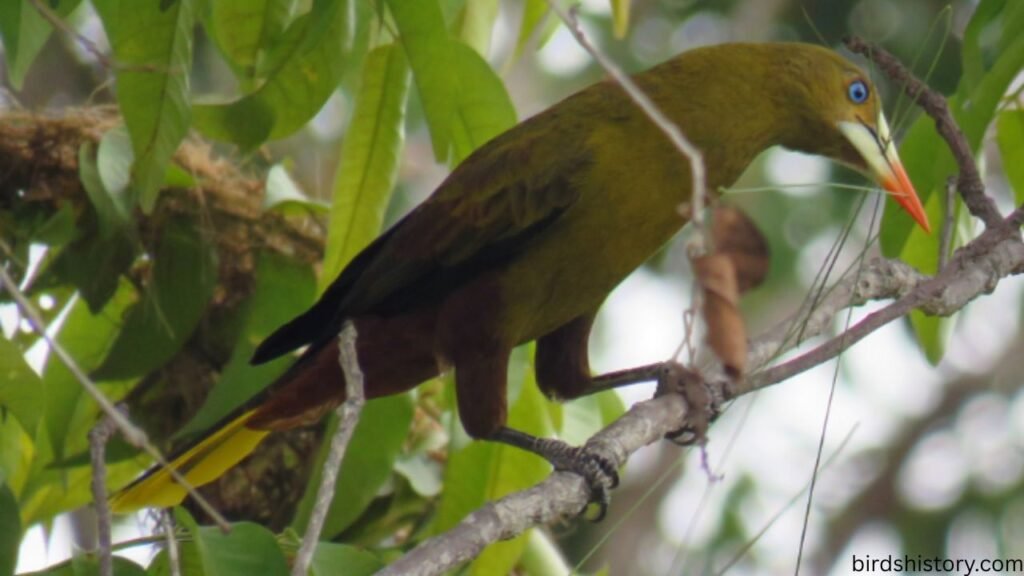
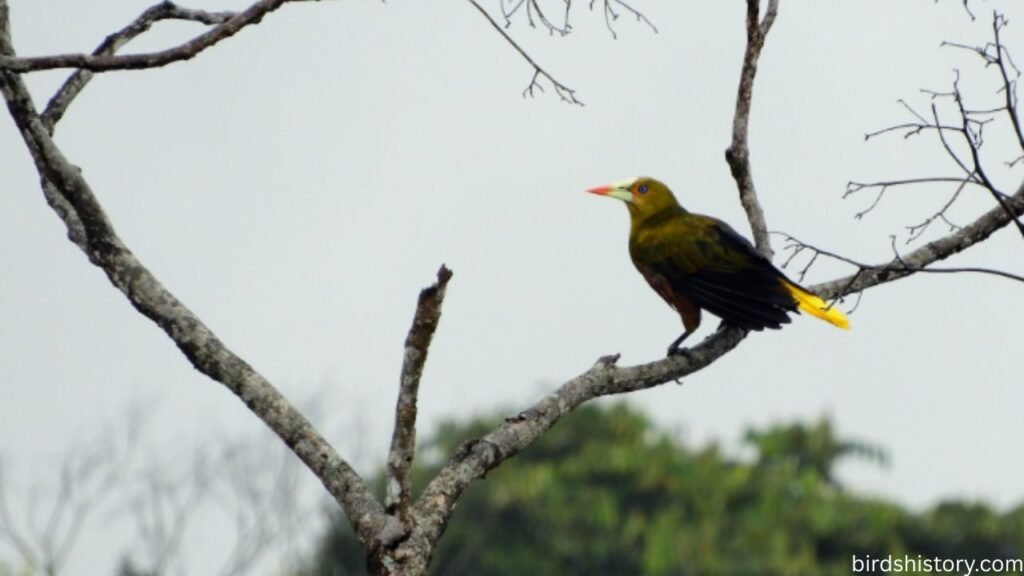
- Plumage: True to its name, its plumage is predominantly a brilliant olive-green, which blends beautifully with rainforest foliage.
- Head and Bill: It has a pale, ivory-yellow beak with a striking black tip. The head may appear slightly darker than the rest of the body.
- Tail: Bright yellow tail feathers create a vivid contrast against the green body.
- Eyes: Pale blue to whitish, giving the bird a sharp, piercing look.
- Sexual Dimorphism: Males are larger and heavier than females, but both share similar coloration.
- Unique Traits: Its strong, conical bill is adapted for eating fruit and insects, while its elongated tail feathers help in maneuvering through dense forests.
Habitat and Range
The Green Oropendola is native to the Amazon Basin, where it thrives in tropical and subtropical lowland forests.
- Geographic Range: Found in Brazil, Peru, Ecuador, Colombia, Venezuela, and parts of Bolivia.
- Preferred Environments:
- Rainforest canopies
- Riverine forests
- Edges of wetlands and swampy woodlands
- Elevation: Typically seen below 900 meters (3,000 feet), though it occasionally ranges higher.
- Migration: The species is generally non-migratory, staying within its tropical range year-round, though it may move locally in search of food.
Its preference for high forest canopies means it’s often heard long before it’s spotted, as its calls echo through the trees.
Diet and Feeding Habits
The Green Oropendola has a varied diet, which makes it an important ecological player in the rainforest:
- Primary Foods:
- Fruits and berries
- Large insects such as grasshoppers, beetles, and caterpillars
- Occasionally small vertebrates like lizards or frogs
- Feeding Method:
- Uses its strong bill to pluck fruit or capture insects from leaves and branches.
- Forages mostly in the canopy but may also come to lower branches.
- Ecological Role:
- Acts as a seed disperser, helping maintain rainforest diversity.
- Controls insect populations by preying on large bugs.
Its diet flexibility makes it well adapted to seasonal changes in food availability.
Behavior and Lifestyle
The Green Oropendola is notable for more than just its color; it also has a very interesting way of life.
- Social Behavior: Highly social, living in colonies often numbering dozens of individuals.
- Nesting: Their colonies are famous for the pendulous, woven nests that hang from tall trees, sometimes measuring over a meter in length. These nests resemble hanging baskets and are a hallmark of oropendola colonies.
- Flight: Strong fliers with swift, direct wingbeats. They navigate the treetops with elegance while looking for food.
- Vocalizations: Known for loud, bubbling, gurgling, and chattering calls that carry over long distances. Their vocal repertoire is both complex and entertaining.
- Mating Rituals: Males often display by hanging upside down from branches, spreading their wings, and producing a series of dramatic calls.
This combination of colony living, complex calls, and elaborate nests makes them some of the most charismatic birds in the tropics.
Reproduction and Lifespan
Breeding in Green Oropendolas is communal and tied to their colony lifestyle:
- Breeding Season: Often aligns with the rainy season, when food is plentiful.
- Nesting:
- Females build long, pendulous nests from plant fibers, vines, and grasses.
- Nests are suspended from high branches, sometimes forming massive colonies in a single tree.
- Eggs: Clutches usually contain 2–3 eggs, pale in color.
- Incubation: Done almost entirely by the female, lasting around 14–17 days.
- Chick Rearing: The female also feeds the chicks with regurgitated fruit and insects.
- Male Role: Males defend the colony and compete for mating rights but do not assist much with chick-rearing.
- In the wild, their estimated lifespan is about 10 to 15 years.
The species’ colony nesting helps protect chicks from predators, as the sheer number of birds makes it difficult for intruders to approach unnoticed.
Predators and Threats
Despite their size and social behavior, Green Oropendolas face both natural and human-related threats:
- Natural Predators:
- Raptors like hawks and eagles
- Tree-climbing snakes that raid nests
- Mammals such as monkeys that may steal eggs or chicks
- Environmental Threats:
- Deforestation, which reduces habitat and nesting trees
- Agricultural expansion into rainforest edges
- Logging of tall canopy trees crucial for colony nesting
- Human Impact: While not heavily hunted, habitat destruction remains their biggest threat.
Conservation Status
- IUCN Status: Currently listed as Least Concern due to its wide distribution and large population.
- Population Trend: Stable overall, but local declines may occur in areas with heavy deforestation.
- Conservation Efforts:
- Protected in many parts of the Amazon and regional reserves.
- Benefits from rainforest conservation initiatives that safeguard biodiversity.
Although not endangered, the Green Oropendola’s reliance on intact rainforest highlights the importance of conservation.
Interesting Facts
- Their name “oropendola” comes from the golden-yellow color of their tail feathers.
- Colonies can contain dozens of pendulous nests in a single tree—an impressive sight.
- Males can perform acrobatic displays, hanging upside down while calling loudly to attract mates.
- Their calls are distinct even among tropical birds, sounding like a blend of bubbling water and the clanking of metal.
- They share their colonies with other bird species like caciques, creating mixed nesting communities.
- Indigenous communities often consider oropendolas as indicators of seasonal changes.
- Their woven nests are so strong and durable that abandoned ones are sometimes reused by other species.
Conclusion
The Green Oropendola is more than just a colorful tropical bird—it’s a symbol of the Amazon’s ecological richness. With its emerald-green plumage, yellow tail, and bubbling calls, it captures attention in both appearance and behavior. Its colony lifestyle and intricate woven nests highlight the incredible complexity of bird societies.
Learning about the Green Oropendola reminds us how valuable tropical rainforests are. Protecting its habitat doesn’t just safeguard one bird—it preserves an entire ecosystem of species that depend on healthy forests. By appreciating and conserving birds like the Green Oropendola, we contribute to protecting the vibrant biodiversity of the Amazon.
FAQs
1. What is the scientific name of the Green Oropendola?
Psarocolius viridis.
2. Where can you find Green Oropendolas?
In the Amazon Basin across Brazil, Peru, Ecuador, Colombia, and Venezuela.
3. What do Green Oropendolas eat?
They eat fruits, insects, and occasionally small vertebrates.
4. How big are Green Oropendolas?
About 38–42 cm (15–17 inches) long.
5. What makes their nests unique?
They build long, hanging, woven nests that dangle from tall trees.
6. Are Green Oropendolas endangered?
No, they are listed as Least Concern by the IUCN.
7. Do males and females look different?
Males are larger, but both sexes share the same green and yellow coloration.
8. What sounds do they make?
They produce bubbling, gurgling, and metallic-sounding calls.
9. How long do they live?
They can live around 10–15 years in the wild.
10. Why are they important?
They help disperse seeds and control insects, contributing to rainforest health.