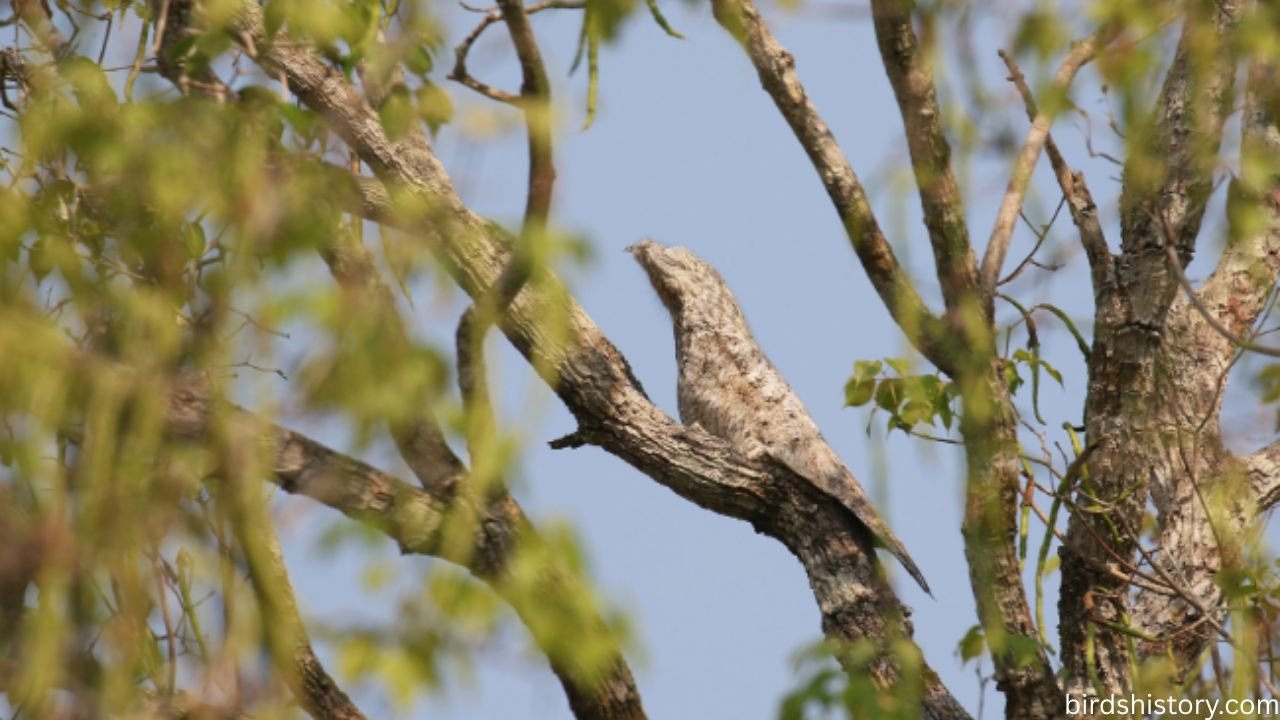
The Great Potoo: Master of Camouflage in the Night
The Great Potoo is one of those birds that seem straight out of a fantasy story. With its enormous eyes, haunting nighttime calls, and unmatched camouflage, it’s both fascinating and eerie to encounter. Found throughout Central and South America, this nocturnal bird has earned a reputation as one of the best “invisible” creatures in the animal kingdom.
Why is it so interesting? For starters, the Great Potoo can sit motionless for hours, blending perfectly with tree stumps and branches. You could walk right past one without realizing it’s there. At night, however, it becomes an expert insect hunter, flying silently through the forest with wide, owl-like wings. A fun fact is that many local myths and legends surround this bird—its ghostly call has been compared to cries of sorrow, giving it a mysterious aura in folklore.
Let’s take a closer look at this remarkable bird—its classification, lifestyle, unique adaptations, and why it continues to capture both scientific and cultural imagination.
Great Potoo Taxonomy / Classification
Here’s how the Great Potoo is classified scientifically:
- Common Name: Great Potoo
- Scientific Name: Nyctibius grandis
- Family: Nyctibiidae (Potoos)
- Order: Nyctibiiformes
- Class: Aves
Also read: /the-blue-and-yellow-macaw/
The Great Potoo is the biggest of the seven species that make up the potoo family. All of them are nocturnal, insect-eating birds native to the Neotropics.
Great Potoo Physical Description
The Great Potoo is a bird that looks both comical and mysterious at the same time.
- Size: It is the largest potoo species, measuring 48–60 cm (19–24 inches) in length.
- Wingspan: Roughly 70–80 cm (27–31 inches).
- Weight: Around 360–650 grams (0.8–1.4 lbs).
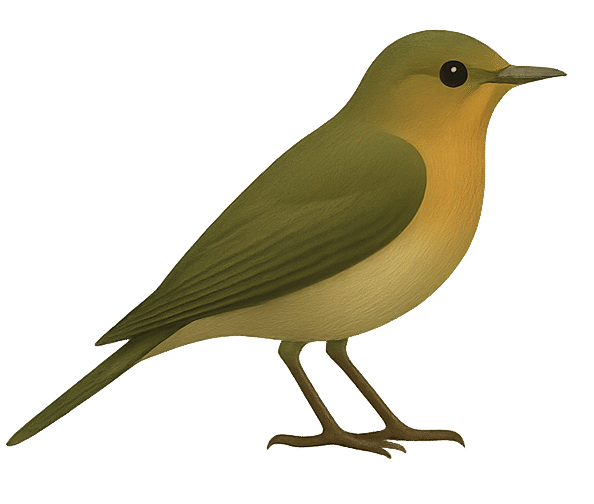
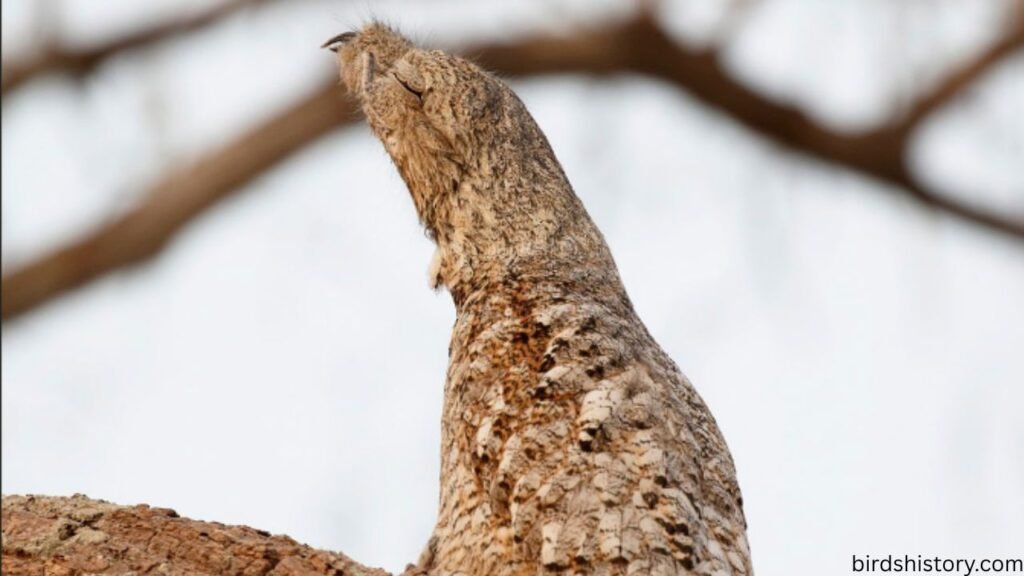
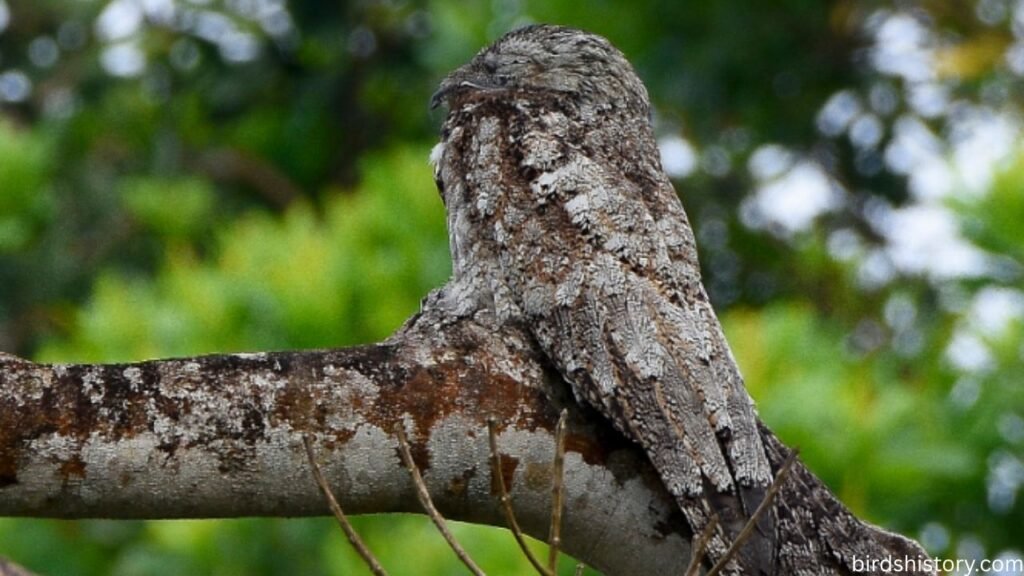
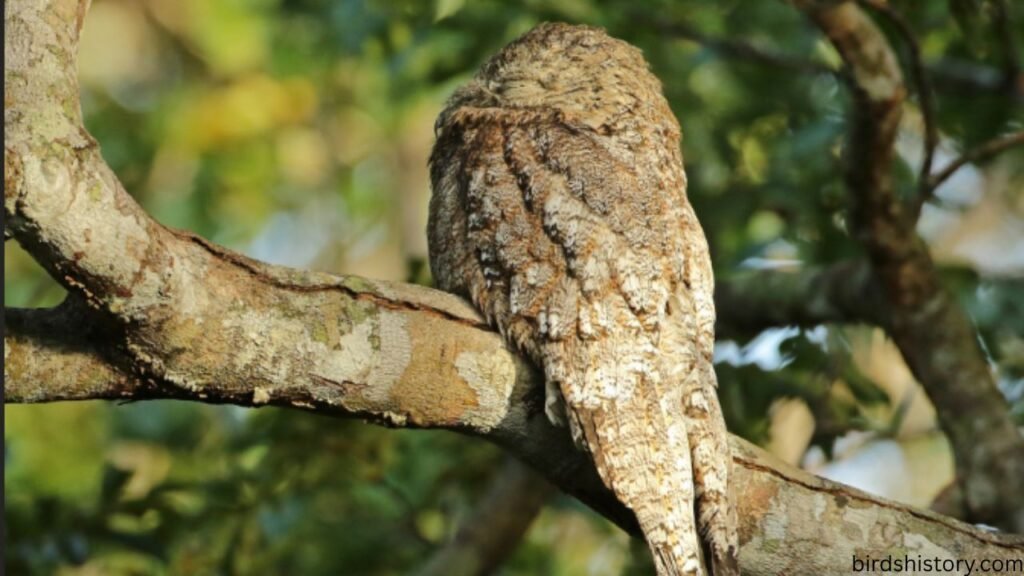
- Its feathers are a mix of gray, brown, and black, creating a pattern that looks like tree bark. This provides excellent camouflage during the day.
- Head and Eyes: Large, rounded head with huge yellowish-brown eyes adapted for night vision. During the day, it squints to slits, making the eyes almost invisible.
- Beak: Short and broad, with a wide gape that helps it scoop insects out of the air.
- Tail: Medium length with barred markings.
There is little difference between males and females in appearance. Juveniles are paler with fluffier plumage, which helps them blend even better with lighter tree bark.
Habitat and Range of Great Potoo
The Great Potoo is widely distributed but can be surprisingly difficult to spot.
- Continent/Regions: Found in Central America (from southern Mexico to Panama) and throughout South America, including Colombia, Venezuela, Brazil, Peru, Bolivia, Ecuador, and northern Argentina.
- Preferred Habitats: Primarily tropical and subtropical forests, open woodlands, forest edges, and savannas with scattered trees.
- Altitude Range: Usually below 1,500 meters but occasionally found higher in some regions.
- Migration: Non-migratory; it stays in its range year-round, though it may move locally depending on food supply.
Its reliance on tree cover for camouflage means it thrives in forested environments but can adapt to open savannas if trees are available.
Diet and Feeding Habits
Like its relatives, the Great Potoo is strictly nocturnal and insectivorous.
- Primary Diet: Large insects such as beetles, grasshoppers, katydids, and moths.
- Secondary Diet: Occasionally eats small vertebrates like bats or small birds if available.
- Hunting Method:
- Hunts at night using its exceptional eyesight.
- It often waits on a branch and then makes short flights to catch insects while they’re flying.
- Its broad mouth enables it to effectively capture its prey.
- Unique Feature: Unlike owls, it does not use strong talons to capture prey. Instead, it relies on its beak and large gape.
This specialized feeding style allows it to occupy a niche different from raptors or bats.
Behavior and Lifestyle
The Great Potoo’s behavior is as unusual as its appearance.
- Daily Habits:
- Daytime: Rests completely still on tree stumps or branches, blending perfectly with bark.
- Nighttime: Becomes active, calling and hunting.
- Camouflage: Its ability to mimic a broken tree branch is legendary. It extends its body, closes its eyes to slits, and freezes completely. Even predators and humans often fail to detect it.
- Social Behavior: Mostly solitary, except during mating and chick rearing.
- Flight Style: Silent, with steady wingbeats similar to nightjars.
- Vocalizations: Famous for its eerie calls, which sound like mournful wails or groans. These calls are used to communicate at night and sometimes terrify listeners unfamiliar with the bird.
Reproduction and Lifespan
Breeding behavior of the Great Potoo reflects its cryptic lifestyle.
- Breeding Season: Varies by region but often during rainy or early dry seasons when insects are plentiful.
- Nesting: Unlike most birds, it does not build a traditional nest. Rather than building a nest, it lays just one egg in a natural indentation on a tree branch or stump.
- Eggs: Typically one egg per breeding cycle. The egg is pale with brown markings.
- Incubation: Lasts about 30 days. Both parents may share incubation duties.
- Chick Development:
- Chicks are covered in fluffy white down.
- They adopt the same camouflage posture as adults, freezing on branches when threatened.
- Fed by regurgitation of insects.
- Fledging: Young birds leave the perch after 6–8 weeks but remain dependent for some time.
- Lifespan: Estimated at 12–15 years in the wild, though detailed data is limited.
Predators and Threats
While its camouflage provides protection, the Great Potoo still faces threats.
- Natural Predators:
- The eggs and young are vulnerable to being eaten by predators such as snakes and monkeys.
- Raptors like hawks may occasionally threaten adults.
- Environmental Threats:
- Deforestation reduces suitable habitat.
- Agricultural expansion leads to fragmentation of forests.
- Human Impact:
- In some areas, local superstitions about its ghostly calls cause people to fear or kill the bird.
Despite these pressures, the species is still relatively widespread.
Also Read About: /the-horned-screamer-history/
Great Potoo Conservation Status
The IUCN Red List currently classifies the Great Potoo as a species of Least Concern. Its wide distribution helps buffer against extinction. However, ongoing habitat destruction in the Amazon and Central American forests poses a long-term threat.
Conservation strategies include:
- Protecting tropical forest habitats.
- Educating local communities to reduce harmful superstitions.
- Conducting further research into population trends.
Interesting Facts About Great Potoo
- The Great Potoo is a master of mimicry—its camouflage posture can make it look exactly like a broken tree branch.
- It is often mistaken for an owl because of its nocturnal habits and large eyes, but it is not related to owls.
- In folklore, its haunting call is sometimes associated with spirits or omens.
- It belongs to the same order as nightjars but is much larger.
- The Great Potoo’s beak has a small notch, or “tooth,” that helps it hold onto insects as they try to get away.
Conclusion
The Great Potoo is a perfect example of how a bird can adapt in an extraordinary manner. With its haunting calls, ghostly presence, and unparalleled camouflage, it’s no surprise that it has inspired myths and legends. Beyond its eerie reputation, however, it plays a crucial role in controlling insect populations and maintaining the balance of tropical ecosystems.
Learning about and protecting birds like the Great Potoo not only helps preserve biodiversity but also keeps alive the natural wonders that make our world so endlessly fascinating.
So next time you find yourself in a Central or South American forest at night, listen carefully. That strange, mournful cry in the darkness might just belong to the Great Potoo.
FAQs About Great Potoo
1. What is the formal scientific name for the Great Potoo?
Its scientific name is Nyctibius grandis.
2. Where does the Great Potoo live?
It is found from southern Mexico through Central America and into most of South America.
3. Is the Great Potoo an owl?
No. While it looks like an owl, it belongs to a different family and order.
4. What does the Great Potoo eat?
Primarily large insects, though it may occasionally eat small vertebrates.
5. Why is the Great Potoo so hard to see?
Its feathers and stance make it nearly impossible to tell apart from tree bark.
6. How many eggs does the Great Potoo lay?
Usually only one egg per breeding season.
7. How long do Great Potoos live?
They can live around 12–15 years in the wild.
8. What is unique about its call?
Its eerie, mournful calls are often compared to human cries and are the basis for local myths.
9. Is the Great Potoo endangered?
No, it is listed as Least Concern, but habitat destruction is a concern.
10. Why is the Great Potoo important?
It helps control insect populations and is an indicator of healthy forest ecosystems.