The Great Cormorant: Master Diver of the Waterways
The Great Cormorant is a bird that masterfully combines strength, skill, and an ability to adapt. Known for its sleek black body, emerald eyes, and extraordinary diving abilities, this waterbird is one of the most widespread cormorant species in the world. You can find it along rocky coasts, in estuaries, and even inland lakes, spanning multiple continents.
What makes it truly fascinating is its fishing technique. While many waterbirds skim the surface or spear fish, the Great Cormorant actually dives underwater, using its powerful legs and webbed feet to chase fish like an expert swimmer. One fun fact? In some parts of Asia, humans have trained Great Cormorants to fish for them—a tradition that goes back over a thousand years.
Great Cormorant Taxonomy / Classification
- Common Name: Great Cormorant
- Scientific Name: Phalacrocorax carbo
- Family: Phalacrocoracidae
- Order: Suliformes
- Class: Aves
Also read: /snowy-egret/
This classification places the Great Cormorant among a family of waterbirds that are known for their diving prowess and global presence.
Great Cormorant Physical Description
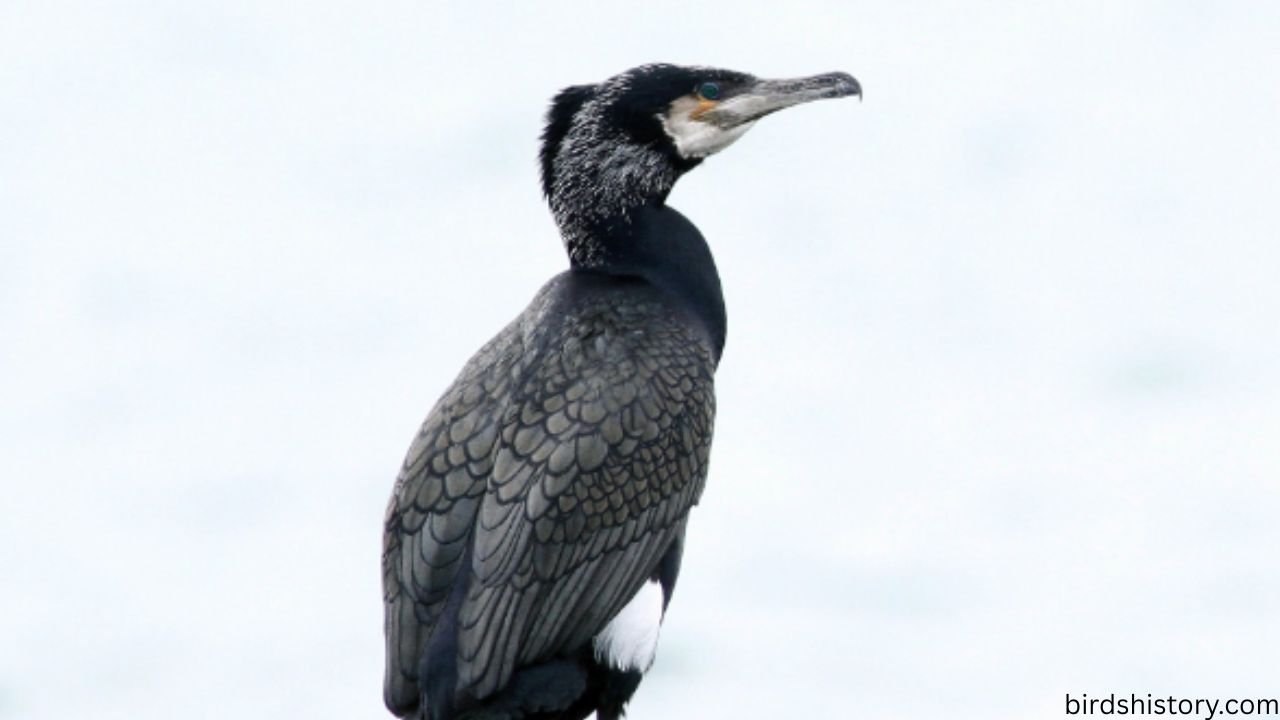
The Great Cormorant is a large, impressive waterbird with a number of distinctive traits.
- Size: Adults measure about 70–102 cm (28–40 inches) in length.
- Wingspan: 120–160 cm (47–63 inches).
- Weight: 2.5–5 kg (5.5–11 pounds).
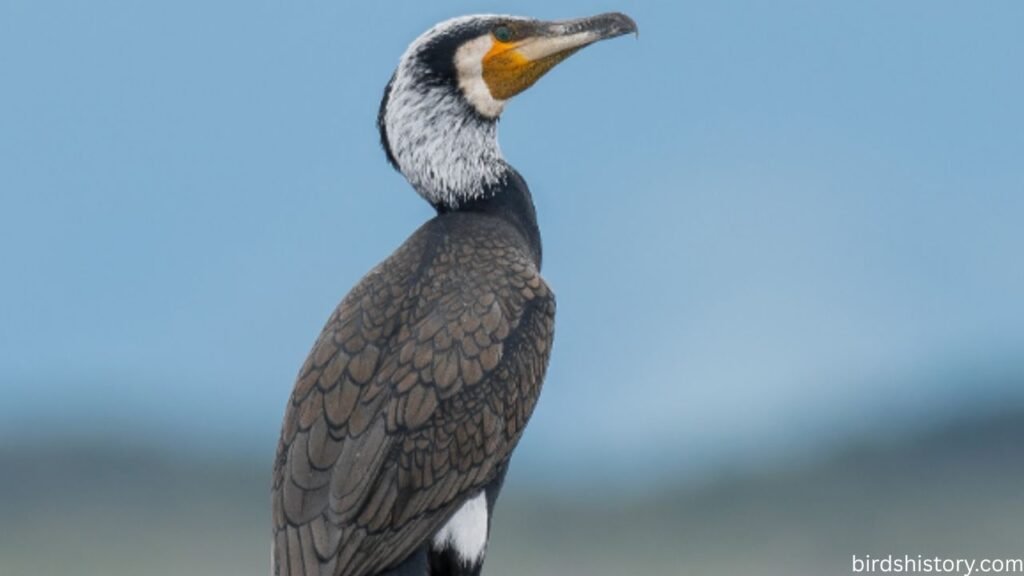
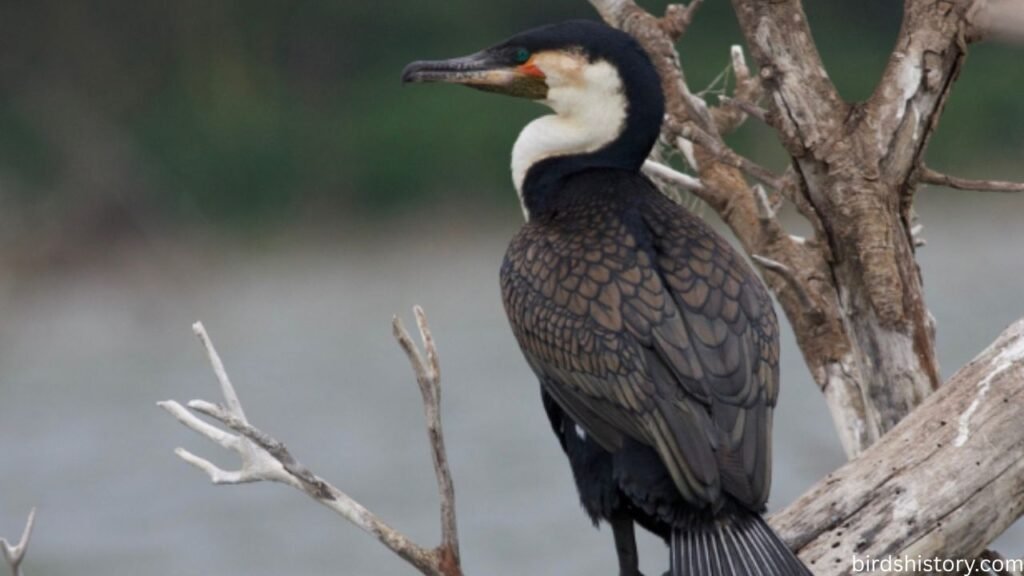
- Its plumage is mostly black, with a shiny green or bronze finish when in the sunlight. Adults often have white patches on the thighs and face during breeding season.
- Beak: Long, hooked bill, perfect for catching slippery fish.
- Legs and Feet: Black legs with webbed feet for strong underwater propulsion.
- Eyes: Bright emerald or turquoise eyes that stand out against their dark plumage.
- Sexual Dimorphism: Males are slightly larger, but both sexes look very similar.
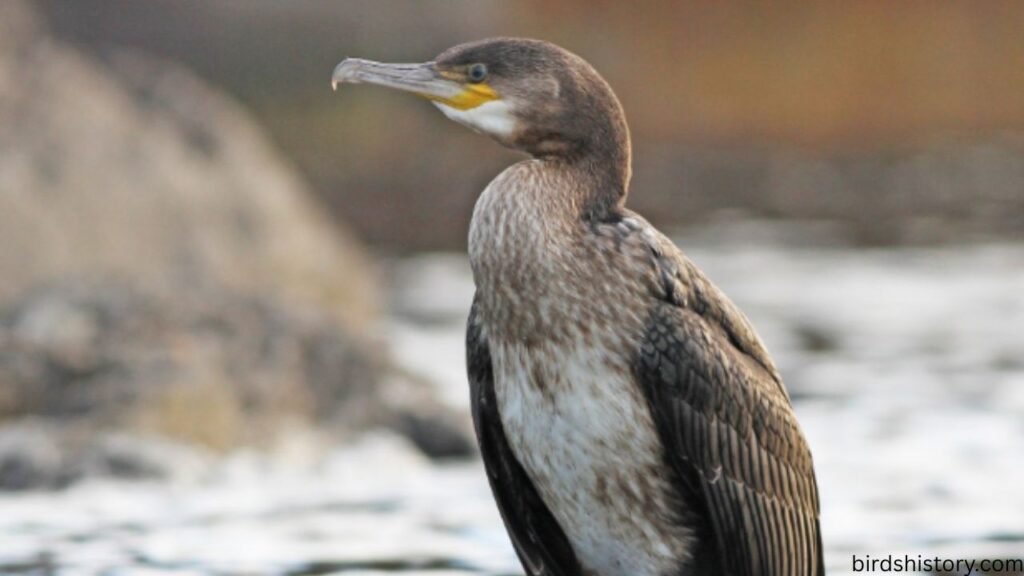
- Juveniles: Brownish-gray with paler underparts, gradually turning darker as they mature.
One of the most distinctive features is their habit of spreading their wings to dry after diving, a behavior often seen when they perch near water.
Habitat and Range of Great Cormorant
The Great Cormorant is a highly adaptable species, flourishing in both coastal and inland environments.
- Geographical Range:
Since this bird can be found in Europe, Asia, Africa, Australia, and North America, it is considered one of the most widespread cormorant species. - Preferred Habitats:
- Rocky coastlines
- Estuaries and harbors
- Freshwater lakes and rivers
- Large reservoirs
- Migration:
Northern populations often migrate southward in winter, while those in warmer regions remain year-round residents.
Their adaptability allows them to thrive in both saltwater and freshwater habitats.
Diet and Feeding Habits of Great Cormorant
The Great Cormorant is a specialist when it comes to fishing.
- Diet:
- Fish (main diet, often small to medium-sized species)
- Eels
- Amphibians
- Occasionally crustaceans
- Feeding Technique:
They plunge underwater, using their powerful webbed feet for propulsion, and chase after fish with incredible agility. They catch prey with their hooked beaks, often swallowing it whole. - Interesting Feeding Behavior:
Cormorants sometimes fish cooperatively, forming lines or circles to herd fish together. This increases their hunting efficiency.
Their skill has even been harnessed by humans in traditional cormorant fishing, practiced in Japan and China for centuries.
Great Cormorant Behavior and Lifestyle
The Great Cormorant is both social and solitary, depending on the season and activity.
- Social Behavior:
They frequently roost and build nests in large colonies but might hunt either alone or in groups. - Flight:
They fly with strong, direct wingbeats, often low over the water. - Perching and Wing-Drying:
Known for spreading their wings to dry because their feathers are less waterproof than those of other waterbirds, which helps them dive deeper. - Calls:
Generally quiet at sea, but in colonies they produce guttural croaks and grunts. - Mating Rituals:
Courtship involves males displaying their white thigh patches and bowing to females.
This balance of social and solitary habits makes them highly adaptable.
Reproduction and Lifespan of Great Cormorant
- Breeding Season: Varies by region, usually spring to early summer.
- Cormorants build their nests in large colonies, usually in trees, on cliffs, or on the ground near a body of water. Their nests are large platforms constructed from materials like sticks, reeds, and seaweed.
- Eggs: Usually 3–4 pale blue or greenish eggs.
- Incubation: Lasts 28–31 days, shared by both parents.
- Chicks: Hatch naked, later developing down feathers. They are fed by regurgitation until they fledge at around 50 days.
- Lifespan: Typically 10–20 years in the wild, with some individuals living longer.
Their colonial nesting provides safety but also makes them vulnerable to disturbance.
Predators and Threats
- Natural Predators:
- Large raptors (eagles, hawks)
- Foxes, raccoons, and other mammals (eggs and chicks)
- Gulls, which often steal eggs or young chicks
- Environmental Threats:
- Habitat destruction
- Overfishing, which reduces their food supply
- Pollution (especially oil spills and plastic waste)
- Human Impact:
In some regions, Great Cormorants are culled because fishermen see them as competition for fish stocks.
Great Cormorant Conservation Status
- IUCN Red List: Listed as Least Concern.
- Population Trend: Increasing in many parts of Europe and Asia, though locally threatened in some areas.
- Conservation Efforts:
- Protection of nesting colonies
- Wetland conservation programs
- Legal protections in many countries to prevent excessive culling
Despite occasional conflicts with humans, the species is resilient and continues to thrive globally.
Interesting Facts About the Great Cormorant
- They can dive up to 45 meters (150 feet) underwater in search of fish.
- Their feathers are not very waterproof, which helps them to sink and maneuver more easily underwater.
- In Japanese culture, trained cormorants are used for fishing in a practice called ukai.
- The species is mentioned in literature, including John Milton’s Paradise Lost.
- Great Cormorants have been observed swallowing fish almost half their body length.
- They often rest with wings outstretched in iconic poses seen in many coastal regions.
- Their colonies can number in the thousands, creating dramatic sights on cliffs and islands.
- Fossil records show cormorants have existed for millions of years, highlighting their evolutionary success.
- They play a key ecological role by keeping fish populations balanced.
- Their emerald eyes are among the most striking features of any bird.
Conclusion
The Great Cormorant is a true master of the waterways—an agile diver, skilled fisher, and adaptable survivor. With its striking black plumage, emerald eyes, and unique wing-drying behavior, it’s a bird that fascinates birdwatchers and scientists alike.
Though sometimes misunderstood due to conflicts with fisheries, the Great Cormorant remains an important part of aquatic ecosystems. Safeguarding wetlands and coastal areas is not only crucial for the survival of this species but also for the well-being of numerous other organisms.
Whether you see one perched with wings spread wide or diving with precision below the water’s surface, the Great Cormorant is a reminder of nature’s adaptability and resilience.
FAQs About Great Cormorant
1. What is the scientific name of the Great Cormorant?
Phalacrocorax carbo.
2. Where can you find Great Cormorants?
Found in Europe, Asia, Africa, Australia, and parts of North America.
3. What do Great Cormorants eat?
It primarily consumes fish, but its diet also includes eels, amphibians, and small crustaceans.
4. Do Great Cormorant migrate?
Yes, northern populations migrate south in winter, while others remain year-round.
5. Why do Great Cormorant spread their wings?
To dry their feathers, which are less waterproof than most waterbirds.
6. How long do Great Cormorants live?
Typically 10–20 years in the wild.
7. Are Great Cormorant endangered?
“The species is not considered to be at risk; in fact, it is classified as Least Concern by the IUCN, and its populations are growing.”
8. How do they catch fish?
By diving underwater and chasing prey with their hooked bills.
9. Do humans use them for fishing?
Yes, they have been trained to fish for centuries in parts of Japan and China.
10. What makes them unique?
Their emerald eyes, expert diving ability, and wing-drying behavior.