The Glossy Ibis: Nature’s Iridescent Wader History 2025
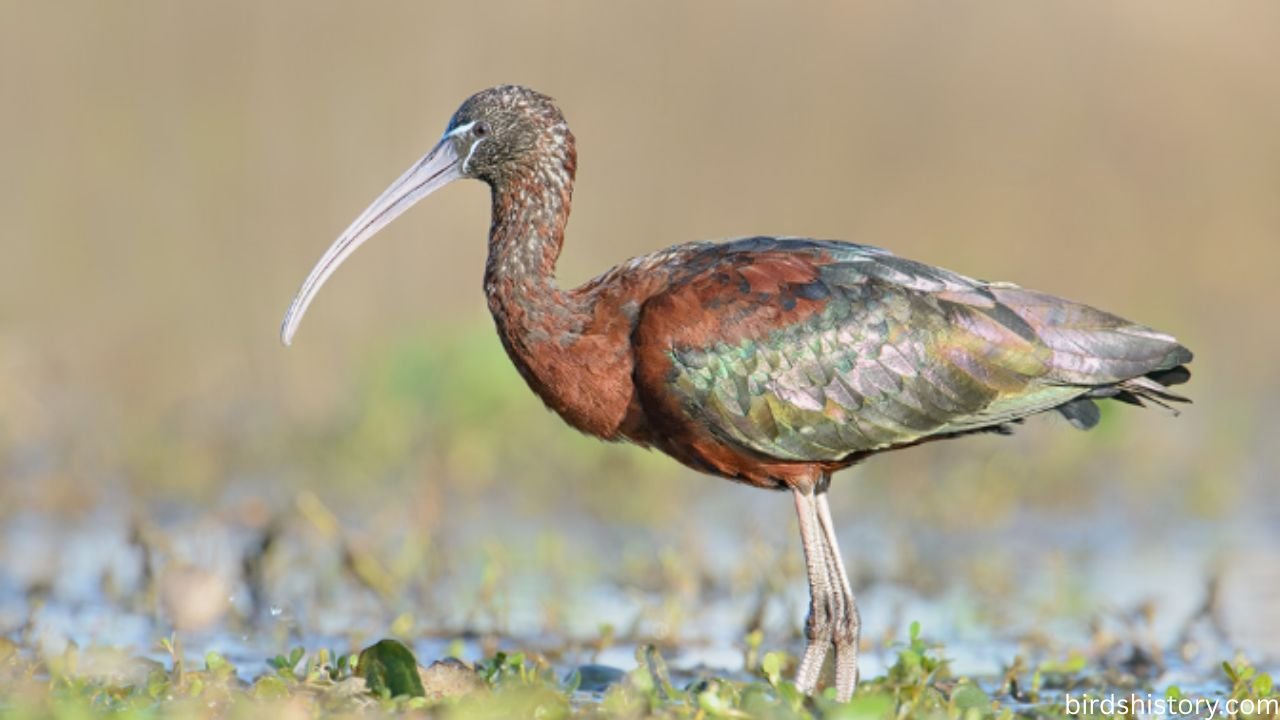
The Glossy Ibis is one of the most striking wetland birds you’ll ever see. With its slender frame, curved bill, and shimmering bronze-green plumage, it looks like it belongs in an art gallery rather than a marsh. Found across multiple continents, the Glossy Ibis is a fascinating species that thrives in wetlands, rice fields, and estuaries.
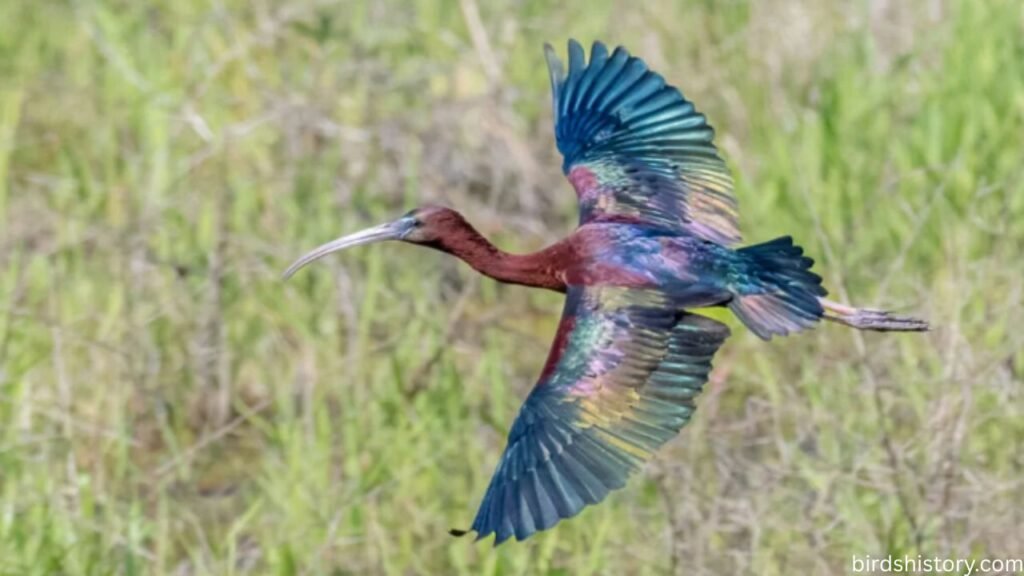
What makes it especially interesting is its color-changing feathers. At first glance, it may look dark brown, but when the sunlight hits just right, it transforms into a dazzling display of green, purple, and copper hues. This avian species is also a remarkable traveler, having been observed across Europe, Africa, Asia, and the Americas, which makes it one of the most widely dispersed ibis species globally.
Glossy Ibis Taxonomy / Classification
To understand the Glossy Ibis better, let’s place it in its scientific context.
- Common Name: Glossy Ibis
- Scientific Name: Plegadis falcinellus
- Family: Threskiornithidae
- Order: Pelecaniformes
- Class: Aves
Must Read: /snowy-egret/
This classification shows that the Glossy Ibis belongs to the same family as other ibises and spoonbills, known for their distinctive long bills and wetland lifestyles.
Glossy Ibis Physical Description
The Glossy Ibis is a medium-sized wader with a body length of about 48–66 cm (19–26 inches) and a wingspan reaching up to 95 cm (37 inches).
- Plumage: At a distance, it looks chestnut-brown, but up close or under sunlight, the feathers shimmer with metallic shades of green, purple, and bronze.
- Its long, thin bill curves downward, making it ideal for probing the mud to find food.
- Legs: Long and dark, adapted for wading in shallow waters.
- Eyes: Reddish-brown in adults, adding intensity to its sharp appearance.
- Sexual Dimorphism: Males and females look alike, though males are slightly larger with longer bills.
- Juveniles: Young Glossy Ibises are duller, with brown plumage and less iridescence, gradually developing their trademark gloss as they mature.
This iridescent plumage is what gives the bird its “glossy” name and makes it stand out among wetland birds.
Habitat and Range of Glossy Ibis
The Glossy Ibis is a true global wanderer.
- Geographical Range:
Found in Southern Europe, Africa, Asia, Australia, the Caribbean, and the Americas, this bird has one of the broadest distributions of any ibis. - Preferred Habitat:
- Wetlands
- Marshes
- Floodplains
- Rice fields
- Lagoons and estuaries
- Migration:
The Glossy Ibis is highly migratory. Birds from Europe and Asia often migrate south to Africa and India for winter, while populations in North and South America move seasonally depending on water availability.
In short, if you are near a swamp or flooded plain, chances are you may spot one.
Glossy Ibis Diet and Feeding Habits
The Glossy Ibis has a diet tailored to wetland life.
- Primary Diet:
- Insects (dragonflies, beetles, grasshoppers)
- Crustaceans (crabs, crayfish)
- Mollusks
- Frogs
- Small fish
- Aquatic worms
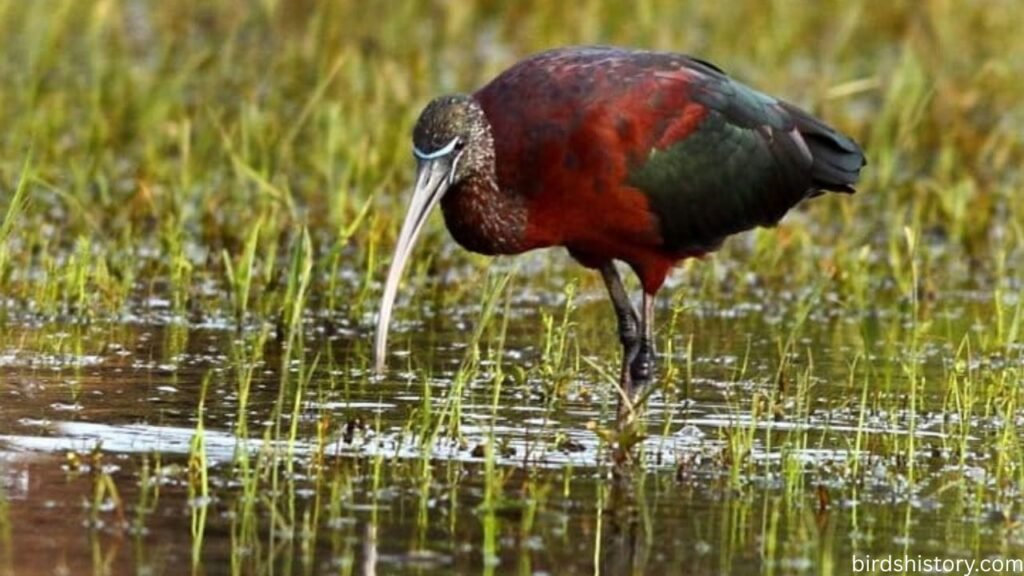
- Feeding Method:
It uses its curved bill to probe muddy soil and shallow water. The sensitive tip helps detect prey by touch. - Unique Behavior:
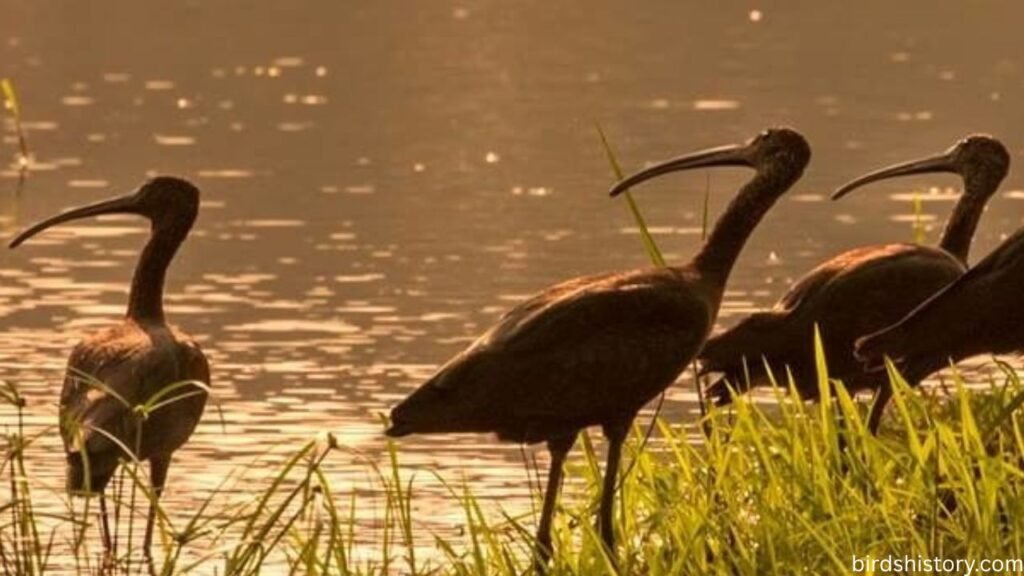
Glossy Ibises often feed in flocks, moving gracefully in synchronized lines through wetlands. Watching them work together is both efficient and mesmerizing.
Behavior and Lifestyle of Glossy Ibis
The Glossy Ibis is social and highly gregarious.
- Flocking Behavior: They gather in large groups for feeding, roosting, and nesting, sometimes mixing with herons and egrets.
- Flight Style: Long, steady wingbeats; they often fly in V-shaped formations.
- Calls: Their calls are soft, guttural croaks, especially noticeable in colonies.
- Mating Rituals: During breeding, males perform displays like bowing and presenting nesting material to females.
Their social lifestyle is a key reason why they thrive across such wide ranges.
Reproduction and Lifespan
Breeding is a busy season for the Glossy Ibis.
- Breeding Season: Varies by region but usually in spring or early summer when wetlands are full.
- Nesting: They build nests out of twigs and reeds, usually in colonies on trees, shrubs, or reed beds.
- Eggs: Typically 3–4 eggs, bluish-green in color.
- Incubation: About 20–23 days, with both parents sharing duties.
- Chicks: Born with downy feathers, they are fed by regurgitation until they can forage on their own.
- Lifespan: Around 10–15 years in the wild, slightly longer in protected captivity.
Their colony-based breeding strategy ensures protection and survival of the young.
Predators and Threats
While common, the Glossy Ibis is endangered by several natural and human-caused dangers.
- Natural Predators:
- Large birds of prey (hawks, eagles)
- Snakes (that target eggs and chicks)
- Mammals like raccoons or foxes
- Environmental Threats:
- Wetland drainage for agriculture
- Pollution, especially pesticides
- Disturbance during nesting season
- Human Impact:
Habitat loss due to urbanization and agricultural expansion is the biggest threat. However, they remain resilient due to their wide range.
Glossy Ibis Conservation Status
The Glossy Ibis is not endangered.
- IUCN Red List: Listed as Least Concern.
- Population Trend: Increasing globally, especially as wetlands are restored in some regions.
- Conservation Efforts:
- Protection of wetlands through international treaties
- Conservation programs in Europe and the Americas
- Awareness campaigns about wetland biodiversity
The bird’s adaptability and broad distribution help keep it relatively safe compared to other ibis species.
Interesting Facts About the Glossy Ibis
- Known as a symbol of good luck in some cultures.
- In Egypt, ibises were sacred birds associated with the god Thoth.
- They can travel thousands of miles during migration.
- Their feeding technique is so efficient that flocks can clear an area of insects in hours.
- Despite their beauty, they are relatively quiet birds compared to other wetland species.
Conclusion
The Glossy Ibis is more than just a beautiful bird—it’s a living example of resilience and adaptation. With its shimmering feathers, cooperative lifestyle, and wide distribution, it stands as one of the most fascinating wetland birds in the world.
Learning about birds like the Glossy Ibis helps us understand the delicate balance of ecosystems. Protecting wetlands not only safeguards this species but also countless others that depend on these habitats.
So, the next time you see a dark bird in a marsh, take a closer look—you might just be lucky enough to spot the glossy shimmer of this incredible ibis.
FAQs About Glossy Ibis
1. What is the Glossy Ibis’s scientific name?
Its scientific name is Plegadis falcinellus.
2. Where can you find the Glossy Ibis?
It lives in wetlands across Europe, Africa, Asia, Australia, and the Americas.
3. Why is it called “Glossy” Ibis?
Because of its iridescent plumage that shines green, purple, and bronze under sunlight.
4. What does the Glossy Ibis eat?
Its diet consists primarily of insects, crustaceans, small fish, frogs, and other aquatic invertebrates.
5. Is the Glossy Ibis endangered?
“The species is not considered to be at risk; in fact, it is classified as Least Concern by the IUCN, and its populations are growing.”
6. Do Glossy Ibises migrate?
Yes, they are seasonal migrants, often flying long distances between their breeding and wintering locations.
7. How do they build their nests?
Using reeds and twigs, usually in colonies on trees, shrubs, or reed beds.
8. How long do they live?
Typically 10–15 years in the wild.
9. What is unique about their flight?
They fly in V-shaped formations, much like geese, to conserve energy.
10. Are Glossy Ibises social birds?
Yes, they are very social and often feed and nest in large colonies.