The Black Collared Hawk: Nature’s Master Fisher
The Black Collared Hawk is one of those birds that instantly captures your attention. With its striking plumage, sharp hunting skills, and preference for watery habitats, it stands out among raptors of the Americas. This medium-sized hawk isn’t just another bird of prey—it’s an elegant fisher that thrives in wetlands, rivers, and marshes.
Found widely across Central and South America, the Black Collared Hawk is best known for its diet that is dominated by fish, which makes it somewhat unusual among hawks. One fascinating fact is that it has specially adapted talons with rough textures that help it grasp slippery fish right out of the water. This adaptation gives it an edge in environments where fishing is the key to survival.
In this article, we’ll take a deep dive into everything you need to know about the Black Collared Hawk—from its taxonomy and physical appearance to its behavior, feeding habits, and conservation status. By the end, you’ll see why this bird is considered a symbol of resilience and grace in the wild.
Taxonomy / Classification
Let’s start with its scientific place in the animal kingdom:
- Common Name: Black Collared Hawk
- Scientific Name: Busarellus nigricollis
- Family: Accipitridae (the hawk and eagle family)
- Order: Accipitriformes
- Class: Aves
Also read: /the-blue-and-yellow-macaw/
The genus Busarellus contains only one species, the Black Collared Hawk, making it a monotypic genus. That means it doesn’t share its genus with any other bird. Its uniqueness in classification reflects how specialized and distinct it is compared to other hawks.
Physical Description
The Black Collared Hawk is visually stunning and easy to identify, thanks to its bold coloration and elegant features.
- Size: Adults measure about 46–56 cm (18–22 inches) in length, with a wingspan of 105–120 cm (41–47 inches).
- Weight: Typically ranges from 700 to 1,000 grams (1.5–2.2 lbs).
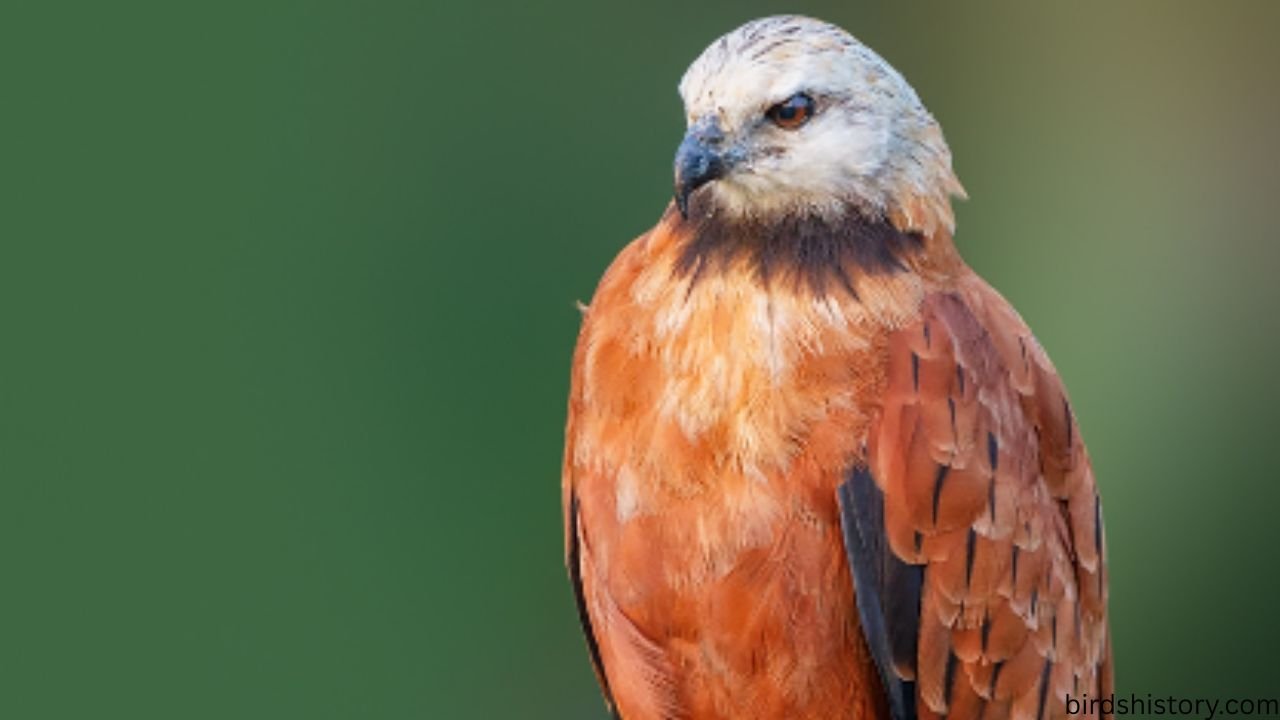
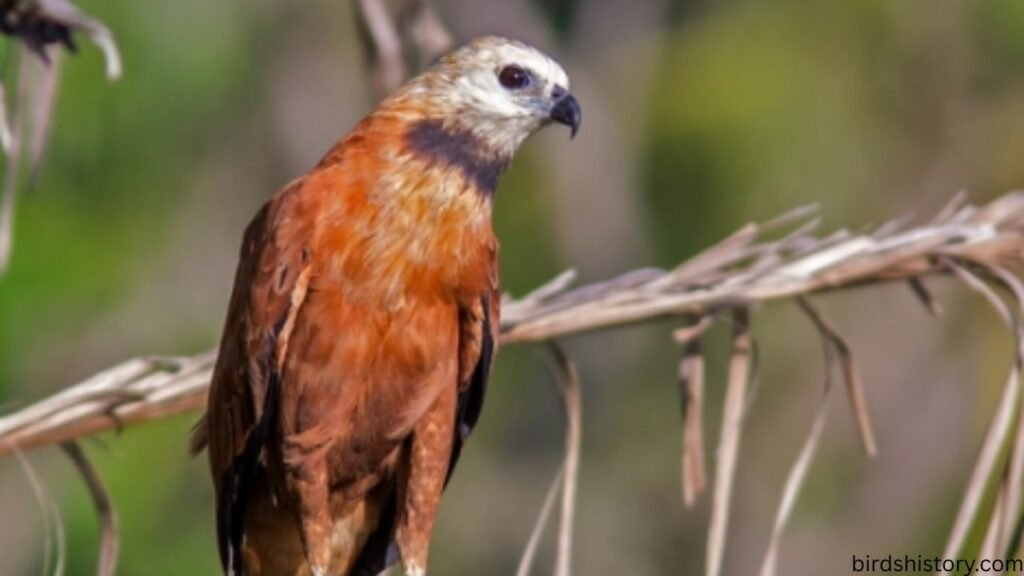
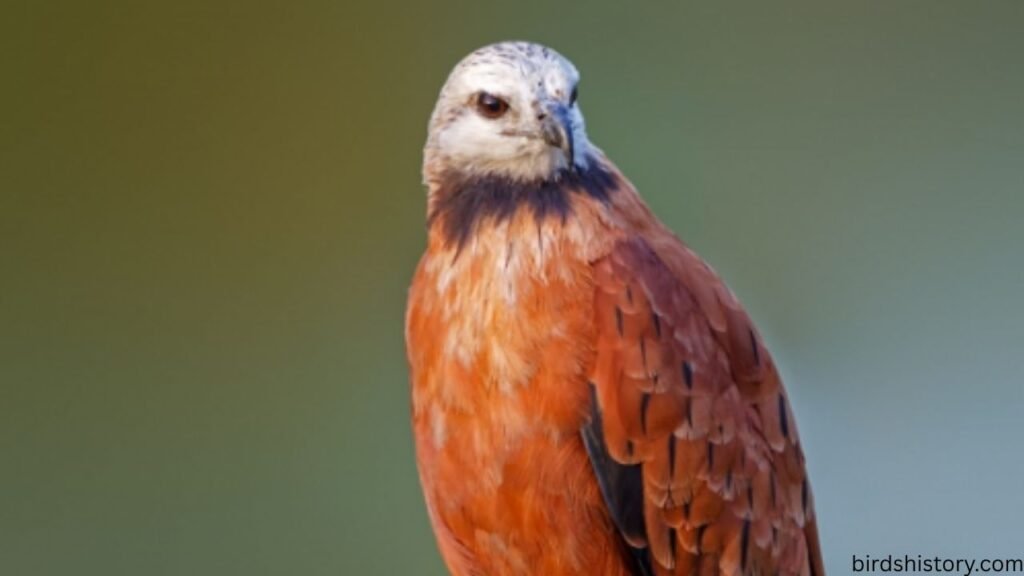
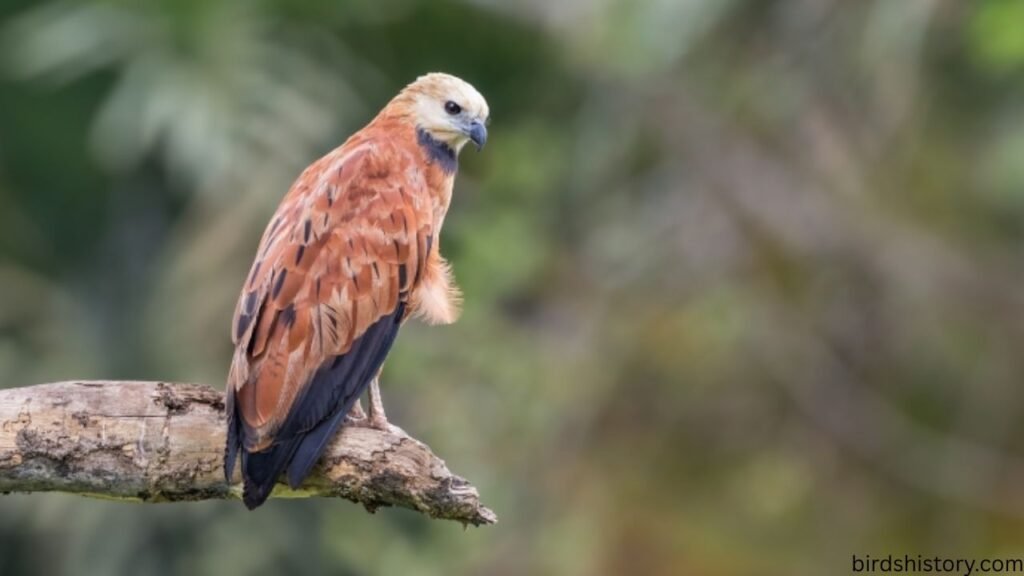
- Plumage: Its body is mostly rufous (reddish-brown) with a deep black collar around the neck, which gives the bird its name. The head is pale, almost creamy white, creating a dramatic contrast.
- Beak: Short, hooked, and black—perfect for tearing into prey.
- Wings: Broad and rounded, well-suited for slow glides and hovering near water.
- Tail: Short and square with a light band at the base.
Males and females look very similar, though females tend to be slightly larger. Juveniles, on the other hand, are darker overall and lack the striking black collar, which develops as they mature.
Habitat and Range
The Black Collared Hawk is native to the Neotropics and has one of the widest ranges among raptors.
- Geographic Range: From Mexico through Central America, across most of South America, all the way to northern Argentina and Uruguay.
- Preferred Habitats: This bird is closely tied to wetland ecosystems. It thrives around rivers, marshes, swamps, lakes, and mangroves. It avoids dense forests, preferring open areas near water where hunting is easier.
- Altitude Range: Usually found at low elevations (below 500 meters), but occasionally spotted at higher altitudes if water bodies are present.
- Migration: The Black Collared Hawk is mostly resident in its range, meaning it does not migrate long distances. However, it may make local movements depending on water levels and prey availability.
Its reliance on aquatic habitats highlights the importance of preserving wetlands, not only for biodiversity but also for specialized predators like this hawk.
Diet and Feeding Habits
What sets the Black Collared Hawk apart from many other raptors is its fish-based diet.
- Primary Diet: Fish make up the majority of its meals.
- Secondary Diet: Occasionally feeds on amphibians, insects, and small mammals when fish are scarce.
- Hunting Strategy: The hawk typically perches quietly on a tree branch near water, scanning the surface. Once it spots a fish, it swoops down in a quick, controlled dive. Unlike ospreys, which plunge into the water, the Black Collared Hawk usually grabs prey from just below the surface without fully submerging.
- Special Adaptation: Its talons are rough and ridged, giving it a better grip on slippery fish.
Interestingly, this hawk has been observed stealing fish from herons and other fishing birds—a behavior known as kleptoparasitism.
Behavior and Lifestyle
The Black Collared Hawk is not just a skilled fisher; it also displays unique behaviors that make it fascinating to observe.
- Social Structure: Generally solitary or seen in pairs. Rarely forms groups, except during migration movements in certain regions.
- Flight Style: Its flight is slow and deliberate, often described as graceful. It uses broad, rounded wings for gliding along rivers and marshes.
- Vocalizations: Its call is a loud, plaintive whistle that echoes through wetlands, especially during the breeding season.
- Daily Habits: Most active during the day (diurnal). It spends long periods perched quietly near water, conserving energy for sudden hunting bursts.
During the breeding season, pairs can become territorial, defending nesting sites with impressive aerial displays.
Reproduction and Lifespan
Like many raptors, the Black Collared Hawk follows a predictable but fascinating breeding cycle.
- Breeding Season: Varies depending on the region. In Central America, it often coincides with the dry season (December–May).
- Nesting: Nests are built in tall trees near water, often reusing old nests from previous years. The structure is bulky, made of sticks, and lined with softer materials.
- Eggs: Typically lays 1–2 eggs. Eggs are whitish with brown markings.
- Incubation: The female incubates for around 5 weeks while the male provides food.
- Chick Rearing: Both parents take part in feeding the young, bringing fish and small prey to the nest.
- Fledging: Chicks leave the nest at about 7–8 weeks old but remain dependent on their parents for some time.
- Lifespan: In the wild, they live around 12–15 years. In captivity, they can exceed 20 years with proper care.
Predators and Threats
Despite being a predator itself, the Black Collared Hawk faces challenges in the wild.
- Natural Predators: Eggs and chicks are vulnerable to snakes, monkeys, and larger birds of prey. Adults have few natural enemies but may occasionally be threatened by larger raptors.
- Environmental Threats:
- Habitat destruction: Wetland drainage and deforestation reduce available nesting and hunting areas.
- Pollution: Water pollution affects fish populations, directly impacting the hawk’s food supply.
- Climate change: Altered rainfall patterns and flooding cycles affect wetland ecosystems.
- Human Impact: Hunting is rare, but habitat loss from agriculture and urbanization poses a significant long-term threat.
Conservation Status
The International Union for Conservation of Nature (IUCN) currently lists the Black Collared Hawk as Least Concern. This is because it has a wide range and a relatively stable population.
However, local declines are noted in areas where wetlands are heavily degraded. Conservationists emphasize the importance of protecting river systems, mangroves, and floodplains not just for the hawk, but for the countless species that depend on these ecosystems.
Efforts such as wetland preservation projects and environmental awareness campaigns indirectly support the future of the Black Collared Hawk.
Interesting Facts
- It is one of the few hawks that primarily eat fish, making it somewhat of a specialist.
- Its wings are broad and rounded, allowing it to glide gracefully over water in a style that resembles ospreys.
- In some indigenous cultures, the hawk is seen as a symbol of patience and precision due to its hunting style.
- The Black Collared Hawk is monotypic—there’s only one species in its genus.
- Juveniles are so different in appearance that they are sometimes mistaken for another species until their collar develops.
Conclusion
The Black Collared Hawk is a bird that beautifully exemplifies both grace and the ability to adapt. From its rufous plumage and dramatic black collar to its fish-hunting expertise, it stands out as one of the most interesting raptors of the Americas.
By protecting wetlands and reducing pollution, we not only safeguard this unique bird but also ensure the survival of the ecosystems it calls home. Learning about species like the Black Collared Hawk reminds us of the delicate balance of nature and why conservation is worth the effort.
If you ever find yourself in Central or South America near a riverbank or swamp, keep your eyes open—you might just spot this graceful fisher perched silently, waiting for the perfect moment to strike.
FAQs
1. What is the scientific name of the Black Collared Hawk?
Its scientific name is Busarellus nigricollis.
2. Where can the Black Collared Hawk be found?
It ranges from Mexico through Central America and across much of South America, especially in wetlands and riversides.
3. What does the Black Collared Hawk mainly eat?
Its diet is dominated by fish, though it may also eat amphibians, insects, and small mammals.
4. How does the Black Collared Hawk catch fish?
It perches near water, spots prey, and swoops down to grab fish with its rough, textured talons.
5. Is the Black Collared Hawk endangered?
No, it is listed as Least Concern by the IUCN, though habitat loss poses risks.
6. How big is a Black Collared Hawk?
It measures about 46–56 cm in length with a wingspan of 105–120 cm.
7. Do male and female Black Collared Hawks look different?
No, they look very similar. Females are slightly larger on average.
8. How many eggs does it lay?
Usually 1–2 eggs per breeding season.
9. What is its lifespan?
In the wild, they live about 12–15 years. When kept in a controlled environment, these animals can have a lifespan of over two decades.
10. Why is it called the Black Collared Hawk?
Because of the bold black band (collar) around its neck, which contrasts with its reddish-brown body and pale head.