The Amazon Kingfisher: Jewel of South American Rivers
The Amazon Kingfisher (Chloroceryle amazona) is a bird that captivates with its dazzling green plumage, sharp fishing skills, and unmistakable presence along rivers and streams in Central and South America. Known for its patience and precision, this bird sits quietly on low branches before diving headfirst into the water to snatch its prey.
It’s not just its beauty that makes the Amazon Kingfisher fascinating—it’s also one of the largest members of the American kingfisher family. Watching one in action is like seeing a master fisherman at work, relying on keen eyesight and lightning-fast reflexes. And here’s a fun fact: unlike many birds where the male is the most striking, female Amazon Kingfishers sport bold chestnut bands across their bellies, making them just as eye-catching as their male counterparts.
Let’s take a deep dive into everything that makes this bird special: from its taxonomy and lifestyle to its cultural significance and conservation status.
Amazon Kingfisher Taxonomy / Classification
- Common Name: Amazon Kingfisher
- Scientific Name: Chloroceryle amazona
- Family: Alcedinidae
- Order: Coraciiformes
- Class: Aves
Also read: /the-black-collared-hawk/
The Amazon Kingfisher is part of the Alcedinidae family, the same family as all other kingfishers. It is a “green kingfisher” from the Americas, sharing a close relationship with the Ringed Kingfisher and Green Kingfisher.
Amazon Kingfisher Physical Description
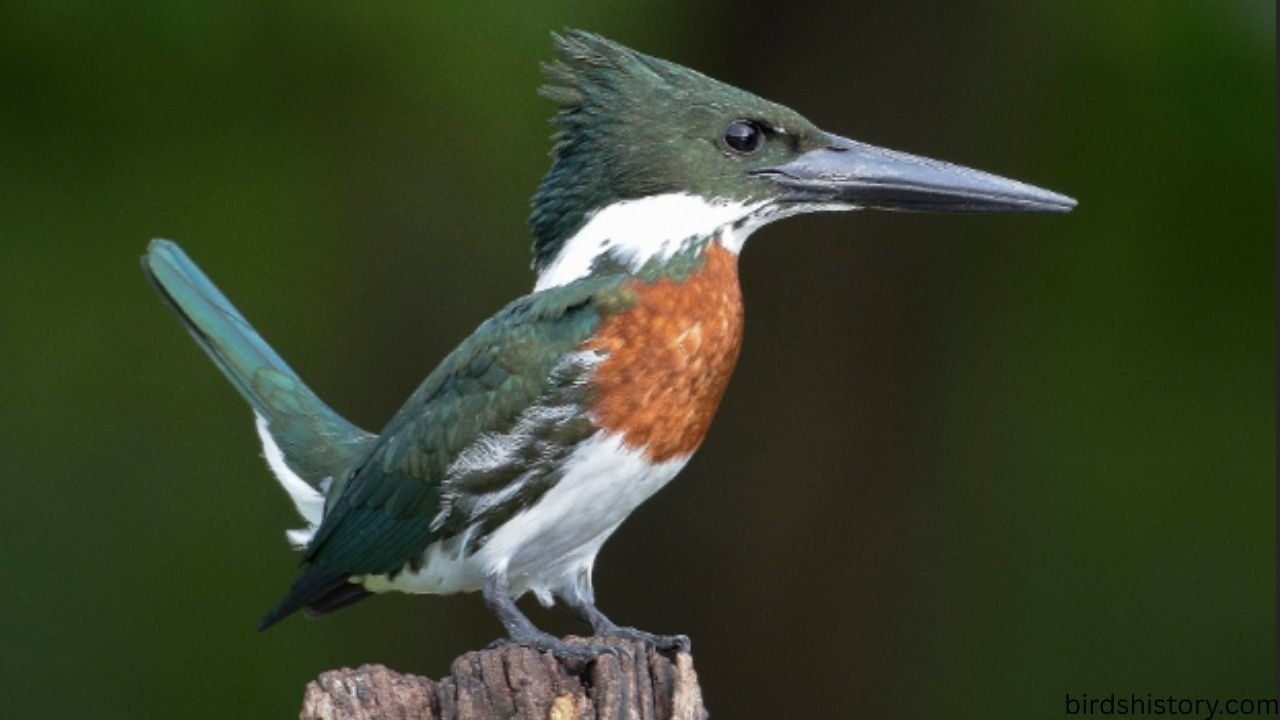
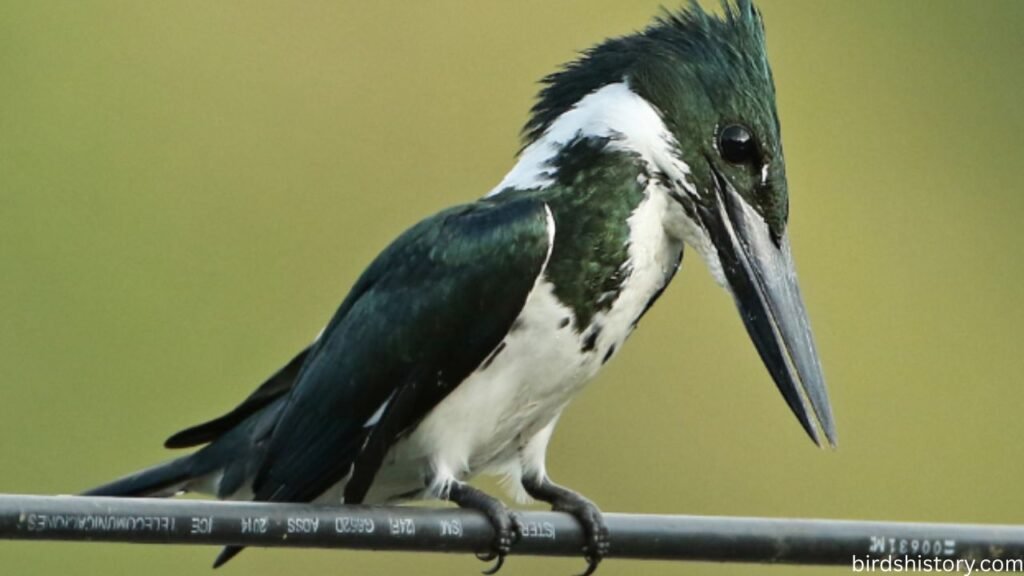
The Amazon Kingfisher is a medium-to-large kingfisher species and is easily identified by its vibrant coloring:
- Size: 29–30 cm (11–12 in) in length; weighs around 100–150 grams.
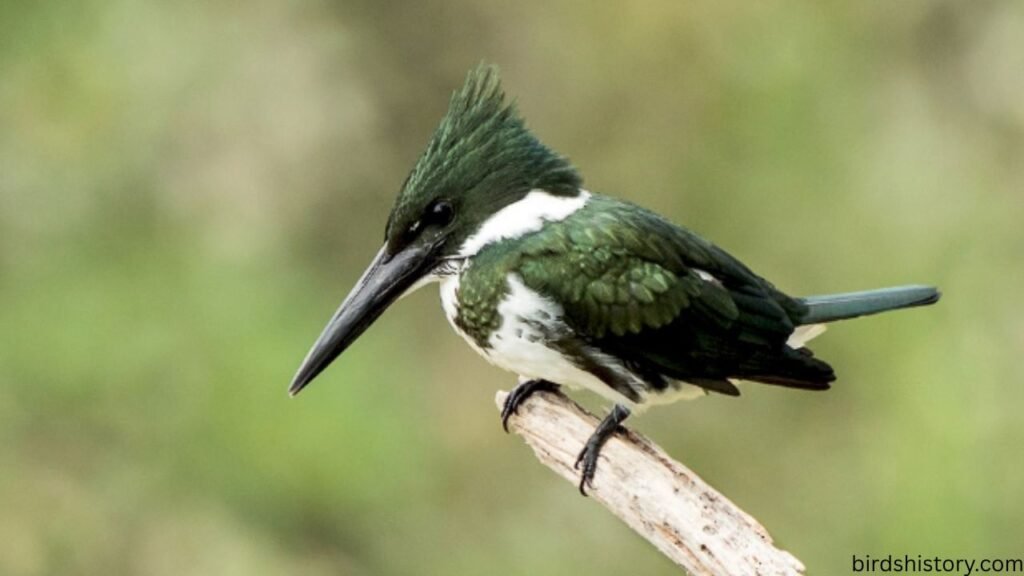
- Plumage: Shiny, metallic green on the back, head, and wings, giving it a jewel-like appearance.
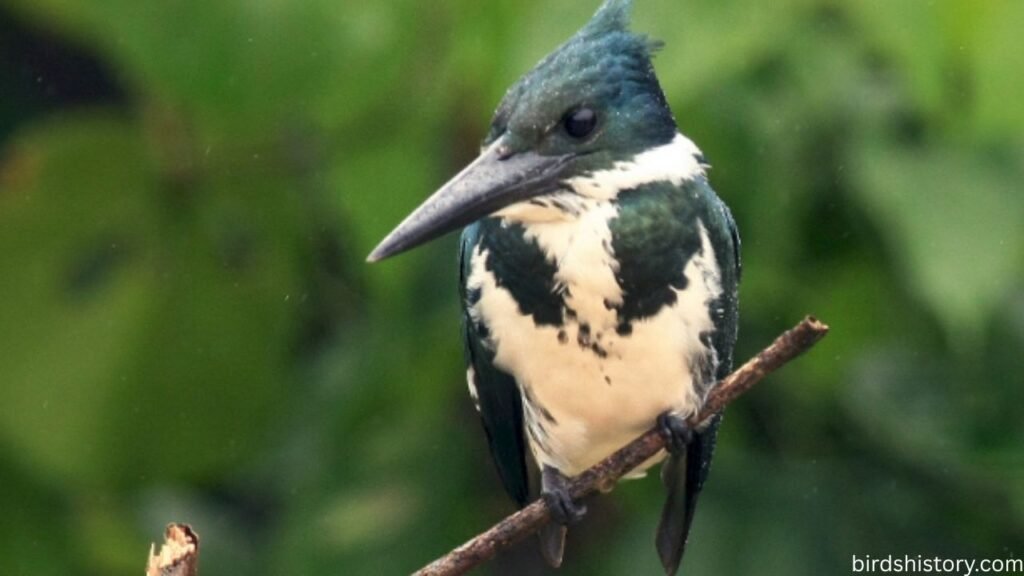
- Underparts: White on the throat and belly with distinctive markings that differ between sexes.
- Sexual Dimorphism:
- Male: Bright green upperparts with a broad, rufous (rusty-orange) chest band.
- Female: Similar to the male but with additional green spotting or bands across the flanks and breast.
- Beak: Long, straight, and dagger-like—perfectly designed for catching slippery fish.
- Wings and Tail: Broad wings allow for swift, direct flight, while the tail provides stability during dives.
- Eyes: Sharp vision that helps detect movement underwater.
At first glance, you might confuse it with the Green Kingfisher, but the Amazon Kingfisher is much larger, making it easier to identify.
Habitat and Range
The Amazon Kingfisher is found across Central and South America, thriving in tropical and subtropical regions:
- Geographic Range: From southern Mexico and Central America down to Argentina, with its highest populations in the Amazon Basin.
- Preferred Habitats:
- Slow-moving rivers and streams
- Lakes, ponds, and marshes
- Lowland tropical forests near freshwater sources
- Elevation: Usually below 900 meters (3,000 feet), though occasionally found higher.
- Migration: The Amazon Kingfisher is generally non-migratory, staying within its range year-round, though it may shift locally with changes in water levels.
This bird is highly dependent on healthy freshwater ecosystems, making it vulnerable to changes in water quality and habitat degradation.
Must Read:/the-horned-screamer-history/
Diet and Feeding Habits
As its name suggests, the Amazon Kingfisher is a fish specialist. Its diet, however, isn’t limited to fish—it occasionally eats crustaceans and aquatic insects.
- Primary Diet: Small fish like minnows, tetras, and catfish.
- Hunting Style:
- Perches silently on low branches or posts near water.
- Waits patiently until spotting movement below.
- Dives swiftly, using its strong beak to spear or grasp prey.
- Feeding Behavior: Once caught, the fish is taken back to a perch, where the bird beats it against the branch to kill it before swallowing headfirst.
This hunting method showcases both patience and efficiency, making the Amazon Kingfisher an apex hunter of small freshwater ecosystems.
Behavior and Lifestyle
- Social Behavior: The Amazon Kingfisher is mostly solitary or seen in pairs. It rarely forms large flocks.
- It flies swiftly and in a straight line, typically staying near the surface of rivers and lakes.
- Vocalizations: Its call is a harsh, rattling chatter, often given while flying. This distinguishes it from other quieter kingfishers.
- Territoriality: Highly territorial, especially during breeding season. Birds defend their fishing grounds aggressively.
- Mating Rituals: Courtship often involves the male presenting fish to the female, a behavior seen across many kingfisher species.
Its combination of stealth, agility, and aggressive defense makes it both an efficient predator and a bold bird to watch.
Reproduction and Lifespan
The Amazon Kingfisher’s breeding biology is fascinating:
- Breeding Season: Varies by region but often coincides with the rainy season when food is abundant.
- Nesting Sites: Excavates long tunnels in riverbanks, sometimes extending up to 1.5 meters (5 feet). At the end of this tunnel is a chamber where eggs are laid.
- Eggs: Usually 3–5 glossy white eggs.
- Incubation: Both parents take part, lasting about 22–24 days.
- Chick Development: Chicks are altricial (born helpless) and are fed regurgitated fish until they are strong enough to fledge.
- Parental Care: Both parents share feeding and protection duties.
- Lifespan: In the wild, it may live up to 6–10 years if it avoids predators and environmental threats.
Predators and Threats
Despite its strong hunting skills, the Amazon Kingfisher is not without threats:
- Natural Predators:
- Raptors like hawks and eagles
- Large snakes
- Mammals such as raccoons (which raid nests)
- Human-Related Threats:
- Pollution: Pesticides and chemicals in rivers reduce fish populations and contaminate food sources.
- Deforestation: Loss of riparian forests impacts nesting and feeding grounds.
- Water Pollution and Dams: Alter ecosystems, affecting prey availability.
While it isn’t a primary target for hunting, indirect human impacts pose significant long-term challenges.
Must Read: /the-northern-pintail-history/
Amazon Kingfisher Conservation Status
- IUCN Status: Least Concern (due to its wide distribution and stable population).
- Population Trends: Considered stable, though local declines are possible in areas with heavy deforestation or pollution.
- Conservation Efforts:
- Protected in many reserves across South America.
- Indirectly benefits from broader wetland and rainforest conservation programs.
Although not endangered, the Amazon Kingfisher’s reliance on healthy aquatic systems makes it a valuable indicator species for environmental health.
Interesting Facts About Amazon Kingfisher
- The Amazon Kingfisher holds the distinction of being the biggest green kingfisher found in the Americas.
- Females have bolder markings than males, a rare case of females being more decorated in birds.
- Their nesting tunnels can be so long that they take weeks to dig, often wearing down their beaks.
- Despite their bright colors, they blend surprisingly well into riverbank vegetation.
- They swallow fish whole, always headfirst, to avoid fins getting stuck.
- Their rattling call can be heard before the bird is even seen, especially as it darts low over rivers.
- They are excellent ecosystem indicators—where you find them, you usually find clean water and healthy fish populations.
Conclusion
The Amazon Kingfisher is a remarkable bird found along the waterways of South America. From its shimmering green plumage to its patient hunting style, it embodies both beauty and skill. As a solitary sentinel of rivers and lakes, it plays a vital role in controlling fish populations and signaling the health of aquatic ecosystems.
Learning about birds like the Amazon Kingfisher reminds us how deeply interconnected life is. Protecting the rivers and forests where this kingfisher thrives ensures not only the survival of the species but also the well-being of countless plants, animals, and even people who depend on these freshwater systems.
Whether you’re a birdwatcher, a traveler, or simply someone who loves nature, spotting an Amazon Kingfisher is an unforgettable experience. Its bold colors, sharp dives, and rattling calls make it one of the most remarkable birds of the tropics.
FAQs About Amazon Kingfisher
1. What is the Amazon Kingfisher’s scientific name?
Chloroceryle amazona.
2. Where can the Amazon Kingfisher be found?
From southern Mexico through Central America down into much of South America, especially the Amazon Basin.
3. How big is the Amazon Kingfisher?
It’s about 29–30 cm (11–12 in) long and weighs 100–150 grams.
4. What does the Amazon Kingfisher eat?
Primarily fish, but also crustaceans and aquatic insects.
5. How does Amazon Kingfisher catch its food?
It plunges headfirst into the water from a high spot, using its sharp beak to catch its prey.
6. What makes males and females different?
Males of this species have a wide chestnut-colored band, while females have extra green markings on their chest and sides.
7. How do Amazon Kingfishers nest?
They excavate extensive tunnels into riverbanks, with a nesting chamber located at the end.
8. What is Amazon Kingfisher lifespan?
Typically 6–10 years in the wild.
9. Are Amazon Kingfisher endangered?
No, the IUCN has categorized them as a species of Least Concern.
10. Why are Amazon Kingfisher important?
They help maintain ecological balance in rivers and serve as indicators of clean, healthy water systems.