Scarlet Macaw: The Colorful Treasure of the Rainforest
If there’s one bird that perfectly captures the essence of tropical rainforests, it’s the Scarlet Macaw. With its blazing red feathers, bold personality, and intelligence, this parrot isn’t just another bird—it’s a living symbol of the Amazon. Found mostly in Central and South America, Scarlet Macaws are admired worldwide for their beauty and vibrant presence in the wild.
Also read: /shoebill/
What makes them even more fascinating is their behavior. They’re not just pretty to look at—they’re also highly social, playful, and capable of mimicking human speech. One fun fact? TThese birds have an exceptionally long lifespan, living for decades and occasionally reaching ages of up to 70 years in captivity.
Let’s dive deep into the life of the Scarlet Macaw—covering its looks, habits, threats, and why it’s so important to protect this rainforest gem.
Taxonomy / Classification
- Common Name: Scarlet Macaw
- Scientific Name: Ara macao
- Family: Psittacidae
- Order: Psittaciformes
- Class: Aves
The Scarlet Macaw is part of the parrot family, which is known for intelligence, strong beaks, and social behaviors. Within its genus Ara, it shares close ties with other large macaws, like the Blue-and-yellow Macaw and Green-winged Macaw.
Physical Description
The Scarlet Macaw is an absolutely stunning bird from every angle. Here’s what makes its appearance unforgettable:
- Size: Typically 32 to 36 inches (81 to 91 cm) from head to tail. Its long tail makes up nearly half that length.
- Wingspan: Around 3 to 3.5 feet (90 to 100 cm).
- Weight: Their weight is between 2 and 3 pounds, which is about 900 to 1,350 grams.
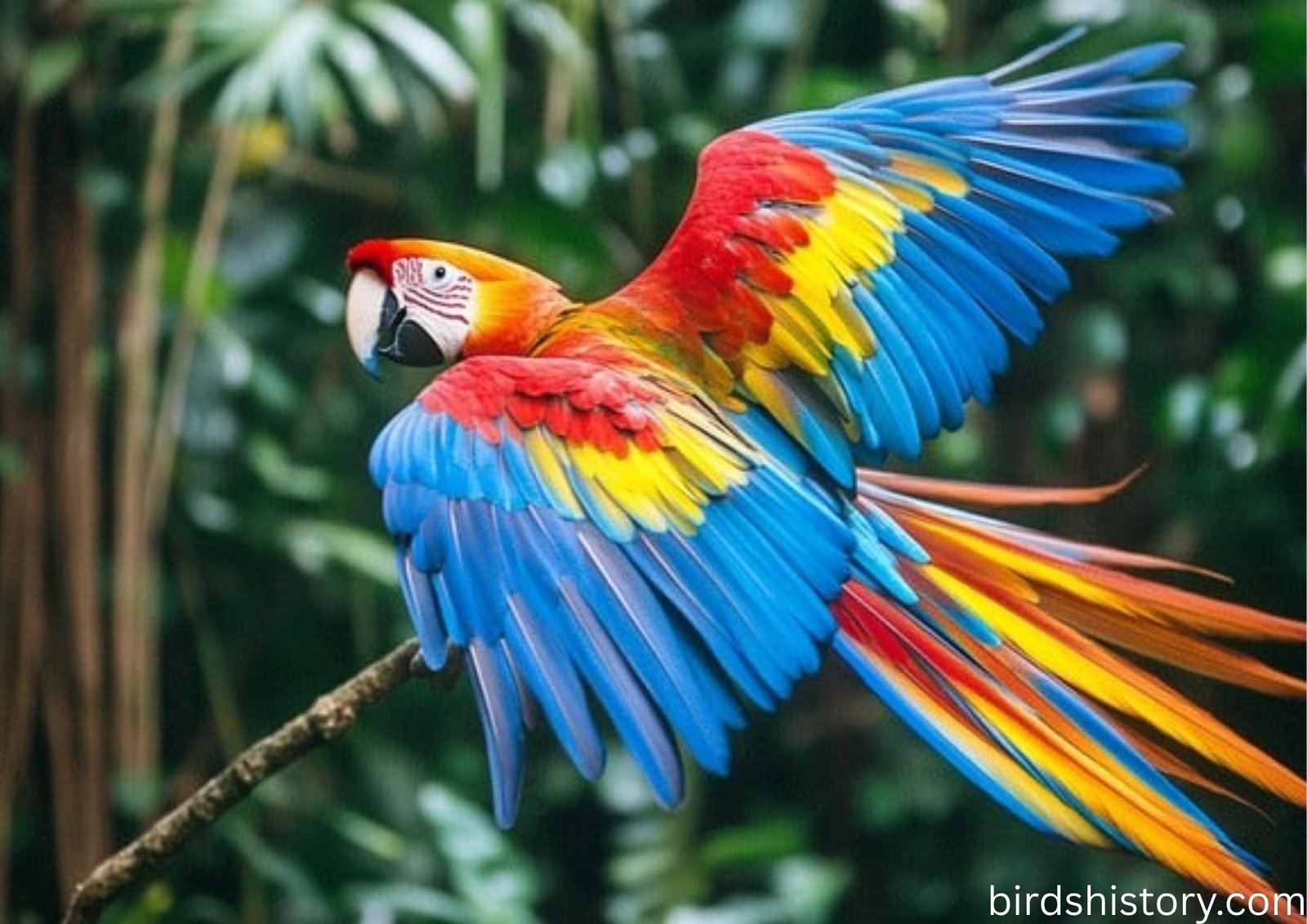
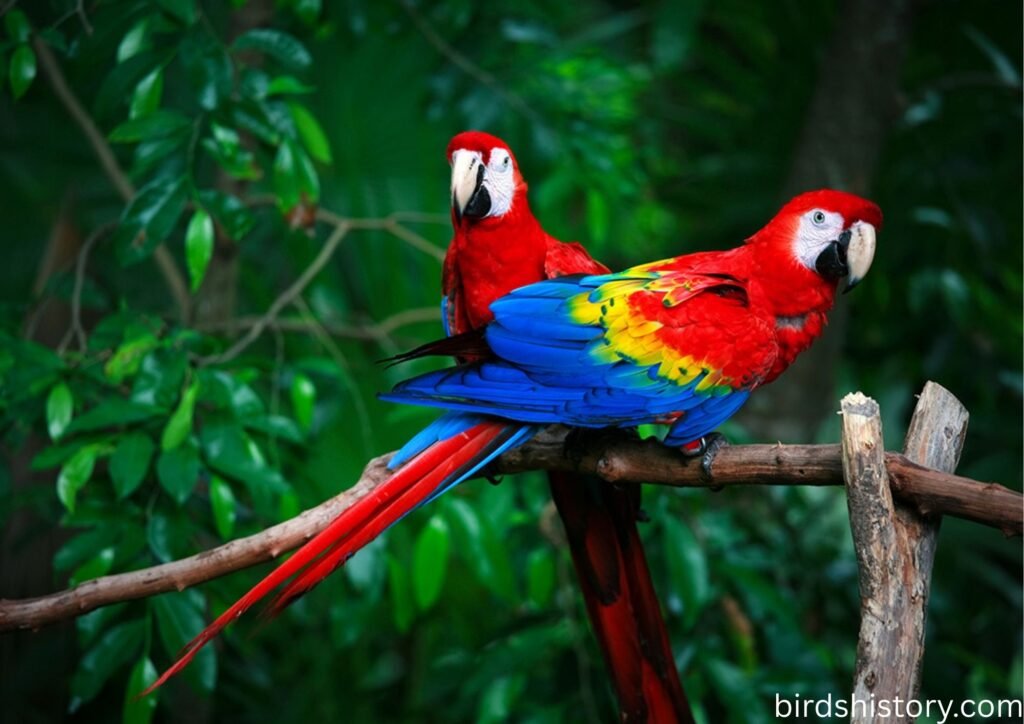
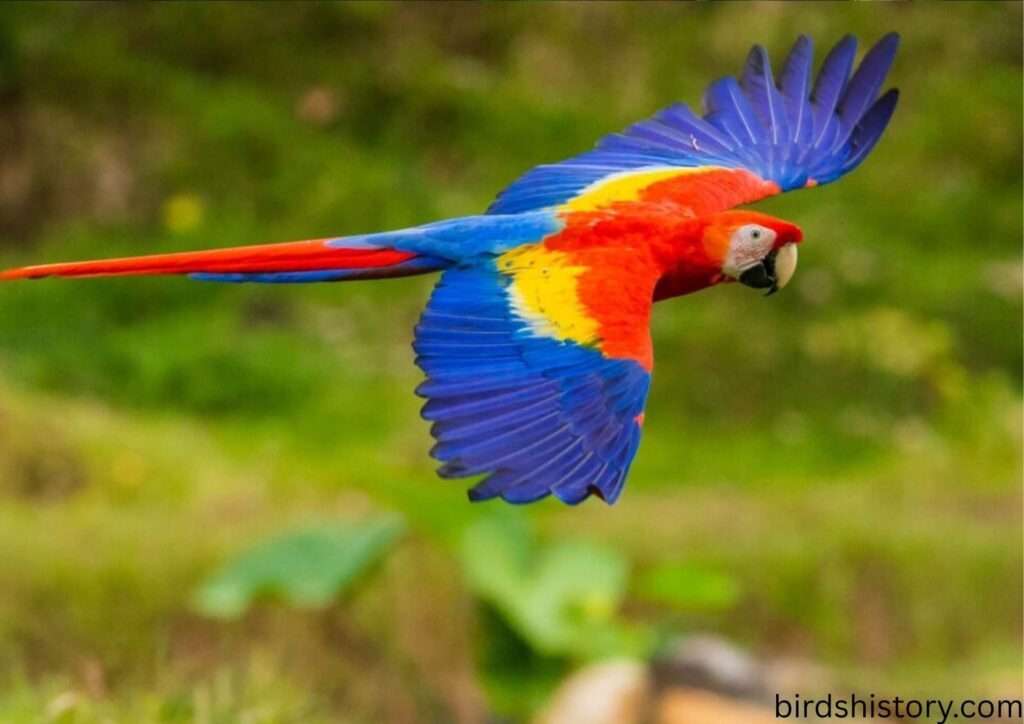
- Plumage: Bright scarlet feathers cover most of the body. The wings feature bold splashes of yellow and blue, creating a rainbow effect in flight.
- Beak: Large, hooked, and powerful—perfect for cracking hard nuts and seeds. The upper mandible is pale, while the lower is black.
- Eyes: Pale yellow with a white patch of bare skin around them.
- Male vs. Female: They look nearly identical, which makes telling them apart difficult without DNA testing.
- Unique Traits: That long, graceful tail and loud, raspy call make them impossible to mistake for any other bird.
The combination of fiery red, golden yellow, and cobalt blue feathers makes the Scarlet Macaw one of the most striking parrots on Earth.
Habitat and Range
The Scarlet Macaw’s native habitat is the tropical rainforests of Central and South America. Its range stretches from:
- The birds’ range in Central America includes southern Mexico, Guatemala, Honduras, Nicaragua, Costa Rica, and Panama.
- South America: Colombia, Ecuador, Peru, Bolivia, Venezuela, and Brazil.
Preferred Environments
- Dense tropical rainforests and humid lowlands.
- These birds are found at elevations reaching up to 1,500 meters (4,900 feet).
- Common along river edges, open woodlands, and savanna areas near forests.
Scarlet Macaws do not typically migrate long distances but may move locally in search of food depending on the season.
Diet and Feeding Habits
The Scarlet Macaw’s strong beak isn’t just for show—it’s designed for a varied diet.
- Main Foods: Fruits, nuts, seeds, berries, and flowers.
- Special Feeding Behavior: They are often seen eating clay from riverbanks. This “geophagy” neutralizes toxins found in some fruits and seeds, acting like a natural antacid.
- Foraging: They typically feed in the morning and late afternoon, traveling in pairs or small groups.
This combination of a plant-based diet and mineral-rich clay helps keep them healthy and allows them to digest foods that would otherwise be harmful.
Behavior and Lifestyle
In the wild, Scarlet Macaws are some of the most captivating birds to observe.
- Social Structure: They are highly social, usually seen in pairs or small flocks. Large groups may gather around clay licks or roosting sites.
- Flight Style: Strong and graceful fliers. Their wings beat slowly but powerfully, making them easily identifiable.
- Vocalizations: Loud, squawking calls that can carry for miles. Their voices help them stay in touch with flock members.
- Intelligence: Known for problem-solving skills, mimicry, and playfulness. In captivity, they can learn words and tricks.
- Mating Rituals: Scarlet Macaws are monogamous. Pairs stay bonded for life, often flying side by side.
Their bond and cooperative behaviors make them one of the most admired parrot species.
Reproduction and Lifespan
- Breeding Season: Varies by region but generally from January to April.
- Nesting Sites: High tree cavities, often in large, mature rainforest trees.
- Eggs: Usually 2–3 eggs per clutch.
- Incubation: Around 24–28 days, with the female doing most of the brooding.
- Chick Development: Chicks are dependent for several months, fledging around 3–4 months of age. Parents often raise only one or two chicks successfully.
- Lifespan:
- In the wild: 40–50 years.
- With proper care, a Scarlet Macaw can live for up to 70 years in captivity.
This long lifespan makes them both rewarding and challenging to keep as pets, which unfortunately fuels the illegal trade.
Predators and Threats
Natural Predators
- Eagles, hawks, and large snakes occasionally prey on eggs or chicks.
Human-Driven Threats
- Deforestation: Loss of rainforest habitat due to logging and agriculture.
- Illegal Wildlife Trade: Scarlet Macaws are often captured for the exotic pet market.
- Hunting: In some regions, they are hunted for feathers or meat.
Their dependence on old-growth trees for nesting makes them especially vulnerable to habitat destruction.
Conservation Status
- IUCN Status: Listed as Least Concern, but populations are declining in many areas due to habitat loss and trapping.
- CITES: Protected under Appendix I, which prohibits international trade of wild-caught individuals.
- Conservation Efforts:
- Breeding programs in zoos.
- Protected areas in Central and South America.
- Eco-tourism projects that encourage locals to protect habitats rather than exploit them.
In regions like Costa Rica and Peru, Scarlet Macaws have become a flagship species for rainforest conservation.
Interesting Facts
- Scarlet Macaws are one of the largest parrot species in the world.
- When flying over long distances, they can reach speeds of 35 miles per hour.
- Their loud calls are not just noise—they help macaws identify each other from afar.
- Pairs are often seen grooming each other, a behavior known as allopreening, which strengthens their bond.
- They have been admired since ancient times. Indigenous peoples of the Americas often featured Scarlet Macaws in art and mythology as symbols of power, fertility, and the sun.
Conclusion / Summary
The Scarlet Macaw is much more than just a beautiful creature. It’s a vital part of the rainforest ecosystem, dispersing seeds and helping forests regenerate. With its vibrant colors, long lifespan, and intelligent personality, it’s no wonder this bird has fascinated humans for centuries.
But its beauty has also made it vulnerable. Habitat loss and the illegal pet trade continue to threaten wild populations. Supporting conservation projects and raising awareness are crucial steps to ensure these birds continue to thrive in the wild.
Protecting the Scarlet Macaw isn’t just about saving a bird—it’s about safeguarding the biodiversity of entire rainforests.
FAQs
1. Where do Scarlet Macaws live?
They are found in Central and South America, mainly in tropical rainforests.
2. What do Scarlet Macaws eat?
They eat fruits, nuts, seeds, berries, flowers, and even clay from riverbanks.
3. How long do Scarlet Macaws live?
In their natural habitat, they can live for as long as 50 years, while those in captivity may reach up to 70 years of age.
4. Are Scarlet Macaws endangered?
They are listed as Least Concern but face threats from habitat loss and illegal trade.
5. Can Scarlet Macaws talk?
Yes, they can mimic human speech and sounds, though not as clearly as some other parrot species.
6. Why do Scarlet Macaws eat clay?
The clay neutralizes toxins from unripe fruits and seeds.
7. Do Scarlet Macaws mate for life?
Yes, they form lifelong monogamous bonds.
8. How big are Scarlet Macaws?
They can reach up to 36 inches long with a wingspan of over 3 feet.
9. How do they fit into their ecosystem?
They disperse seeds, helping regenerate rainforest plants.
10. Are Scarlet Macaws good pets?
While beautiful and intelligent, they require decades of care, specialized diets, and lots of space, making them unsuitable for most households.