The Elegant Pied Avocet: A Graceful Wader of the Wetlands
Few birds combine beauty, elegance, and ecological importance quite like the Pied Avocet. With its striking black-and-white plumage and gracefully upturned bill, this wader is a delight for birdwatchers and conservationists alike. It’s often seen striding through shallow wetlands, sweeping its bill side to side in search of food.
The Pied Avocet is not only admired for its looks but also for its role as a symbol of bird conservation in the UK. Once nearly extinct in Britain, the species made a dramatic comeback thanks to targeted conservation efforts, and it now stands as a success story for wetland protection.
A fun fact: the Pied Avocet’s bill curves upward, which is rare among birds. This unique adaptation makes it an expert at skimming tiny invertebrates from shallow waters.
In this article, we’ll take a deep dive into everything about the Pied Avocet — from its classification and physical traits to its lifestyle, conservation journey, and fascinating facts.
Pied Avocet Taxonomy / Classification
The Pied Avocet belongs to a unique group of waders with specialized feeding adaptations. Here’s its scientific breakdown:
- Common Name: Pied Avocet
- Scientific Name: Recurvirostra avosetta
- Family: Recurvirostridae
- Order: Charadriiformes
- Class: Aves
Also read: /the-purple-swamphen/
The family Recurvirostridae also includes stilts, which are long-legged waders. The genus name Recurvirostra means “curved beak,” perfectly describing the bird’s defining feature.
Pied Avocet Physical Description
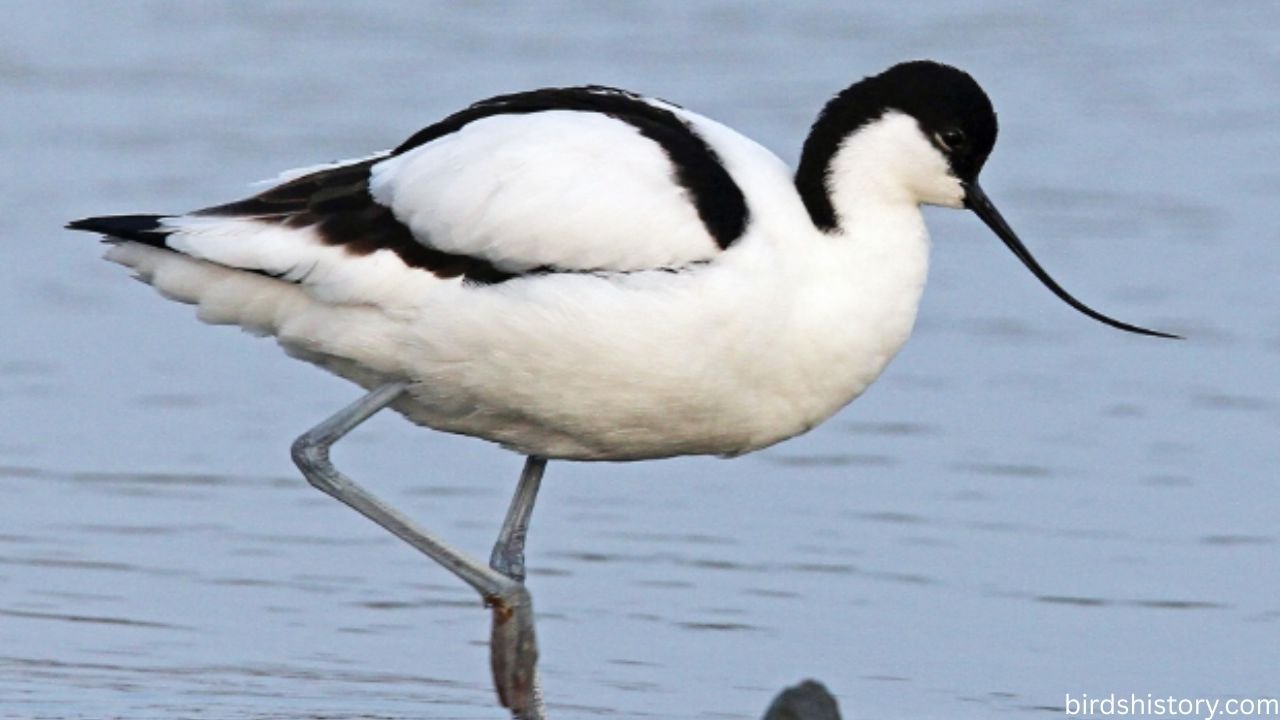
The Pied Avocet is one of the most elegant waders in the world. Its appearance is both simple and striking:
- Size: 16–18 inches (42–45 cm) in length.
- Wingspan: About 28–31 inches (68–77 cm).
- Weight: Roughly 10–15 ounces (280–420 grams).
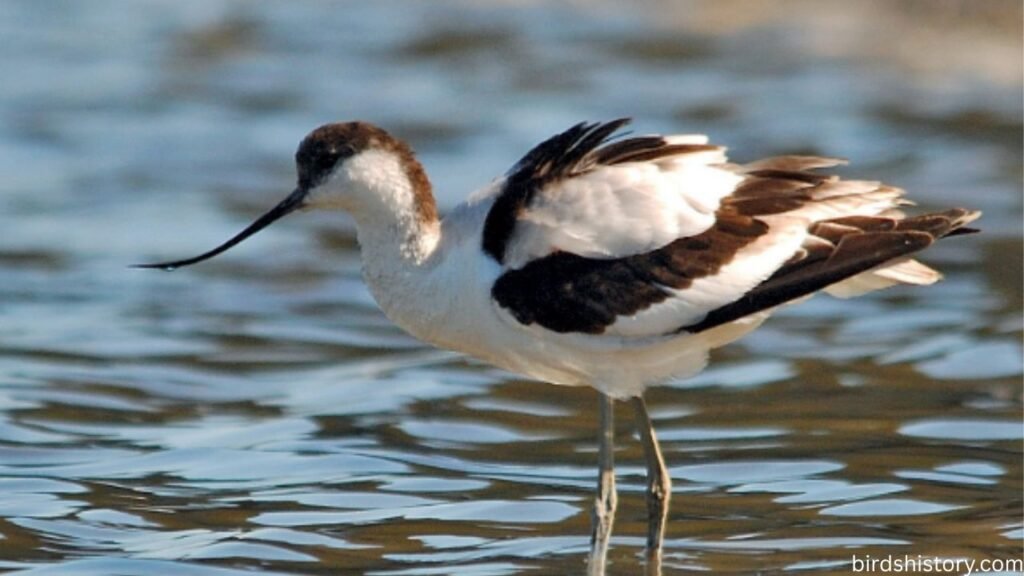
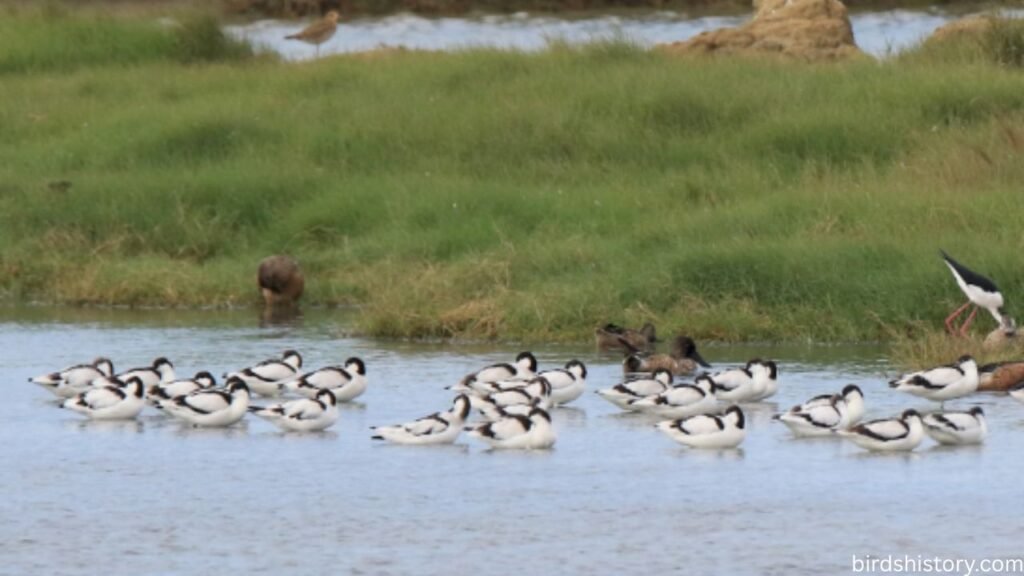
- Plumage: Pure white body with bold black markings on the back, wings, and crown. The sharp contrast gives it a “pied” or patched look.
- Bill: Long, thin, and curving upwards. Unlike most waders that probe straight down, the Avocet sweeps its bill side to side like a scythe.
- Legs: Long, slender, and bluish-gray, adapted for wading in shallow waters.
- Tail: Short and square.
- Sex Differences: Males and females look very similar, though females sometimes have slightly more pronounced curves in their bills.
- Juveniles: Paler overall, with buff tones replacing some of the bold black and white.
Their graceful look, combined with their unique feeding style, makes them instantly recognizable.
Habitat and Range of Pied Avocet
The Pied Avocet is strongly tied to wetlands, mudflats, and coastal lagoons. Its distribution is impressive, stretching across parts of Europe, Asia, and Africa.
Preferred Habitats
- Shallow coastal lagoons
- Salt marshes and estuaries
- Inland lakes with exposed mudflats
- Saline or brackish wetlands
Range
- Breeding Range: Found in parts of Europe (especially the Netherlands, UK, France, Spain), central Asia, and eastern Russia.
- Wintering Grounds: Migrates to southern Europe, Africa, the Middle East, and South Asia.
- UK Presence: Once extinct in Britain, it recolonized in the mid-20th century and is now found mainly in East Anglia and along the south coast.
Migration
Pied Avocets are partial migrants. Northern populations travel long distances to warmer climates in winter, while some southern groups remain year-round.
Pied Avocet Diet and Feeding Habits
The Pied Avocet is a specialist feeder with a technique as elegant as its appearance.
- Main Diet: Aquatic invertebrates, small crustaceans, worms, insects, and larvae. Occasionally tiny fish.
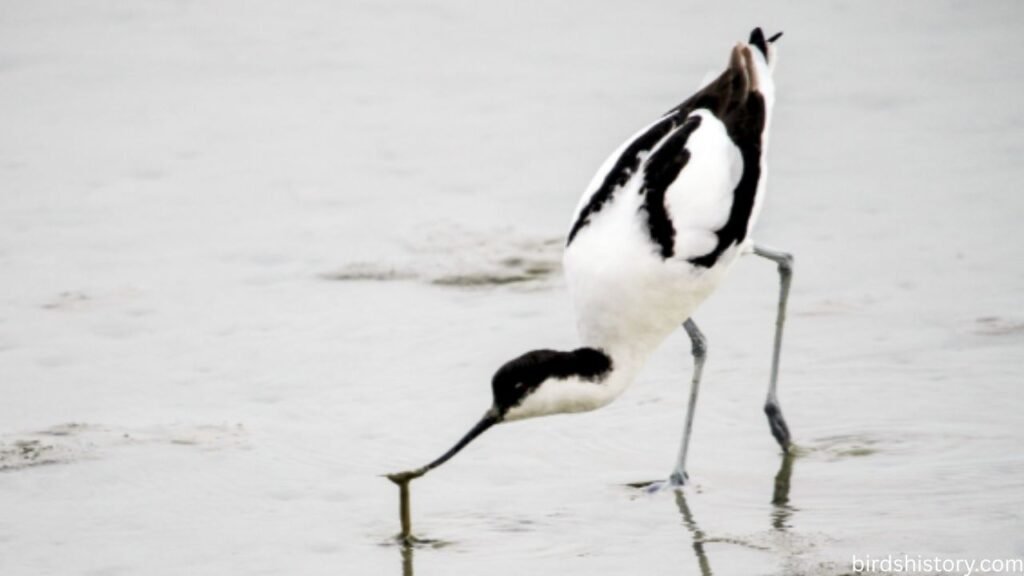
- Feeding Style: Uses its long, curved bill to sweep side to side in shallow water. This scything motion stirs up prey, which is then quickly snapped up.
- Foraging Habitat: Prefers mudflats, saline lagoons, and shallow estuaries where invertebrate life is abundant.
- Feeding Behavior: Often feeds in small groups, which helps stir up more prey.
This sweeping technique sets it apart from other waders that usually probe straight down into mud.
Behavior and Lifestyle of Pied Avocet
The Pied Avocet is social, elegant, and surprisingly bold when it comes to protecting its young.
- Social Behavior: Often seen in flocks, especially outside of the breeding season. Large numbers gather on mudflats during migration.
- Flight: Strong and graceful, with bold black and white wing patterns visible in flight.
- Calls: Loud, sharp “kluit” or “kleep” calls, often given in rapid series, especially when alarmed.
- Breeding Behavior: Known for aggressive defense of nesting colonies, with adults mobbing predators such as gulls and crows.
- Mating Rituals: Courtship involves synchronized displays, where pairs bow, preen, and walk side by side before mating.
Their combination of elegance and boldness makes them captivating birds to observe.
Reproduction and Lifespan of Pied Avocet
- Breeding Season: Late spring through summer, varying by region.
- Nesting Sites: Colonies often form on open, bare ground near shallow water, such as islands or saltmarsh flats.
- Nest: A shallow scrape lined with grass or shells.
- Eggs: Typically 3–4 pale greenish or buff eggs, speckled with dark spots.
- Incubation: Around 23–25 days, shared by both parents.
- Chicks: Precocial — they hatch covered in down and can walk and feed themselves within hours. Parents, however, guide and defend them.
- Fledging: Young can fly at about 35–42 days.
- Lifespan: Average of 9–10 years in the wild, though some live longer.
Predators and Threats
Like many wetland birds, the Pied Avocet faces both natural predators and human-driven threats.
Natural Predators
- Gulls, crows, and raptors targeting eggs and chicks.
- Foxes and other mammals preying on colonies.
Environmental Threats
- Loss of wetlands due to agriculture, development, and drainage.
- Climate change leading to sea-level rise and altered wetland habitats.
- Pollution and chemical runoff affecting aquatic life.
Human Impact
- Disturbance from recreational activities near nesting colonies.
- Historical hunting pressures in some regions.
Pied Avocet Conservation Status
The Pied Avocet is a conservation success story in some regions, but challenges remain.
- IUCN Red List Status: Listed as Least Concern, thanks to its wide range and large global population.
- Population Trend: Stable or increasing in many areas, particularly Europe, due to active conservation.
- Conservation Efforts:
- Protection of wetlands through reserves and protected areas.
- Breeding colonies monitored and guarded against predators.
- Symbolic role: In the UK, the Pied Avocet is the emblem of the Royal Society for the Protection of Birds (RSPB), highlighting its importance to conservation.
Interesting Facts About the Pied Avocet
- Its name “avocet” comes from an Italian word avosetta, first recorded in the 17th century.
- The upward-curved bill is unique among European waders.
- Pied Avocets often perform “broken-wing displays” to distract predators away from nests.
- They were once extinct in the UK but recolonized after World War II, aided by new coastal reserves.
- Their bold black and white plumage makes them look almost formal, as if dressed for a gala.
- Flocks can number in the thousands during migration stopovers.
- They are considered indicator species for wetland health.
- They have partially webbed feet, which help them wade and swim.
- In some cultures, they are admired as symbols of grace and resilience.
- Avocets are highly vocal when alarmed, creating a noisy chorus around nesting colonies.
Conclusion
The Pied Avocet is more than just a pretty bird. It is a living symbol of wetland conservation and ecological resilience. Its striking appearance, graceful feeding style, and successful conservation comeback make it one of the most admired waders in the world.
Learning about the Pied Avocet reminds us of the importance of protecting wetlands — habitats that support countless species while also safeguarding human communities through flood control and water purification.
Next time you’re near a mudflat or lagoon, keep an eye out for this striking black-and-white bird sweeping its bill through the shallows. The sight of a Pied Avocet in action is a reminder of nature’s elegance and the power of conservation.
FAQs About Pied Avocet
1. What is the scientific name of the Pied Avocet?
Recurvirostra avosetta.
2. Why is the Pied Avocet’s bill curved upward?
The upturned bill helps it sweep through shallow water to catch tiny invertebrates.
3. Where can I see Pied Avocets?
They are commonly seen in wetlands, mudflats, and lagoons across Europe, Asia, and parts of Africa.
4. Are Pied Avocets migratory?
Yes, northern populations migrate to warmer regions during winter, while some remain year-round in southern areas.
5. What do Pied Avocets eat?
They feed mainly on aquatic invertebrates, small crustaceans, and insect larvae.
6. How do Pied Avocets protect their nests?
They nest in colonies and aggressively mob predators, often performing distraction displays.
7. How long do Pied Avocets live?
On average, around 9–10 years in the wild.
8. Why are Pied Avocets important for conservation?
They are indicators of wetland health and symbolize successful conservation efforts.
9. Were Pied Avocets ever extinct in Britain?
Yes, they disappeared in the 19th century but recolonized in the 1940s and are now thriving.
10. What is the conservation status of the Pied Avocet?
Globally, they are listed as Least Concern, though wetland loss remains a threat.