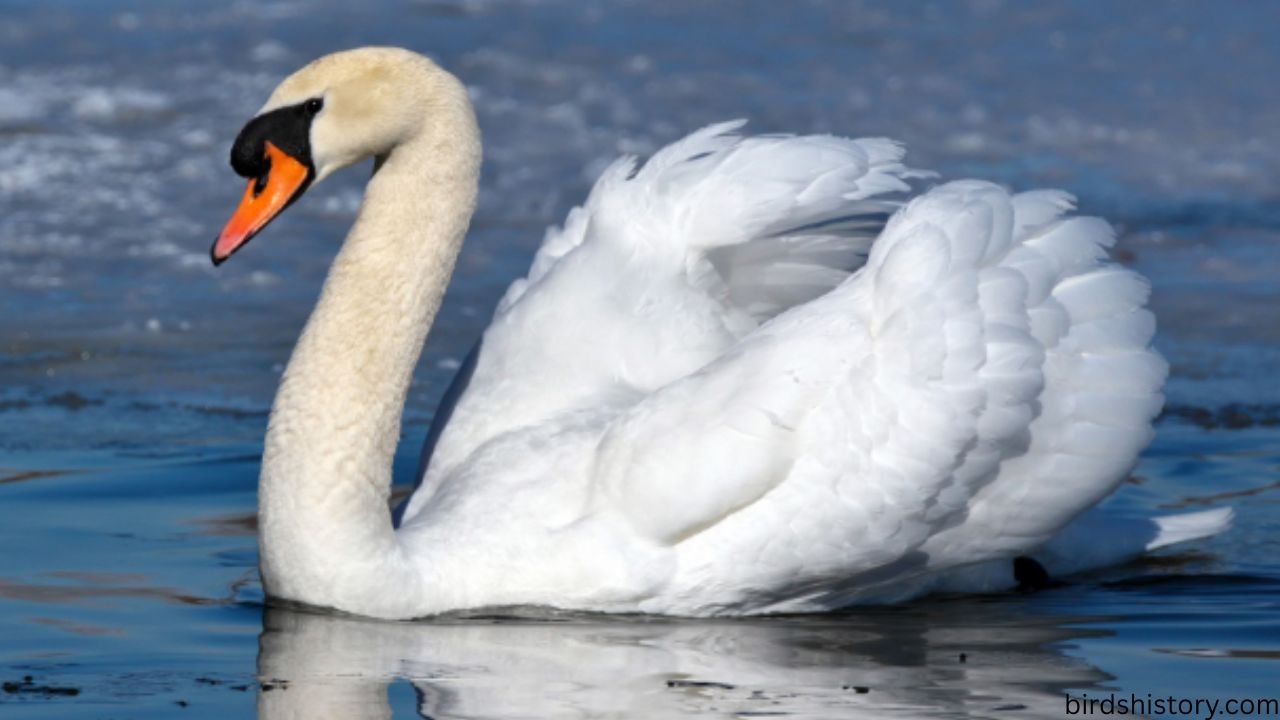
The Mute Swan: Graceful Guardian of Lakes and Rivers
Few birds embody grace and majesty as powerfully as the Mute Swan (Cygnus olor). For centuries, the mute swan’s majestic white wings, long curved neck, and peaceful glide have made it a subject of inspiration in art, literature, and legends. From European folklore to ballet stages in Swan Lake, it remains a universal symbol of beauty, love, and loyalty.
Interestingly, despite its name, the Mute Swan is not completely silent. While it is quieter than other swan species, it communicates through hisses, grunts, and wing beats that can be surprisingly loud. This bird’s unique combination of elegance and strength has made it one of the most identifiable waterfowl species globally.
Today, mute swans thrive across Europe, parts of Asia, and even in North America, where they were introduced and have become naturalized. One fun fact: a flying mute swan’s wingbeats can be heard from more than 20 meters away, sounding like soft helicopter blades cutting through the air.
Mute Swan Taxonomy / Classification
Every species has its scientific place in the avian world. Here’s how the mute swan is classified:
- Common Name: Mute Swan
- Scientific Name: Cygnus olor
- Family: Anatidae (ducks, geese, swans)
- Order: Anseriformes
- Class: Aves
Also read: /the-northern-pintail-history/
Within the genus Cygnus, mute swans are closely related to whooper swans, trumpeter swans, and tundra swans. They are distinguished by their orange bill and the knob-like structure above it, which is absent in other swan species.
Mute Swan Physical Description
The mute swan, one of the world’s largest flying birds, is considered beautiful due to its impressive size and elegant form.
- Length: 125–170 cm (49–67 inches)
- Wingspan: 200–240 cm (79–94 inches)
- Weight: 8–12 kg (17–26 lbs), with males sometimes reaching 15 kg (33 lbs).
Key Features
- Plumage: Pure white feathers, though cygnets (young swans) are gray or brown before turning white.
- Neck: Long and curved in an elegant “S” shape.
- The beak is orange and features a notable black knob at its base.
- Legs and Feet: Dark gray to black, webbed for efficient swimming.
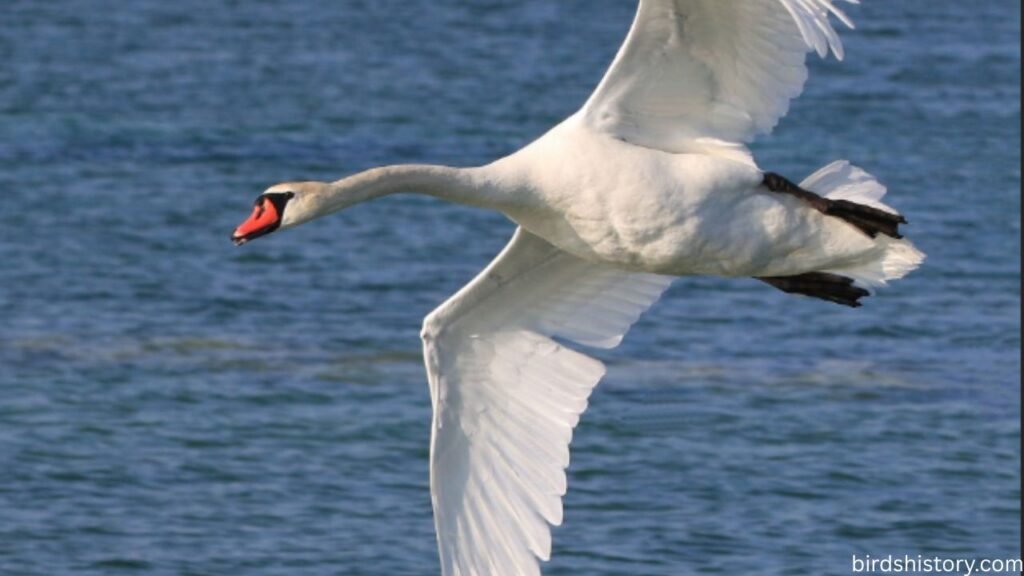
- Flight: Slow, powerful wingbeats with a distinctive sound.
Male vs Female
- Males (cobs) are larger and have a more pronounced black knob above the bill.
- Females (pens) are slightly smaller and less bulky.
This sexual dimorphism is subtle but noticeable to trained observers.
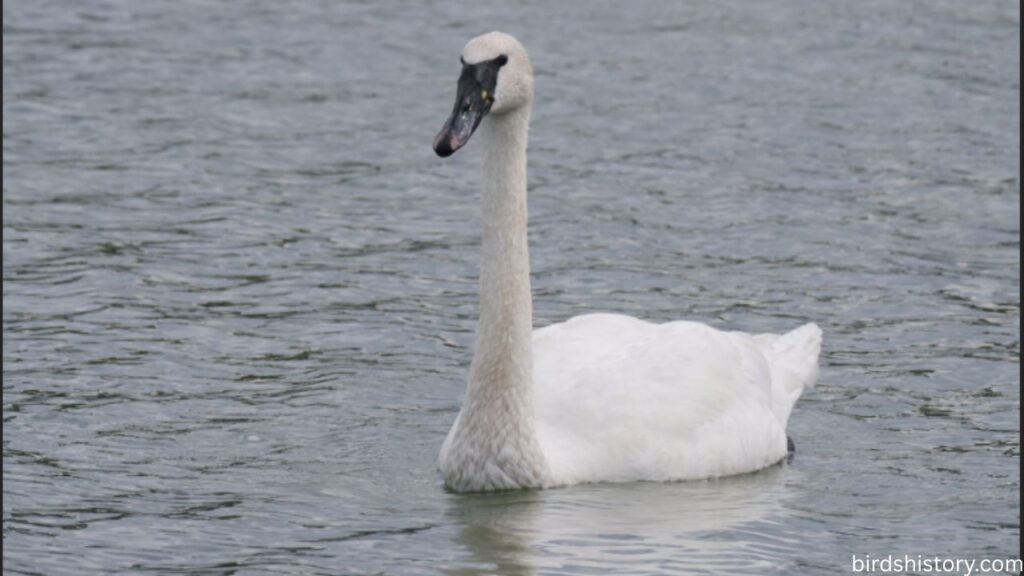
Habitat and Range of Mute Swan
The mute swan has a broad distribution, thriving in both native and introduced ranges.
- Native Range: Europe, parts of Asia, and North Africa.
- Introduced Range: North America (particularly the Great Lakes and northeastern U.S.), Australia, and New Zealand.
- Preferred Habitats:
- Freshwater lakes, rivers, and ponds.
- Estuaries and coastal lagoons.
- Urban parks and ornamental lakes.
Unlike migratory swans, mute swans are generally sedentary or only make short seasonal movements, especially in milder climates. Populations in colder northern regions may shift southward when ice covers breeding waters.
Diet and Feeding Habits
Mute swans are primarily herbivores, though they occasionally eat small aquatic animals.
- Plant-based foods: Aquatic vegetation, submerged grasses, pondweeds, algae.
- Animal-based foods: Small insects, mollusks, tadpoles, and occasionally small fish.
Feeding Behavior
- They dabble and upend in shallow water, reaching up to 1 meter below the surface with their long necks.
- They graze on land, especially in agricultural fields during winter.
- A single swan can eat up to 4 kg (9 lbs) of vegetation per day, making them highly influential in shaping wetland ecosystems.
Behavior and Lifestyle
Mute swans are known for their regal yet sometimes aggressive demeanor.
- Social structure:
- They are commonly observed in groups of two or with their families.
- Outside breeding season, they may form flocks, especially juveniles.
- Flight style:
- Requires a long “runway” of water for takeoff.
- Once airborne, they fly strongly with necks outstretched.
- Vocalizations:
- These swans are generally quieter than other types of swans, but they can still make sounds like hisses, snorts, and grunts.
- Wingbeats produce a distinctive whooshing sound.
- Mating rituals:
- Courtship displays include synchronized swimming and mutual neck arching.
- Known for forming monogamous, long-term pair bonds.
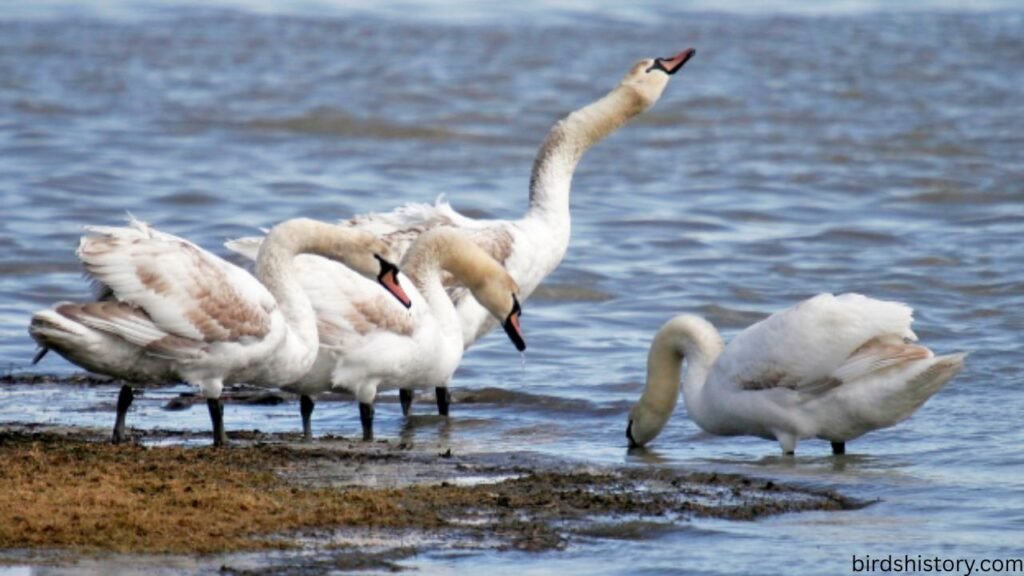
Mute Swan Reproduction and Lifespan
Breeding Season
- Starts in April–May in temperate regions.
- Swans frequently come back to the same location to build their nests each year.
Nesting
- Nests are huge mounds of reeds and grasses near water’s edge.
- Both male and female contribute to nest-building.
Eggs
- Clutch size: 5–7 eggs.
- Color: Pale blue-green to gray.
- Incubation: About 35–38 days, done mainly by the female while the male guards aggressively.
Lifespan
- Wild: 10–15 years on average.
- Captivity: Up to 25–30 years.
Predators and Threats
While adult mute swans are large and formidable, their eggs and cygnets face many dangers.
- Natural predators: Foxes, raccoons, crows, gulls, and snapping turtles.
- Environmental threats: Habitat destruction, pollution, lead poisoning from fishing sinkers.
- Human impact: Collisions with power lines, illegal hunting, and disturbance from boating.
Mute Swan Conservation Status
According to the IUCN Red List, the mute swan is categorized as Least Concern due to its widespread and stable population.
- Population size: Estimated at over 500,000 individuals worldwide.
- Conservation measures:
- Legal protection in many countries.
- Wetland conservation projects.
- Regulations against lead fishing weights.
In North America, however, mute swans are sometimes considered invasive due to their impact on native vegetation and competition with native waterfowl. Wildlife managers in certain states actively control populations.
Interesting Facts About Mute Swans
- A mute swan can fly at speeds of up to 50–55 mph when fully airborne.
- They are one of the few birds that can aggressively defend themselves against large mammals, including humans.
- In England, all unmarked mute swans on open water were historically considered property of the Crown—a tradition still partially observed today.
- The mute swan’s image has appeared in various cultural works, from Tchaikovsky’s ballet Swan Lake to the classic story The Ugly Duckling by Hans Christian Andersen.
- Their loyalty is legendary: many pairs stay together for life, reinforcing their image as a symbol of love and fidelity.
Conclusion
The mute swan is more than just a large white bird gliding across ponds. It is a creature of elegance, resilience, and symbolism. With its long history of cultural significance, impressive physical presence, and ecological role in wetlands, the mute swan deserves both admiration and protection.
By conserving wetlands and respecting swan habitats, we not only safeguard these birds but also preserve the natural beauty and biodiversity they represent. The next time you see a mute swan gliding gracefully across a lake, you’ll know that behind its beauty lies centuries of symbolism, ecological importance, and natural strength.
FAQs About Mute Swan
1. Why are they called “Mute” Swans?
Because they are less vocal than other swan species, though not entirely silent.
2. Where do mute swans live?
Originating in Europe and Asia, this species has been introduced to North America, Australia, and New Zealand.
3. What do mute swans eat?
Mostly aquatic vegetation, along with small invertebrates and insects.
4. Do mute swans mate for life?
Yes, they typically form long-term monogamous pair bonds.
5. How long do mute swans live?
In the wild, they typically live for 10 to 15 years, while their lifespan can extend to 30 years in captivity.
6. Are mute swans aggressive?
Yes, especially during breeding season when defending nests.
7. Are mute swans endangered?
No, they are listed as Least Concern globally.
8. How many eggs do they lay?
Usually 5–7 eggs per clutch.
9. Do mute swans migrate?
Most are sedentary, but northern populations may move south in winter.
10. Why are swans considered royal birds in the UK?
Historically, any mute swans found in open waters were considered to be the property of the British Crown, a tradition that is still upheld today for ceremonial purposes.