Junin Grebe: Endangered High-Andean Diver With Bright Red Eyes
Let’s meet an extraordinary bird you’ve likely never heard of—the Junin Grebe. This unique grebe lives only on one lake high in the Andes, and what makes it special is as much its habitat as its appearance. Picture a waterbird with brilliant red eyes gliding through remote, reed-filled shores. This species is not just interesting—it’s one-of-a-kind.
You’ll find it only at Lake Junín in west‑central Peru, perched at over 4,000 meters above sea level—one of the highest waterbird habitats on earth. And here’s a surprising fact: despite being a diver, it’s nearly flightless, making it even more fascinating. Let’s dive in.
Junin Grebe Taxonomy / Classification
- Common Name: Junín Grebe
- Scientific Name: Podiceps taczanowskii
- Family: Podicipedidae
- Order: Podicipediformes
- Class: Aves
Junín Grebe belongs to the grebe family—diving waterbirds well adapted to aquatic life.
Must Read About: /the-wilsons-bird-of-paradise/
Physical Description of Junin Grebe
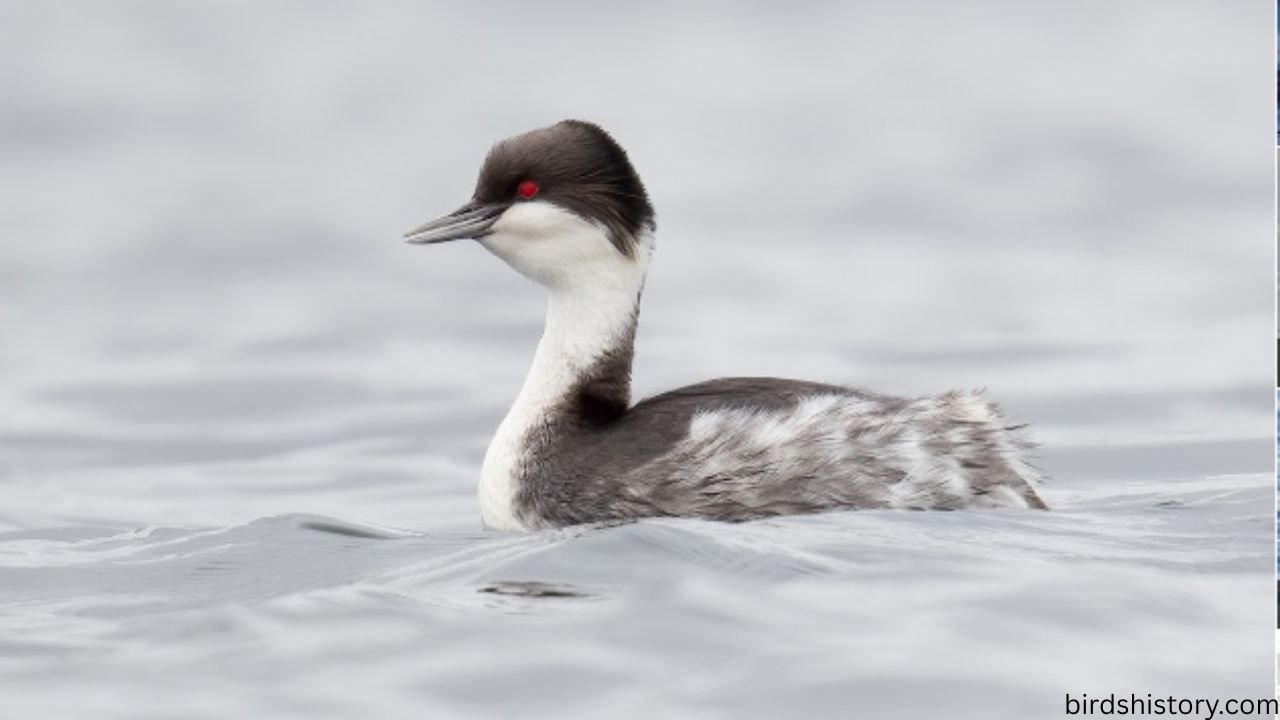
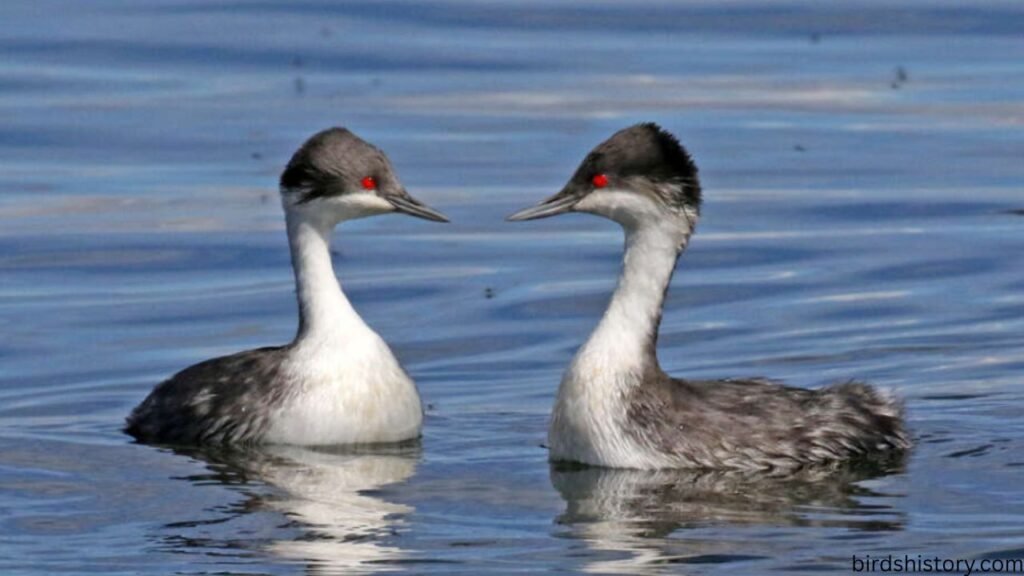
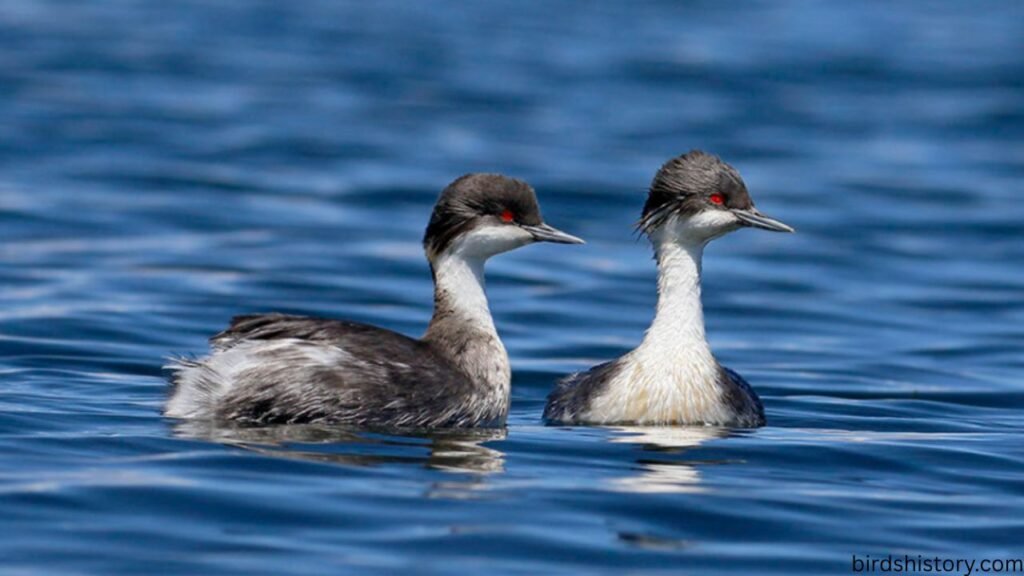
This grebe measures approximately 33-38 cm long, making it about the same size as a small duck. Its most striking feature is its bright red eyes, set against a dark grey crown that extends down its neck and back, while its underparts are clean white. During breeding season, adults show slender silvery‑grey feathers along the sides of their head—a subtle yet elegant touch.
Outside that season, and in juveniles, those feathers fade. Males and females look alike, though males may be slightly larger (Oiseaux Birds). The beak is narrow and grey—perfect for snatching fish.
Also read: /the-snowy-owl/
Habitat and Range of Junin Grebe
You’ll only find the Junín Grebe in Lake Junín, in Peru’s highlands, nestled at 4,082 m elevation. The lake spans about 530 km², with depths reaching up to 12 m—though most of it is much shallower. Around the shores, you’ll find wide reed beds—this is where the grebe makes its home.
During breeding season, it sticks close to reeds, within 8–75 m of the shoreline Outside of breeding season, it ventures into more open water, unconcerned by the shore.
Junin Grebe Diet and Feeding Habits
Junín Grebes are mostly fish-eaters—about 90 % of its diet consists of small fish, especially Orestias species under 2.5 cm long. Their diving skill is key—they chase fish underwater with expert agility. The rest of their diet includes small invertebrates and insect larvae, usually eaten when fish are scarce.
Behavior and Lifestyle of Junin Grebe
Junín Grebes don’t usually travel alone, but they don’t form large groups either. They often congregate in small groups to feed in open water. Their courtship is a delicate dance: two birds face each other, breast‑to‑breast, shaking their heads rapidly—this is called “head‑shaking”.
They’re known for their melodic calls—soft whistles like “doo’‑ith” and “wit”, and a longer “phooee‑th” used to woo a mate. In threat displays, they may add a short “trrr” or advertising call “phuuuee” (Oiseaux Birds).
When flying is out of the question, they sometimes run across the water, flapping to stay afloat and move forward.
Junin Grebe Reproduction and Lifespan
Junín Grebes nest among reeds, often in small colonies of 8–20 pairs, with nests spaced just a few meters apart. They breed between November and March, peaking in December–January (Oiseaux Birds). A typical clutch is two eggs. If the lake’s water level dips too low, breeding fails—greens and nests dry out or get exposed.
Research doesn’t give exact nesting calendars or incubation periods, but chicks have grey striped down and white underparts. There’s little data on lifespan, but like many grebes, they likely live several years in the wild.
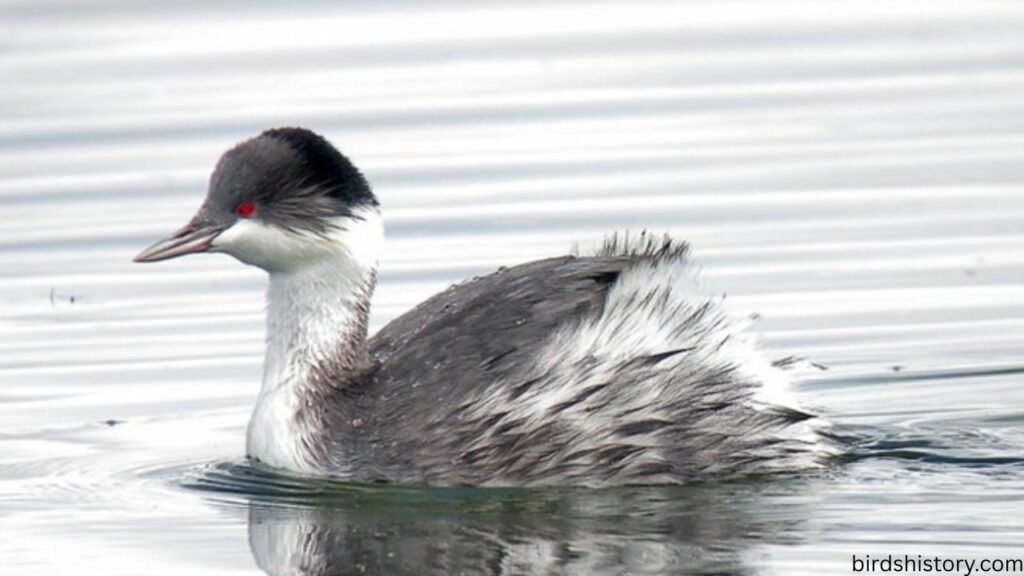
Junin Grebe of Predators and Threats
This grebe faces numerous threats. Natural predators aren’t well documented—but environmental threats are significant. Lake Junín suffers pollution from mining and sewage, which affects water quality and food availability. A hydroelectric plant often causes large water level swings, damaging reed beds and preventing successful breeding. Introduced rainbow trout compete for the same small fish and sometimes feed on them directly. Fishing nets also pose risks of entanglement.
Human disturbance—reed burning, habitat destruction—and climate variability linked to El Niño make a tough mix.
Conservation Status
The IUCN lists the Junín Grebe as Endangered, with fewer than 400 individuals remaining, including 140–320 adults. In the 1960s, populations topped 1,000, but they’ve since plummeted.
Since 1974, Lake Junín has been a national reserve, and it was designated a Ramsar site in 1997. In 2002, Peru passed an emergency law to curb water extraction and clean the lake, though enforcement remains weak).
A local conservation organization, ECOAN, works to protect the Junín grebe and other local species through educational programs and the creation of sustainable community practices. Efforts like finding alternative lakes for translocation have been attempted but face challenges—mainly due to trout in other lakes.
Interesting Facts About Junin Grebe
- The Junín Grebe may be flightless, running across the water as its main form of movement (Oiseaux Birds).
- This species is truly endemic, meaning it exists only in this specific location and nowhere else globally. Lake Junín is home to several other endemic species too—like Junín Rail and White‑tufted Grebe.
- This grebe’s evolution is tied to ancient geography—once a glacial refuge, Lake Junín isolated these grebes and helped them evolve (Avian Report).
- Locals refer to the lake as Chinchaycocha, meaning “northern lake” in Quechua.
Conclusion / Summary
The Junín Grebe is a rare and captivating bird living in one of the most extreme lakes on Earth. Its bright red eyes, near-flightless behavior, and exclusive high-altitude habitat make it truly remarkable. Sadly, its numbers have taken a sharp nosedive, driven by human impacts and environmental pressures.
Learning about this bird isn’t just interesting—it’s a reminder of how fragile some species are and how tied they are to specific places. Protecting the Junín Grebe means caring for Lake Junín and the communities around it. That’s why conservation matters so much here and why we should pay attention.
FAQs About Junin Grebe
Where does the Junín Grebe live?
Only on Lake Junín in west-central Peru at around 4,000 meters elevation.
What does it look like?
It’s a dark grey and white diving bird with bright red eyes and silvery earmuffs in breeding adults.
Is the Junin Grebe flightless?
Yes, it’s nearly flightless and often runs across the water.
What does Junin Grebe eat?
Their diet consists primarily of small fish less than 2.5 cm long, supplemented with various invertebrates.
How many eggs doesJunin Grebe lay?
During the breeding season in December and January, they typically lay two eggs.
What’s its conservation status?
It’s listed as Endangered, with only 300–400 individuals estimated left.
Why is Junin Grebe endangered?
Pollution, fluctuating water levels, competition from trout, and habitat loss are the main threats.
Who’s helping protect Junin Grebe?
Organizations like ECOAN and the Peruvian government are running conservation and education programs.
Is Junin Grebe found anywhere else?
No. It’s endemic to Lake Junin.
Why is the Junin Grebe special?
Because of its unique habitat, striking looks, flightless behavior, and the urgent need to save it.