Jabiru Stork: The Giant Guardian of Wetlands
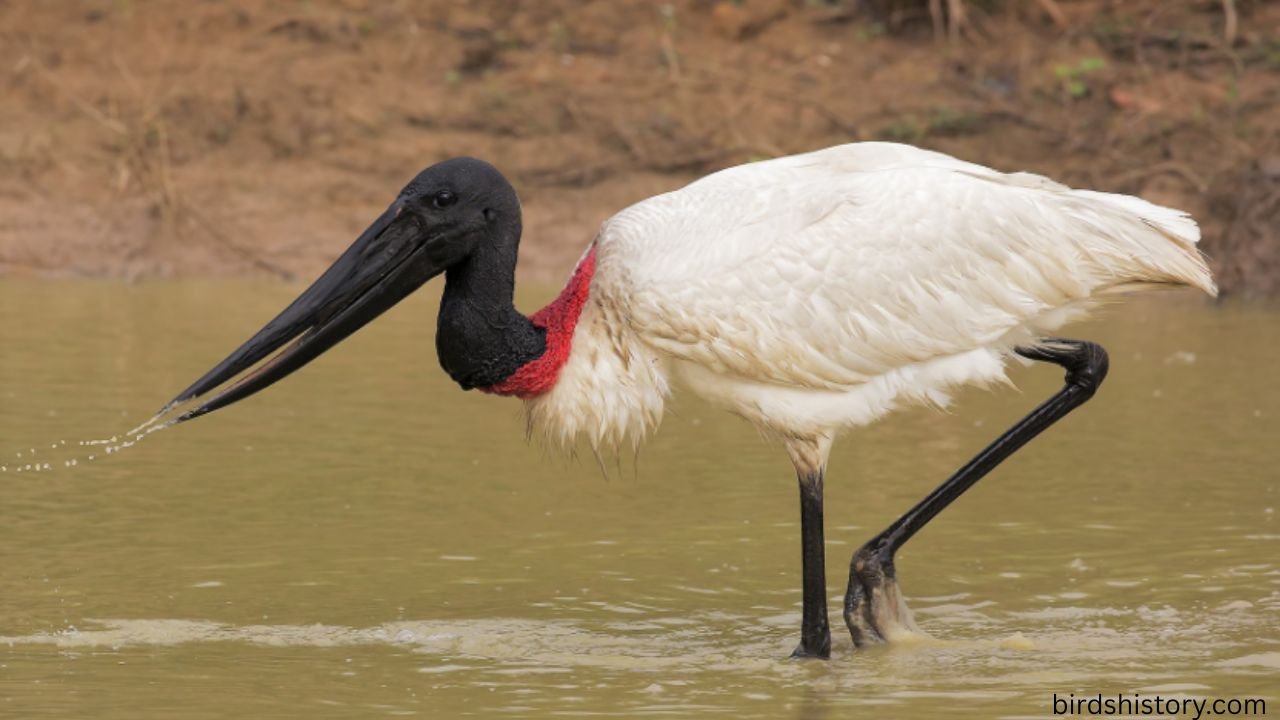
If you ever travel to Central or South America’s wetlands, you might encounter a bird so tall and striking that it looks like something from prehistoric times. The Jabiru Stork (Jabiru mycteria) is the biggest stork in the Americas and stands as one of the world’s tallest flying birds. With its massive black bill, white body, and distinctive red neck band, the Jabiru is a true wetland icon.
This bird isn’t just fascinating for its size—it also plays a vital role in keeping wetland ecosystems balanced. Known for wading through shallow waters and using its powerful bill to catch fish, the Jabiru is both a skilled hunter and a symbol of resilience.
One surprising fact? Despite its intimidating size and stern look, the Jabiru is a gentle giant often seen quietly soaring above marshes or nesting in tall trees with its lifelong mate.
Taxonomy / Classification
- Common Name: Jabiru Stork
- Scientific Name: Jabiru mycteria
- Family: Ciconiidae
- Order: Ciconiiformes
- Class: Aves
Also read: /hoatzin-bird/
It belongs to the stork family (Ciconiidae), which includes other large wading birds like the Wood Stork and Marabou Stork. Among its relatives, the Jabiru stands out due to its impressive size and the distinct red pouch located at the base of its neck.
Physical Description
The Jabiru is nothing short of impressive when seen in person.
- Size: Adults can reach a height of 120–140 cm (4–4.5 feet).
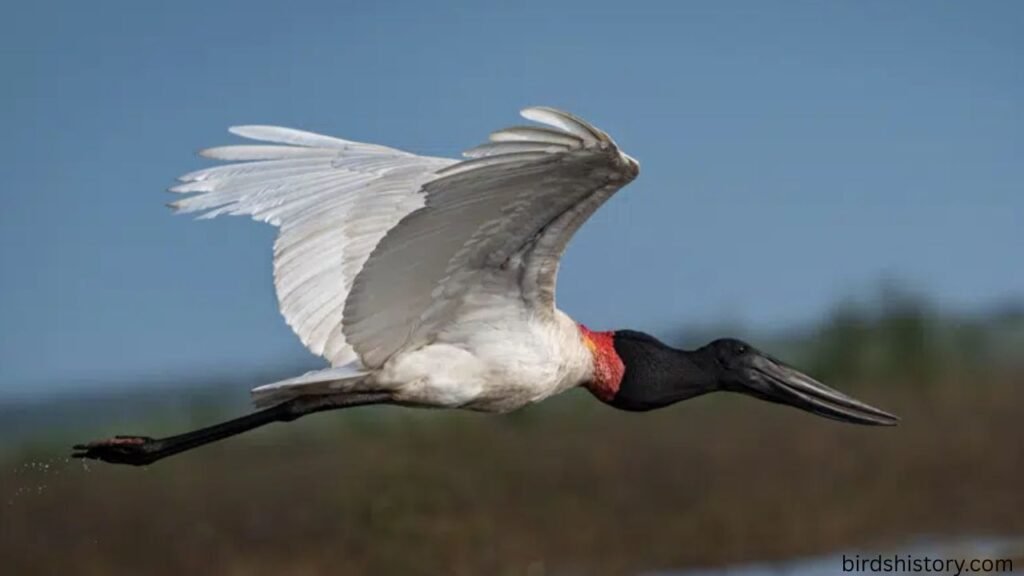
- It has a huge wingspan, which can reach between 2.3 and 2.8 meters (7.5–9 feet) and is similar in size to that of certain eagles and condors.
- Weight: Typically between 6–8 kilograms (13–18 pounds).
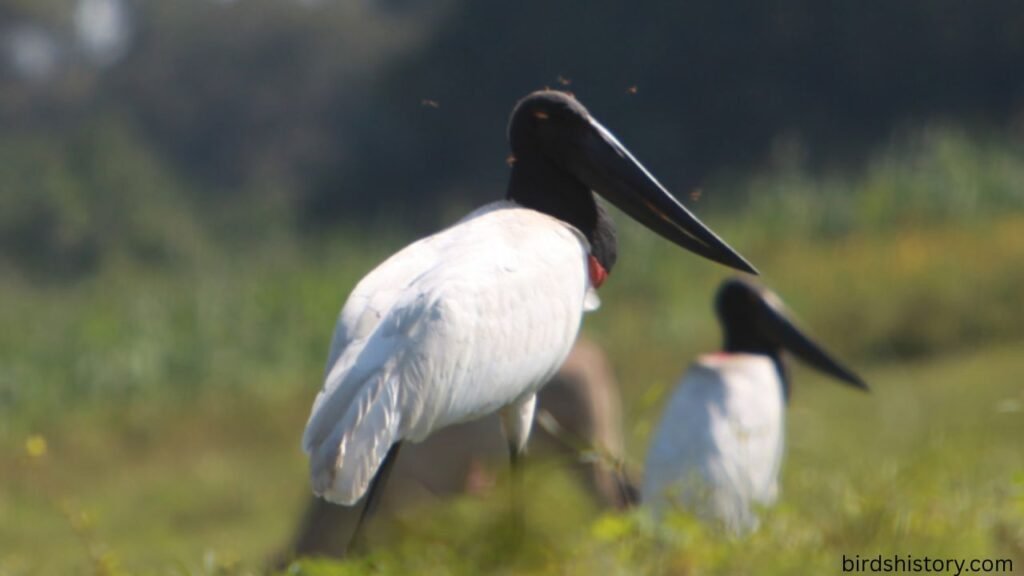
- Plumage: The body is almost entirely white, a sharp contrast to the dark head and massive bill.
- Neck: Bare and black with a bright red inflatable pouch around the base, used in displays and possibly thermoregulation.
- Beak: Huge, straight, and black, about 25–30 cm (10–12 inches) long, perfectly adapted for scooping and grasping prey.
- Male vs. Female: Males are generally larger, sometimes nearly 25% heavier, but both sexes look very similar.
- Unique Traits:
- The red neck band is the Jabiru’s signature feature.
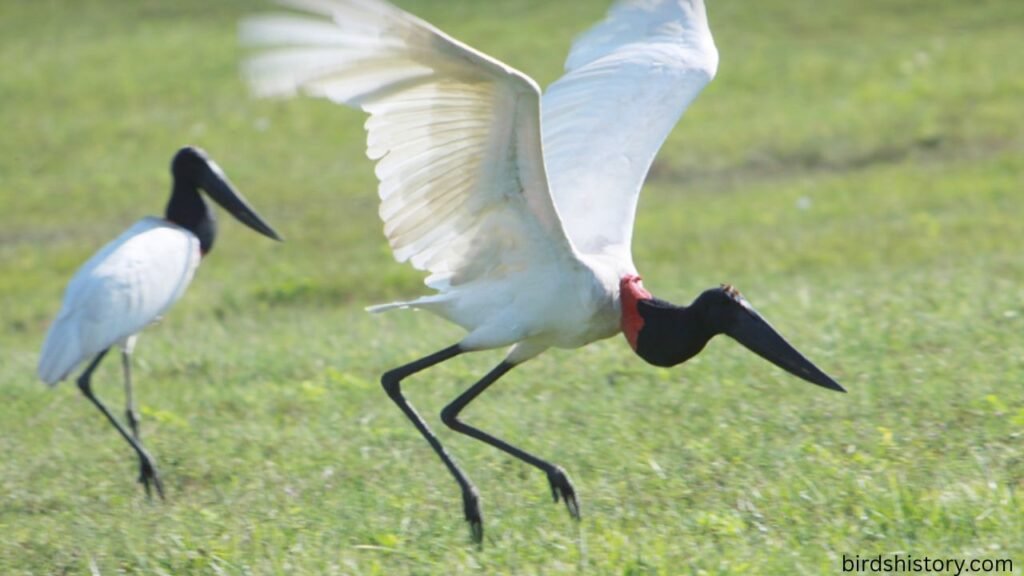
- Their long legs enable them to easily walk through deep wetland areas.
- Their soaring flight is graceful despite their bulk, resembling large raptors in the sky.
When standing in water, the Jabiru looks like a white pillar topped with a powerful, spear-like bill—a sight few forget.
Habitat and Range
The Jabiru is a Neotropical species, meaning it inhabits the warmer regions of the Americas.
- Countries: Found from Mexico and Central America down to Argentina, but most common in Brazil, Paraguay, and northern Argentina.
- Preferred Habitats:
- They inhabit areas like freshwater wetlands, swamps, marshes, floodplains, riverbanks, and shallow lakes.
- Areas rich in fish and amphibians.
- Seasonal Movement:
While not truly migratory, Jabirus may move locally depending on water levels. In the dry season, they often gather around shrinking water bodies where fish are concentrated.
The highest number of these birds lives in Brazil’s Pantanal, which is recognized as one of the planet’s most biodiverse wetland ecosystems. Here, they are considered a flagship species, symbolizing the health of the wetlands.
Diet and Feeding Habits
The Jabiru is primarily a carnivorous feeder, specializing in aquatic prey.
- Main Diet:
- Fish (their favorite), especially those trapped in shallow water during dry seasons.
- Amphibians such as frogs.
- Snakes, insects, mollusks, and even small mammals when available.
- Feeding Technique:
- It uses its massive bill like a pair of tongs, sweeping it through the water and quickly closing it when it detects movement.
- Often hunts by sight but can also detect vibrations.
- Interesting Behavior:
- It takes advantage of ponds that are drying up to feast on the fish trapped inside.
- Sometimes seen scavenging carrion, though less often than some of its stork relatives.
As major predators in wetland environments, they help to control the populations of fish and amphibians, which in turn helps maintain a stable ecosystem.
Behavior and Lifestyle
Despite their imposing size, Jabirus live a surprisingly low-drama lifestyle.
- Social Structure:
- Often solitary or in pairs.
- During the dry season, dozens may gather at concentrated feeding spots.
- Flight Style:
- Soars with strong, deep wingbeats.
- Glides effortlessly on thermal currents, resembling vultures or eagles in the air.
- Vocalizations:
- Storks in general are not songbirds. Jabirus communicate mainly through bill-clattering and low grunts, especially during courtship.
- Courtship and Pair Bonds:
- Known for their monogamous behavior. A pair often mates for life.
- Courtship involves synchronized bill-clattering and displays at the nest.
Their peaceful and enduring pair bonds make them a symbol of loyalty in many cultures.
Reproduction and Lifespan
The breeding biology of the Jabiru is fascinating, partly because of the scale of its nesting efforts.
- Breeding Season: Usually during the dry season when water levels are low and food is abundant.
- Nests:
- Gigantic platform nests made of sticks, often 2–3 meters wide and placed high in trees (up to 25 meters).
- Some nests are reused and added to each year, becoming massive structures visible from far away.
- Eggs:
- Typically 2–4 eggs per clutch.
- Eggs are white and relatively large.
- Incubation:
- Lasts about 30–35 days.
- Both parents share incubation duties.
- Chick Development:
- Hatchlings are fed regurgitated food.
- Fledge after 80–100 days but remain dependent for several more weeks.
- Lifespan:
- In the wild, Jabirus can live up to 30 years, making them one of the longest-living stork species.
Their massive nests and long parental investment reflect their strategy of raising only a few well-cared-for offspring each season.
Predators and Threats
Even giants like the Jabiru are not free from danger.
- Natural Predators:
- Their eggs and young are at risk from monkeys, big snakes, and birds of prey.
- Because of their size, adult Jabiru Storks have very few natural predators.
- Environmental Threats:
- Deforestation: Removal of tall nesting trees threatens breeding success.
- Wetland Loss: Drainage of swamps and rivers for agriculture impacts feeding grounds.
- Human Impacts:
- Historically hunted for feathers or food.
- Disturbance from tourism or fishing in nesting areas.
Climate change, with its impact on flooding cycles, poses an emerging threat to their ecosystems.
Conservation Status
The IUCN Red List currently lists the Jabiru as Least Concern, but local declines are noted.
- Population Trends: Stable in large strongholds like the Pantanal but declining in areas of habitat loss.
- Conservation Efforts:
- Protected in many reserves and national parks.
- The Pantanal region promotes ecotourism focused on Jabiru sightings, indirectly funding conservation.
- Awareness campaigns highlight their role as wetland health indicators.
Their large size and visibility make them excellent “ambassador species” for wetland conservation.
Interesting Facts
- The Jabiru holds the record for the tallest flying bird in South America.
- Its name comes from a Tupi–Guarani word meaning “swollen neck,” referencing its red pouch.
- Jabiru nests are so large that other bird species, like herons, sometimes build their own nests on top of them.
- Their courtship rituals involve synchronized movements of their necks and the striking together of their bills to create a loud, rattling sound.
- In Mayan culture, storks, including Jabirus, were symbols of rain and fertility.
Conclusion
The Jabiru Stork is more than just a giant bird—it’s a guardian of wetlands, a symbol of loyalty, and a key player in aquatic ecosystems. From its towering height to its enormous nests, everything about this bird is larger than life.
Protecting the Jabiru means protecting wetlands, which in turn supports countless other species and the people who rely on these ecosystems. Next time you see a photo of this majestic bird soaring above a flooded plain, remember—it’s not just impressive, it’s essential.
FAQs
1. What is the scientific name of the Jabiru Stork?
Jabiru mycteria.
2. How tall can a Jabiru get?
They can reach 4–4.5 feet tall, with wingspans up to 9 feet.
3. Where does the Jabiru live?
In Central and South America, mainly wetlands and floodplains.
4. What do Jabirus eat?
Mostly fish, frogs, and aquatic creatures.
5. Are Jabirus endangered?
No, they are listed as Least Concern, though habitat loss is a threat.
6. Do Jabirus migrate?
Not long-distance, but they move locally with water levels.
7. How long do Jabirus live?
Up to 30 years in the wild.
8. Do Jabirus mate for life?
Yes, they are generally monogamous and form long-term pair bonds.
9. How big are their nests?
Gigantic, often 2–3 meters wide and reused year after year.
10. Why is the Jabiru important?
It helps control fish and amphibian populations and is an indicator of wetland health.