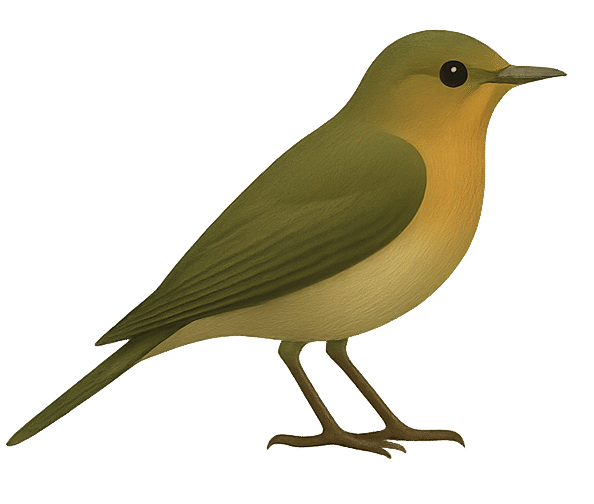

Inaccessible Island Rail: The World’s Smallest Flightless Bird
In the remote South Atlantic, the volcanic Inaccessible Island, a part of the Tristan da Cunha archipelago, is home to one of the planet’s most remarkable birds, the Inaccessible Island Rail (Atlantisia rogersi), which thrives despite the island’s name.
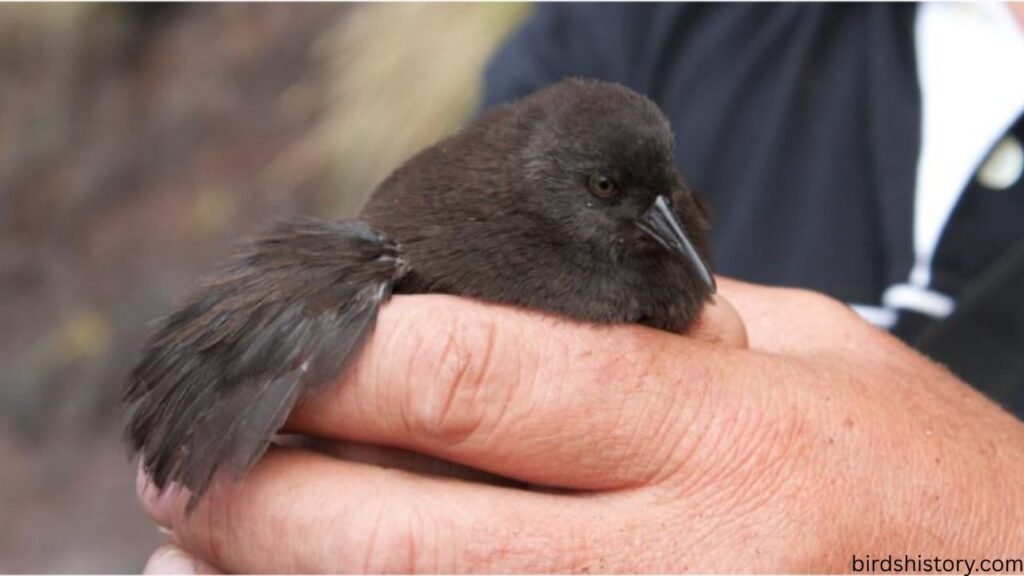
What makes this bird so fascinating? Measuring only a few inches in length, it holds the record as the smallest flightless bird in the world. While most rails are excellent fliers, this little species lost its ability to fly long ago, adapting instead to life in dense vegetation, where wings are less useful than strong legs and a secretive lifestyle.
The fact that this tiny bird exists at all is almost miraculous. It lives in complete isolation, found nowhere else on the planet, on an island that humans rarely visit. One fun fact? Despite being small and flightless, it has survived for thousands of years without ever needing to leave its island home.
Inaccessible Island Rail Taxonomy / Classification
The Inaccessible Island Rail is a unique bird with its own place in avian taxonomy:
- Common Name: Inaccessible Island Rail
- Scientific Name: Atlantisia rogersi
- Family: Rallidae (Rails, coots, and crakes)
- Order: Gruiformes
- Class: Aves
Also read: /white-headed-steamer-duck/
It was first described in 1923 by British ornithologist Percy Lowe. The name “Atlantisia” highlights its location in the middle of the Atlantic Ocean, while “rogersi” honors Reverend H. M. C. Rogers, who helped collect the first specimens.
Inaccessible Island Rail Physical Description
The Inaccessible Island Rail is a small and reclusive bird that is perfectly suited to its habitat.
- Size: Only about 13–15 cm (5–6 inches) long
- Weight: Around 30–40 grams (1–1.5 ounces)
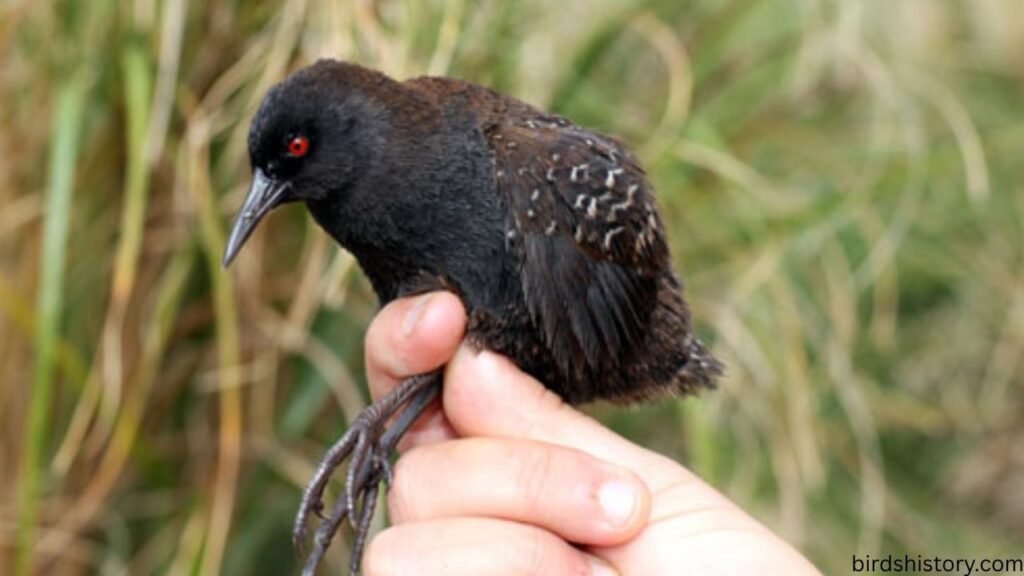
- Plumage: Dark brown upperparts with chestnut underparts, giving it natural camouflage in dense grasses.
- Beak: Short, pointed, and dark-colored, ideal for probing the soil and vegetation.
- Wings: Short and stubby, completely useless for flight.
- Tail: Very short and often held upright.
- Legs: Strong, slender, and dark gray, built for running and sneaking through vegetation.
- Eyes: Dark and alert, well-suited for its cautious nature.
Male vs. Female: Both sexes look alike, with no strong visual differences.
Unique Traits:
- Holds the world record as the smallest flightless bird.
- Its coloration provides excellent camouflage against predators and human observers.
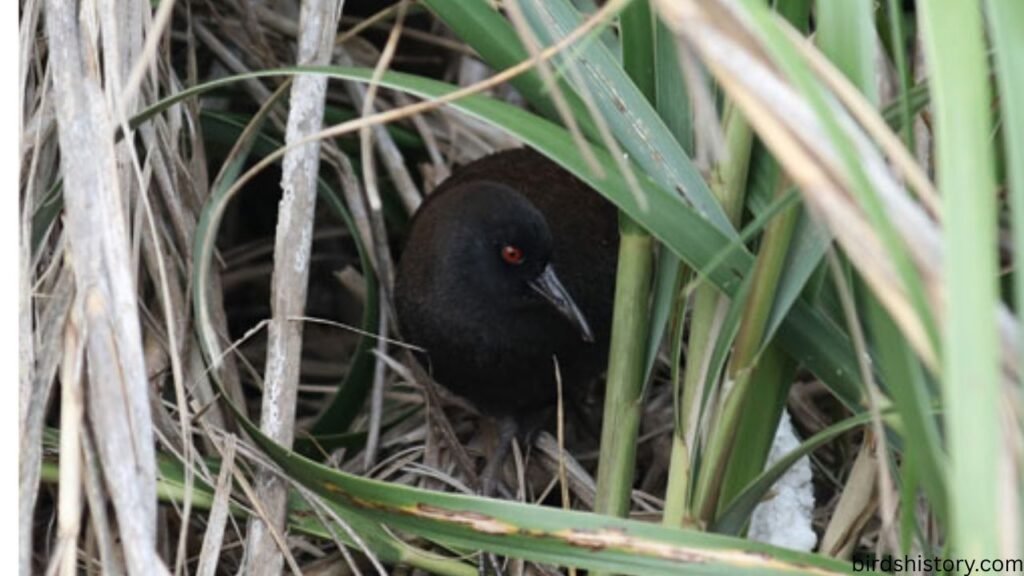
- Highly secretive, often heard more than seen.
Habitat and Range Of Inaccessible Island Rail
- Geographic Range: Exclusively on Inaccessible Island, a 14 km² volcanic island in the Tristan da Cunha group, part of the British overseas territory of St. Helena, Ascension, and Tristan da Cunha.
- Environment:
- Prefers dense tussock grass, ferns, and scrubland.
- Common in coastal vegetation and up to the slopes of the island’s volcanic ridges.
- Avoids open rocky ground where cover is scarce.
Because it cannot fly, its range is confined entirely to this small island. Unlike migratory birds, the Inaccessible Island Rail is sedentary, never leaving its isolated habitat.
Inaccessible Island Rail Diet and Feeding Habits
The Inaccessible Island Rail eats a variety of things, including small invertebrates and plant material.
- Diet Includes:
- Insects (beetles, flies, and larvae)
- Spiders and worms
- Small mollusks
- Seeds, berries, and grasses
- Feeding Behavior:
- Forages by probing soil and leaf litter with its short beak.
- Moves quietly through undergrowth, searching for hidden prey.
- This species typically forages by itself or with a partner, and it’s uncommon to see them in large groups.
Its small size and secretive behavior make it difficult for scientists to study, but its diet is thought to be highly adaptable, which helps it survive in a restricted environment.
Behavior and Lifestyle
The Inaccessible Island Rail lives a quiet and secretive life.
- Social Behavior: Usually solitary or in pairs; occasionally small family groups.
- Movement: Cannot fly, but runs swiftly through dense vegetation.
- Vocalizations: Known for its distinctive high-pitched calls, often used for communication between mates.
- Daily Routine:
- Active during the day, foraging in cover.
- Resting in sheltered vegetation at night.
- Mating Rituals: Pairs form strong bonds, with vocal duets reinforcing pair connection.
Despite its size, the bird has a strong personality, defending territories against other rails.
Inaccessible Island Rail Reproduction and Lifespan
- Breeding Season: Mainly during the summer months (November to February), coinciding with warmer weather and abundant food.
- Nesting:
- Nests are hidden under dense tussock grasses or ferns.
- Constructed with grass and leaves, providing camouflage.
- Eggs:
- Clutches usually contain 2–3 eggs.
- Eggs are cream-colored with fine speckles.
- Both parents take turns incubating the eggs for approximately 19 to 21 days.
- Chicks:
- Hatch as black, downy chicks.
- Precocial (able to move soon after hatching).
- Cared for by both parents until independent.
- Lifespan: Believed to live around 5–10 years in the wild, though exact data is scarce.
Predators and Threats
On its remote island, the Inaccessible Island Rail faces fewer threats than most birds — but it is still vulnerable.
- Natural Predators:
- Few native predators exist, though introduced animals could be devastating.
- Native crabs and owls may occasionally prey on eggs or chicks.
- Environmental Threats:
- Habitat loss from landslides or vegetation changes.
- Climate change could alter vegetation or food supplies.
- Human Threats:
- Invasive species such as rats or cats (if accidentally introduced) could wipe out the population quickly.
- Limited range makes the species especially fragile.
Because of these risks, the island is kept strictly protected, with limited human access.
Inaccessible Island Rail Conservation Status
- IUCN Red List: Vulnerable
- Population: Estimated 5,600 mature individuals.
- Conservation Efforts:
- Inaccessible Island is designated a Nature Reserve.
- Thorough biosecurity protocols are in place to stop the arrival of invasive species.
- Tristan da Cunha’s conservation teams and visiting researchers are continuously monitoring the species.
Thanks to these protections, the population is currently stable, though its vulnerability remains due to the limited habitat.
Interesting Facts About Inaccessible Island Rail
- Smallest Flightless Bird: No other bird of its size has lost flight.
- Remote Home: Its entire global population lives on one tiny island.
- Evolutionary Wonder: Scientists believe its ancestors flew to the island millions of years ago, then gradually lost the ability to fly due to lack of predators.
- Difficult to Study: Researchers often hear its calls but rarely see the bird itself.
- Cultural Symbol: Locals of Tristan da Cunha see it as a symbol of their island’s unique wildlife.
Conclusion
The Inaccessible Island Rail is one of the most extraordinary examples of island evolution. Small, secretive, and flightless, it has adapted perfectly to its tiny, remote world. As the world’s smallest flightless bird, it captures the imagination of scientists and bird enthusiasts alike.
Its survival depends on continued protection of Inaccessible Island, strict biosecurity, and global awareness. Studying and conserving this species reminds us how delicate and unique island ecosystems can be — and why it’s vital to protect them.
FAQs About Inaccessible Island Rail
1. What’s the reason for the Inaccessible Island Rail’s name?
Because it lives only on Inaccessible Island, part of the Tristan da Cunha group.
2. How big is the Inaccessible Island Rail?
It is only 13–15 cm long, making it the smallest flightless bird in the world.
3. Can Inaccessible Island Rail fly?
No, it is completely flightless.
4. What does Inaccessible Island Rail eat?
A mix of insects, spiders, worms, seeds, and berries.
5. How many are left?
Around 5,600 mature individuals.
6. Is Inaccessible Island Rail endangered?
Its limited habitat has led to its classification as Vulnerable.
7. Where can it be found?
Only on Inaccessible Island in the South Atlantic.
8. How does Inaccessible Island Rail reproduce?
It lays 2–3 eggs in nests hidden under dense vegetation.
9. What threatens its survival?
The introduction of invasive predators like rats or cats would be catastrophic.
10. Why is Inaccessible Island Rail important?
It represents a unique evolutionary adaptation and highlights the fragility of island ecosystems.