How Do Birds Mate? A Complete Guide to Bird Reproduction in 2026
Understanding how do birds mate opens a window into one of nature’s most fascinating and intricate processes. Unlike mammals, birds have evolved unique reproductive systems that combine efficiency with remarkable behavioral displays. Most species lack a penis, relying instead on the brief yet effective cloacal kiss for sperm transfer, while a small percentage, such as ducks and ostriches, possess a phallus in birds that works through hydraulic or lymphatic fluid erection. Reproduction begins long before physical contact, as males perform elaborate bird courtship rituals, including mating displays in birds, dances, songs, and plumage display, to attract mates and demonstrate fitness.
Once fertilized, eggs develop internally in the female’s reproductive tract, progressing through egg formation and the incubation period until hatching. Seasonal factors like the spring mating season, photoperiod, and environmental triggers ensure successful breeding. Exploring how birds reproduce reveals the blend of biology, behavior, and evolution that sustains avian life across the globe.
What Is Bird Mating? (Bird Reproduction Explained)
Bird mating is the biological process that allows birds to produce offspring. It includes courtship behavior, copulation, fertilization, and eventually egg laying and incubation.
Unlike mammals, birds do not get pregnant. Instead, fertilization happens inside the female’s body, and then she lays fertilized eggs.
In the United States, most birds begin breeding during spring. Increasing daylight hours trigger hormonal changes that prepare birds for reproduction. This is known as photoperiod influence. Temperature, food supply, and habitat conditions also affect the bird breeding season.
Bird reproduction is important for:
- Maintaining population numbers
- Supporting food chains
- Pollinating plants and spreading seeds
- Keeping ecosystems balanced
Bird Reproductive Anatomy (Cloaca Explained)
To understand how birds mate physically, we must first understand bird anatomy.
Both male and female birds have a single opening called the cloaca. This opening is used for:
- Reproduction
- Urination
- Waste removal
Most birds do not have visible external reproductive organs. Instead, reproductive organs are located inside the body.
In females:
- The ovary produces yolk.
- The yolk travels through the oviduct.
- Egg white (albumen), membranes, and shell form around it.
- The egg is laid within about 24 hours.
In males:
- Sperm is stored internally near the cloaca.
- During mating, sperm is transferred to the female.
This structure explains why bird mating is quick and often difficult to observe.
Do Birds Have Penises? (Genital Evolution in Birds)
One of the most searched questions is: Do birds have penises?
The surprising answer is that about 97% of bird species do not.
Instead of a penis, most male birds transfer sperm using the cloaca. This method evolved over millions of years. During embryonic development, a gene called Bmp4 triggers cell death in the developing genital structure, causing it to shrink.
However, about 3% of bird species do have a phallus. These include certain ducks and flightless birds.
For example:
- Mallard males have a corkscrew-shaped phallus.
- Argentine lake duck males have one of the longest phalluses relative to body size in the animal world.
These structures work through lymphatic fluid erection, not blood like mammals. Scientists believe this developed due to sexual competition and forced mating attempts in waterfowl.
How Do Birds Mate Physically? (The Cloacal Kiss)
The physical act of bird mating is called the cloacal kiss.
Here’s how it works:
- The male mounts the female’s back.
- The female moves her tail feathers aside.
- Their cloacas briefly touch.
- Sperm is transferred.
This contact usually lasts only a few seconds. Because the process is so quick, people rarely see it happen.
After sperm transfer, the female can store sperm inside her reproductive tract. This is called sperm storage in female birds. When an egg passes through the oviduct, fertilization occurs internally.
This is known as internal fertilization in birds.
Bird Courtship Behavior (Mating Rituals Explained)
Before mating happens, birds perform complex courtship rituals. These behaviors help in mate selection, reduce species confusion, and demonstrate health and strength.
Common bird courtship behaviors include:
- Singing (bird mating songs)
- Dancing displays
- Feather fluffing
- Mutual preening
- Food offering
- Nest-building demonstrations
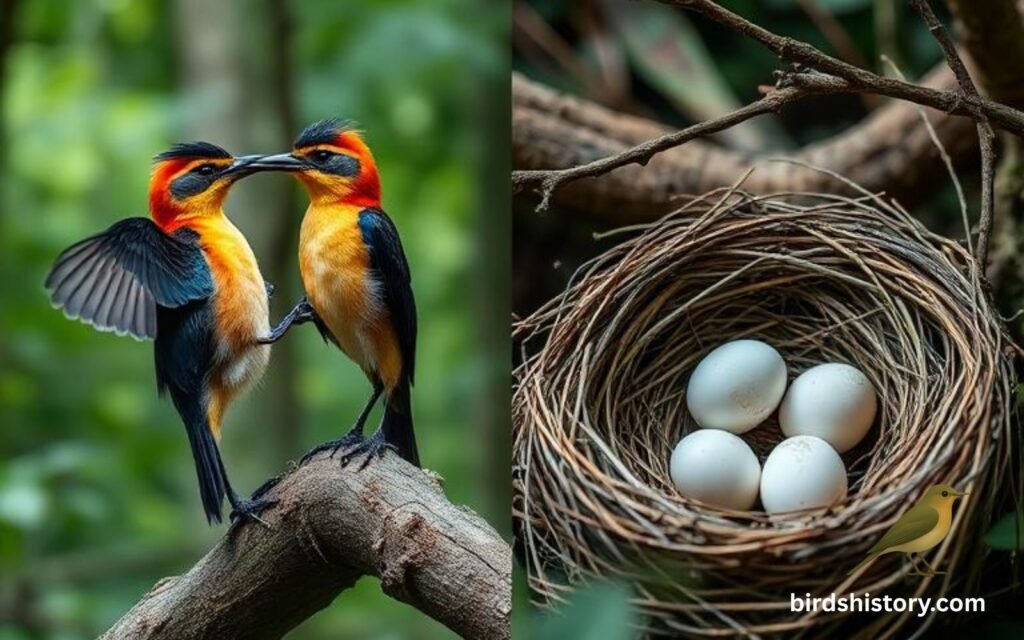
Courtship supports sexual selection theory, first explained by Charles Darwin. According to Darwin, individuals with attractive traits are more likely to reproduce.
Courtship is not random. It communicates:
- Genetic fitness
- Territory control
- Disease resistance
- Parenting ability
How Do Birds Attract Mates? (Mating Displays in Birds)
Birds use visual and sound signals to attract partners.
Plumage Display
Bright colors signal health. For example, vibrant red feathers often indicate strong immune systems.
Bird Mating Dance
Some species perform choreographed movements.
Aerial Displays
Certain birds perform flight acrobatics to prove stamina.
Nest Building
Some males build nests to show they can provide safe shelter.
These behaviors increase mating success and improve survival chances for offspring.
Unique and Famous Bird Mating Displays
Some birds are world famous for their extraordinary mating behavior.
- Birds-of-paradise perform dramatic feather displays.
- Lyrebird males mimic chainsaws and camera sounds.
- Bowerbird males decorate structures with colorful objects.
- Red-crowned crane pairs perform synchronized dances.
In North America:
- American crow forms strong pair bonds.
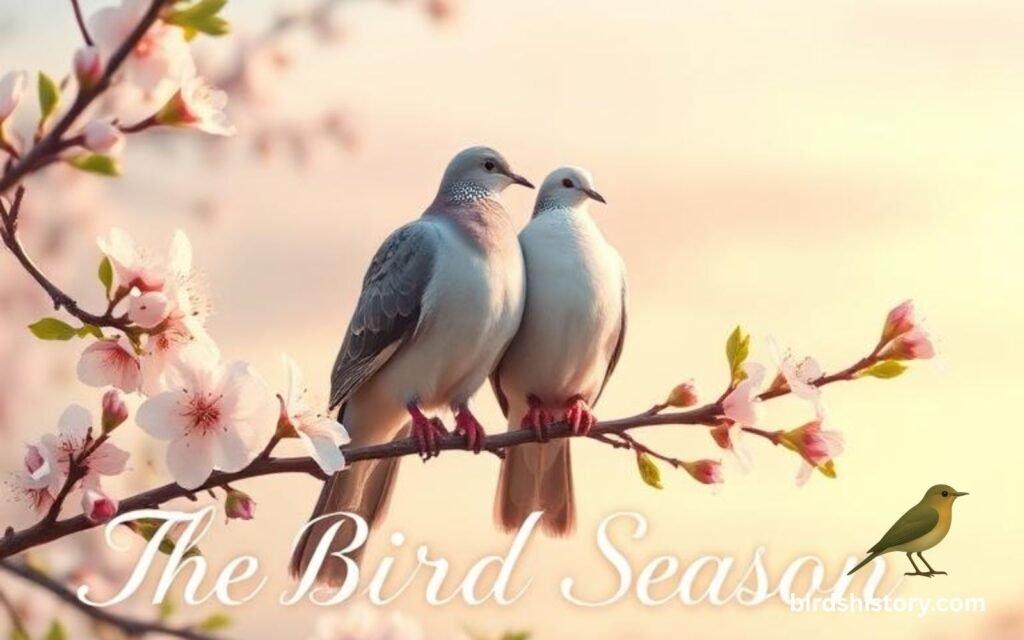
- Mourning dove uses soft cooing during courtship.
These examples show the diversity of avian mating behavior.
When Is Bird Mating Season? (Breeding Season in Birds)
Most birds in the United States breed between March and June. This is known as the spring breeding season.
Triggers include:
- Longer daylight hours
- Rising temperatures
- Increased food supply
- Hormonal changes
Migratory birds return from southern regions to nest. Some species in dry areas breed after rainfall instead of during spring.
Understanding when birds mate explains why:
- Birdsong increases in spring
- Nests appear in trees and buildings
- Territorial behavior becomes stronger
Are Birds Monogamous? (Mating Systems in Birds)
Another common question is: Are birds monogamous?
The answer varies by species.
Monogamy
Some birds form long-term pair bonds and may mate for life.
Seasonal Monogamy
Pairs stay together for one breeding season only.
Polygyny
One male mates with multiple females.
Polyandry
One female mates with multiple males.
Even in monogamous species, extra-pair copulation sometimes occurs to increase genetic diversity.
Bird mating systems depend on:
- Habitat conditions
- Food availability
- Predator pressure
- Population density
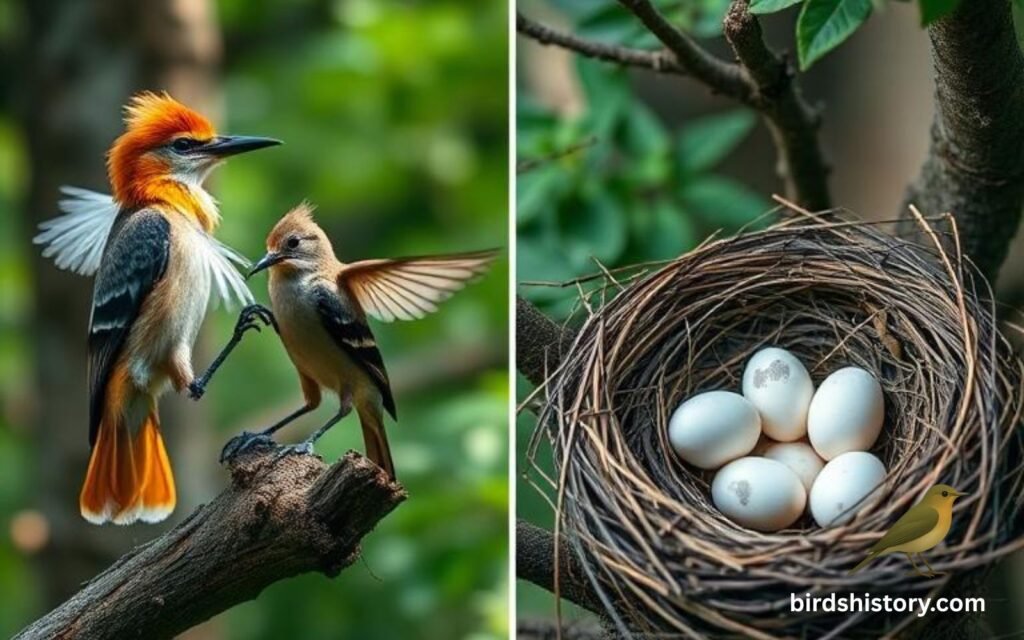
How Does Fertilization Happen in Birds?
Fertilization occurs inside the female after sperm transfer. When the egg passes through the oviduct, sperm fertilizes it.
The fertilized egg then forms:
- Egg white (albumen)
- Protective membranes
- Hard shell
The female lays the egg, and incubation begins.
Birds do not experience pregnancy like mammals. Instead, embryo development happens inside the egg outside the mother’s body.
Frequently Asked Questions
How do male birds fertilize eggs?
Male birds fertilize eggs through a brief cloacal kiss, where the male’s sperm transfer occurs via contact between the avian vent and the female’s reproductive tract, allowing the sperm to reach and fertilize the eggs internally.
Do birds mate in flight?
No, most birds do not mate in flight. Copulation typically occurs on a perch or the ground, where males can align cloacas safely for bird copulation.
How often do birds mate?
Birds mate at varying frequencies depending on species; some, like goshawks, may copulate hundreds of times per mating season, while others, like Eurasian skylark mating, occur only once per clutch.
When is bird mating season?
Most birds breed during the spring mating season, typically from March to June, though timing can shift with climate, migratory breeding cycles, and environmental mating triggers like rainfall.
Do all birds lay eggs?
Yes, all female birds lay eggs as part of avian reproduction; no birds give birth to live young.
Why do birds lay eggs instead of giving birth?
Egg-laying allows females to continue hunting and flying while embryos develop externally. It increases clutch size, promotes biparental care, and reduces the burden of carrying developing offspring internally.
Do birds mate all year round?
Most birds mate only during their breeding season, though some species, like eagles, may engage in copulation outside nesting periods.
Do birds perform mating displays?
Yes, bird mating dances, songs, plumage displays, and nest-building are vital bird courtship rituals to attract mates and ensure mate selection in birds.
Can birds reproduce without males?
Some domesticated birds, like chickens, can lay infertile eggs without males, but in the wild, internal fertilization requires males for fertilized eggs and continuation of the species.
Final Thoughts on How Birds Reproduce
The world of bird mating reveals a remarkable blend of biology, behavior, and evolutionary strategy. From the fleeting cloacal kiss to the dramatic mating displays in birds, reproduction is a carefully orchestrated process that ensures the survival of species. Courtship rituals, including bird mating songs, dances, mutual preening, and nest-building, help females select the fittest males while promoting sexual selection. Most birds reproduce without penises, yet the rare species with a bird phallus, such as the Argentine lake duck phallus, demonstrate unique adaptations shaped by sexual competition in birds.
Fertilized eggs undergo embryo development during the incubation period, with both males and females often providing biparental care. Seasonal cues, like the spring mating season, regulate reproduction, while environmental factors such as rainfall breeding triggers influence timing. Studying avian reproduction not only answers questions about how birds mate but also highlights the intricate, adaptive strategies that allow these creatures to thrive across diverse habitats worldwide.