The Horned Screamer: The Quirky Giant of South America’s Wetlands
Among the world’s many fascinating birds, the Horned Screamer (Anhima cornuta) is in a category of its own. Found in South America’s tropical wetlands, this large, goose-like bird is instantly recognizable by the horn-like structure protruding from its forehead. No other bird in the world has such a feature, making the Horned Screamer truly unique.
Its name comes from two traits: the odd keratin “horn” and its incredibly loud calls that can be heard miles away. Despite looking somewhat prehistoric and producing sounds that echo across marshes, the Horned Screamer is a peaceful, plant-eating bird that plays a vital role in wetland ecosystems.
A surprising fact: the Horned Screamer has air sacs in its body that make its skin spongy to the touch, and when punctured, the sacs create whistling sounds as the bird moves. Nature rarely gets stranger than this!
In this article, we’ll explore everything about the Horned Screamer — from its classification and physical description to its diet, behavior, conservation, and fascinating cultural significance.
Horned Screamer Taxonomy / Classification
Here’s the scientific classification of the Horned Screamer:
- Common Name: Horned Screamer
- Scientific Name: Anhima cornuta
- Family: Anhimidae
- Order: Anseriformes
- Class: Aves
Also read: /the-purple-swamphen/
The Horned Screamer belongs to the family Anhimidae, which includes just two other species: the Southern Screamer and the Northern Screamer. All three screamers are found in South America and are closely related to ducks, geese, and swans, though their appearances differ dramatically.
Horned Screamer Physical Description
The Horned Screamer is one of the most visually unusual birds in the world.
- Size: About 33–36 inches (85–92 cm) long.
- Wingspan: Around 5 feet (150 cm).
- Weight: 7–9 pounds (3.5–4 kg).
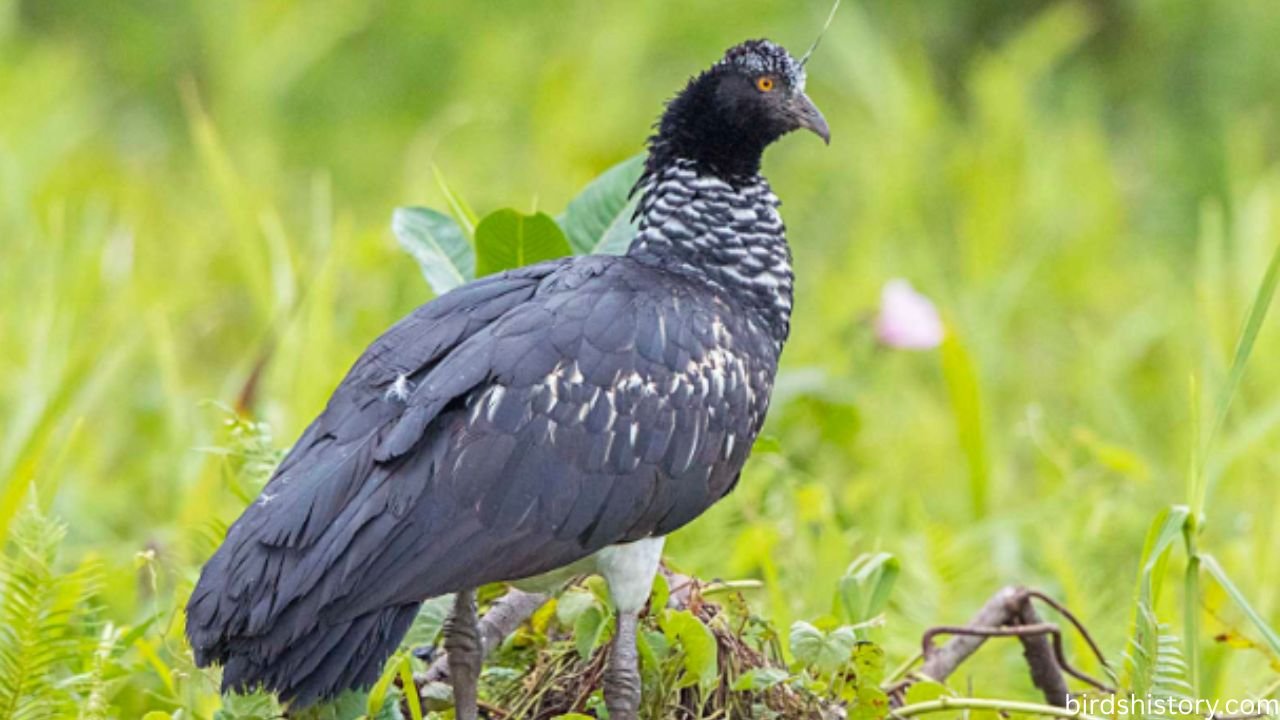
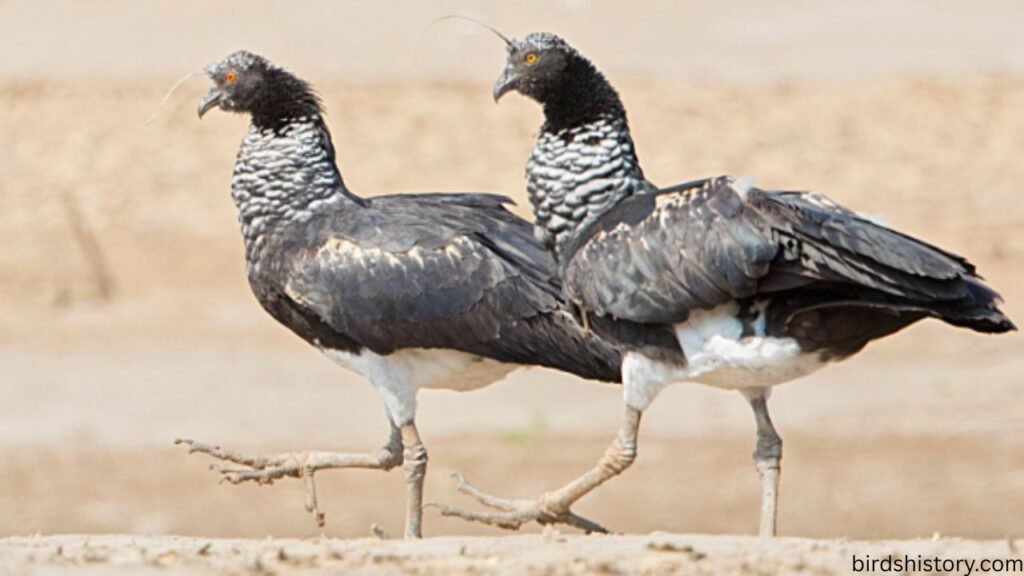
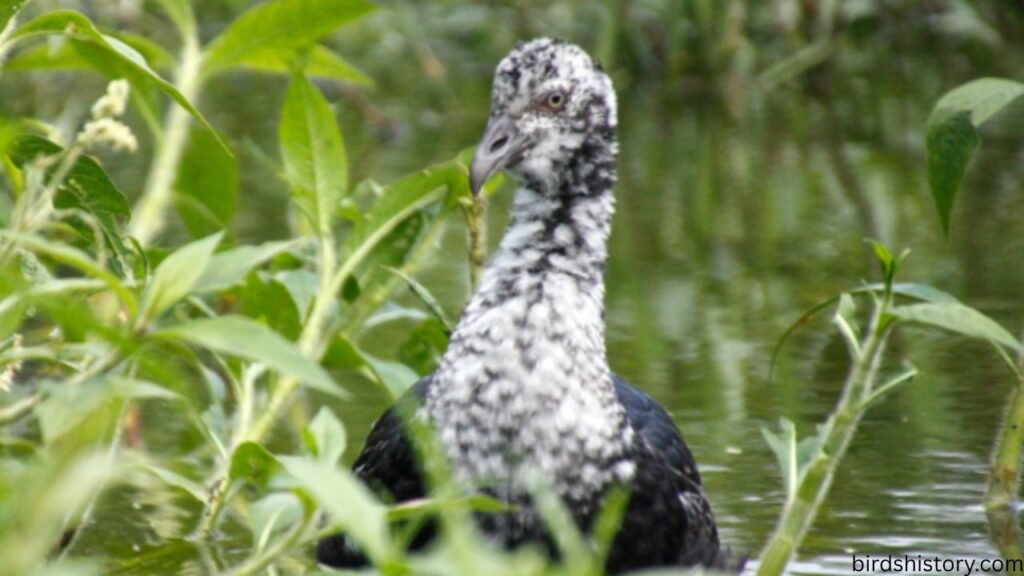
- Plumage: Mostly black with white shoulders and some white flecking on the underparts.
- Head: Small compared to body size, with a bare patch of skin around the eyes.
- Horn: A long, thin, keratinous projection that can grow up to 6 inches (15 cm). It is not bone but a horn-like growth unique to this species. It can break off and regrow.
- Bill: Short, grayish, and more goose-like than duck-like.
- Legs and Feet: Strong, with three long toes adapted for walking in marsh vegetation.
- Sex Differences: Males and females look alike.
- Unique Traits: Wing spurs — sharp, bony outgrowths used for defense during fights with rivals.
Their large body, odd horn, and spongy-feeling skin make them look like something from a different evolutionary era.
Habitat and Range Of Horned Screamer
The Horned Screamer is a bird of South America’s wetlands and tropical lowlands.
Distribution
- Found from Colombia and Venezuela down through Ecuador, Peru, Brazil, Bolivia, and Paraguay.
- Most abundant in the Amazon Basin and Orinoco River systems.
Preferred Habitats
- Freshwater marshes
- Flooded grasslands
- River edges and oxbow lakes
- Lagoons with abundant aquatic vegetation
Migration
Horned Screamers are generally sedentary, but they may move locally in response to flooding or drought conditions.
Diet and Feeding Habits
The Horned Screamer is entirely herbivorous, which sets it apart from many other large waterbirds.
- Main Diet: Aquatic plants, grasses, seeds, stems, and leaves.
- Feeding Method: Uses its strong bill to crop vegetation while walking through shallow wetlands.
- Foraging Behavior: Often seen grazing like geese, plucking vegetation from water surfaces or mud.
Because they consume large amounts of plants, they play an important role in maintaining wetland plant balance.
Behavior and Lifestyle
Despite their loud voices, Horned Screamers are generally peaceful birds.
- Social Behavior: Usually found in pairs or small family groups, though large flocks of 50–100 may gather in rich feeding areas.
- Flight: Strong flyers despite their heavy bodies. Their broad wings carry them long distances, often with noisy wingbeats.
- Calls: The name “screamer” comes from their extremely loud, trumpeting, and honking calls that can carry for miles. Pairs often call together in duets.
- Nesting Habits: Build floating nests in marshes, usually anchored to vegetation.
- Defense: Use their sharp wing spurs to fend off predators or rivals.
Their noisy nature and unusual looks make them unforgettable once encountered.
Horned Screamer Reproduction and Lifespan
- Breeding Season: Varies with rainfall and wetland flooding cycles, but often during the rainy season.
- Nest: Large platform nests made of sticks and aquatic plants, often floating or built on small islands.
- Eggs: Typically 2–5 eggs, chalky white in color.
- Incubation: About 43–46 days, shared by both parents.
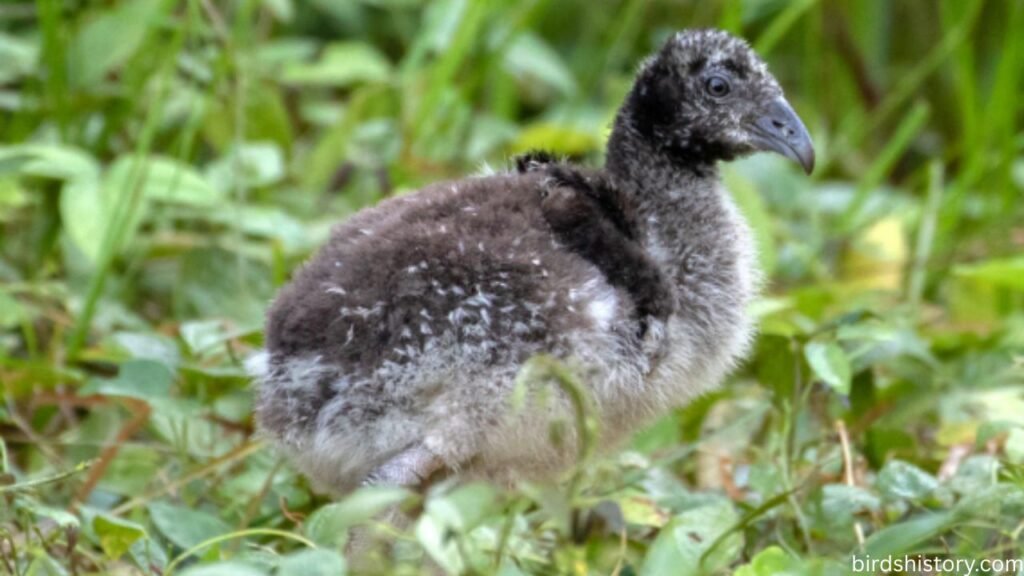
- Chicks: Covered in down, able to walk and swim soon after hatching. Parents guard them closely.
- Parental Care: Both parents feed and protect the young, sometimes forming small family groups.
- Lifespan: Estimated 15–20 years in the wild.
Predators and Threats
Natural Predators
- Large raptors such as hawks and eagles (target chicks).
- Mammals like jaguars or ocelots may attack adults or nests near shorelines.
- Caimans and snakes pose risks to eggs and chicks.
Environmental Threats
- Habitat destruction due to wetland drainage for agriculture.
- Pollution of rivers and wetlands.
- Deforestation in Amazon and Orinoco basins affecting wetland ecosystems.
Human Impact
- Hunted locally for meat and feathers, though not heavily.
- Nest disturbance by fishermen or livestock in wetlands.
Horned Screamer Conservation Status
- IUCN Red List: Least Concern
- Population Trend: Stable overall, though some local declines occur due to habitat loss.
- Conservation Efforts:
- Protected in many reserves across South America.
- Wetland conservation programs indirectly support populations.
- Education campaigns highlight its ecological importance as a flagship wetland species.
Despite its limited family group, the Horned Screamer is not endangered thanks to its wide range and adaptability.
Interesting Facts About the Horned Screamer
- The horn on its head is made of keratin and continues growing throughout its life.
- Their bodies are filled with air sacs that make them light for flight but spongy to the touch.
- Their loud calls can be heard from up to 2 miles away.
- They are sometimes nicknamed “flying cows” because of their grazing habits and booming calls.
- Unlike ducks or geese, they do not have webbed feet.
- They use sharp wing spurs as weapons in territorial battles.
- Horned Screamers have been kept in captivity by local people as “watchbirds” because of their alarm-like calls.
- Despite their odd looks, they are gentle and primarily vegetarian.
- They play a vital ecological role in shaping wetland vegetation.
- Fossil records suggest screamers have existed for millions of years, making them living relics of ancient bird lineages.
Conclusion
The Horned Screamer is one of nature’s strangest and most fascinating birds. With its loud voice, odd horn, spongy body, and peaceful plant-eating habits, it represents the diversity and wonder of South America’s wetlands.
Learning about this bird reminds us that not all ecological “giants” are predators. Some, like the Horned Screamer, are gentle grazers that help balance ecosystems. Protecting them means protecting wetlands that also sustain countless other species — and human communities too.
So, the next time you hear a distant trumpeting call echoing across a South American marsh, remember: you might be listening to the unforgettable Horned Screamer.
FAQs About Horned Screamer
1. What makes the Horned Screamer unique?
Its horn-like projection, loud calls, and spongy body filled with air sacs.
2. Where can Horned Screamers be found?
In wetlands across northern and central South America, especially the Amazon and Orinoco basins.
3. What do Horned Screamers eat?
They are herbivores, feeding on aquatic plants and grasses.
4. Do both male and female Horned Screamers have horns?
Yes, both sexes have the horn-like structure on their heads.
5. How loud is a Horned Screamer?
Their calls can be heard from up to 2 miles away.
6. Are Horned Screamers endangered?
No, they are listed as Least Concern, though habitat loss is a threat.
7. How do Horned Screamers defend themselves?
They use sharp wing spurs to fight off predators or rivals.
8. Do Horned Screamers migrate?
They are mostly sedentary but may move locally depending on water levels.
9. How many eggs do Horned Screamers lay?
Typically between 2–5 eggs per clutch.
10. Why are they called “screamers”?
Because of their extremely loud, trumpeting calls.