Hoopoe Bird Facts: Appearance, Diet & Behavior 2027
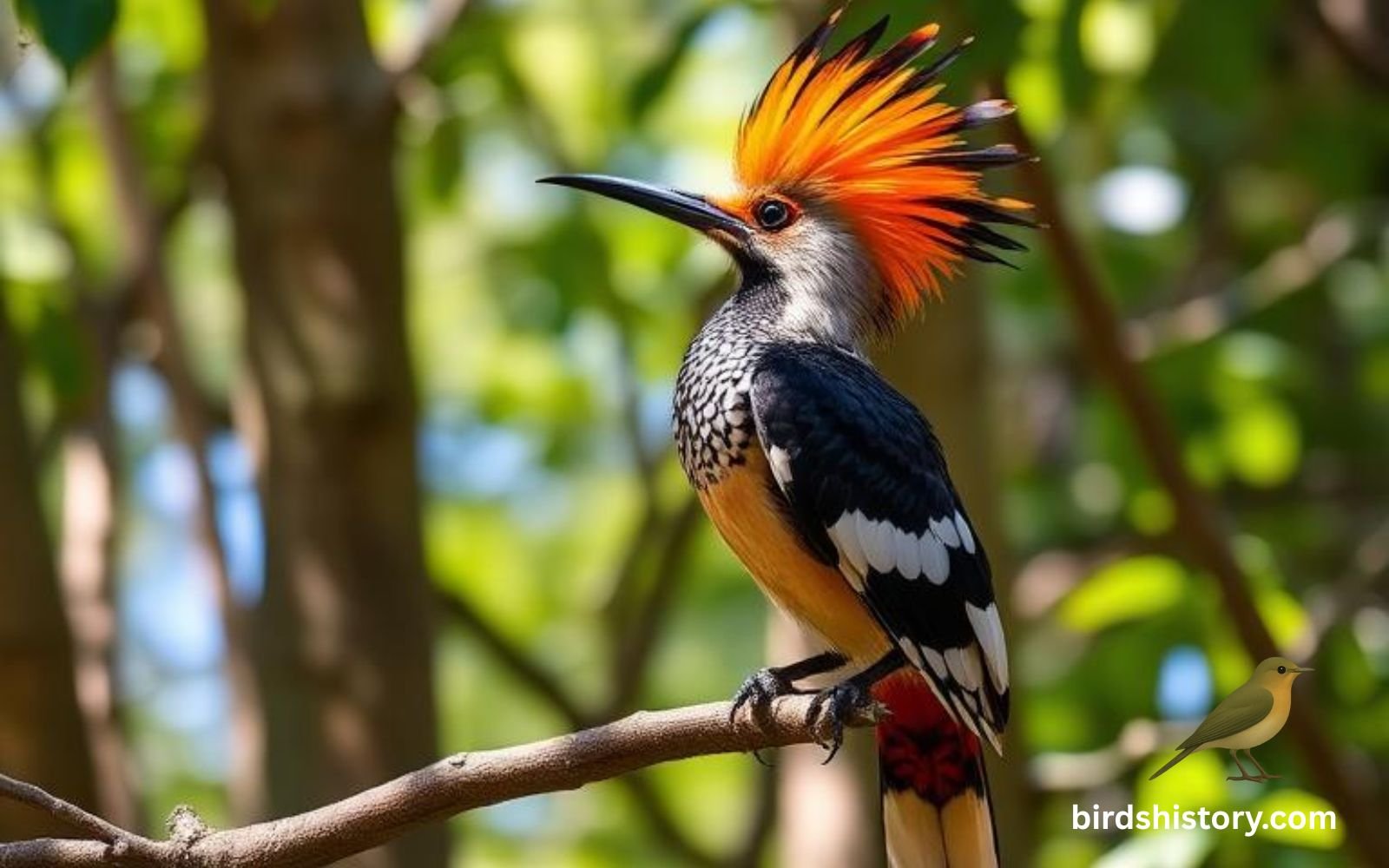
The Hoopoe bird, scientifically known as Upupa epops, is one of the most visually striking birds found across Europe, Asia, and Africa. Known for its long, down-curved bill and bold black-and-white wings, the Eurasian Hoopoe habitat spans open grasslands, vineyards, orchards, and forest edges. Its crest feathers can fan out dramatically, giving it a regal and unique appearance that sets it apart from other birds. This crested bird is famous not only for its looks but also for its enchanting Hoopoe call / “oop-oop-oop”, which can carry for long distances across open fields and woodlands.
Although rare in the United States, the Hoopoe distribution occasionally reaches Alaska or other northern areas, often as vagrant birds. Their presence sparks curiosity among bird enthusiasts, who marvel at the bird’s Hoopoe flight pattern, an undulating flight that resembles a butterfly gliding across the sky. With a Hoopoe longevity of around 10 to 11 years, these birds offer long-term opportunities for study, observation, and appreciation, making them fascinating subjects for both casual birdwatchers and researchers.
Identification & Physical Features
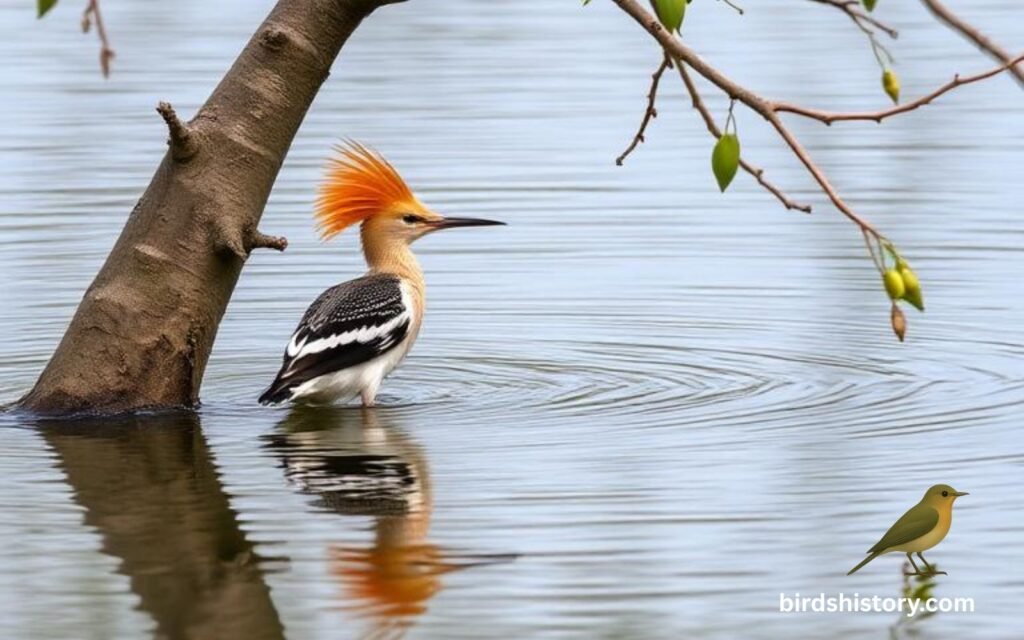
The Hoopoe bird appearance is unmistakable. It measures about 26 to 32 centimeters in length with a wingspan of 42 to 48 centimeters. The long, thin, down-curved bill allows it to probe soil for insects and larvae, while its Hoopoe crest feathers rise into a spectacular crown when excited or alarmed. The head, neck, and underparts are typically rufous or sandy-buff, contrasting sharply with black-and-white striped wings and tail, which become more pronounced during flight. The African subspecies, the African Hoopoe (U. e. africana), is darker and more chestnut-colored, whereas the Eurasian subspecies shows more white in the primaries and tail feathers.
Sexual dimorphism in the Hoopoe bird is subtle. Females are slightly smaller and paler, and juveniles resemble females but with shorter crests and smaller bills. Their eyes are dark brown, and legs are gray, adapted for walking and probing. A close look at a Hoopoe bird reveals not only its elegance but also its specialized adaptations, including strong head musculature for digging, which supports its Hoopoe feeding habits. Birdwatchers can differentiate Hoopoe subspecies differences by plumage shade, wing patterns, and subtle size variations across regions.
Distribution & Habitat
Where do Hoopoes live? These birds occupy a wide range of habitats, making them highly adaptable. The Hoopoe distribution covers Europe, Asia, North Africa, and northern Sub-Saharan Africa. Northern populations often migrate south during winter, showcasing remarkable Hoopoe migration patterns in Europe and Asia, while African populations remain largely resident. They prefer open landscapes like grasslands, savannahs, orchards, vineyards, and forest clearings, where bare or lightly vegetated soil facilitates foraging.
The Eurasian Hoopoe habitat includes a mix of cultivated lands and natural ecosystems, often bringing them near human settlements. They rely on vertical structures, including tree cavities, cliffs, walls, or even nestboxes for nesting. These versatile choices demonstrate how Hoopoes adjust to both Hoopoe behavior in forests and grasslands and human-modified environments. Interestingly, their occasional appearances in unusual locations, like Alaska or high-altitude Himalayan passes, indicate that these birds can travel and survive in diverse conditions.
Behavior & Ecology
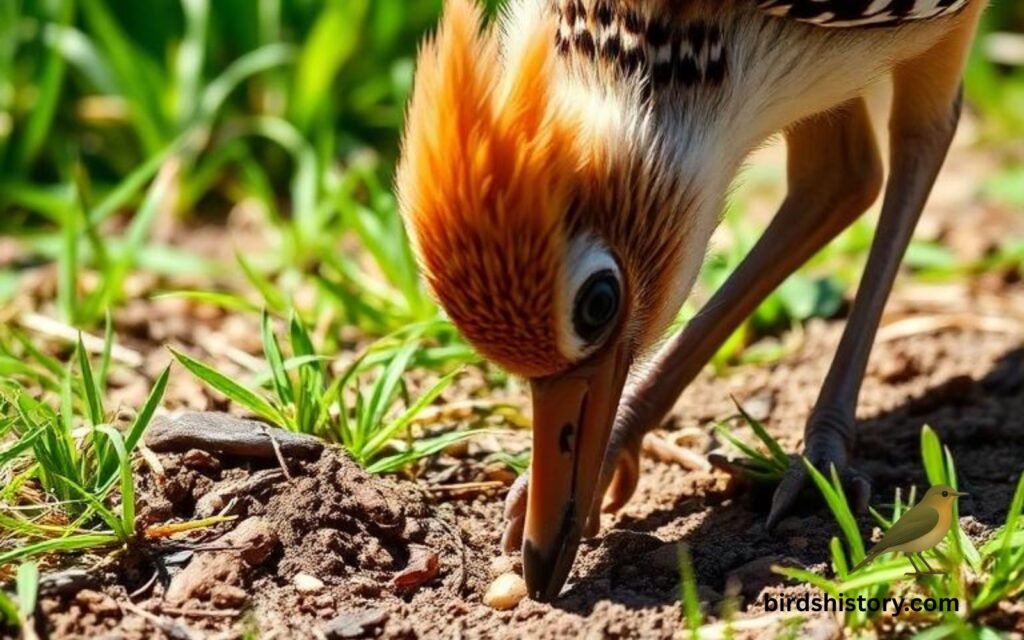
Hoopoe bird behavior in forests and grasslands is a blend of solitary foraging and territorial displays. They spend much of their day probing the soil for insects and larvae, often pausing mid-step to flick the soil aside or open their bill to extract prey. During sunny hours, they perform sunbathing or dust baths, which may help in parasite control and feather maintenance. Their territorial behavior is well developed, with males calling repeatedly to establish boundaries, sometimes engaging in Hoopoe courtship feeding or aerial duels with rivals.
Social interactions are limited mostly to breeding pairs, though during migration or in food-rich areas, small groups may be observed. Their Hoopoe anti-predator behavior is notable: when threatened, adults or chicks use uropygial gland secretion, producing a foul-smelling liquid to deter predators. Nestlings may even squirt fecal streams or hiss in a snake-like manner. Such behaviors reflect the bird’s highly specialized adaptations for survival and indicate why Hoopoes have thrived in diverse habitats across Europe, Asia, and Africa.
Diet & Feeding Habits
The Hoopoe diet is primarily composed of insects, making it an insectivorous bird, but it can also consume small reptiles, amphibians, seeds, and berries. It excels in probing soil for hidden prey, often inserting its closed bill and opening it abruptly—a technique called “gaping.” Large insects like crickets, beetles, and locusts are commonly captured, beaten against the ground, and stripped of indigestible parts before ingestion. This remarkable technique highlights the bird’s Hoopoe feeding habits and efficiency in controlling agricultural pests.
Occasionally, Hoopoes feed in trees or on open surfaces, leveraging their strong wings for maneuvering. They demonstrate selective feeding, often preferring prey around 20–30 millimeters in size, though they can tackle much larger insects and even small lizards. By consuming harmful insects such as the pupae of the processionary moth, Hoopoes provide natural pest control in orchards and fields. This ecological role emphasizes their importance beyond their beauty, linking them directly to human agriculture and ecosystem balance.
Flight & Movement
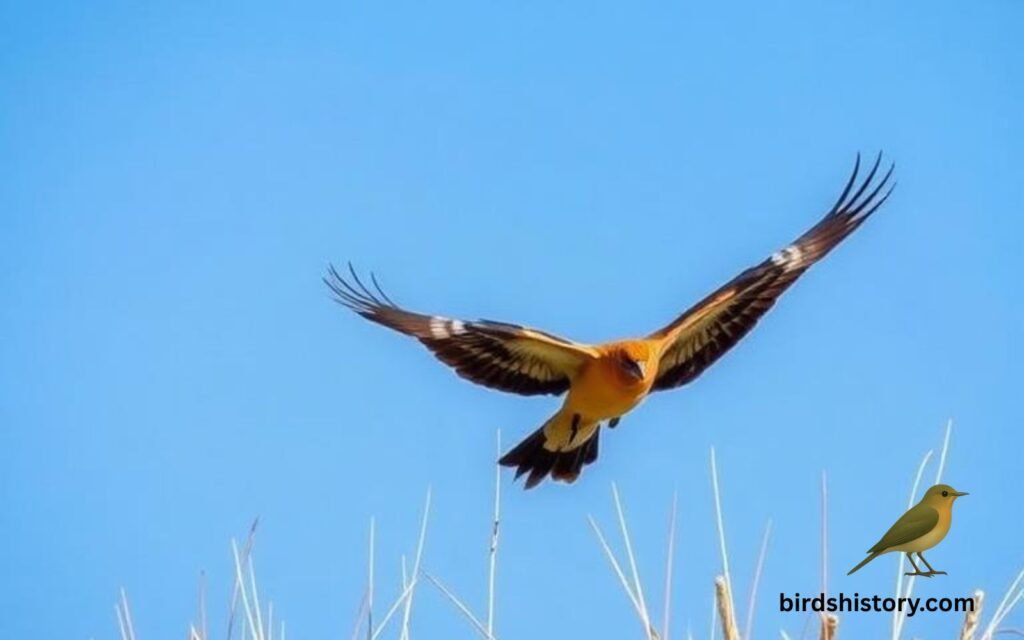
The Hoopoe flight description and patterns is one of its most distinctive traits. Their wings are broad and rounded, allowing for strong, agile flight. The Hoopoe flight pattern is undulating, creating a wave-like movement across the sky, with wings half-closing at the end of each beat. This undulating flight gives them the appearance of a giant butterfly in motion and allows for quick directional changes during foraging or predator evasion. Their flight is usually low and deliberate, though during migrations, they may cover long distances across continents.
Migratory populations, primarily in northern Europe and Asia, undertake seasonal Hoopoe birdmigration to reach tropical regions in Africa during winter. African and tropical Asian populations, however, remain mostly sedentary. During migration, Hoopoes often fly alone or in pairs, keeping distance between mates. These impressive movements demonstrate not only their endurance but also adaptability, as they navigate different climates, altitudes, and ecosystems. Observing a Hoopoe in flight offers a glimpse into both its beauty and functional elegance.
Reproduction & Life Cycle
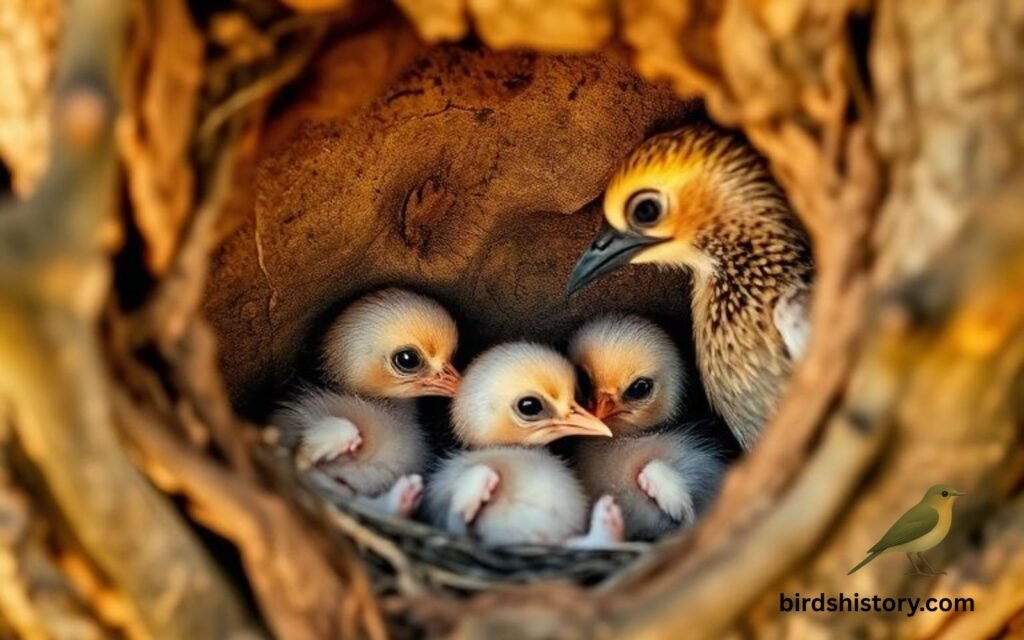
The Hoopoe breeding season varies across its range, generally starting in spring. Males establish territories with persistent Hoopoe songs and calls, attracting females and engaging in Hoopoe courtship feeding. Pairs often nest in tree cavities, walls, cliffs, or even abandoned burrows. Unlike many birds, Hoopoe bird do not build elaborate nests; instead, they rely on existing holes lined with minimal material. The female alone performs Hoopoe incubation, which lasts around 15 to 18 days, beginning with the first egg, resulting in asynchronous hatching.
Chick development is fascinating. Hoopoe chick development is rapid, with downy feathers appearing immediately after hatching. Within a few days, quills emerge, later growing into the adult plumage, including the characteristic Hoopoe crest feathers. Parents feed the young with insects and larvae, sometimes prioritizing the strongest chicks when food is scarce. Fledging occurs between 26 to 29 days, after which juveniles remain near parents briefly. This carefully timed life cycle maximizes survival in variable environments.
Predators & Threats
Hoopoe bird face several natural predators, including birds of prey, snakes, and mammals. However, their unique Hoopoe predator defense strategies, such as releasing a foul-smelling uropygial gland secretion and hissing like snakes, make them challenging targets. Nestlings can squirt feces at intruders, adding another layer of defense. Their territorial behavior also plays a role in deterring rival birds and small predators from encroaching on their nesting sites.
Human activities present additional threats. Habitat loss, hunting, and pesticide use can reduce insect prey, limiting survival. In some regions, the trade of live Hoopoes or their parts for medicinal use also poses risks. Conservation efforts emphasize protecting nesting sites, reducing pesticide exposure, and educating the public about the bird’s ecological value as an insectivorous bird that naturally controls agricultural pests.
Conservation Status
Despite their widespread range, the Hoopoe conservation status varies. In Europe, northern populations face decline due to habitat changes, while in Africa and Asia, many populations remain stable. They are protected in multiple countries, and in Israel, the Hoopoe has become a national symbol, highlighting its cultural importance. International organizations monitor their populations to ensure Hoopoe protection and conservation.
Key measures include safeguarding Eurasian Hoopoe habitat, regulating hunting, and conserving open landscapes with suitable nesting cavities. Since they feed on pests like caterpillars and beetle larvae, protecting Hoopoes also supports sustainable agriculture. Conservation programs often combine scientific monitoring with public outreach to raise awareness about the Hoopoe as sacred bird and its ecological significance.
Human Interaction
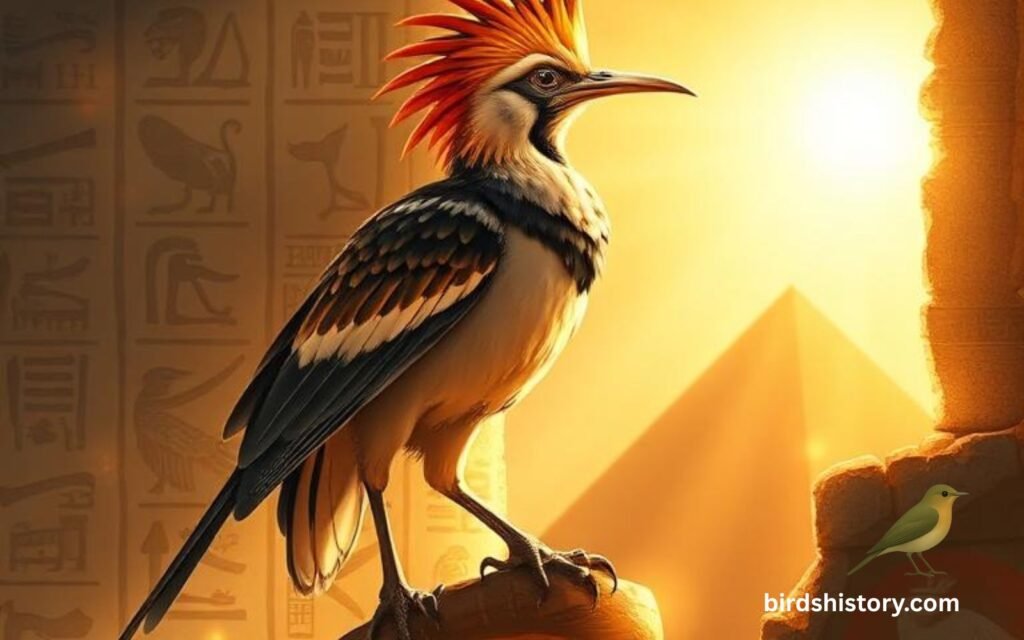
Humans have long admired and mythologized the Hoopoe bird. In Ancient Egypt, it was considered sacred, often depicted in tombs and temples. The Hoopoe appears in religious texts, including the Hoopoe in Quran (Hudhud) and Hoopoe in Torah, reflecting its spiritual and symbolic roles. In folklore, it is sometimes viewed as a harbinger of war, while in Persia, it symbolizes wisdom and leadership, famously leading other birds in Hoopoe in Persian literature.
In modern times, humans benefit from the Hoopoe’s diet. By feeding on insect pests, these birds protect crops and gardens. Yet, they are also threatened by human activities, including hunting for traditional medicine, habitat destruction, and pollution. Balancing human interaction with conservation ensures that this elegant, crested bird continues to thrive while remaining a living symbol of cultural and ecological richness.
Unique Adaptations
The Hoopoe’s survival relies on remarkable unique adaptations. Its long, curved bill allows precise soil probing, while strong head muscles support digging. Its uropygial gland secretion creates a foul odor, deterring predators and protecting eggs. The Hoopoe flight description and patterns—an undulating, wave-like motion—provides agility and evasion from predators. In addition, their acute territorial instincts, courtship feeding, and vocal communication enhance reproductive success.
Hoopoe bird also exhibit fascinating physiological adaptations. Nestlings can spray fecal matter at threats, and adults use visual displays of Hoopoe crest feathers for signaling. The bird’s diet flexibility allows survival in diverse habitats, from European meadows to African savannahs. Together, these traits make the Hoopoe one of the most resilient and intriguing avian species across multiple continents.
Cultural Significance & Myths
Throughout history, the Hoopoe cultural significance is profound. Ancient Egyptians revered it as a sacred bird, while in the Quran, the Hoopoe played a pivotal role as Solomon’s messenger. In the Torah, it is considered a non-kosher bird. European folklore often links it to thieves, war, or death, whereas Persian literature elevates it as a wise leader among birds. In Israel, it symbolizes national pride and is a protected species.
Stories about the Hoopoe bird abound. In Spain, the bird’s nest odor inspired the saying, “huele peor que un nido de abubillas,” highlighting the Hoopoe nest smell / foul odor as both a defense mechanism and a cultural metaphor. Such myths and anecdotes show the deep respect and fascination humans have long held for this Hoopoe bird, linking ecology, behavior, and symbolism in a way few other species achieve.
Birdwatching & Observing Tips
Observing a Hoopoe bird in the wild requires patience and understanding of its behavior. They prefer open areas, short grass, and lightly wooded spaces, making Hoopoe behavior in forests and grasslands predictable for birdwatchers. Early mornings or late afternoons, when insects are active, are ideal times to witness foraging, courtship, or Hoopoe flight pattern displays. Their Hoopoe call / “oop-oop-oop” helps locate them from a distance.
For best viewing, stay quiet near known feeding areas, such as vineyards, orchards, or forest clearings. Binoculars can reveal their Hoopoe crest feathers and striking wing patterns during Hoopoe undulating flight. Documenting migration patterns or nest sites offers valuable data for enthusiasts and researchers. Birdwatching not only provides enjoyment but also contributes to understanding Hoopoe subspecies differences and monitoring Hoopoe conservation status.
Quick Facts & Trivia
The Hoopoe bird continues to surprise with its unique traits. It can live up to 11 years, demonstrates exceptional Hoopoe anti-predator behavior, and feeds primarily on insects, larvae, and small reptiles. The species’ crested crown, undulating flight, and distinctive Hoopoe songs and calls make it unmistakable. From African Hoopoe (U. e. africana) to Eurasian subspecies, these birds remain a living link between mythology, ecology, and culture.
| Fact | Detail |
|---|---|
| Scientific Name | Upupa epops |
| Length | 26–32 cm |
| Wingspan | 42–48 cm |
| Diet | Insects, larvae, small reptiles, seeds |
| Lifespan | Up to 11 years |
| Nesting | Cavities in trees, walls, cliffs |
| Incubation | 15–18 days, asynchronous hatching |
| Special Feature | Uropygial gland secretion, crest feathers |
| Cultural References | Egypt, Quran, Torah, Persia, Israel |
Conclusion
The Hoopoe bird is a fascinating mix of beauty, behavior, and cultural significance. Its elegant crest, undulating flight, and insectivorous habits make it ecologically valuable and visually captivating. From ancient sacred symbolism to modern agricultural benefits, the Upupa epops exemplifies resilience and adaptability. Understanding its Hoopoe bird subspecies differences, migration, and reproductive strategies enriches our appreciation and underscores the importance of protecting this remarkable crested bird across Europe, Asia, and Africa.