Greater Roadrunner – Facts, Behavior, and Conservation 2026
The Greater Roadrunner, also known by its scientific name Geococcyx californianus, is one of the most fascinating Southwestern United States birds. Belonging to the Cuckoo family, this unique roadrunner bird thrives in arid landscapes where few other animals can survive. Unlike many birds that prefer to fly, the Greater Roadrunner is an exceptional runner, showcasing remarkable running speed of birds that allows it to chase prey across open scrublands. Found in deserts, grasslands, and scattered woodlands, this bird’s presence signals a healthy desert ecology, balancing populations of insects, reptiles, and small mammals.
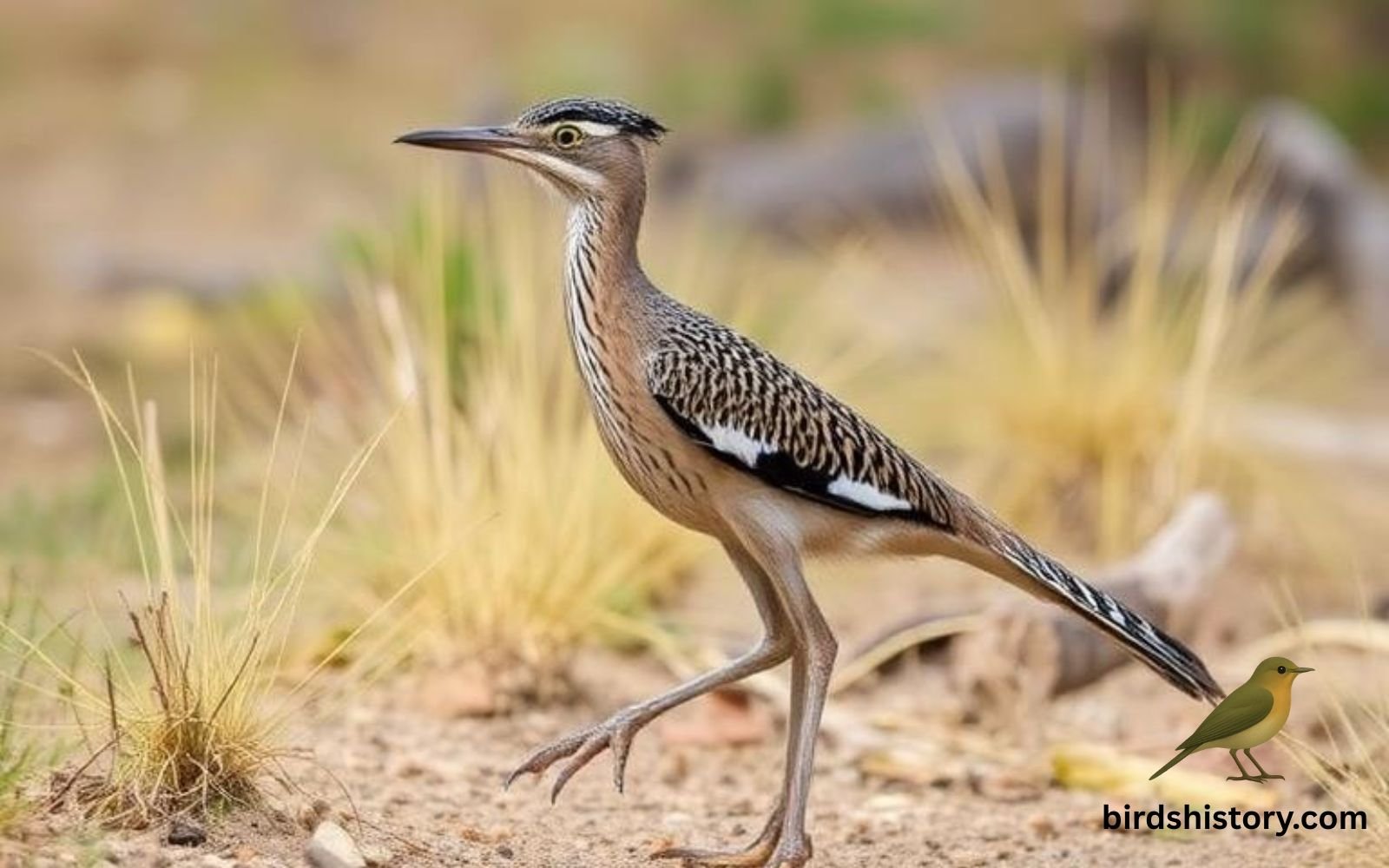
This bird’s charm extends beyond its physical abilities. Known for its curiosity, intelligence, and quirky habits, the Greater Roadrunner often entertains wildlife watchers with its quick sprints and high-energy displays. Its adaptability has allowed it to expand beyond the desert southwest into parts of Texas, Oklahoma, Louisiana, and Arkansas, making it a celebrated part of Oklahoma wildlife. Bird enthusiasts rely on careful bird identification techniques, noting its long tail, shaggy crest, and distinctive X-shaped tracks that reveal its zygodactyl feet—two toes forward and two back—designed for balance and gripping rough terrain.
Physical Description
The Greater Roadrunner is a medium-sized desert bird, measuring between 20 and 24 inches long, with a wingspan of roughly 16–22 inches. Its plumage is mottled brown and white, providing excellent camouflage among the desert shrubs and prickly pear cactus. The long tail and slender body give it a prehistoric appearance, while its oversized beak and shaggy crest make it unmistakable. Both males and females look similar, though males tend to be slightly larger and more robust. Juveniles appear paler and with shorter tails, but they quickly gain adult coloring as they grow.
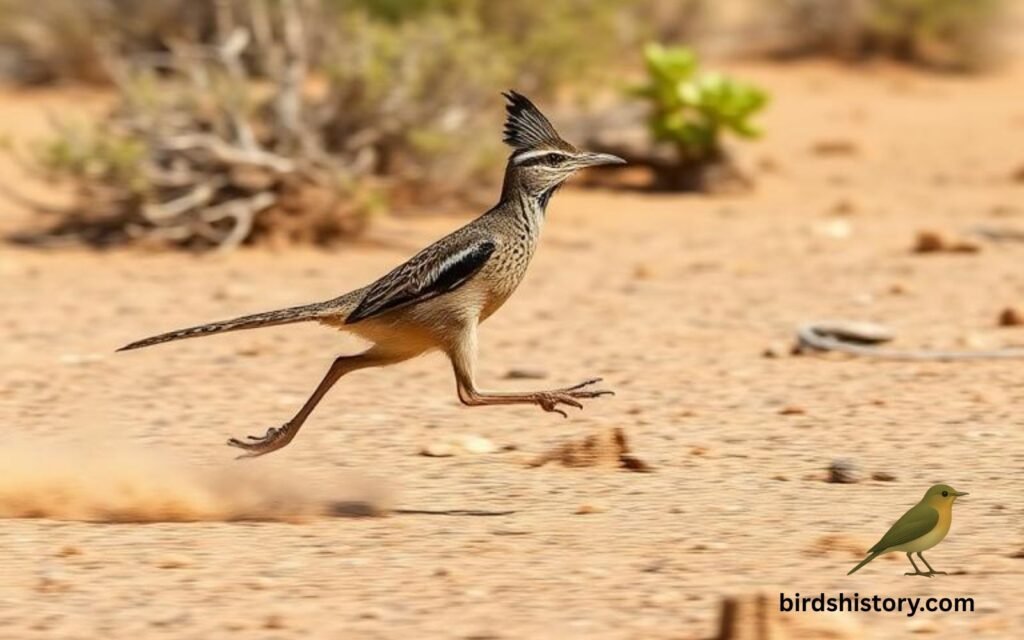
Despite being a bird, the Greater Roadrunner prefers running over flying, demonstrating an extraordinary flight vs. running behavior. When startled, it can perform a short flight or a dramatic gliding escape leap, but its true strength lies in its legs. Capable of speeds up to 15–20 mph, the roadrunner uses rapid sprints to hunt, evade predators, and patrol territories. Its feathers and tail not only provide balance during these bursts but also serve as signaling tools during bird courtship display and territorial interactions. This combination of physical and behavioral traits makes the Greater Roadrunner one of the most adaptable and resilient predatory birds in North American deserts.
Identification Tips
Spotting a Greater Roadrunner in the wild requires attention to detail. Its long tail often tilts downward when running, and the bird frequently rocks from side to side, a behavior that makes it recognizable even from a distance. The X-shaped tracks it leaves behind and its unique zygodactyl feet are distinguishing markers for careful observers. Coloration, size, and crest shape are additional guides for bird identification, helping differentiate it from quails or other ground-dwelling species.
Aside from physical traits, its behavior is a key clue. Roadrunners often use quick, short bursts to chase prey or escape danger, a combination of walking, running, leaping, hunting prey that sets them apart from other insectivorous birds. Their vocalizations, ranging from soft coos to sharp high-pitched barks, also help in recognition. By observing the bird’s speed, stance, and interaction with its environment, enthusiasts can accurately identify the Greater Roadrunner even without visual confirmation.
Habitat & Range
The Greater Roadrunner prefers roadrunner habitat that includes deserts, arid scrublands, grasslands, and lightly wooded areas. It thrives in regions with scattered bushes, low trees, and prickly pear cactus, providing both cover and hunting grounds. Its range extends across the desert southwest, East Texas, Oklahoma, Louisiana, and Arkansas, highlighting its adaptability to different ecosystems within the United States. This bird plays an important role in desert ecology, controlling insect populations and maintaining a balance in the food chain.
| Habitat Feature | Description |
|---|---|
| Open Scrublands | Sparse vegetation allowing quick running and hunting |
| Desert Regions | Arid zones with minimal tree cover |
| Low Trees and Cacti | Sites for nesting and cover from predators |
| Grasslands | Areas supporting prey like lizards, insects, and rodents |
The bird’s presence signals a healthy ecosystem. It avoids dense forests and extremely urban areas but can often be found along roadsides, ranches, and semi-arid agricultural fields. Its adaptability to these habitats demonstrates key adaptive features, including the ability to manage temperature through thermoregulation in birds, conserve energy during cool nights, and take advantage of scattered food sources.
Migration & Movement
Unlike many migratory birds, the Greater Roadrunner is largely sedentary, but it may shift locally in response to extreme temperatures or food scarcity. Its remarkable running speed allows it to cover territory quickly, patrolling areas that may stretch for several miles. Short bursts of flight are typically used to evade predators or to glide from perches, but it relies on its legs for nearly all movement.
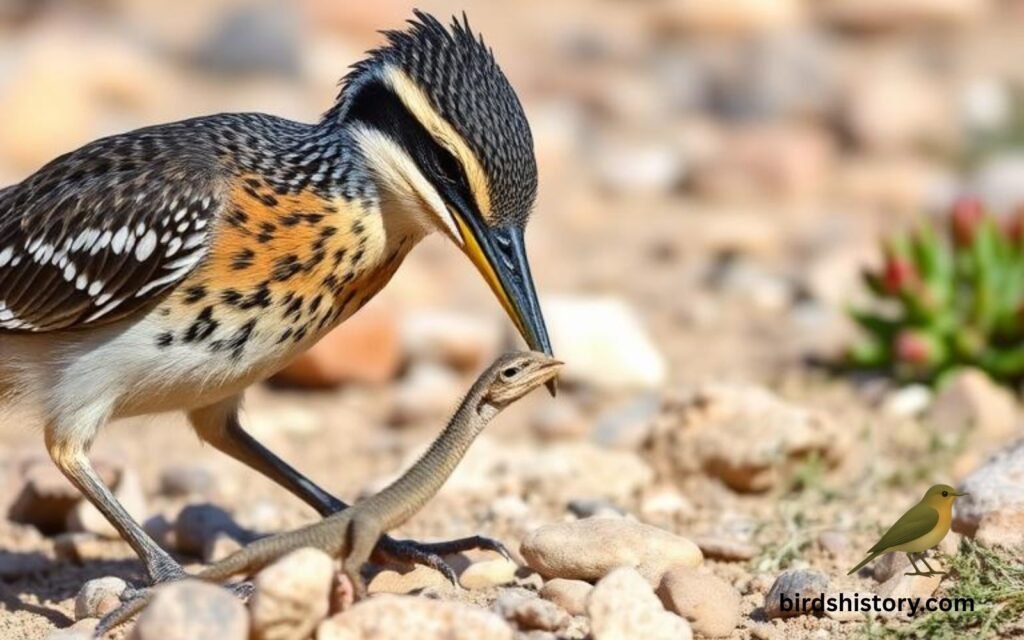
The bird’s mobility supports its hunting strategy. With a diet including insects, reptiles, lizards, snakes, rodents, and birds, the Greater Roadrunner uses its agility to stalk prey in open scrublands, maneuver through thorny bushes, and even leap to catch flying insects or small birds. Seasonal movement is more influenced by habitat range shifts due to severe winters or drought rather than traditional long-distance migration. Observers often note that territorial behavior and social interaction with neighboring roadrunners can shape where the bird chooses to hunt or nest.
Behavior & Lifestyle
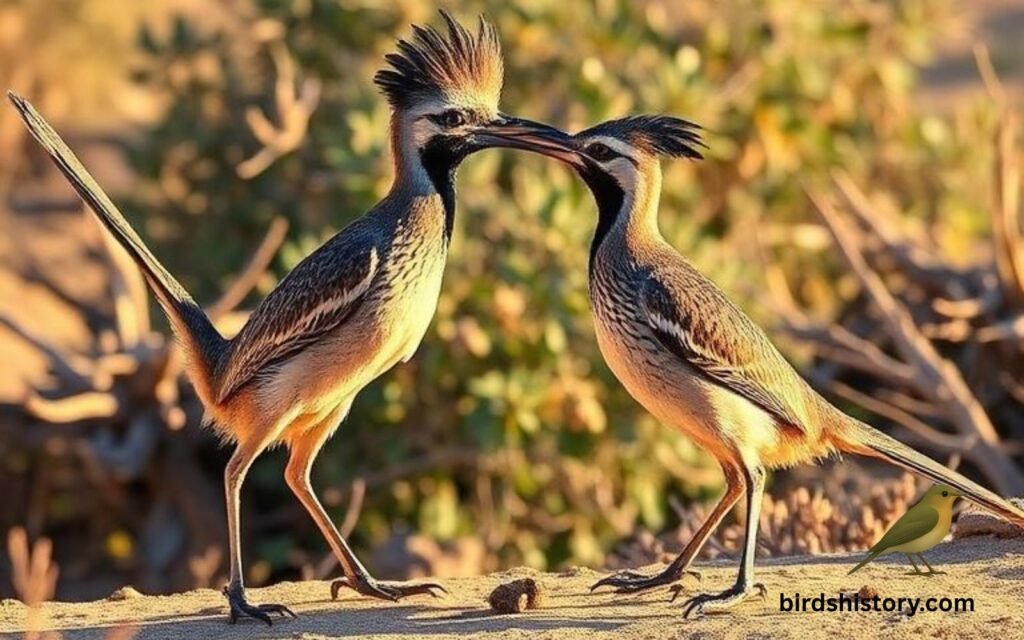
The Greater Roadrunner exhibits complex bird behavior patterns, combining territorial defense, social interaction, and advanced hunting techniques. They are curious and intelligent, often investigating human presence while remaining cautious. Courtship involves elaborate bird courtship display, including chasing, offering sticks, tail wagging, and bowing. Pairs may mate for life, defending their territory throughout the year.
Daily life involves patrolling roadrunner habitat, hunting prey with a mix of walking, running, leaping, hunting prey, and interacting with family members. Vocalizations range from soft coos to guttural calls and high-pitched barks, providing communication for courtship, alarm, and territorial claims. These behaviors highlight their role as both predatory birds and key components of desert ecology, controlling populations of insects, small reptiles, and rodents.
Feeding & Diet
The Greater Roadrunner’s diet is incredibly diverse. It consumes insects, lizards, snakes, rodents, birds, fruits, seeds, scorpions, tarantulas, and centipedes, making it one of the most versatile reptile diet birds and insectivorous birds in North America. Hunting is a combination of stealth and bursts of speed, allowing it to capture prey that would escape other avian predators.
| Prey Type | Description |
|---|---|
| Insects | Grasshoppers, beetles, and other arthropods |
| Reptiles | Lizards, snakes including rattlesnakes |
| Small Mammals | Rodents such as mice and young squirrels |
| Birds | Nestlings and small ground-dwelling birds |
| Plant Matter | Fruits, cactus seeds, and occasionally flowers |
| Arachnids | Scorpions, tarantulas, centipedes |
Its hunting method includes running swiftly, leaping to strike, and sometimes pinning prey against the ground. Observers have even reported young being fed snakes that are swallowed in portions, illustrating the bird’s advanced hatchling care and juvenile bird feeding skills. By maintaining a balanced diet, the Greater Roadrunner contributes to rodent control birds and insect population management, playing a critical ecological role in the Southwestern United States birds’ habitat.
Nesting & Reproduction
The Greater Roadrunner has fascinating nesting habits, often choosing low trees, dense bushes, or prickly pear cactus to build its platform nest. Constructed from sticks, grass, feathers, cacti, and sometimes cow manure lining, these nests provide protection against predators and harsh desert conditions. Bird reproduction begins with elaborate courtship rituals, including chases, tail wagging, and offering sticks to mates. Pairs may mate for life, guarding their territory throughout the year and engaging in cooperative hunting to feed their young.
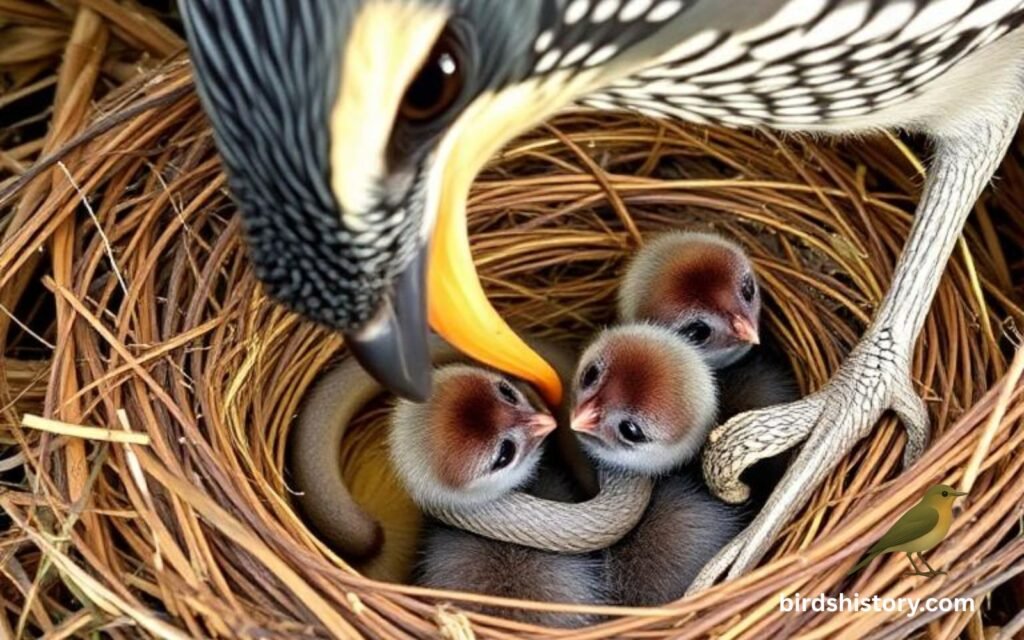
Eggs are typically white, pale yellowish, and number 3–5, occasionally ranging from 2–6. Both male and female share incubation, usually lasting around 20 days. Once hatched, the young leave the nest after 18–21 days but continue receiving care, with parents feeding them for up to 30–40 days. This structured parental care ensures high survival rates among juveniles, demonstrating advanced hatchling care and juvenile bird feeding behaviors that few other predatory birds exhibit in the wild.
Life Cycle
The life of a Greater Roadrunner unfolds in a series of skillful stages. From the moment chicks hatch, they are taught hunting techniques, first targeting insects and small lizards before graduating to snakes and rodents. Juveniles quickly develop the feeding behavior of their parents, combining walking, running, leaping, hunting prey in swift sequences. The birds reach full maturity around one year, after which they establish territories, pair for mating, and participate fully in parental duties.
In the wild, their lifespan averages seven to eight years, though some individuals can reach 10 years in protected environments. Seasonal changes influence behavior, including hunting times and thermoregulation. During cold nights, roadrunners reduce activity and rely on their heat exchanger patch to absorb sunlight in the morning, demonstrating impressive thermoregulation in birds. These adaptive features ensure survival even in harsh climates of the desert southwest.
Adaptations
The Greater Roadrunner has evolved a remarkable array of adaptive features. Its long, muscular legs and tail allow precise balance while running across open scrublands, giving it unmatched running speed of birds among desert birds. Its wings, though short, provide enough lift for a quick gliding escape leap or short flight when evading predators.
In addition, this bird exhibits sophisticated thermoregulation in birds. At night, body temperature drops to conserve energy, and at dawn, it exposes the dark patch on its back to the sun, absorbing heat efficiently. Its diet flexibility, including insects, reptiles, rodents, and fruits, allows survival across variable habitats and seasons. Such adaptations make the Greater Roadrunner a model of resilience among Southwestern United States birds, capable of thriving in conditions that challenge most avian predators.
Fun Facts & Trivia
The Greater Roadrunner is a bird of surprises. For instance, it can run up to 15–20 mph, occasionally leaping to catch small birds or insects mid-air. Cultural references abound; Native American tribes used roadrunner tracks in rituals, believing they could mislead evil spirits. In popular culture, cartoons like “Wile E. Coyote and the Roadrunner” have immortalized the bird’s clever, quick-footed persona.
It is also a masterful hunter, consuming creatures that many other predatory birds avoid. Young roadrunners have been observed swallowing snakes in segments while parents assist with hatchling care, a spectacle that demonstrates the complexity of juvenile bird feeding. This bird’s bird vocalizations, ranging from coos to high-pitched barks, further contribute to its charm and recognition among bird identification enthusiasts.
Threats & Conservation
Despite its widespread presence, the Greater Roadrunner faces threats from climate change, severe winters, and habitat loss. Its habitat, including deserts, grasslands, and scrublands, is sensitive to human encroachment and environmental shifts. According to the IUCN Red List, its bird conservation status is currently Least Concern, yet population trends in some regions, like California and the northern edges of its range, show gradual declines.
| Threat Factor | Impact on Greater Roadrunner |
|---|---|
| Climate Change | Alters prey availability and habitat suitability |
| Severe Winters | Limits range expansion and increases mortality |
| Habitat Loss | Urban development reduces nesting and hunting grounds |
| Human Interaction | Road collisions and habitat fragmentation pose risks |
Conservation efforts include habitat protection, citizen science programs like the Christmas Bird Count, and public education on the importance of rodent control birds in maintaining ecosystem balance. Monitoring populations using climate range maps helps predict future shifts and plan effective protective measures.
At the Museum & Observation Tips
For those eager to observe the Greater Roadrunner safely, wildlife centers and natural history museums in the USA offer excellent opportunities. Observers should note the habitat range, including deserts, East Texas, Oklahoma, Louisiana, and Arkansas, and focus on areas with scattered trees, low bushes, or prickly pear cactus. Using binoculars and field guides enhances bird identification, while maintaining distance ensures natural behavior and prevents disturbance to nests.
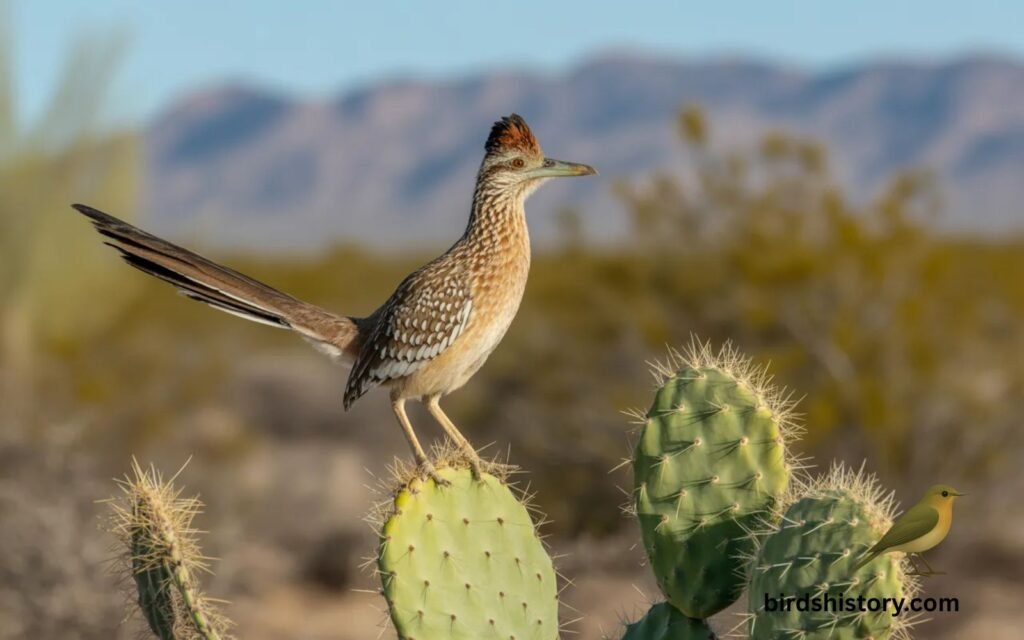
Seasonal timing matters; early morning or late afternoon are ideal for spotting predatory birds active in hunting or territorial displays. Observing bird courtship display, tracking X-shaped tracks, or listening to bird vocalizations offers rewarding insights into the species’ complex lifestyle. These observation strategies help enthusiasts connect directly with this iconic member of the Cuckoo family.
Frequently Asked Questions (FAQs)
Can a roadrunner fly?
Yes, the Greater Roadrunner can fly, but only for short distances. Its wings are adapted for gliding and escape leaps, not long flights. Most of its movement relies on its exceptional running speed of up to 15–20 mph, which makes it a powerful predatory bird on the ground.
Is a roadrunner faster than an ostrich?
No, an ostrich is faster. While a roadrunner’s running speed is impressive for a bird, reaching 15–20 mph, an ostrich can sprint up to 45 mph. Roadrunners are specialized for short bursts and agile movements in open scrublands, not long-distance speed like the ostrich.
Is it rare to see a roadrunner?
Not particularly. Roadrunners are common in the desert southwest, East Texas, Oklahoma, Louisiana, and Arkansas. They are shy and elusive, so sightings may seem rare, but they thrive in suitable roadrunner habitat such as deserts, grasslands, and prickly pear cactus areas.
Is a roadrunner a real bird?
Absolutely. The Greater Roadrunner (Geococcyx californianus) is a real, living bird and a member of the Cuckoo family. It is famous for its running speed, predatory skills, and quirky behavior in the deserts and scrublands of the USA.
Are roadrunners friendly?
Roadrunners are generally wild and cautious. They are curious and may approach humans, but they are not domesticated and do not exhibit “friendly” behavior like pets. Their interactions are more about curiosity than affection.
Is the road runner the fastest bird?
The roadrunner is fast for a ground-dwelling bird, reaching 15–20 mph, but it is not the fastest bird overall. Birds like the peregrine falcon reach speeds of over 200 mph in a dive, while some swifts cruise at 60 mph in level flight.
Can a human outrun a roadrunner?
Yes, most humans can outrun a roadrunner briefly, but over short bursts, the bird’s agility and sudden dashes make it tricky to catch. Roadrunners rely on running speed and quick escape leaps to evade predators.
What is the #1 most endangered bird in the world?
The Spix’s Macaw is one of the most endangered birds globally, with very few individuals left in the wild. While roadrunners are not endangered, this highlights the contrast in bird conservation status across species.
Which animal chases the roadrunner?
Predators such as hawks, snakes, bobcats, and coyotes may chase roadrunners. Roadrunners use a combination of running speed, short flights, and camouflage among open scrublands and prickly pear cactus to evade these threats.
What is the lifespan of a roadrunner?
In the wild, the Greater Roadrunner typically lives 7–8 years, though some can reach up to 10 years in protected habitats. Lifespan depends on predation, food availability, and climate conditions.
What is faster than a roadrunner?
Many birds are faster, including the ostrich on land and the peregrine falcon in the air. Among ground birds, roadrunners are moderately fast but excel in agility rather than top speed.
What eats a roadrunner?
Predators include hawks, snakes, coyotes, and bobcats. Eggs and chicks are vulnerable to raccoons, skunks, and other small carnivores. Their nesting habits, such as placing nests in low trees, prickly pear cactus, or dense bushes, help protect against these threats.
How intelligent are roadrunners?
Roadrunners are highly intelligent and adaptable. They exhibit problem-solving skills, strategic hunting, and complex behavior patterns like courtship displays, territorial defense, and social interaction. Observers note their ability to handle dangerous prey like snakes safely, demonstrating remarkable cognitive abilities for a Southwestern United States bird.
Conclusion
The Greater Roadrunner is more than a fast-running bird; it is a symbol of resilience, intelligence, and adaptability. With its unique combination of physical adaptations, clever behavior, and wide-ranging bird diet diversity, it thrives in the deserts, scrublands, and grasslands of the USA. Observing its nesting habits, feeding behavior, courtship display, and vocalizations offers a window into the fascinating world of Southwestern United States birds. Protecting its habitat and understanding its ecological role ensures that this iconic roadrunner bird continues to amaze and inspire future generations.