Great Blue Heron: A Complete History of Nature’s Tall Fisher
The Great Blue Heron (Ardea herodias) is one of the most iconic birds of North America. With its towering height, slow deliberate wingbeats, and elegant fishing style, this heron captures the imagination of birdwatchers and casual observers alike.
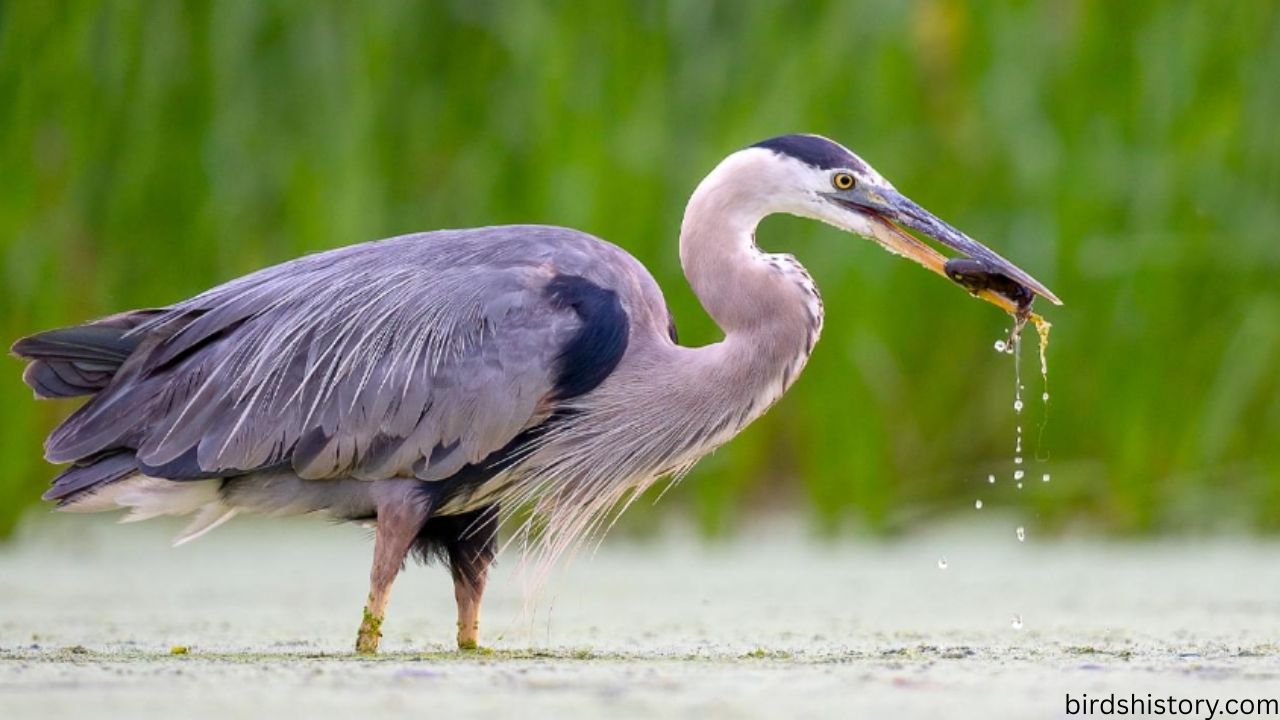
Commonly found along shorelines, marshes, and riverbanks, the Great Blue Heron is often seen standing perfectly still, waiting for the right moment to spear a fish with its dagger-like bill. Their patience and skill make them fascinating to watch.
One fun fact is that despite their large size, Great Blue Herons are surprisingly light—they weigh only about 5–6 pounds thanks to their hollow bones. Because of this, they are powerful fliers that can travel great distances.
Great Blue Heron Taxonomy / Classification
- Common Name: Great Blue Heron
- Scientific Name: Ardea herodias
- Family: Ardeidae (herons, egrets, and bitterns)
- Order: Pelecaniformes
- Class: Aves
Also Read: /the-mallard/
They are part of the heron family, a group of long-legged wading birds that live all over the world.
Great Blue Heron Physical Description
The Great Blue Heron holds the title of the largest heron species found in North America.
- Height: 97–137 cm (38–54 inches).
- Wingspan: 167–201 cm (66–79 inches).
- Weight: 2–3 kg (4.5–6.5 lbs).
- The Great Blue Heron has a body covered in bluish-gray feathers, long legs, and a sharp, yellow bill.
- Head: White face with a black crown and long black plumes extending backward.
- Neck: Long and S-shaped, with rufous and gray streaking.
- Male vs Female: Males are slightly larger but otherwise similar in appearance.
- Unique Trait: In flight, they tuck their necks into an “S” shape, unlike cranes, which fly with necks extended.
During breeding season, adults grow elegant plumes on their chest and back, making them even more striking.

Habitat and Range of Great Blue Heron
The Great Blue Heron is a highly versatile bird that inhabits a broad geographic area.
- Great Blue Herons can be found in a variety of places, including North and Central America, the Caribbean, and northern South America.
- Preferred Habitats: Freshwater and saltwater wetlands, rivers, lakes, marshes, estuaries, and coastal shorelines.
- Migration: Northern populations migrate south in winter, while those in warmer climates may remain year-round.
Their ability to live in both freshwater and saltwater makes them one of the most widespread herons.
Diet and Feeding Habits of Great Blue Heron
Great Blue Herons are carnivorous hunters, known for their patience and precision.
- Main Diet: Fish, amphibians, reptiles, crustaceans, insects, and small mammals.
- Hunting Style:
- Stand motionless or slowly stalk prey.
- Use sharp bill to spear or grasp.
- Swallow prey whole, often head-first.
- Unique Behavior: They sometimes hunt at night, taking advantage of their excellent vision.
- Adaptability: While fish is their main diet, they will opportunistically feed on almost any animal small enough to swallow.
This versatility makes them highly successful predators in diverse habitats.
Great Blue Heron Behavior and Lifestyle
The Great Blue Heron is both solitary and social, depending on the activity.
- Foraging: Usually solitary, defending feeding territories.
- Nesting: Highly social during breeding season, forming colonies called “heronries.”
- Flight Style: Slow, powerful wingbeats; neck tucked in S-shape; legs trailing behind.
- Vocalizations: Harsh croaking or squawking calls, especially in flight or at colonies.
- Mating Rituals: Males perform elaborate courtship displays with stretching, bill snapping, and presenting sticks to females.
They are graceful hunters but can be surprisingly clumsy and noisy when interacting at colonies.

Great Blue Heron Reproduction and Lifespan
Great Blue Herons have fascinating nesting habits.
- Breeding Season: Spring to early summer.
- Nesting Sites: Trees near water, often in colonies with dozens or even hundreds of nests.
- Nest Structure: Large stick platforms lined with softer material.
- Eggs: 3–5 pale blue eggs.
- Incubation: 25–30 days, shared by both parents.
- Chicks: Fed by regurgitation; fledge at about 8–10 weeks.
- Lifespan: Typically 15 years in the wild, though some live beyond 20.
Heronries can be long-lasting, used year after year, growing into massive colonies that shape local ecosystems.
Predators and Threats
While adult Great Blue Herons have few predators, eggs and chicks face more risks.
- Predators of Eggs/Chicks: Raccoons, crows, gulls, and hawks.
- Adult Predators: Eagles and owls occasionally prey on adults.
- Human Threats:
- Habitat loss from wetland drainage.
- Pollution, especially mercury contamination in fish.
- Disturbance of nesting colonies by human activity.
Despite these challenges, their adaptability helps them survive.
Great Blue Heron Conservation Status
- IUCN Red List: Least Concern.
- Population: Stable to increasing across most of their range.
- Conservation Success: Wetland protection and hunting bans have supported healthy populations.
- Challenges Ahead: Climate change and pollution may affect food supplies and breeding habitats.
Overall, the Great Blue Heron is considered a conservation success story, though continued efforts are needed to protect wetlands.
Interesting Facts About the Great Blue Heron
- Largest heron in North America.
- Flies with its neck tucked in, unlike cranes.
- Can swallow fish up to half a foot long in one gulp.
- Sometimes choke if prey is too large.
- Hunt both day and night.
- Their colonies can include hundreds of nests.
- Can stand motionless for hours while hunting.
- Nicknamed the “statue bird” for its stillness.
- Despite their size, they weigh only about 6 lbs.
- Play an important role in wetland ecosystems as top predators.

Conclusion
The Great Blue Heron is a remarkable bird—tall, elegant, and skilled. From its patient fishing style to its massive nesting colonies, this heron is a symbol of wetland health and resilience. Watching one glide across a lake or stand silently at the water’s edge is a reminder of nature’s quiet power.
Protecting wetlands ensures that these herons continue to thrive, inspiring future generations with their beauty and grace.
FAQs About Great Blue Heron
1. What is the formal Latin name for the Great Blue Heron?
Ardea herodias.
2. How big is a Great Blue Heron?
Standing at about 4 feet tall, it has a wingspan that can reach up to 7 feet.
3. What do Great Blue Herons eat?
Mostly fish, but also frogs, insects, reptiles, and small mammals.
4. Where do Great Blue Herons live?
Across North and Central America in wetlands, rivers, lakes, and coastal areas.
5. Do Great Blue Herons migrate?
Yes, northern populations migrate south for winter.
6. How do Great Blue Heron hunt?
They remain motionless or move slowly before using their sharp bills to pierce their prey.
7. Are Great Blue Herons endangered?
No, they are classified as Least Concern with stable populations.
8. How long do Great Blue Heron live?
On average 15 years in the wild.
9. Do Great Blue Heron nest alone?
No, they form large colonies called heronries.
10. Why are they called Great Blue Herons?
Because of their large size and bluish-gray plumage.