7 Birds With the Best Eyesight: How Powerful Is Bird Vision?
Look up at the sky and watch a bird glide with confidence. What you’re seeing is vision at its finest. Birds with the best eyesight don’t just rely on sight, they depend on it for survival. From spotting tiny prey from extreme heights to navigating vast landscapes, bird vision abilities far exceed human limits. In fact, bird vision vs human vision feels like comparing a magnifying glass to a high-powered telescope.
This remarkable ability comes from specialized bird eye anatomy, dense photoreceptor cells, and unique adaptations shaped by evolution. Whether it’s nocturnal bird vision that thrives in darkness or daytime bird vision that excels under bright sunlight, birds dominate the visual world.
In this guide, you’ll discover birds with strongest eyesight, explore how their eyes work, and learn which species truly deserve the title of birds with best vision in the world. Get ready to see the world through sharper eyes—literally.
Introduction to Bird Eyesight and Vision Capabilities
Picture flying at highway speed while dodging branches, spotting food, and tracking movement below. That’s daily life for birds. Bird vision abilities evolved for survival, making sight their primary sense. Compared to humans, bird vision vs human vision feels like standard definition versus ultra-high resolution.
What makes this impressive is consistency. Across habitats, birds rely on eyesight for hunting, navigation, and social cues. From diurnal birds active in daylight to night hunters, birds with excellent eyesight dominate the skies because vision fuels every decision they make.
Anatomy of a Bird’s Eye
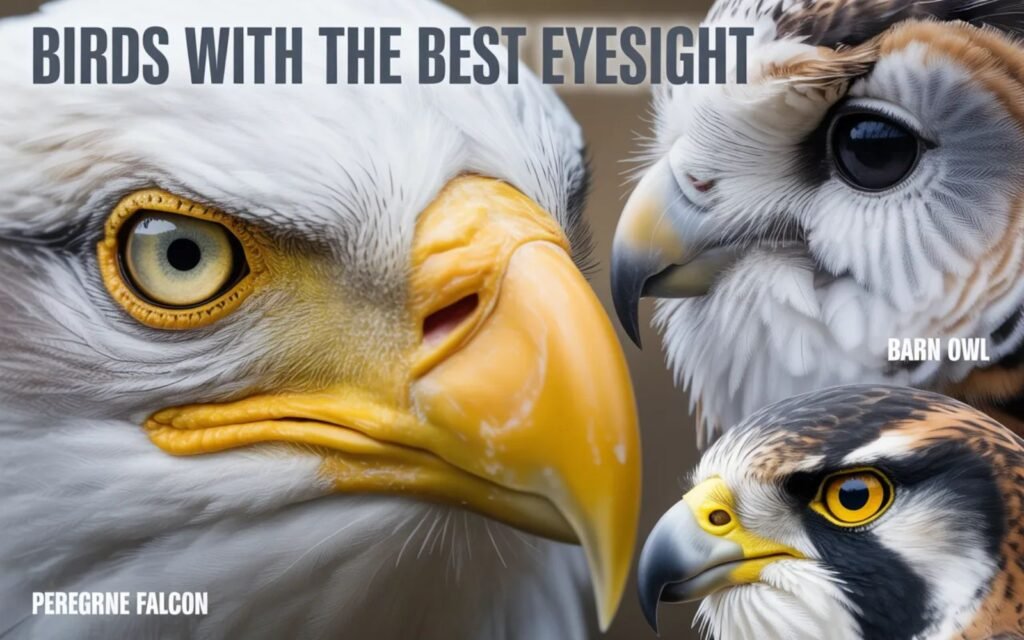
At the core of bird eye anatomy lies size and structure. Birds have oversized eyes relative to their heads, packed with detail-detecting cells. Light enters through the cornea, bends through the lens, and hits the retina, where vision truly begins.
Unlike humans, birds control focus using powerful eye muscles and enhanced lens flexibility. Signals travel through the optic nerve to the brain almost instantly. This structure supports long-distance vision in birds, even during rapid flight or sudden dives.
Bird With the Best Eyesight in the World
Ask scientists which bird has the best eyesight, and one name often surfaces. The Wedge-tailed eagle stands out due to massive eyes and extreme cone density. Research suggests this species may exceed all land animals in visual acuity in birds.
This advantage isn’t just about size. Neural processing plays a role. Signals travel faster from eye to brain, improving reaction time. Combined with altitude hunting, this creates arguably the strongest eyesight in birds known today.
| Bird Species | Eyesight Strength | Unique Vision Ability |
|---|---|---|
| Bald eagle | Exceptional distance vision | Spots prey over 2 miles away |
| Wedge-tailed eagle | Highest known visual acuity | Sharpest land-animal eyesight |
| Peregrine falcon | Extreme motion tracking | Sees clearly at 200 mph dives |
| Tawny owl | Elite nocturnal bird vision | Hunts in near-total darkness |
| Harris hawk | Advanced color detection | Tracks movement from far away |
| American woodcock | Wide visual field | Nearly 360° awareness |
| Broad-tailed hummingbird | UV and non-spectral colors | Sees colors humans can’t |
Eagles vs Hawks: Which Bird Has Stronger Eyesight?
The debate over eagles vs hawks eyesight remains popular. Eagles excel at distance. Hawks shine in color detail and tracking movement. Both represent best bird vision but apply it differently depending on terrain and prey.
Hawks like the Harris hawk rely on teamwork and sharp contrast detection. Eagles dominate wide landscapes. This comparison highlights how bird eyesight comparison depends on context rather than a single winner.
Birds With the Best Night Vision
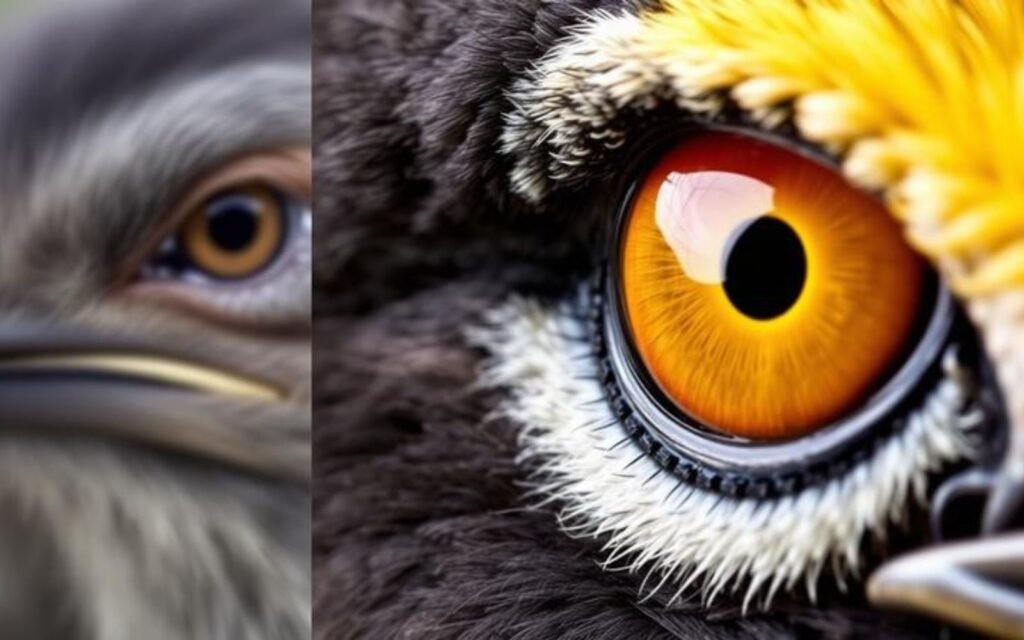
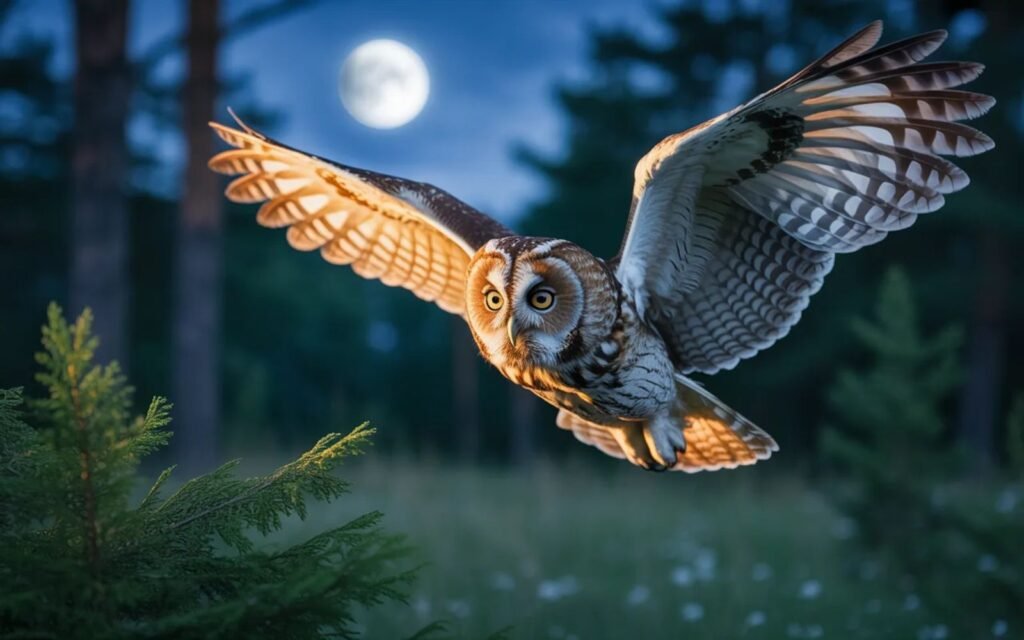
Darkness doesn’t slow every bird. Night vision birds rely on dense rod cells for superior night hunting vision. The Tawny owl leads here, spotting prey in near-total darkness with ease.
These birds evolved enlarged pupils and extreme light sensitivity. Their nocturnal bird vision turns faint moonlight into usable information. When asked which bird has the best night vision, owls remain the strongest example.
Bird Vision vs Human Vision
Birds with best eyesight don’t just see better than humans, they see differently. Compared to humans, bird vision vs human vision feels like standard definition versus ultra-high resolution.
| Vision Feature | Birds | Humans |
|---|---|---|
| Visual acuity | Extremely high, often 20/5 vision | Average 20/20 vision |
| Color perception | birds with color vision including UV | Limited to visible spectrum |
| Photoreceptor density | Up to 1,000,000 cone cells per mm² | Around 200,000 cones per mm² |
| Motion detection | Detects very fast movement | Misses rapid motion |
| Low-light vision | Superior in many species | Moderate |
| Field of view | Up to 340° in some birds | Around 180° |
| Overall result | birds with excellent eyesight | Much weaker comparison |
This comparison clearly answers questions like do birds see better than humans and strengthens topical authority.
Birds With the Sharpest Daytime Vision
Bright skies favor speed hunters. Falcons and eagles dominate daytime bird vision, detecting motion instantly. The Eurasian kestrel uses this skill to hover and strike small mammals with pinpoint accuracy.
Sunlight enhances color contrast, improving daytime hunting vision. This sharpness supports prey spotting even against cluttered backgrounds. Few animals rival birds under full daylight conditions.
Rods and Cones: How Birds See So Clearly
Inside the retina sit photoreceptor cells, mainly rod cells and cone cells. Rods manage darkness and motion, while cones sharpen detail and color. Raptors pack up to five times more cones than humans, driving superior visual acuity in birds.
Some species also feature a fovea, a tiny hotspot for sharp focus. Others, like falcons, carry a dual fovea, letting them see forward and sideways simultaneously. That design explains why birds with sharp eyesight rarely miss moving prey.
Can Birds See Colors and Ultraviolet Light?
Humans see millions of colors. Birds see more. Thanks to tetrachromatic vision, many species perceive ultraviolet vision beyond human limits. This expanded color spectrum allows birds that see ultraviolet light to detect food, mates, and trails invisible to us.
Researchers discovered UV light perception helps birds identify ripe berries and feather signals. Special oil droplets in cones filter light wavelengths for clarity. This means flowers, feathers, and landscapes appear richer and more detailed to birds than to people.
Visual Acuity in Birds: How Sharp Is Bird Vision?
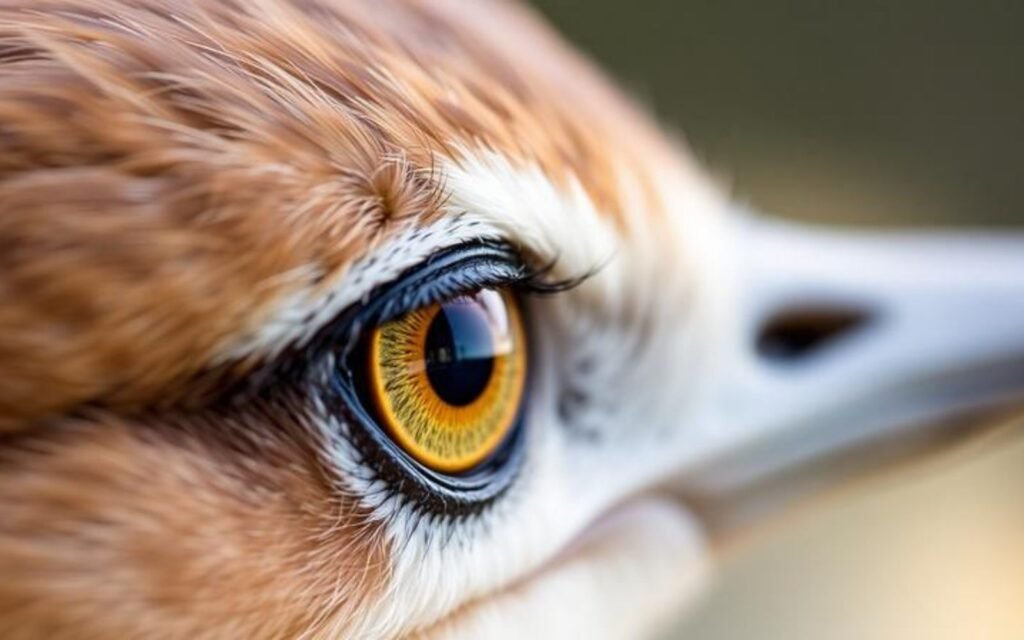
Sharpness matters when hunting. Visual acuity measures how much detail an eye detects at distance. Some raptors achieve 20/5 vision, meaning they see from 20 feet what humans need five feet to see. That’s elite distance vision.
This explains why which bird sees the farthest remains a common question. Studies suggest birds see two to eight times sharper than humans. Combined with rapid motion detection, prey has little chance once spotted.
Binocular vs Monocular Vision in Birds
Eye placement defines strategy. Predators rely on binocular vision, where overlapping sight creates depth accuracy. This boosts depth perception during dives or chases. Birds like the Peregrine falcon depend on this for precision strikes.
Prey species often use monocular vision, giving nearly panoramic awareness. This wide field supports predator detection from all sides. The balance between these systems shapes a bird’s survival style and explains differences across species.
Eye Position and Lifestyle Differences in Birds
Eye positioning reflects lifestyle. Hunters face forward. Grazers and foragers look sideways. The American woodcock achieves near-complete visual coverage, allowing feeding while watching for danger. This design showcases smart evolutionary adaptation.
Lifestyle drives structure. Water birds tilt heads to counter glare. Forest birds rely on quick focus shifts. These bird vision adaptations improve hunting efficiency, proving vision evolves to match daily challenges.
Birds of Prey With the Best Eyesight
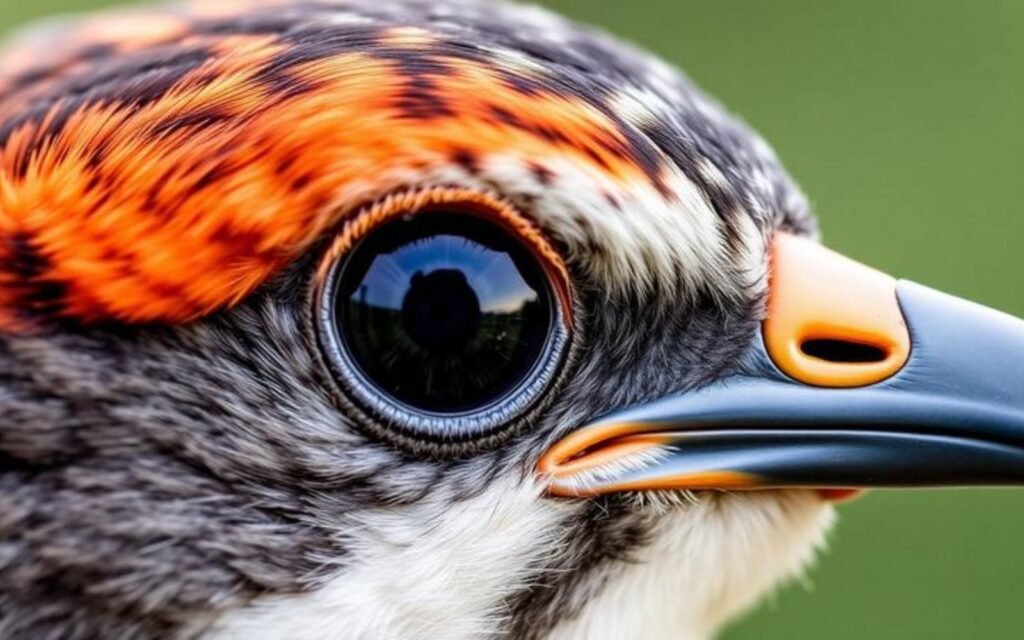
High above open land, birds of prey eyesight shows its full power. Raptors combine speed, focus, and patience. The Bald eagle scans lakes from great heights, while the Peregrine falcon tracks fast targets midair. This group defines birds with strongest eyesight through unmatched clarity and timing.
What sets raptors apart is precision under pressure. During dives, their eyes stabilize images while bodies accelerate. That ability supports long-range prey detection and keeps targets sharp. When people ask how good is bird vision, raptors provide the clearest answer.
Birds With Poor Eyesight (Yes, They Exist)
Not every bird depends on vision. Scavengers like the Black vulture rely more on social cues and smell. Their eyesight works well enough, but it doesn’t define survival.
Ground feeders and nocturnal scavengers compensate with hearing or scent. This tradeoff shows vision isn’t universal. Even so, most birds still outperform mammals in basic visual tasks.
Other Adaptations That Enhance Bird Vision
Beyond structure, birds carry extra tools. The nictitating membrane, also called the third eyelid, protects eyes during dives and high-speed flight. It keeps vision clear without blocking sight.
Some species detect electromagnetic radiation patterns, aiding navigation using magnetic fields. The European robin uses this skill during migratory navigation, turning vision into a powerful survival mechanism.

Conclusion
After exploring the science and species behind avian sight, one thing becomes clear. Birds with excellent eyesight sit at the very top of the visual hierarchy in the animal kingdom. Their ability to combine sharp focus, rapid motion detection, advanced color perception, and extreme distance viewing explains why avian vision continues to outperform most mammals. From eagles ruling the skies with unmatched clarity to owls mastering the night with powerful low-light vision, each species showcases a unique solution to survival.
These differences highlight how bird vision adaptations evolved to match hunting styles, habitats, and daily challenges. So, when people ask which bird has the strongest eyesight or how good is bird vision, the answer lies in this incredible diversity. Birds don’t just see the world. They read it, measure it, and react faster than almost anything else alive.
FAQs About Birds with the best eyesight
Which bird has the best eyesight?
The Bald eagle is widely regarded as having the best eyesight due to its exceptional long-distance vision and extreme sharpness. It can spot prey from miles away with ease.
Which bird species has the best eyesight?
Among all species, the Wedge-tailed eagle is often considered the top performer, with the highest visual acuity recorded in land animals.
Which eagle has the best eyesight?
The Bald eagle stands out among eagles, thanks to its powerful distance vision and ability to see details four to five times better than humans.
Which bird species has the best eyesight at night?
Owls dominate nighttime vision, with the Tawny owl being one of the strongest examples due to its extreme sensitivity to low light.
Which bird has the best eyesight at night?
The Tawny owl has the best night eyesight, using dense rod cells to hunt effectively in near-total darkness.
Which bird has poor eyesight?
Birds like the Black vulture have relatively weaker eyesight and rely more on smell and social cues rather than sharp vision.
Which bird has the best eyesight, eagle or hawk?
Eagles generally have stronger long-distance eyesight, while hawks excel at color detection and tracking movement, making both superior in different ways.
Which bird has the best vision?
Raptors such as eagles and falcons have the best overall vision, combining sharp focus, motion detection, and excellent depth perception.
Which bird has the strongest eyesight?
The Wedge-tailed eagle is considered to have the strongest eyesight due to its unmatched visual acuity and eye structure.
Which bird has the sharpest eyesight?
The Peregrine falcon has the sharpest eyesight for motion, allowing it to track fast prey even during high-speed dives.
What bird has the best eyesight in the world?
The Wedge-tailed eagle is often ranked as the bird with the best eyesight in the world based on scientific studies.
Which animal or bird has the best eyesight?
Among all land animals, birds—especially eagles—have the best eyesight, outperforming mammals including humans by a wide margin.