Guam Kingfisher: Hope Rising for a Bird Lost in the Wild
The Guam Kingfisher, also known by its Chamoru name sihek, is a bird that draws attention because it vanished from its homeland and is now being reintroduced through determined conservation work. It used to live only on Guam, a small Pacific island, and one surprising fact is that its decline was caused primarily by a snake, not habitat loss or hunting.
Guam Kingfisher Taxonomy / Classification
- Common Name: Guam Kingfisher (sihek)
- Scientific Name: Todiramphus cinnamominus
- Family: Alcedinidae (the kingfisher family)
- Order: Coraciiformes
- Class: Aves
Also read: /bali-starling/
Guam Kingfisher Physical Description
- The Guam Kingfisher is a medium-sized bird, around 20 to 24 cm (about 8 to 9.5 inches) long.
- It has a strong, thick bill, large head, and sturdy legs, traits good for a predator that hunts from perches.
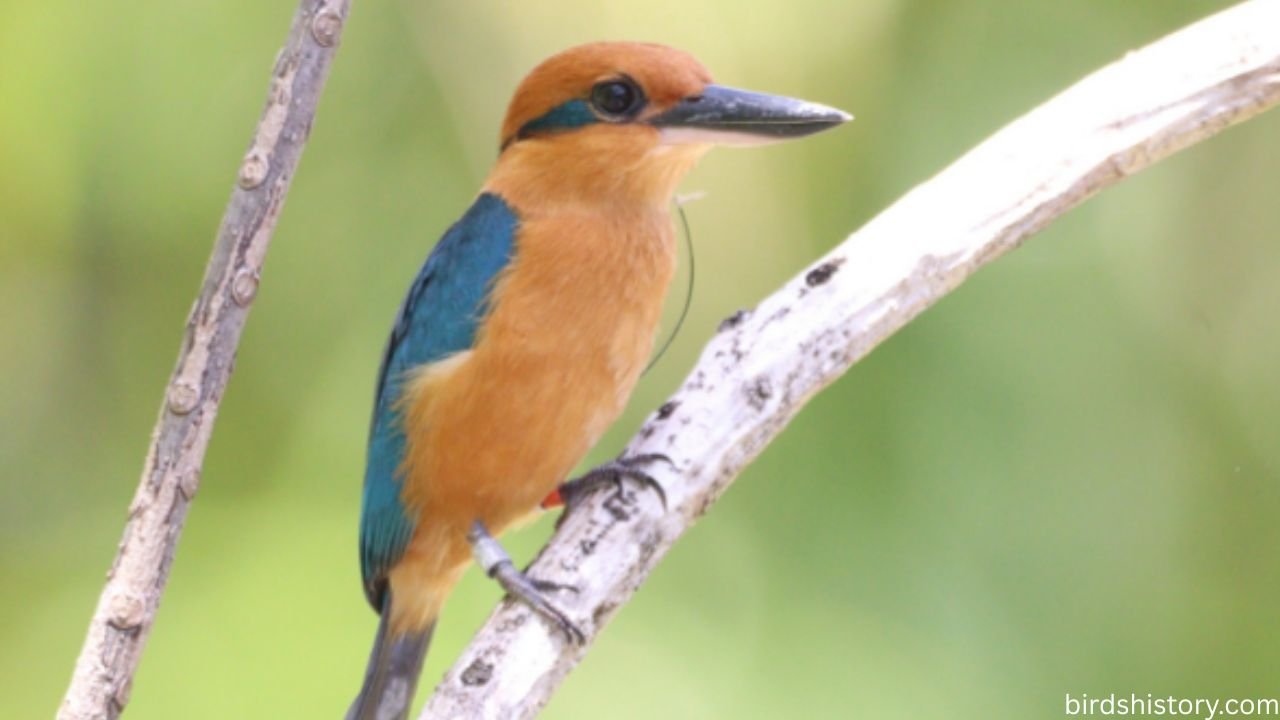
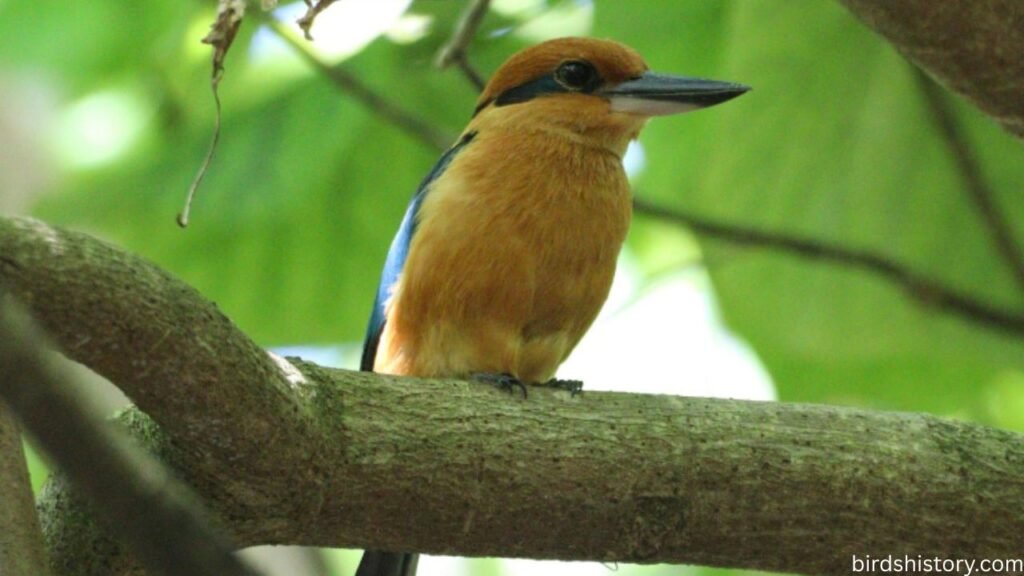
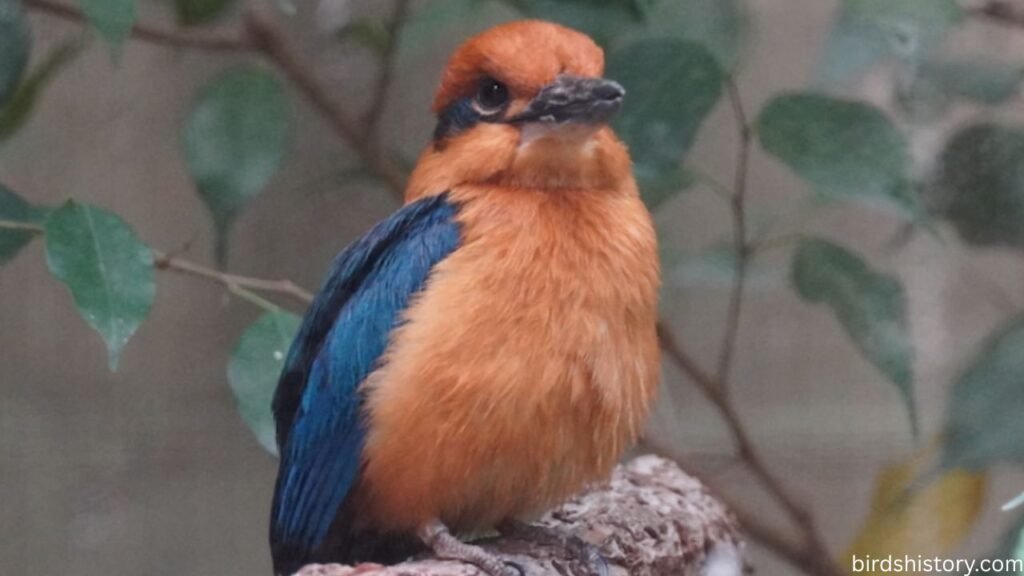
- Coloration is striking: males have cinnamon-brown heads, chests, and underparts, with an iridescent greenish-blue back and wings, while females are paler (especially on the breast and underparts), often with white or lighter tones.
- Both sexes share large beaks, dark eyes, dark feet. The head, tail, and wings are brightly colored relative to many forest birds.
Habitat and Range Of Guam Kingfisher
- Native Range: Historically found throughout the island of Guam, throughout its forested areas (mature forests, secondary growth, ravines) but not in pure wetlands or open savanna.
- The bird preferred closed-canopy forests, limestone forests, and areas with standing dead trees (for nesting), exposed perches, and plenty of ground or near-ground prey.
- Range now: Extinct in the wild as of 1988; its existence is maintained through captive breeding programs and recent reintroductions to Palmyra Atoll, a remote island where habitat is safe from predators.
Diet and Feeding Habits Of Guam Kingfisher
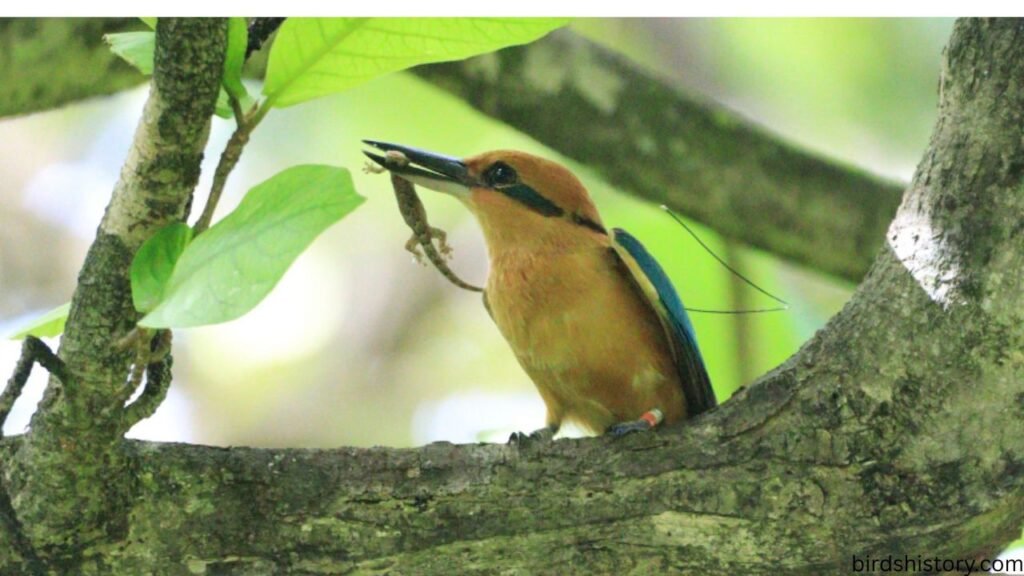
- Guam Kingfishers are strictly carnivorous. They eat insects, spiders, lizards, geckos, beetles, land crabs, and other small ground or low-vegetation prey.
- Their hunting style is “sit-and-wait”: they perch on low exposed branches, watch for prey, then swoop or drop down to capture it. They don’t usually hunt fish (unlike many kingfisher species) but focus on terrestrial or near-ground prey.
Guam Kingfisher Behavior and Lifestyle
- The sihek is territorial and usually found in pairs or small family groups rather than large flocks. Mated pairs defend territories.
- They nest in tree cavities or soft/rotten trees (rotten wood easier to excavate), or in arboreal termite mounds. Both parents share in nest duties.
- Vocalizations: they have raspy calls, often chattering, used to signal territory or alert other birds. Their call is distinct among Guam’s forest birds.
Guam Kingfisher Reproduction and Lifespan
- Breeding season spans several months: roughly December to July. Nests are built in cavities in trees. Clutch size is usually one to two eggs per nest.
- Incubation period, nestling period in wild data are sparse. In captivity, rearing takes careful handling; fledging periods are around 30-plus days in many cases.
- Lifespan: in captivity, they can live for 15 to 20 years with good care. Wild lifespan is less well documented, given they have been extinct in the wild for decades.
Predators and Threats
- The main cause of their extirpation (extinction in the wild) was the introduced brown tree snake (Boiga irregularis). This snake arrived on Guam (likely accidentally) after World War II, and without natural predators, its population exploded. It preyed on many bird species, including Guam Kingfisher, especially nestlings and adults.
- Other threats: habitat loss and alteration, although less dominant than the snake, also contributed. Disturbances, loss of nesting trees, change in forest structure, perhaps competition from other species.
- Genetic issues: because the captive population descends from a small number of individuals (founder population of about 28-29 birds), there is risk of inbreeding, loss of genetic diversity, which can affect health, fertility, survival.
Must Read: /pallass-cormorant/
Guam Kingfisher Conservation Status
- The Guam Kingfisher is listed as Extinct in the Wild by IUCN.
- Captive populations exist in zoos, conservation facilities, and several institutions under managed breeding programs. As of recent years, there are over 120 individuals across many institutions.
- Reintroduction efforts: They have begun translocation to Palmyra Atoll, where habitat is safe (predator-free), to build a wild population outside Guam. In 2024-2025, the first eggs were recorded in the wild on Palmyra Atoll among those released birds.
- For full reintroduction back to Guam, the brown tree snake threat must be controlled or eliminated. Conservationists are working on snake control, habitat protection, and improving genetic health of the sihek population.
Interesting Facts About Guam Kingfisher
- The name sihek is used by the indigenous Chamoru people of Guam. The bird has cultural meaning and spiritual significance to local communities.
- For decades, the sihek lived only in cages, captive breeding programs. The first wild eggs laid in almost 40 years were a major milestone.
- The selection of Palmyra Atoll as a reintroduction site is strategic: it is remote, has good habitat, and lacks many predators that threaten the bird on Guam. It serves as a temporary safe wild home until Guam itself can be made safe.
Conclusion / Summary
The Guam Kingfisher (sihek) is a reminder of how fragile island ecosystems can be. Its dramatic decline shows that a single invasive species (the brown tree snake) can change whole biotas. But this bird is also proof of what determined human effort can do.
Key features of the sihek:
- Bright, striking color between cinnamon-brown and blue, with males and females distinguishable by underpart shades.
- Forest-dwelling, cavity-nesting, a perch-and-wait hunter focused on terrestrial prey.
- Extinct in the wild since the late 1980s, surviving only in captivity until reintroductions began.
Why it matters:
- The sihek is part of Guam’s natural and cultural heritage. Restoring it reconnects people with their forest’s voice.
- Conservation of this species involves tackling invasive species control, habitat protection, genetic diversity, and careful rewilding.
- The story gives hope: the first wild eggs laid in Palmyra Atoll show that reintroduction can work if plans are well thought out.
The future depends still on how well conservation teams manage threats like snakes, maintain captive breeding health, and whether released birds can thrive. Success with the Guam Kingfisher would be a milestone for island conservation, for birds extinct in the wild kind of status, and for people who care about preserving biodiversity.
FAQs About Guam Kingfisher
- When did the Guam Kingfisher go extinct in the wild?
The last wild observations were around 1986 (some sources say 1988). Since then, the species has existed only in captivity. - What made the Guam Kingfisher disappear?
The main driver was predation by the introduced brown tree snake, which wiped out many native bird species on Guam. Habitat issues and genetic decline also played roles. - How many of them exist now?
There are over 120 adult birds in captive breeding institutions, around 25 facilities, as of recent reports. - What is being done to bring them back into the wild?
Conservation partners have reintroduced some sihek to Palmyra Atoll, a predator-free habitat, where the birds are now laying eggs. Plans are in place to one day reintroduce them back onto Guam when it is safer. - What do they eat?
Their diet includes insects, spiders, lizards (such as skinks and geckos), land crabs, and other small animals found on or near the ground. - How do they nest?
They use tree cavities or rotten soft wood for nesting. Both parents share caring duties for the eggs and chicks. In captivity, nesting height and timing are carefully managed. - What is the lifespan of sihek?
In captivity, they can live 15-20 years under good care. Wild data is scarce because they’ve been absent from Guam for decades. - What threats remain even with reintroduction?
Key threats include lingering predators (especially the brown tree snake), limited genetic diversity (inbreeding), ensuring released birds can adapt, and preserving suitable habitat. - Why is Palmyra Atoll important for the sihek’s recovery?
It is free of many predators, has suitable forest habitat, and allows reintroduction in a safer environment than Guam currently offers. - Can the sihek ever return permanently to Guam?
That is the goal. But it depends on controlling or eliminating the brown tree snake threat and ensuring that habitat is protected. If those can be managed, permanent reintroduction is possible.