
The Remarkable Dodo Bird: Extinction’s Most Iconic Mystery
Few birds capture the human imagination as strongly as the Dodo. This flightless bird, once found only on the island of Mauritius in the Indian Ocean, has become the ultimate symbol of extinction. Though it disappeared more than 350 years ago, the Dodo is still alive in popular culture, history books, and even everyday language. People often use the phrase “as dead as a dodo” to emphasize something gone forever.
What makes the Dodo fascinating is not just its extinction but the story behind it. In less than a century after humans discovered it, the bird vanished due to hunting, invasive species, and habitat loss. Yet despite being gone for centuries, it continues to inspire scientific research, conservation efforts, and cultural discussions.
One surprising fact: scientists are now working on “de-extinction” projects to possibly bring the Dodo back using genetic engineering. That’s right—the bird we thought lost forever might one day walk the earth again.
Dodo Bird Taxonomy / Classification
Let’s place the Dodo within the scientific classification system:
- Common Name: Dodo
- Scientific Name: Raphus cucullatus
- Family: Columbidae (same family as pigeons and doves)
- Order: Columbiformes
- Class: Aves
Also read: /wandering/
Interestingly, the Dodo is most closely related to pigeons, particularly the Nicobar pigeon of Southeast Asia. This connection often surprises people because the bulky, clumsy image of the Dodo seems worlds apart from the sleek pigeon.
Dodo Bird Physical Description
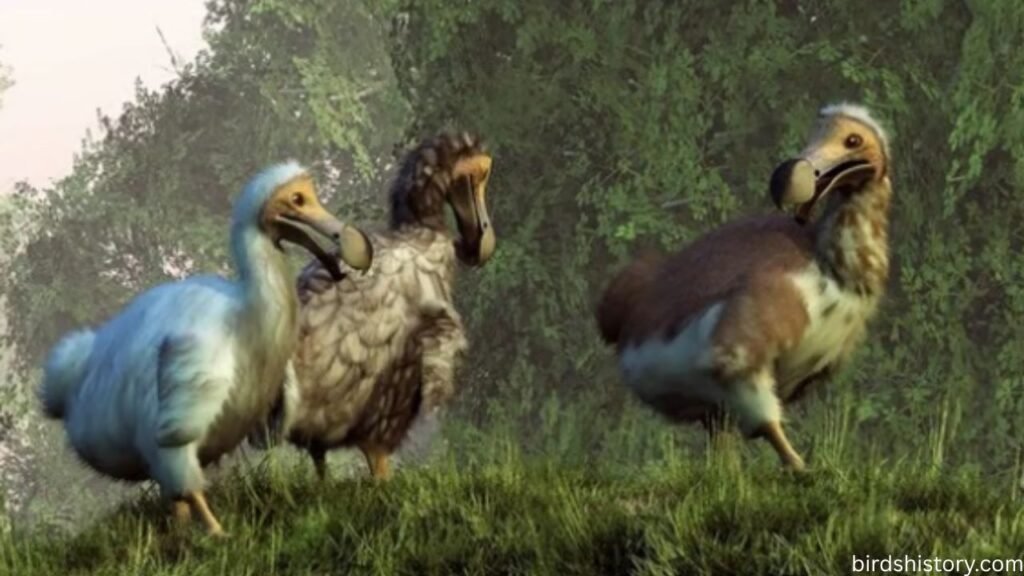
The Dodo was a large, flightless bird, standing about 1 meter (3.3 feet) tall and weighing 15–20 kilograms (33–44 pounds). Its body was round and plump, supported by sturdy yellowish legs. The bird had small, stubby wings, which were useless for flying but may have been used for balance or display during courtship.
The Dodo’s most distinctive feature was its large, hooked beak, measuring up to 9 inches long. This powerful beak helped it crack tough fruits and possibly defend itself. Its head was grayish, with a bare patch of skin around the eyes and beak.
Descriptions from sailors suggest the bird’s feathers were soft and downy, colored gray to brown, with curly tufts at the tail. Because the Dodo became extinct before photography, our knowledge comes from written records, sketches, and a few museum specimens.
Unlike many birds, there is little evidence of sexual dimorphism—males and females likely looked quite similar.
Habitat and Range Of Dodo Bird
The Dodo was endemic to Mauritius, meaning it lived nowhere else on earth. Mauritius is a volcanic island in the Indian Ocean, about 2,000 kilometers off the southeast coast of Africa.
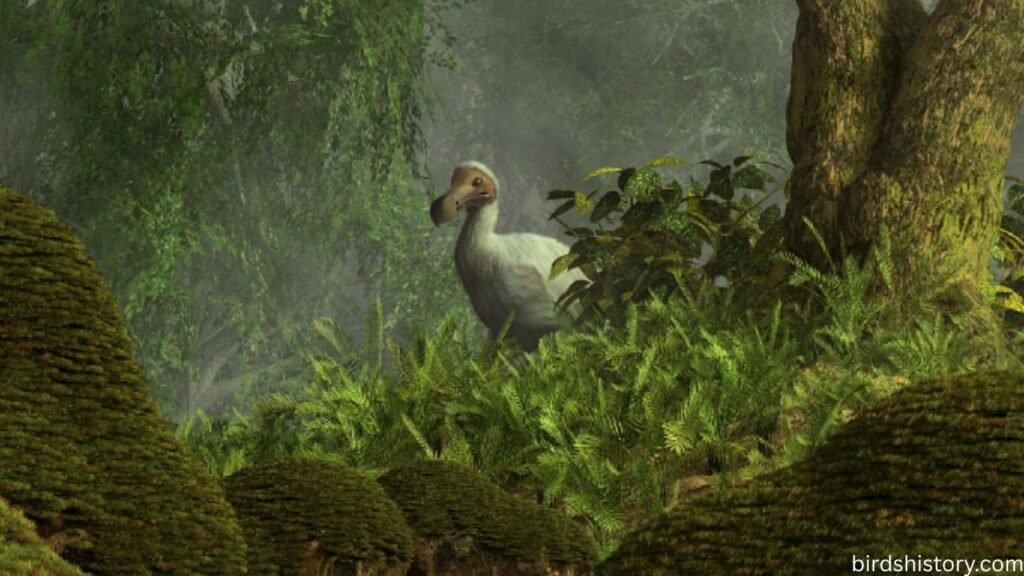
The bird thrived in coastal forests and woodlands, where it foraged on the ground. The climate of Mauritius is tropical, with warm temperatures and abundant rainfall—ideal conditions for the fruit-bearing plants that made up most of the Dodo’s diet.
Because Mauritius was isolated and had no significant land predators, the Dodo evolved without fear. This made it particularly vulnerable once humans arrived in the 1500s.
Diet and Feeding Habits Of Dodo Bird
The Dodo was primarily herbivorous, feeding on fruits, nuts, seeds, and roots. Historical accounts suggest it may have also eaten small land animals or shellfish occasionally, but plants were the mainstay of its diet.
Its large, hooked beak was perfectly adapted for cracking tough seeds and accessing hard-to-reach fruits. Some scientists believe the Dodo played an important role in seed dispersal for native plants, helping maintain the ecosystem of Mauritius.
One famous example is the Tambalacoque tree (also called the Dodo tree). For many years, botanists believed this tree relied exclusively on the Dodo to germinate its seeds. Though later research suggested other animals could also disperse them, the idea highlighted how interconnected species can be.
Behavior and Lifestyle
The Dodo was a ground-dwelling bird, adapted to a predator-free environment. It likely walked with a waddling gait, using its short wings for balance. Sailors described it as slow and clumsy, but this may be an exaggeration. In reality, it probably moved quite efficiently in its natural habitat.
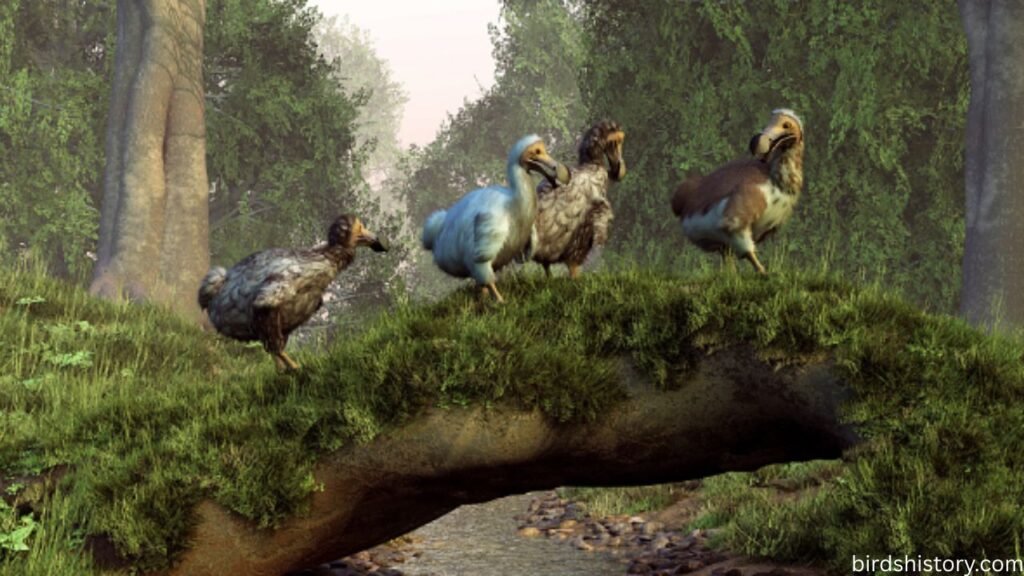
- Social Behavior: The Dodo may have lived in small groups rather than as solitary birds.
- Nesting Habits: Nests were built on the ground, often in sheltered forest areas.
- Vocalizations: Though no recordings exist, accounts mention the Dodo making low cooing or grunting sounds, similar to pigeons.
- Mating Rituals: Like pigeons, they may have had simple courtship displays involving vocal calls and wing gestures.
The bird’s lack of natural predators meant it had no instinct to flee from danger, which unfortunately made it easy prey for sailors and introduced animals.
Dodo Bird Reproduction and Lifespan
Breeding likely followed a seasonal cycle, tied to fruiting times of local plants.
- Nests: Simple ground scrapes lined with leaves.
- Eggs: Typically one large white egg at a time. This low reproductive rate made the species particularly vulnerable.
- Incubation: Both parents may have shared incubation duties, similar to pigeons.
- Lifespan: Estimates suggest the Dodo could live up to 20 years in the wild, given its size and pigeon-like relatives.
Unfortunately, ground-nesting habits and a single-egg clutch made the species fragile when faced with invasive predators like rats, pigs, and monkeys brought by humans.
Predators and Threats
The Dodo had no natural predators on Mauritius before humans arrived. That changed dramatically in the late 1500s when Portuguese sailors first discovered the island.
Key threats included:
- Human Hunting: Sailors hunted Dodos for food. Early reports claimed the meat was tough and unappetizing, but desperate crews relied on them nonetheless.
- Invasive Animals: Rats, pigs, dogs, and monkeys brought by ships raided nests, eating eggs and chicks.
- Habitat Loss: Deforestation for settlements reduced the bird’s natural range.
Within less than 100 years of human arrival, the Dodo was driven to extinction. The last confirmed sighting dates to the 1660s, though exact timing remains debated.
Dodo Bird Conservation Status
The Dodo is officially extinct, listed by the International Union for Conservation of Nature (IUCN).
Though it cannot be saved, the Dodo has become a powerful symbol in conservation. Its story is often used to highlight the devastating impact humans can have on fragile ecosystems.
In modern times, efforts are underway to study the Dodo’s genetics. In 2023, scientists announced progress toward sequencing its genome, raising the possibility of using DNA to “revive” the species. While controversial, such projects keep the Dodo in global conversation about biodiversity and ethics.
Interesting Facts About the Dodo
- The Dodo is closely related to pigeons—its nearest living relative is the Nicobar pigeon.
- The term “as dead as a dodo” became a common English expression after its extinction.
- Despite its reputation, the Dodo may not have been as clumsy as often portrayed. Many sailor accounts were exaggerated.
- Only a handful of skeletal remains and preserved specimens exist today. Most knowledge comes from descriptions, paintings, and partial bones.
- The Dodo has appeared in literature and pop culture, from Alice’s Adventures in Wonderland to modern video games.
- Mauritius honors the bird as a national symbol—it appears on coins, stamps, and emblems.
- The idea of the Tambalacoque tree depending on the Dodo sparked decades of scientific debate.
- Some scientists are actively exploring de-extinction projects to bring the Dodo back using pigeon surrogates.
Conclusion
The Dodo bird remains one of the most famous examples of extinction caused by human activity. Though it disappeared centuries ago, its story continues to teach us vital lessons about conservation, biodiversity, and the fragile balance of ecosystems.
From its plump body and oversized beak to its tragic downfall, the Dodo is a reminder of how quickly human influence can alter the natural world. But it is also a symbol of hope—fueling conversations about protecting endangered species today and perhaps even inspiring science to bring back what was lost.
The Dodo may be gone, but its legacy is very much alive.
FAQs About Dodo Bird
1. Why did the Dodo go extinct?
The Dodo went extinct due to human hunting, invasive species like rats and pigs, and habitat loss.
2. When was the last Dodo seen?
The last widely accepted sighting was around 1662.
3. Where did the Dodo live?
It lived only on the island of Mauritius in the Indian Ocean.
4. What did the Dodo eat?
Mainly fruits, nuts, seeds, and roots.
5. Was the Dodo really clumsy?
Not necessarily. While flightless, it was well-adapted to its environment.
6. How big was the Dodo?
About 1 meter (3.3 feet) tall and 15–20 kilograms in weight.
7. Are there Dodo fossils?
Yes, though only a few skeletal remains and partial specimens exist.
8. Can the Dodo be brought back?
Scientists are exploring genetic engineering possibilities, though it’s controversial.
9. Why is the Dodo so famous?
It symbolizes human-driven extinction and has a strong presence in culture and history.
10. What bird is related to the Dodo?
The Nicobar pigeon is its closest living relative.