
The Caspian Tern: A Powerful Fisher of the Skies
When it comes to terns, one bird stands above the rest — literally. The Caspian Tern (Hydroprogne caspia) is the largest tern species in the world, with a wingspan that can rival some birds of prey. Watching a Caspian Tern dive headfirst into the water to snatch a fish is a breathtaking sight.
Found across multiple continents, this bird’s range is surprisingly vast, stretching from North America to Europe, Asia, Africa, and Australia. Despite its widespread presence, the Caspian Tern remains a mystery to many casual birdwatchers because it is often overshadowed by smaller, more numerous tern species.
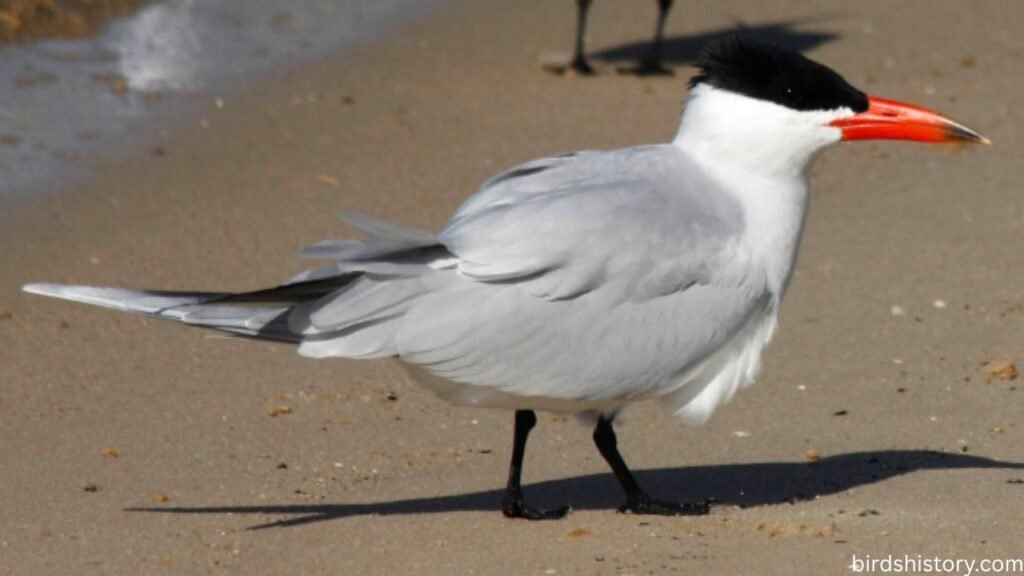
A fun fact: Caspian Terns have bright red-orange bills that make them look as if they’re carrying a torch. This feature, along with their booming call and bold size, makes them unforgettable once you’ve seen one.
In this article, we’ll take a detailed look at the Caspian Tern — from its scientific classification and physical features to its unique lifestyle, conservation status, and fascinating quirks.
Caspian Tern Taxonomy / Classification
Here’s where the Caspian Tern fits in the avian family tree:
- Common Name: Caspian Tern
- Scientific Name: Hydroprogne caspia
- Family: Laridae (the gull and tern family)
- Order: Charadriiformes
- Class: Aves
Also read: /the-purple-swamphen/
The Caspian Tern is the only member of the genus Hydroprogne. Its name “caspia” comes from the Caspian Sea region, where it was first described scientifically.
Caspian Tern Physical Description
The Caspian Tern is a striking bird that’s impossible to confuse with smaller terns once you know what to look for.
- Size: 19–24 inches (48–61 cm) long.
- Wingspan: 50–57 inches (127–145 cm), the largest of all terns.
- Weight: 20–28 ounces (570–800 grams).
- Plumage: Mostly white body with pale gray wings and a dark black cap on the head during breeding season. In winter, the cap becomes mottled.
- Bill: Thick, bright red-orange with a slightly darker tip. This is its most recognizable feature.
- Legs: Black and fairly short compared to body size.
- Tail: Moderately forked, unlike the deeply forked tails of smaller terns.
- Sex Differences: Males and females look alike.
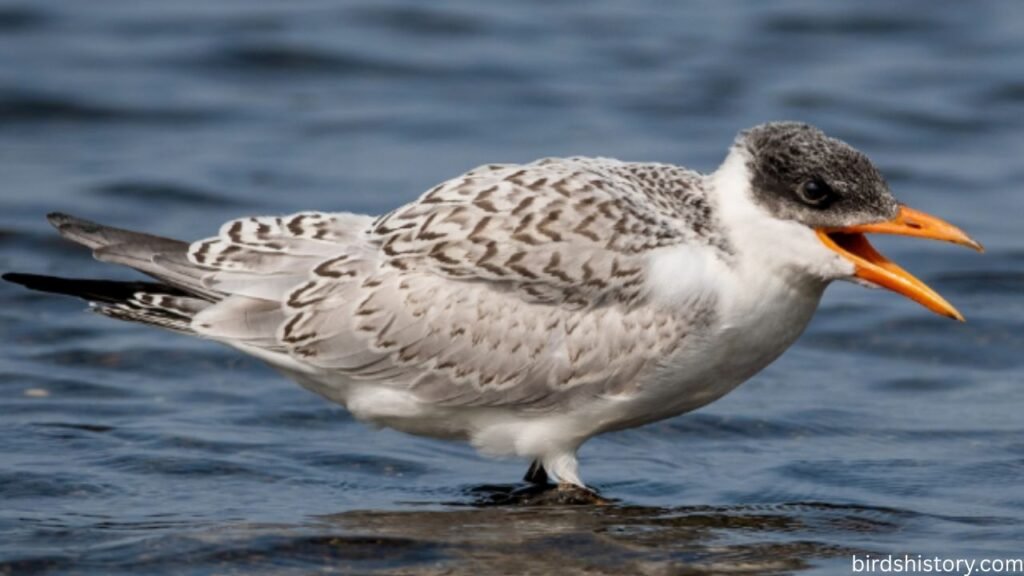
- Juveniles: Paler, with scaly-looking gray backs and duller bills.
Their sheer size, combined with their fiery bill, makes Caspian Terns look almost regal compared to their relatives.
Habitat and Range Of Caspian Tern
The Caspian Tern is a bird of wide-ranging habitats and can be found on nearly every continent.
Preferred Habitats
- Coastal lagoons and estuaries
- Inland lakes and large rivers
- Sandy or gravelly islands for nesting
- Occasionally seen offshore over oceans while foraging
Range
- North America: Breeds across Canada, the Great Lakes, and parts of the U.S. Winters along southern coasts and into Central and South America.
- Europe and Asia: Found around the Baltic, Black, and Caspian Seas, and scattered inland lakes.
- Africa: Winters and breeds along coastlines and large freshwater bodies.
- Australia and New Zealand: Breeding colonies are established in coastal areas.
Migration
Caspian Terns are strong migrators, traveling long distances between breeding and wintering sites. They tend to stick close to coasts or inland water systems during their journeys.
Diet and Feeding Habits
Caspian Terns are fish specialists, and their hunting style is both dramatic and efficient.
- Main Diet: Fish, usually small to medium-sized species caught near the surface.
- Occasional Food: Insects, crustaceans, and the chicks of other birds (rare but recorded).
- Feeding Style:
- Flies high above the water, scanning for prey.
- Dives with a sudden plunge, often completely submerging.
- Uses its sharp bill to grasp fish.
- Interesting Behavior: They may carry fish crosswise in their bills, making them look like they’re holding a silver banner.
Their hunting technique requires sharp vision and quick reflexes, making them impressive aerial fishers.
Behavior and Lifestyle
The Caspian Tern is social but also somewhat territorial compared to smaller terns.
- Social Behavior: Often seen in loose colonies during breeding, but can be solitary when fishing.
- Flight Style: Strong, powerful wingbeats with less fluttering compared to smaller terns.
- Calls: Loud, harsh, and guttural — often described as a hoarse “kraah” or “aaark.” Their calls are powerful enough to be heard from far away.
- Mating Rituals: Courtship involves males presenting fish to females. If the female accepts, the pair bond strengthens.
- Nesting Habits: Nest in colonies, often with gulls or other terns, but defend their own space aggressively.
These birds are bold defenders of their nests and will dive at intruders, including humans, with alarming persistence.

Reproduction and Lifespan
- Breeding Season: Late spring to early summer, depending on location.
- Nest: A shallow scrape on sand, gravel, or bare ground, sometimes lined with vegetation or shells.
- Eggs: Usually 2–3 eggs, pale buff or greenish with dark spots.
- Incubation: 20–28 days, shared by both parents.
- Chicks: Semi-precocial — covered in down and able to walk soon after hatching, but dependent on parents for food.
- Fledging: Young fledge in 4–7 weeks. Parents may continue feeding them for several months.
- Lifespan: Average 12–15 years in the wild, though some individuals have been recorded living over 20 years.
Predators and Threats
Caspian Terns, due to their size, have fewer predators than smaller terns, but they’re not without threats.
Natural Predators
- Large gulls and raptors (targeting eggs and chicks).
- Foxes, raccoons, and other mammals on nesting islands.
Environmental Threats
- Habitat loss due to coastal development and wetland drainage.
- Disturbance from human recreation near nesting colonies.
- Pollution and declining fish stocks.
Human Impact
- Historically persecuted in some regions due to competition with fisheries.
- Egg collecting and disturbance during breeding seasons still pose risks.
Caspian Tern Conservation Status
The Caspian Tern has a wide global range, but local populations can be vulnerable.
- IUCN Red List Status: Least Concern globally.
- Population Trend: Stable overall, though some regional declines are reported.
- Conservation Efforts:
- Protection of breeding colonies through wildlife reserves.
- Habitat restoration for wetlands and coastal areas.
- Monitoring of populations to detect declines early.
Their success depends heavily on the availability of fish and undisturbed nesting sites.
Interesting Facts About the Caspian Tern
- The Caspian Tern is the world’s largest tern, easily dwarfing common terns.
- Their red bill makes them one of the most striking seabirds to spot.
- They are known for food transfers during courtship, with males offering fish to females.
- Caspian Terns often nest in colonies with gulls, benefiting from shared vigilance against predators.
- They can fly long distances with fish in their bills, delivering food to chicks far from the foraging site.
- Their booming call has earned them the nickname “the hawk among terns.”
- Fossils of Caspian Tern relatives date back nearly 2 million years, showing their long evolutionary history.
- They are found on five continents, making them one of the most widely distributed terns.
- Caspian Terns will mob intruders fiercely, even attacking much larger animals.
- They are excellent indicators of fish availability in their ecosystems.
Conclusion
The Caspian Tern is more than just a bird with striking looks. It is a powerful predator, a dedicated parent, and a global traveler. Its resilience across continents speaks to its adaptability, while its conservation story reminds us of the delicate balance between human activity and wildlife survival.
By learning about the Caspian Tern, we not only appreciate one of nature’s most impressive seabirds but also gain insight into the importance of protecting wetlands, coasts, and fish populations. Next time you see a large white bird with a blazing red bill soaring over water, you’ll know you’ve encountered the king of terns — the Caspian Tern.
FAQs About Caspian Tern
1. What is the scientific name of the Caspian Tern?
Hydroprogne caspia.
2. How big is the Caspian Tern compared to other terns?
It’s the largest tern in the world, with a wingspan up to 57 inches.
3. Where can Caspian Terns be found?
On five continents — North America, Europe, Asia, Africa, and Australia.
4. What do Caspian Terns eat?
Mainly fish, which they catch by diving into the water.
5. Do Caspian Terns migrate?
Yes, many populations migrate long distances between breeding and wintering areas.
6. What is their conservation status?
They are globally listed as Least Concern, though local populations face threats.
7. How do Caspian Terns nest?
They nest on sandy or gravelly ground, often in colonies with other birds.
8. How many eggs do they lay?
Usually 2–3 eggs per clutch.
9. What is the lifespan of a Caspian Tern?
Typically 12–15 years, with some living over 20.
10. Why are Caspian Terns important?
They are top predators in their ecosystems and indicators of fish availability.