The American White Pelican: A Graceful Giant of the Skies
The American White Pelican is one of North America’s most striking waterbirds. With a wingspan stretching up to 9 feet, it rivals eagles and condors in size, yet it’s surprisingly graceful in flight. Unlike its cousin, the Brown Pelican, which plunges dramatically into the sea, the American White Pelican prefers a quieter style of fishing—working in groups to herd fish in shallow waters.
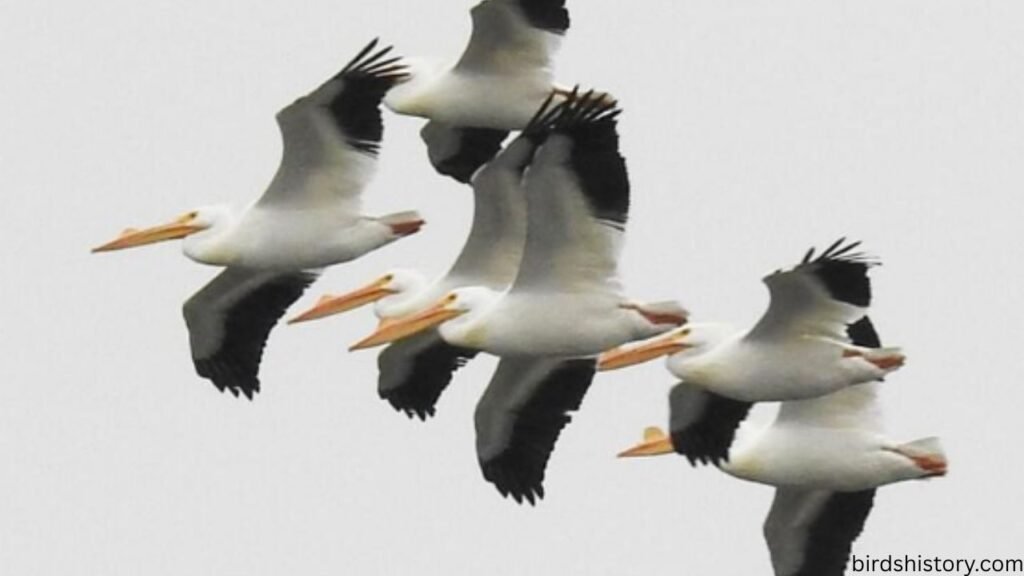
You can find these birds across much of the United States and Canada during breeding season, and in the southern U.S., Mexico, and Central America in the winter. One fun fact? Despite their size, they are excellent fliers, often gliding in elegant V-formations like geese, covering long distances with minimal effort.
American White Pelican Taxonomy / Classification
- Common Name: American White Pelican
- Scientific Name: Pelecanus erythrorhynchos
- Family: Pelecanidae
- Order: Pelecaniformes
- Class: Aves
Also read: /snowy-egret/
This bird is one of eight pelican species worldwide and stands out for its striking white plumage and cooperative hunting style.
American White Pelican Physical Description
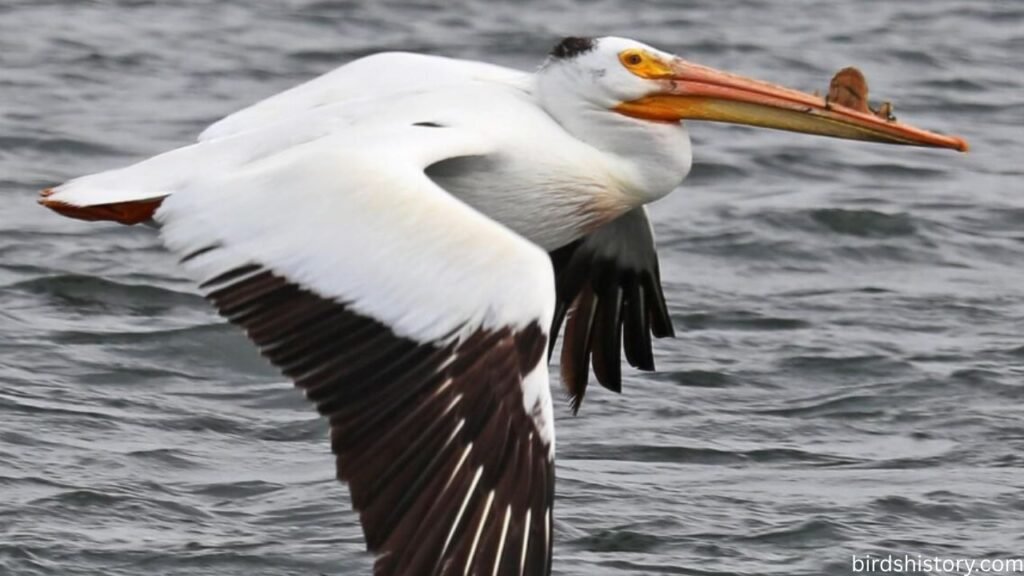
The American White Pelican is a large and powerful bird, but its beauty lies in its elegance.
- Size: One of the largest birds in North America, measuring 50–70 inches (127–178 cm) in length.
- Wingspan: 8–9.5 feet (2.4–2.9 m).
- Weight: 11–20 pounds (5–9 kg).
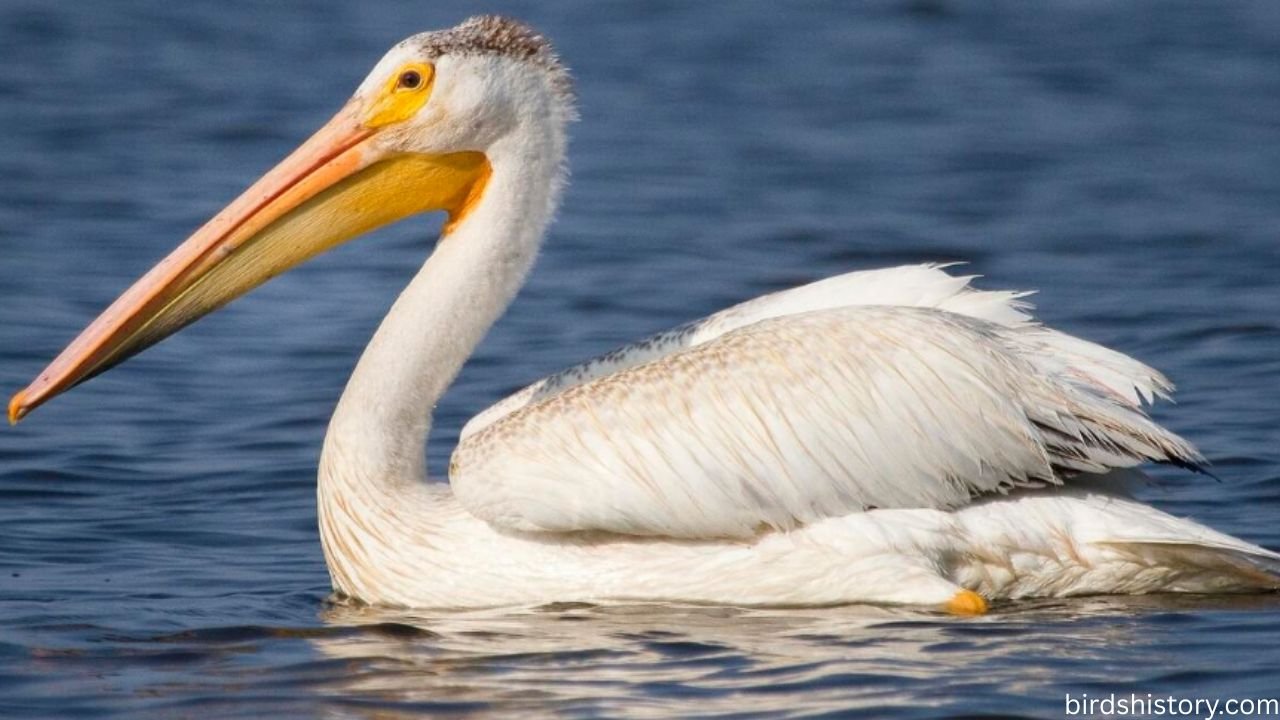
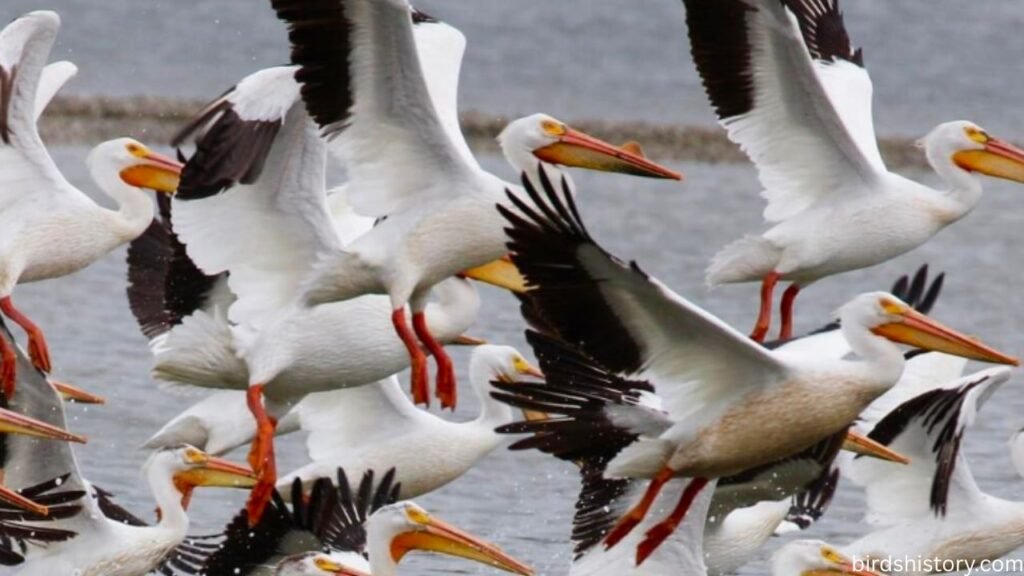
- Plumage: Pure white body feathers with contrasting black flight feathers visible in flight.
- Beak: Enormous orange bill with a throat pouch for catching fish. During the breeding season, adults grow a distinctive “horn” on their upper bill, which is later shed.
- Legs and Feet: Bright orange with webbed toes.
- Eyes: Yellow eyes surrounded by bare orange facial skin.
- Male vs. Female: Both sexes look similar, though males tend to be slightly larger.
- Young birds have gray feathers that progressively become white as they get older.
The combination of snowy plumage and a massive orange bill makes this bird easy to identify, even from a distance.
Habitat and Range Of American White Pelican
The American White Pelican favors freshwater environments but can also be found in coastal areas during migration.
- Breeding Range: Inland lakes and marshes in Canada and the northern U.S., especially in states like Minnesota, North Dakota, and Montana.
- Winter Range: Gulf Coast, California, Mexico, Central America, and occasionally further south.
- Preferred Habitat: Shallow lakes, wetlands, rivers, and coastal lagoons with abundant fish.
- Migration: Highly migratory, traveling in large flocks. They migrate north in spring for breeding and return south in fall for wintering.
Their reliance on healthy wetlands makes them key indicators of ecosystem health.
Diet and Feeding Habits Of American White Pelican
American White Pelicans are fish-eaters, but their method of feeding is unique.
- Diet:
- Fish (carp, minnows, catfish, and perch)
- Amphibians
- Occasionally small crustaceans
- Feeding Style:
Unlike Brown Pelicans, they don’t dive. Instead, they work in groups to herd fish into shallow waters, scooping them up with their bills. - Interesting Behavior:
They can consume as much as 4 pounds of fish daily. Their bill pouch holds several liters of water, which they drain before swallowing their catch.
This cooperative feeding strategy is one of their most remarkable traits.
Behavior and Lifestyle
The American White Pelican is social, graceful, and surprisingly quiet.
- Flocking: They live and feed in colonies, often numbering hundreds or thousands of individuals.
- Flight: Despite their bulk, they are expert gliders. They use thermal currents to soar effortlessly, often circling high in the sky.
- Calls: Generally silent, though they may grunt or croak at colonies.
- Daily Life: Much of their time is spent fishing, preening, or resting in groups on sandbars and shorelines.
- Mating Rituals: During courtship, males and females perform synchronized displays, often including bill clattering and head movements.
Their social nature and teamwork make them one of the most fascinating waterbirds to observe.
American White Pelican Reproduction and Lifespan
- Breeding Season: Late spring to summer, depending on latitude.
- Nesting Colonies: Large colonies on isolated islands in lakes or rivers.
- Nests: Shallow scrapes lined with sticks and vegetation, built close together.
- Eggs: Usually 2 eggs, chalky white in color.
- Incubation: About 30–36 days, shared by both parents.
- Chicks: Hatch naked and helpless, later developing down. Usually, only one chick makes it to adulthood because the more powerful chick outcompetes its weaker sibling for resources. This behavior is called siblicide.
- Fledging: Young leave the nest at about 9–10 weeks.
- Lifespan: 15–25 years in the wild, longer in captivity.
Their colony-nesting habit provides safety in numbers, though it also means they need large, undisturbed breeding grounds.
Predators and Threats
- Natural Predators:
- Gulls, crows, and ravens (egg predators)
- Coyotes, foxes, raccoons, and eagles (chick predators)
- Environmental Threats:
- Wetland loss due to agriculture and urban development
- Pollution and contamination from pesticides and heavy metals
- Disturbance from human recreation (boating, camping near colonies)
- Human Impact:
Historically, they were hunted for their feathers and sometimes persecuted by fishermen. Today, habitat destruction remains their biggest threat.
American White Pelican Conservation Status
- IUCN Status: Least Concern
- Population Trend: Stable and even increasing in many areas.
- Conservation Efforts:
- Protected under the Migratory Bird Treaty Act.
- Wetland conservation and restoration projects support their breeding and feeding grounds.
- Monitoring programs track population health and migration routes.
While not endangered, the American White Pelican depends heavily on healthy wetlands. Conservation of these habitats is key to its future.
Interesting Facts About American White Pelican
- They are counted among the world’s heaviest flying birds.
- During breeding season, a temporary fibrous plate, often called a “horn,” develops on their upper bill and is later shed.
- They can glide for hours without flapping, covering hundreds of miles during migration.
- Their wings are so large they are sometimes mistaken for swans from a distance.
- They rarely dive for food—unlike Brown Pelicans, they prefer cooperative fishing.
- Fossil records show that pelicans have been around for at least 30 million years.
- Their beak can measure up to 15 inches, making it one of the largest of any bird species.
- In flight, they tuck their heads back onto their shoulders, unlike herons that extend their necks.
- Colonies can contain thousands of nests, creating spectacular breeding grounds.
- They are highly sensitive to disturbance, making them a conservation priority in areas with human activity.
Conclusion
The American White Pelican is a remarkable bird—giant in size, graceful in flight, and cooperative in feeding. Its snow-white plumage, enormous orange bill, and social lifestyle make it one of the most recognizable waterbirds in North America.
Though not endangered, the species depends on the protection of wetlands, lakes, and rivers. Their story reminds us that conserving habitats benefits not only birds but entire ecosystems. Watching a flock of American White Pelicans soar against a blue sky or fish together in perfect coordination is a breathtaking experience, and one worth preserving for future generations.
FAQs About American White Pelican
1. What is the scientific name of the American White Pelican?
Pelecanus erythrorhynchos.
2. How big are American White Pelicans?
With a wingspan of up to 9.5 feet and a weight of 11 to 20 pounds, they are among the heaviest flying birds in the world.
3. Where do American White Pelican live?
They breed in the interior of North America and spend the winter along the coasts of the southern U.S., Mexico, and Central America.
4. What do American White Pelicans eat?
Mostly fish, but also amphibians and small crustaceans.
5. Do they dive for fish like Brown Pelicans?
No, they feed cooperatively by herding fish in shallow waters.
6. How long do American White Pelican live?
Typically 15–25 years in the wild.
7. Do American White Pelican migrate?
Yes, they migrate north in spring for breeding and south in fall for wintering.
8. How doAmerican White Pelican nest?
They build shallow nests in large colonies on islands located in lakes or rivers.
9. Are American White Pelican endangered?
No, they are listed as Least Concern and have stable populations.
10. What makes American White Pelican unique?
Their cooperative feeding style, enormous bills, and graceful soaring flight set them apart.