The Roseate Spoonbill: Nature’s Pink Wading Wonder
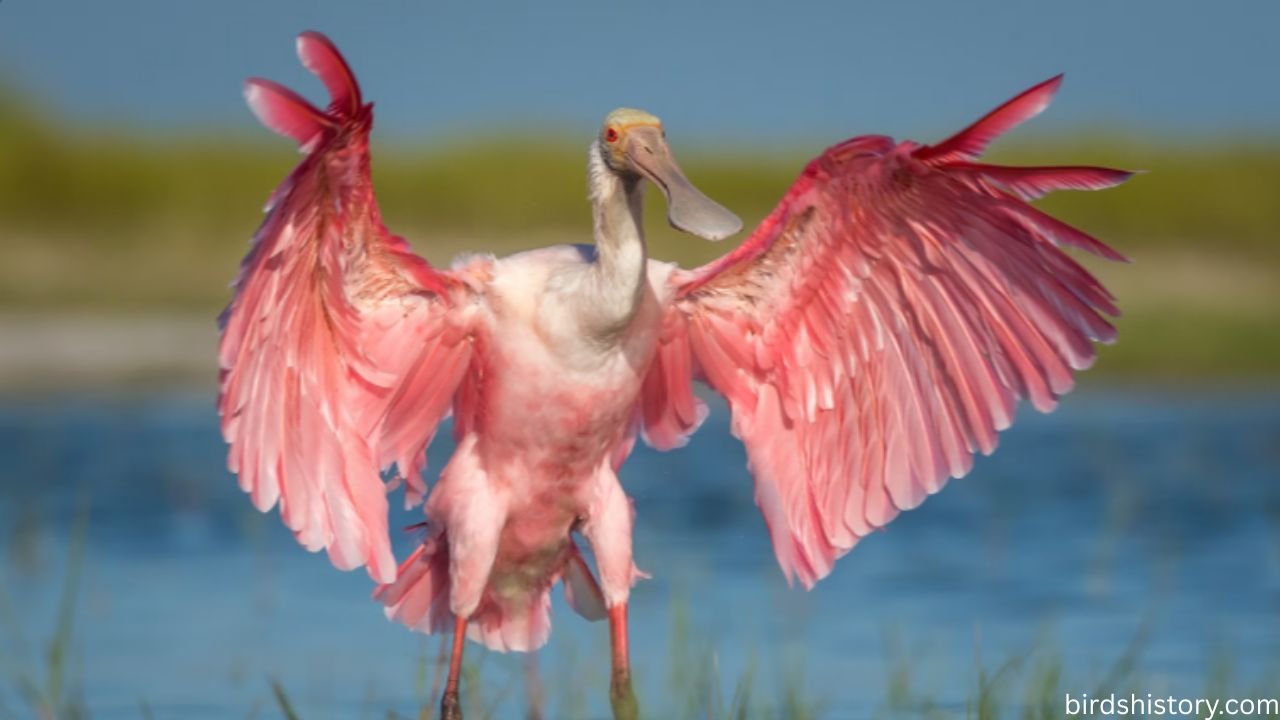
The Roseate Spoonbill is one of the most eye-catching birds you’ll ever see. With its bubblegum-pink feathers, red shoulders, and a spoon-shaped bill, it’s often mistaken for a flamingo at first glance. But take a closer look, and you’ll realize it’s a completely different species with its own fascinating story.
A common sight in the wetlands stretching from the U.S. Gulf Coast to South America, the Roseate Spoonbill is a species that is as vital as it is beautiful to wetland ecosystems. A fun fact? Its bright pink color doesn’t come from its genetics—it comes from its diet, much like flamingos. The carotenoid pigments in the crustaceans and aquatic invertebrates it eats give its feathers that stunning rosy hue.
Roseate Spoonbill Taxonomy / Classification
- Common Name: Roseate Spoonbill
- Scientific Name: Platalea ajaja
- Family: Threskiornithidae
- Order: Pelecaniformes
- Class: Aves
Also read: /snowy-egret/
This bird is closely related to ibises and other spoonbills, all known for their long legs, wading habits, and specialized beaks.
Roseate Spoonbill Physical Description
The Roseate Spoonbill is a medium-to-large wading bird, typically measuring 70–86 cm (28–34 inches) in length with a wingspan of about 120–130 cm (47–51 inches).
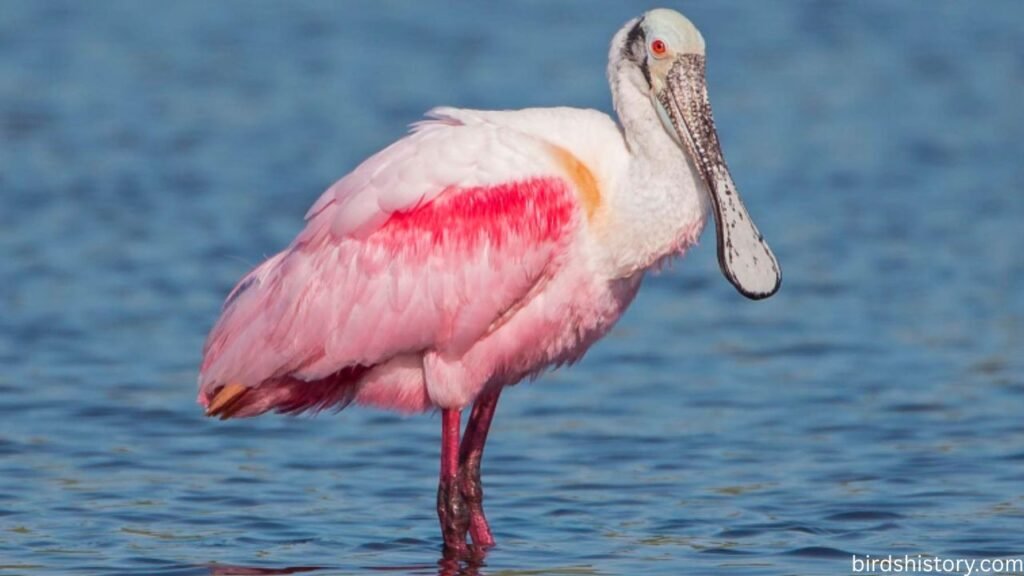
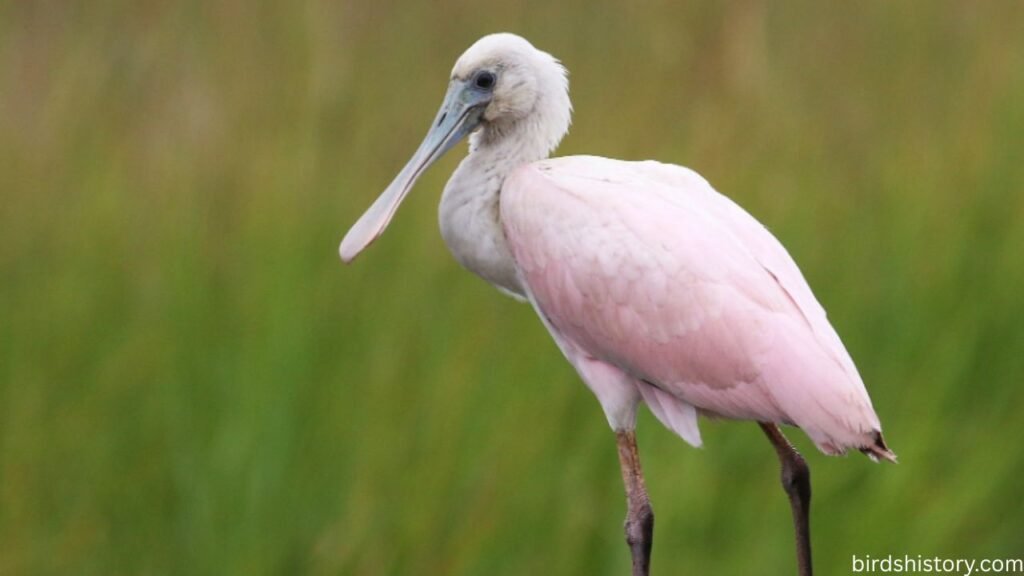
- Plumage: Its body is mostly pink with splashes of carmine red on the shoulders and tail. The neck and chest are paler, and the head is mostly bare with a yellowish-green tinge.
- The most notable characteristic is its long, flat, spoon-shaped bill. It is gray and slightly textured, perfect for sweeping through shallow waters to catch prey.
- Legs: Long, reddish legs suited for wading.
- Eyes: Bright red eyes give the bird an intense and striking look.
- Sexual Dimorphism: Males and females look very similar, though males are slightly larger.
- Juveniles: Young spoonbills are paler, almost white, with shorter bills. They develop their characteristic pink as they mature.
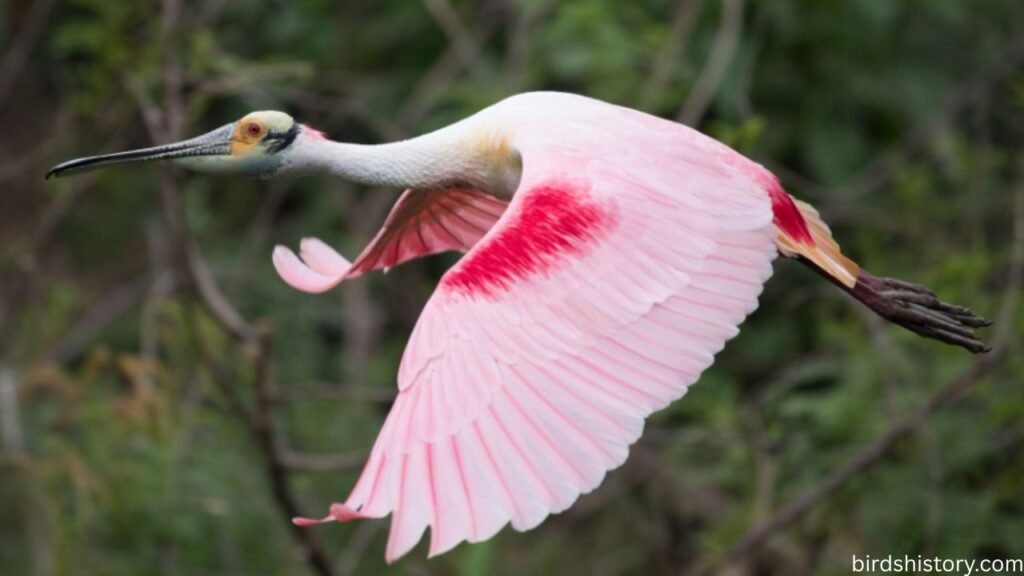
When you see one in flight, the mix of pink wings with red shoulders creates a breathtaking sight against the blue sky.
Habitat and Range Of Roseate Spoonbill
The Roseate Spoonbill flourishes in a variety of wetland environments, such as coastal lagoons, estuaries, mangroves, swamps, and shallow lakes.
- Geographical Range:
Found in the southeastern United States (Florida, Texas, Louisiana), throughout Central America, the Caribbean, and into South America as far as Argentina and Chile. - Preferred Environment:
They prefer shallow waters with abundant aquatic life. You’ll often spot them in the company of herons, ibises, and egrets. - Migration:
Some populations in the U.S. migrate seasonally, moving southward during colder months, while tropical populations are largely resident.
Their preference for wetlands also makes them excellent indicators of ecosystem health.
Diet and Feeding Habits
The Roseate Spoonbill is a carnivorous wader, feeding primarily on aquatic animals.
- Diet:
- Crustaceans (shrimps, crayfish, crabs)
- Small fish
- Aquatic insects
- Snails
- Amphibians
- Feeding Method:
They sweep their distinctive spoon-shaped bill from side to side in shallow water to find food. Sensitive receptors in the bill snap shut instantly when they touch prey. - Unique Feeding Behavior:
They commonly forage in groups, which results in a synchronized, sweeping motion across the wetlands. This cooperative behavior stirs up food and increases foraging efficiency.
Interestingly, their pink color comes directly from carotenoids in crustaceans, meaning their diet literally paints their plumage.
Roseate Spoonbill Behavior and Lifestyle
Roseate Spoonbills are highly social birds.
- Flocking: They are usually found in groups, often mixed with herons, ibises, and storks.
- Flight: They fly with outstretched necks and steady wingbeats, often forming small flocks in flight.
- Calls: Despite their flashy appearance, they are relatively quiet birds, producing low grunts and croaks.
- Daily Life: Much of their day is spent feeding, preening, and roosting in trees near water.
- Mating Rituals: Courtship displays involve bill clapping, head bobbing, and presenting nest material.
Their social and cooperative nature makes them a delight to observe in colonies.
Reproduction and Lifespan Of Roseate Spoonbill
- Breeding Season: Varies by location, often tied to wet seasons when food is abundant. In the U.S., breeding typically occurs from March to August.
- Nesting: They nest in colonies, often with ibises and herons, building platform nests out of sticks in mangroves or trees near water.
- The clutch usually contains two to four eggs, which are a pale, off-white color with brown spots.
- Incubation lasts approximately 22 to 24 days, and both parents take turns caring for the eggs.
- Chicks: Hatchlings are covered in down and are fed by regurgitation. They fledge around 7–8 weeks.
- Lifespan: On average, 10–15 years in the wild, with some individuals living longer in captivity.
Their colonial nesting habits provide safety in numbers, reducing predation risks.
Predators and Threats
- Natural Predators:
- Raccoons (nest raiders)
- Snakes
- Large birds of prey (eagles, hawks)
- Environmental Threats:
- Habitat destruction through wetland drainage
- Pollution (pesticides, mercury contamination)
- Disturbance from human activity
- Human Impact:
In the 19th century, Roseate Spoonbills were hunted heavily for their feathers, which were used in fashion. This nearly drove them to extinction in parts of the U.S. Thankfully, protective laws helped populations recover.
Roseate Spoonbill Conservation Status
- IUCN Red List: Listed as Least Concern.
- The population trend for this species is stable, but it’s experiencing localized declines because of habitat loss.
- Conservation Efforts:
- It is a species protected in the United States under the Migratory Bird Treaty Act.
- Wetland restoration programs support their habitat.
- Monitoring of colonies helps track populations.
While they are not globally threatened, continued wetland conservation is crucial for their long-term survival.
Interesting Facts About Roseate Spoonbill
- They are sometimes called the “Flamingo of the South” due to their pink color, though they are not related to flamingos.
- Their spoon-shaped bill is so sensitive it can detect prey in murky waters by touch alone.
- Early explorers in Florida once thought they were a type of exotic flamingo brought from the Caribbean.
- Their colonies can number in the hundreds, creating an explosion of pink across wetlands.
- Juveniles are almost entirely white, only turning pink as they grow.
- They play a vital ecological role by controlling insect and crustacean populations.
- Their pink hues intensify during the breeding season, much like flamingos.
- They are excellent indicators of wetland health—declines in their numbers often signal habitat issues.
Conclusion
The Roseate Spoonbill is more than just a pretty bird—it’s a symbol of the rich biodiversity found in wetlands. With its vibrant plumage, specialized spoon-shaped bill, and social lifestyle, it has attracted the attention of birdwatchers, photographers, and conservationists.
Its survival story—from near-extinction in the 19th century to stable populations today—reminds us of the importance of conservation efforts. By protecting wetlands, we’re not only safeguarding this iconic bird but also ensuring the health of countless other species.
So, whether you spot one feeding gracefully in shallow waters or see a colony glowing pink at sunset, the Roseate Spoonbill is a reminder of nature’s artistry and resilience.
FAQs About Roseate Spoonbill
1. What is the scientific classification for the Roseate Spoonbill?
Platalea ajaja.
2. Where can you find Roseate Spoonbills?
In wetlands across the southeastern U.S., Central America, the Caribbean, and South America.
3. Why are they pink?
Their pink color comes from carotenoid pigments in their crustacean-rich diet.
4. How big are they?
They measure about 28–34 inches long with a wingspan up to 51 inches.
5. What does their bill do?
With its spoon-shaped bill, the bird sweeps and filters prey from shallow waters.
6. Do they migrate?
Yes, U.S. populations migrate seasonally, while tropical populations are mostly resident.
7. Are they endangered?
No, they are listed as Least Concern by the IUCN, though they face habitat threats.
8. How many eggs do they lay?
Usually 2–4 eggs per nesting season.
9. How long do they live?
On average, 10–15 years in the wild.
10. Are they related to flamingos?
No, they only share the pink coloration due to diet but belong to different families.


