The Mallard: Nature’s Colorful Waterfowl
The mallard (Anas platyrhynchos), a species of duck, is globally recognized as one of the most common ducks. Whether you live in North America, Europe, or Asia, chances are you’ve seen one gliding gracefully across a pond or quacking in a park. Their bright green heads, cheerful calls, and adaptable nature make them instantly recognizable.
What makes mallards fascinating isn’t just their beauty—it’s their story. These ducks have adapted to live alongside humans, thrive in urban environments, and migrate thousands of miles each year. They’re also the wild ancestors of nearly all domestic ducks, linking backyard farms to wild wetlands.
Here’s one surprising fact: Mallards are so widespread that scientists call them a “super spreader species.” Their adaptability allows them to breed with many other ducks, creating hybrids across continents.
Taxonomy and Classification
To better understand the mallard, let’s break down its classification:
- Common Name: Mallard
- Scientific Name: Anas platyrhynchos
- Family: Anatidae
- Order: Anseriformes
- Class: Aves
Also read: /agami-heron/
Mallards belong to the large duck family, Anatidae, which also includes swans and geese. Within this family, they are considered a “dabbling duck,” meaning they feed mainly at the surface of the water rather than diving deep.
Physical Description Of The Mallard
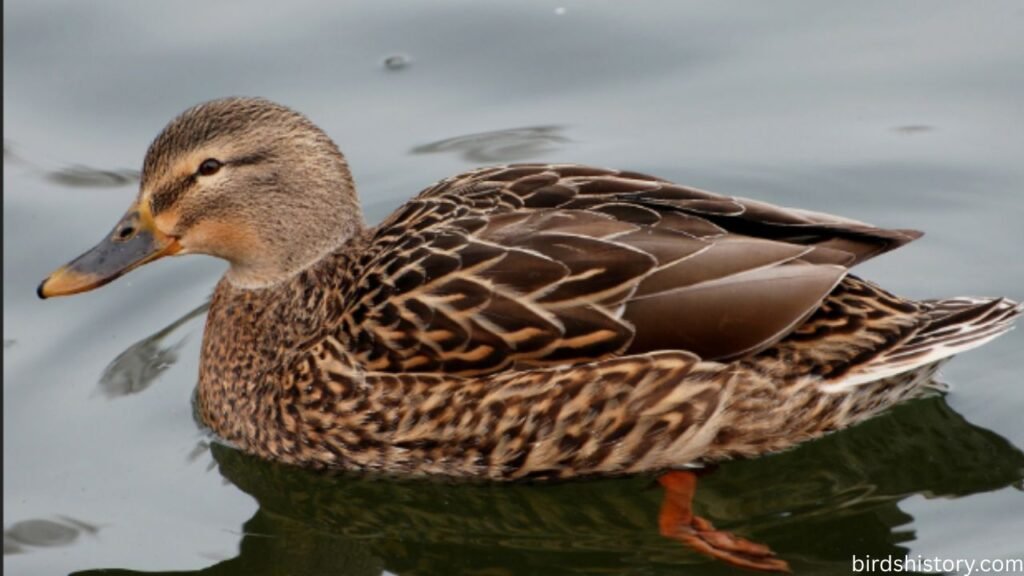
Mallards are medium-sized ducks with striking differences between males and females.
- The length of this animal is approximately 50 to 65 centimeters (20–26 inches), and its wingspan stretches between 81 and 98 centimeters (32–39 inches).
- Weight: 1–1.6 kg (2.2–3.5 lbs).
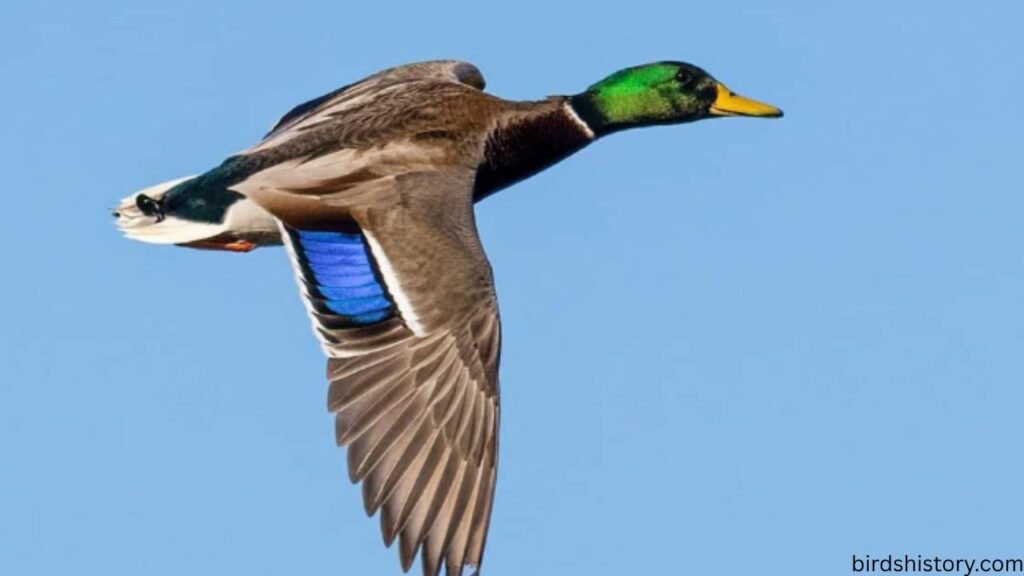
Males (Drakes)
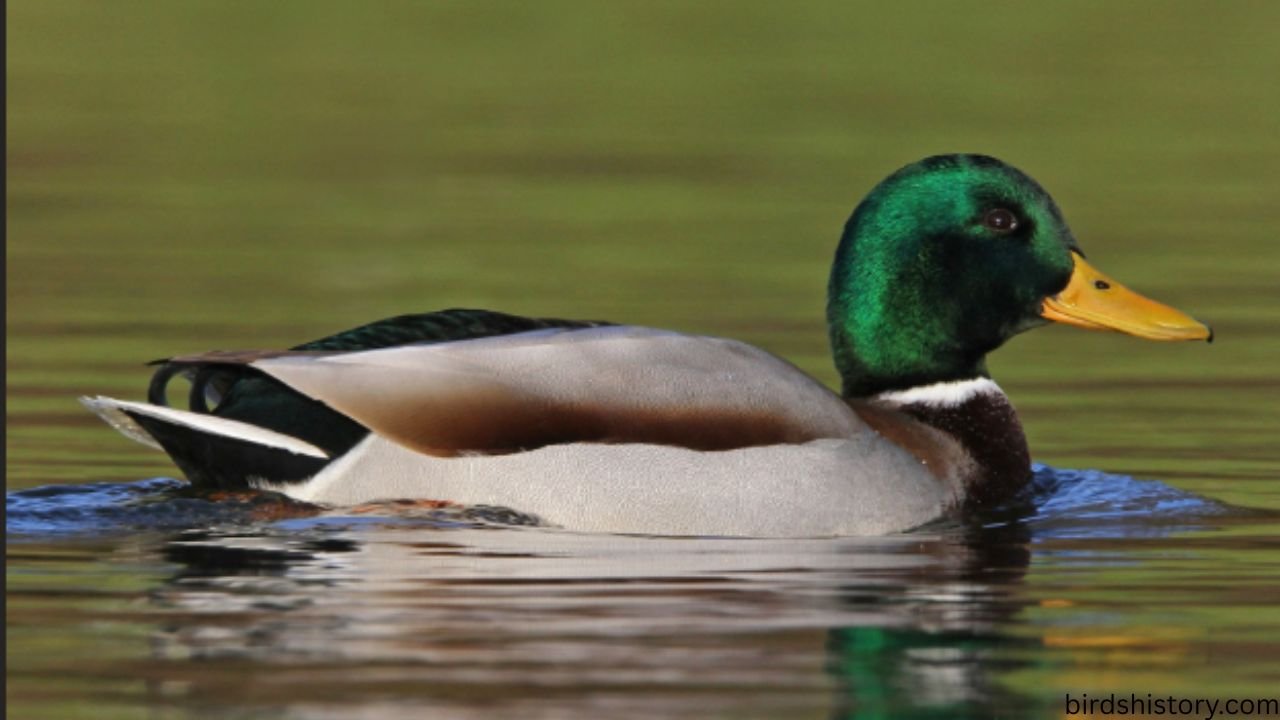
- Distinctive iridescent green head.
- Bright yellow bill.
- White ring around the neck.
- Chestnut-brown breast and grayish body.
- Black rump with white-edged blue speculum (wing patch).
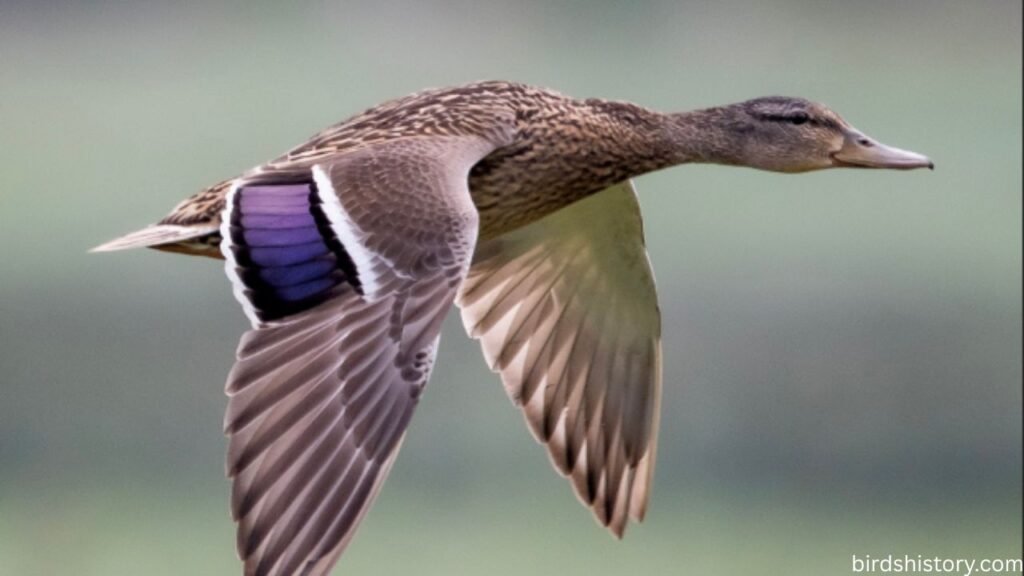
Females (Hens)
- Mottled brown plumage for camouflage.
- Orange and black bill.
- Blue wing patch similar to males but less vibrant.
This sexual dimorphism helps females stay hidden while nesting, while males attract mates with their vivid colors.
Habitat and Range
Mallards are among the most widespread bird species on Earth.
- The Mallard can be found naturally on the continents of North America, Europe, and Asia, and has been introduced to both New Zealand and Australia.
- Habitats:
- Freshwater lakes, rivers, ponds, marshes.
- Urban parks and reservoirs.
- Agricultural fields during migration.
Migration
Mallards are partial migrants. Northern populations (like those in Canada or Scandinavia) fly south for winter, while those in warmer areas may stay year-round. Their flexibility explains why they thrive in so many climates.
Diet and Feeding Habits
Mallards are a type of dabbling duck that eats both plants and animals, making them omnivores.
- Plant matter: Seeds, aquatic plants, grains, and crops.
- Animal matter: Insects, snails, worms, and small fish.
Feeding Behavior
They often tip forward in the water—tails in the air, heads underwater—to reach vegetation below the surface. On land, they forage in fields, especially in fall and winter when they feed on leftover grains.
Fun fact: Mallards sometimes eat acorns, a behavior that helps them survive in oak-rich regions.
Behavior and Lifestyle
Mallards are social, adaptable, and expressive birds.
- Social life: They often gather in flocks, especially during migration and winter.
- Flight style: Fast, direct, with rapid wingbeats. They are capable of flying at speeds of up to 55 miles per hour.
- Vocalizations: Females produce the familiar “quack,” while males make softer, raspier sounds.
- Mating rituals: Males court females with displays such as head bobbing, wing flapping, and synchronized swimming.
Reproduction and Lifespan
Breeding Season
- Typically begins in spring (March–May in the Northern Hemisphere).
- Pairs often form during winter but separate after breeding.
Nesting
- Females choose the nest site, usually near water in tall grass or shrubs.
- They build nests lined with down feathers.
Eggs
- Clutch size: 8–13 eggs.
- Color: Creamy to pale green.
- Incubation: About 26–30 days, with only the female incubating.
Lifespan
- In the wild: 5–10 years.
- In captivity: Up to 15 years.
Predators and Threats
Mallards face many dangers in the wild.
- Natural predators:
- Common predators for their eggs and young ducklings include raccoons, foxes, snakes, crows, and gulls.
- Adults: Hawks, eagles, and snapping turtles.
- Environmental threats:
- Habitat loss due to wetland drainage.
- Pollution of rivers and lakes.
- Human impact: Hunting, urbanization, and hybridization with domestic ducks.
Conservation Status
Based on the IUCN Red List, the mallard’s conservation status is categorized as “Least Concern.” Their global population is stable, estimated at over 19 million individuals.
However, conservationists monitor them closely due to habitat loss and hybridization risks. Organizations like Ducks Unlimited work to protect wetlands, ensuring mallards and other waterfowl have safe habitats.
Interesting Facts About Mallards
- Mallards are the ancestors of most domestic ducks, except for Muscovy ducks.
- They can interbreed with many duck species, producing hybrids like “mule ducks.”
- Their quack has a unique echo effect—scientists found it doesn’t echo clearly in some settings.
- Mallards are excellent fliers—they’ve been recorded flying as high as 21,000 feet during migration.
- They play a role in ecosystems by dispersing seeds through their droppings.
Conclusion
The mallard isn’t just another common duck—it’s a remarkable species that has adapted to thrive almost everywhere humans live. Its brilliant plumage, social behaviors, and ecological importance make it worth appreciating and protecting.
By learning about mallards, we also learn more about wetland ecosystems, biodiversity, and the relationship between humans and wildlife. Next time you see one gliding across a pond, you’ll know there’s more to it than meets the eye.
FAQs
1. Are mallards the same as domestic ducks?
Nearly all domesticated ducks, with the exception of the Muscovy duck, are descendants of the mallard.
2. Do mallards migrate?
Yes, northern populations migrate south for winter, while southern ones may remain year-round.
3. How can you tell a male from a female mallard?
Males have a green head and bright colors, while females are mottled brown for camouflage.
4. What do mallards eat in winter?
They eat grains, seeds, and leftover crops in fields.
5. How long do mallards live?
In the wild, they typically live for 5 to 10 years, but can survive for up to 15 years in captivity.
6. Are mallards endangered?
No, they’re listed as “Least Concern” due to their large population.
7. Why do mallards quack?
Females quack to communicate with ducklings or signal alarm.
8. Can mallards fly long distances?
They migrate for thousands of miles and can reach speeds of up to 55 miles per hour.
9. Do mallards mate for life?
No, pairs form for a breeding season but usually separate afterward.
10. Where are mallards most commonly found?
They are found in North America, Europe, Asia, and introduced populations exist in Australia and New Zealand.