
Agami Heron: The Jewel of the Rainforest Waters
The Agami Heron, also known as Agamia agami, is considered among the globe’s most stunning and enigmatic heron species. Often called the “jewel of the heron family,” it is admired for its striking plumage and secretive lifestyle. While other herons are more common and easier to spot, the Agami Heron prefers the quiet, shaded waterways of Central and South America, making sightings rare and special for birdwatchers.
What makes this bird fascinating is not only its vibrant colors but also its behavior. Rather than hunting in open marshes like other common herons, the Agami Heron prefers to live in thick forests near rivers and lagoons. Its combination of elegance, rarity, and secrecy makes it a true hidden treasure of the tropics.
Taxonomy / Classification
Here’s where the Agami Heron fits in the bird world:
- Common Name: Agami Heron
- Scientific Name: Agamia agami
- Family: Ardeidae (the heron family)
- Order: Pelecaniformes
- Class: Aves
Also read: /the-green-oropendola/
Interestingly, the Agami Heron is the only species in its genus (Agamia), which makes it unique among herons. Its closest relatives include other long-legged wading birds like the Green Heron and Great Egret, but its look and lifestyle set it apart.
Physical Description
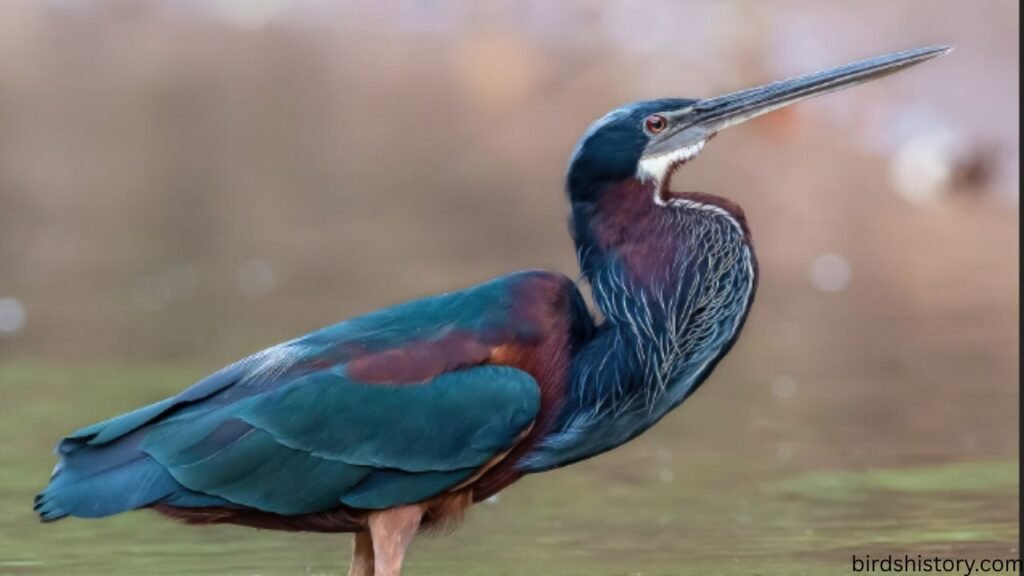
The Agami Heron is truly a showstopper in terms of appearance. It is a medium-sized heron, measuring about 66–76 cm (26–30 inches) in length, but what stands out most is its vibrant plumage.
- Head and Neck: Chestnut-colored neck with long, wispy feathers.
- Back and Wings: Iridescent greenish-blue with metallic tones that glimmer in the light.
- Belly: Whitish underparts with soft contrasts.
- Bill: Long, slender, and sharply pointed—adapted perfectly for spearing fish.
- Legs: Greenish-yellow, long and slim for wading in shallow waters.
- Eyes: Red iris that enhances its striking look.
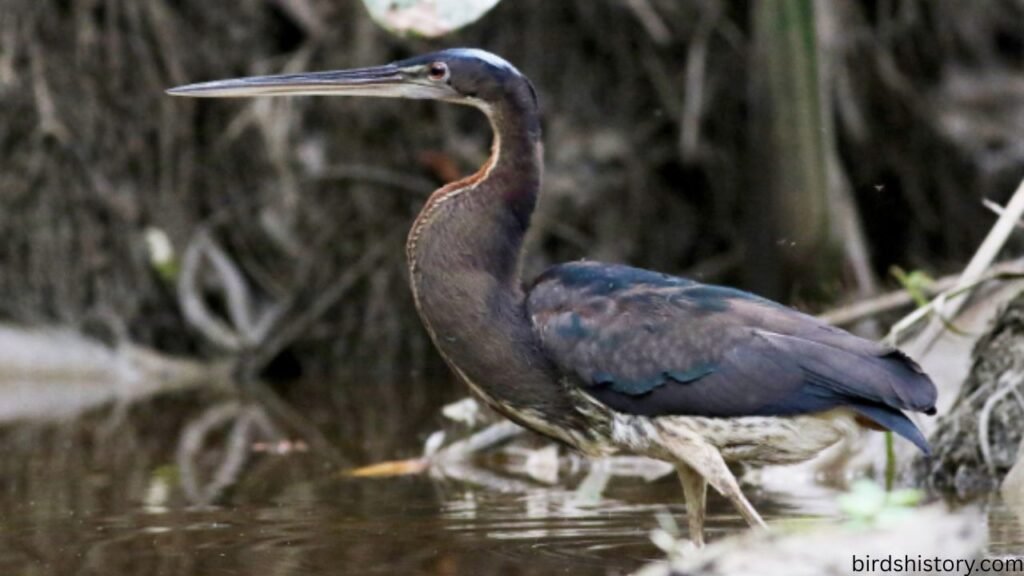
Both males and females look very similar, although males may appear slightly larger. Juveniles are duller, lacking the deep colors of adults until they mature.
The Agami Heron’s delicate build and jewel-like plumage make it one of the most visually stunning birds in tropical forests.
Habitat and Range
The Agami Heron has a wide distribution but is highly localized and secretive.
- Continent: Central and South America
- Countries: Found in parts of Mexico, Guatemala, Costa Rica, Brazil, Colombia, Venezuela, Peru, and the Guianas.
- Preferred Environments:
- Lowland tropical forests
- Swampy rivers and streams
- Lagoons and freshwater marshes with dense cover
Unlike migratory birds, the Agami Heron is considered a resident species, although some local seasonal movements are observed when water levels change. It prefers the hidden waterways of the Amazon and rarely ventures into open wetlands, making it harder to spot than other herons.
Diet and Feeding Habits
The Agami Heron is primarily a fish-eater, but it also feeds on other aquatic prey.
Main Diet:
- Small fish
- Frogs and tadpoles
- Aquatic insects
- Small crustaceans
Feeding Style:
- It often hunts by standing silently near water, waiting for prey to come close.
- With its long, dagger-like bill, it makes quick, precise strikes to spear fish.
- Unlike other herons that wade into open water, the Agami Heron prefers shaded, secluded spots, which makes its hunting style more secretive.
This patient, stealthy approach shows how well-adapted the bird is to its dense forest environment.
Behavior and Lifestyle
The Agami Heron is recognized for its reclusive and solitary behavior.
- Social Behavior: Usually solitary outside the breeding season.
- Flight Style: Slow and graceful, with deep wing beats.
- When the bird is flying or feels threatened, it makes a soft, low grunting sound.
- Daily Routine: Spends much of its time perched quietly near streams, blending into the shadows.
Mating Behavior:
During the breeding season, however, these herons come together in large colonies, sometimes with hundreds of nests close to each other. This is one of the rare times birdwatchers can observe them in groups.
Reproduction and Lifespan
Breeding is one of the most fascinating aspects of the Agami Heron’s life.
- Breeding Season: Usually aligns with the rainy season, which varies by region.
- Nesting: Large colonies form near rivers and swamps, often in trees overhanging water.
- Nest: Made of twigs, usually placed high in the canopy for safety.
- Eggs: Typically 2–4 pale blue or whitish eggs.
- Incubation: Both parents share the duty, lasting about 27–30 days.
- Chicks: Hatch helpless but grow quickly, fed by regurgitated food.
Lifespan:
In the wild, Agami Herons are believed to live around 12–15 years, though more research is needed to confirm exact figures.
Predators and Threats
The Agami Heron, though rarely seen, is at risk from both natural and human-made dangers.
Predators:
- Snakes and monkeys pose a threat to the nests, as they steal eggs and young birds.
- Raptors such as hawks and eagles
- Large reptiles like caimans in their watery habitats
Human-related Threats:
- Deforestation: Loss of lowland tropical forests reduces suitable habitat.
- Water Pollution: Impacts fish populations, their primary food source.
- Disturbance of Colonies: Nesting sites are vulnerable to human activity like logging or fishing.
Conservation Status
The Agami Heron is currently listed as Vulnerable on the IUCN Red List. While its range is large, its population is declining due to habitat destruction and fragmentation.
Conservation Measures:
- Protected reserves in the Amazon and Central America.
- Conservation programs focused on wetland and forest preservation.
- Raising awareness among local communities about the bird’s ecological importance.
Protecting this species is crucial, not only because of its beauty but also because it plays a role in controlling fish and insect populations in freshwater ecosystems.
Interesting Facts
- The Agami Heron is sometimes called the “chestnut-bellied heron” because of its deep chestnut neck and underparts.
- Unlike many herons, it is rarely seen in flight; instead, it prefers to stay hidden near shady water edges.
- Birdwatchers prize sightings of this heron because of its rarity and spectacular plumage—it’s often considered a “holy grail” bird of the tropics.
- Its long, slender bill makes it one of the most specialized fish hunters in its family.
- Colonies of Agami Herons can sometimes contain thousands of nests, creating a remarkable natural spectacle.

Conclusion
The Agami Heron is one of the most extraordinary yet secretive birds of the heron family. With its shimmering green-blue back, chestnut neck, and stealthy hunting style, it has earned the title of the “jewel of the rainforest.”
While it may be hard to find, its very elusiveness makes it special. This bird serves as a reminder of the unseen beauty still found in tropical forests and the critical need to protect these environments. Protecting the Agami Heron means protecting the ecosystems of Central and South America where countless species coexist.
For bird lovers and conservationists alike, the Agami Heron represents both a challenge and a treasure—a bird worth learning about, appreciating, and safeguarding for future generations.
FAQs
1. What is the scientific name of the Agami Heron?
Its scientific name is Agamia agami.
2. Where can the Agami Heron be found?
It lives in tropical forests and waterways of Central and South America, especially the Amazon basin.
3. Why is it called the jewel of the heron family?
Due to its striking feathers, which feature iridescent shades of blue, green, and chestnut.
4. What does the Agami Heron eat?
Mostly small fish, but also frogs, insects, and crustaceans.
5. Is the Agami Heron migratory?
No, it is a resident bird, although it may move locally with changing water levels.
6. How does the Agami Heron reproduce?
It breeds in large colonies, building twig nests in trees overhanging water and laying 2–4 eggs.
7. What threats does the Agami Heron face?
Deforestation, pollution, and disturbance of nesting colonies.
8. What is its conservation status?
Its conservation status is “Vulnerable” on the IUCN Red List.
9. How long does it live?
On average, 12–15 years in the wild.
10. Why is it important to protect the Agami Heron?
It plays an ecological role in freshwater ecosystems and is a flagship species for rainforest conservation.