King Vulture the Stunning and Powerful Scavenger of the Skies
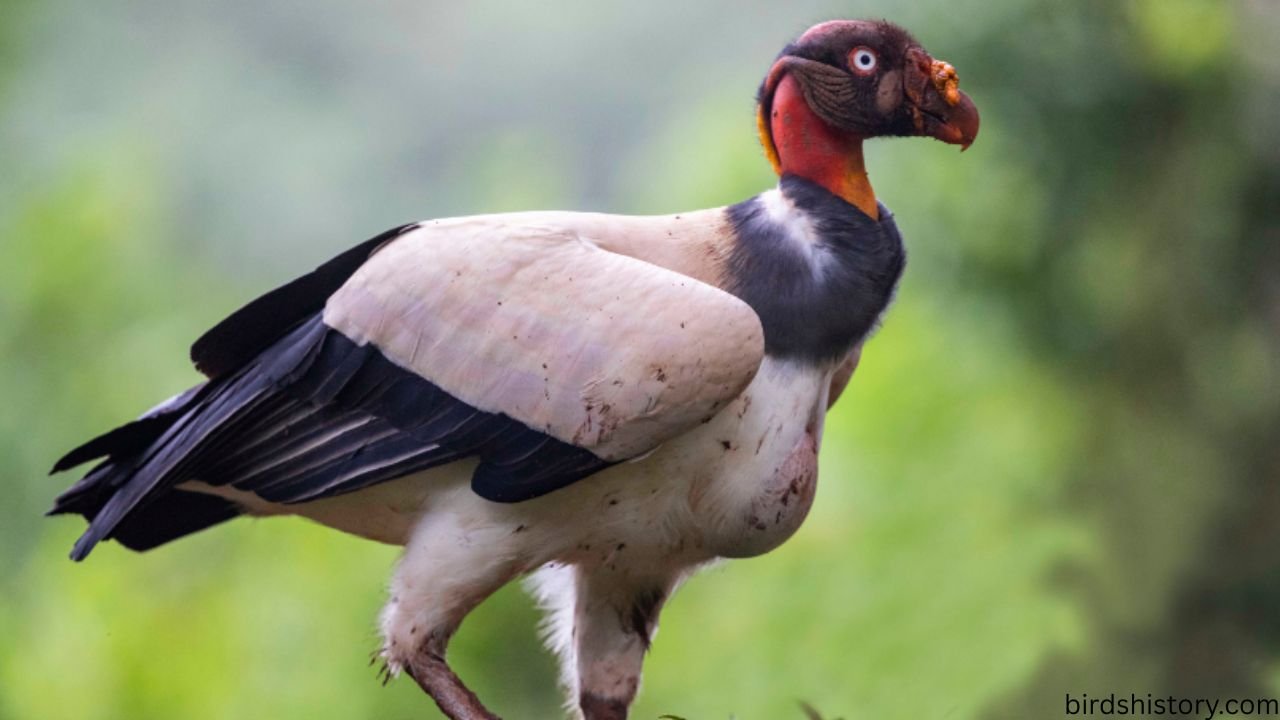
The King Vulture (Sarcoramphus papa) is one of the most striking vultures in the world. With its massive size, vibrant colors, and commanding presence, it has long captured the imagination of people across Central and South America. Unlike other vultures, the King Vulture has a brightly patterned head in shades of orange, yellow, and red, making it look almost regal—hence its name.
These birds play an essential ecological role by cleaning up animal remains in the rainforest. Found mainly in tropical lowlands, the King Vulture is both a mysterious and vital part of its environment.
One surprising fact? In Mayan mythology, the King Vulture was seen as a messenger between humans and the gods, symbolizing renewal and transformation. This fascinating combination of biology and cultural significance makes it one of the most interesting birds to study.
King Vulture Taxonomy / Classification
- Common Name: King Vulture
- Scientific Name: Sarcoramphus papa
- Family: Cathartidae
- The taxonomic order for this species is Accipitriformes, though some older sources may classify it under Ciconiiformes.
- Class: Aves
Also read: /dwarf-cassowary/
The King Vulture is the sole surviving species in the genus Sarcoramphus. Its closest relatives are other New World vultures, including the Black Vulture, Turkey Vulture, and Andean Condor.
King Vulture Physical Description
The King Vulture is impossible to mistake for any other bird.
- Size: Adults measure about 26–32 inches (67–81 cm) in length.
- Wingspan: 4–7 feet (120–200 cm).
- Weight: Between 6–10 pounds (2.7–4.5 kg).
Appearance:
- The body is covered mostly in white feathers, with contrasting black on the wing edges and tail.
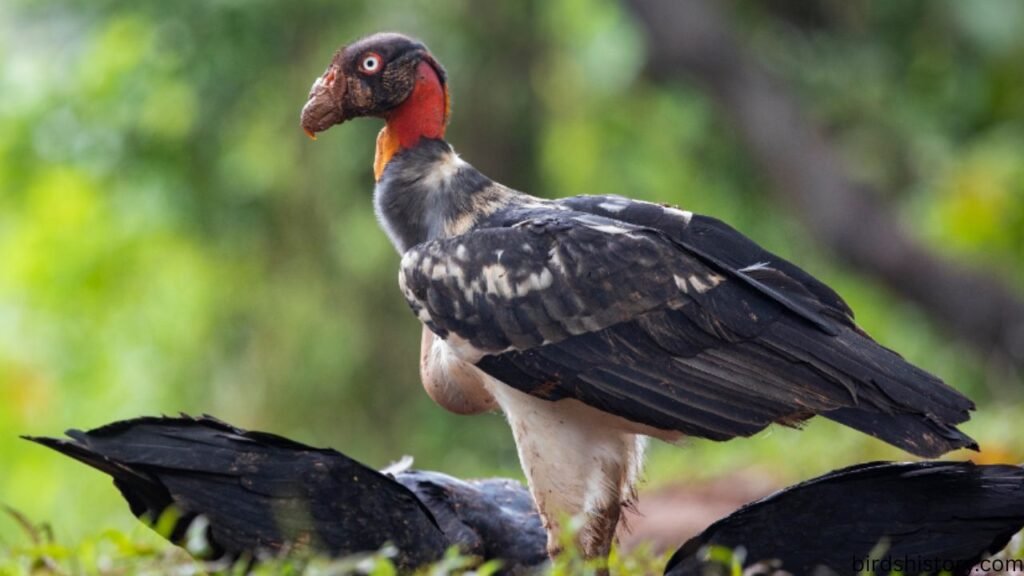
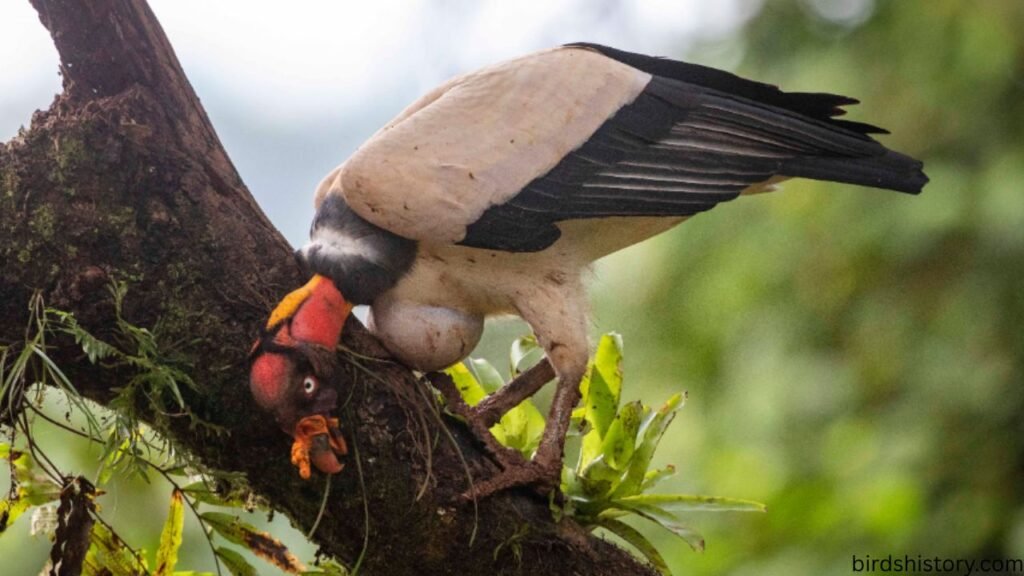
- The King Vulture has a bare head and neck that are adorned with vibrant colors, including shades of red, yellow, orange, and purple.
- A distinctive fleshy caruncle (a wattle-like structure) sits above the beak, giving the bird an even more unusual look.
- Eyes are white with red rings around them, adding to its piercing gaze.
Male vs. Female
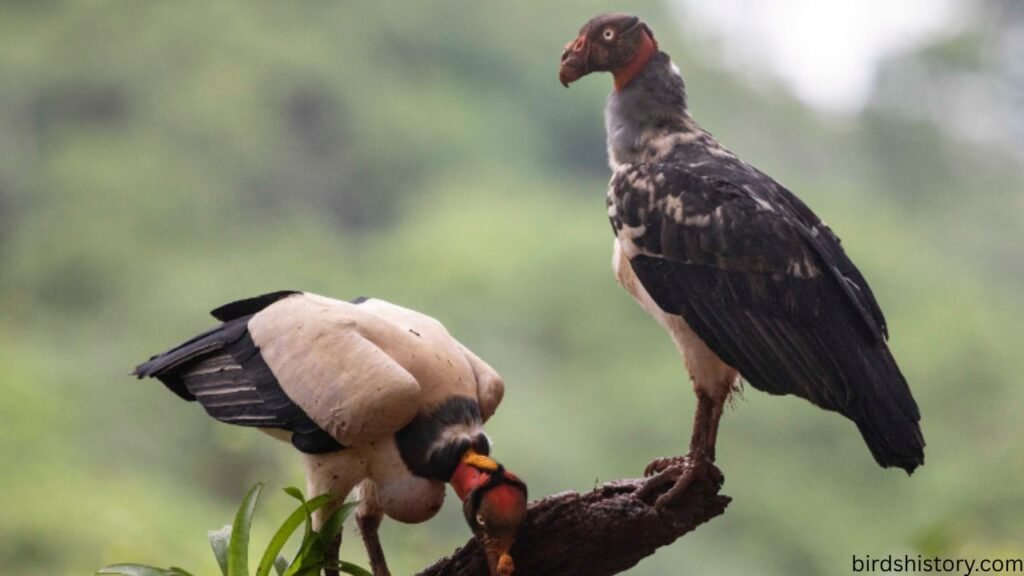
Males and females look almost identical, which makes it hard to distinguish between them. Both share the same bold coloration and size, though males may be slightly heavier.
Unique Traits
The lack of feathers on the head is an adaptation for hygiene—when feeding on carrion, having a bare head helps prevent bacteria from sticking to feathers.
Habitat and Range of King Vulture
The King Vulture is found in Central and South America, ranging from southern Mexico down through Argentina.
Preferred Environments:
- Lowland tropical rainforests
- Savannahs and open woodlands
- Areas close to rivers and wetlands
They tend to steer clear of mountainous areas and prefer flat or slightly hilly terrain.
Range:
- Countries include Mexico, Belize, Guatemala, Honduras, Costa Rica, Panama, Colombia, Venezuela, Ecuador, Peru, Bolivia, Brazil, Paraguay, and Argentina.
They are non-migratory, generally staying in the same region throughout their lives, although they may roam large areas in search of food.
Diet and Feeding Habits
Like other vultures, the King Vulture is a scavenger, feeding on carrion (dead animals).
- Diet: Medium to large carcasses, including those of deer, tapirs, cattle, and monkeys.
- Feeding behavior: They often let smaller vultures find the carcass first, then swoop in and dominate the site, using their stronger beaks to tear through tough hides.
- Digestive system: Highly acidic stomachs allow them to safely consume decaying meat that would be deadly to most animals.
Because of their dominance at feeding sites, King Vultures play a key role in controlling disease spread in tropical ecosystems.
Behavior and Lifestyle
The King Vulture is generally a solitary or small-group bird, often seen alone or with a few others rather than in large flocks.
- Flight: They are powerful fliers, soaring gracefully on thermals while searching for carrion.
- Social habits: At feeding sites, they are dominant over most other vulture species, except for the larger Andean Condor.
- Vocalizations: They lack a syrinx (the bird’s voice box), so they cannot produce calls like other birds. Instead, they make low croaks, grunts, and wheezing sounds.
- Daily routine: They spend most of their time soaring in the skies and feeding when carrion is available.
Reproduction and Lifespan
King Vultures form monogamous pairs and often maintain long-term relationships.
Breeding Season
Varies depending on location but often occurs during the dry season.
Nesting
- They do not build typical nests. Rather than building a nest, they utilize natural hollows, tree cavities, or rock formations.
- Nests are usually located in secluded, forested areas.
Eggs and Chicks
- The female typically lays one egg.
- Both parents take turns incubating the egg for about 52–58 days.
- Chicks hatch covered in white down and are fed regurgitated food by both parents.
- Fledging occurs after about 3 months, though young remain dependent for several more months.
Lifespan
- In the wild: Around 20–25 years.
- In captivity, King Vultures can live up to or even exceed 30 years.
Predators and Threats
Natural Predators
- Snakes, monkeys, and big cats sometimes eat the eggs and young birds.
- Adult King Vultures, due to their size, have few natural predators.
Environmental Threats
- Forest loss is destroying the rainforest habitats where these birds nest and find food.
- Poisoning: In some areas, carcasses poisoned by humans (to target pests like coyotes) unintentionally kill scavengers like vultures.
- Human disturbance: Logging and agriculture reduce safe nesting areas.
Conservation Status
- IUCN Red List: Least Concern
- Population trend: Declining in some areas due to habitat loss and poisoning, but still widely distributed.
Conservation Efforts
- Protected areas across Latin America help preserve rainforest habitat.
- Environmental education campaigns promote the importance of vultures in ecosystems.
Interesting Facts About the King Vulture
- Known as the “King” because smaller vultures often step aside when it arrives at a carcass.
- The Mayans believed it was a divine messenger between humans and gods.
- Despite its size, it is often surprisingly quiet, making only hisses and grunts.
- Its striking colors are thought to play a role in species recognition and possibly mate attraction.
- By eating carrion, it prevents the spread of diseases that could affect other animals and even humans.
Conclusion
The King Vulture is one of the most fascinating scavengers in the world. With its colorful head, powerful build, and commanding presence, it lives up to its regal name. More than just a striking bird, it plays a crucial role in rainforest ecosystems by cleaning up carrion and preventing disease spread.
Though currently listed as Least Concern, the King Vulture faces challenges from deforestation and human activity. Saving this species is essential for the overall well-being of tropical forests.
Its beauty, mythology, and ecological importance make the King Vulture a species worth celebrating and conserving.
FAQs About King Vulture
1. What is the scientific name of the King Vulture?
Sarcoramphus papa.
2. Where can you find King Vultures?
Their habitat spans from Mexico to Argentina, covering a wide range of Central and South America.
3. Why is it called the Vulture?
Because it dominates feeding sites, often displacing smaller vultures.
4. What do King Vultures eat?
They feed primarily on carrion (dead animals).
5. How big is a King Vulture?
It has a wingspan of 4–7 feet and weighs up to 10 pounds.
6. Do King Vultures migrate?
No, they are non-migratory and remain in their tropical range year-round.
7. How long do they live?
20–25 years in the wild, up to 30 years in captivity.
8. Are King Vultures endangered?
No, they are listed as Least Concern, though habitat loss poses risks.
9. What sounds do King Vultures make?
Because they don’t have a proper voice box, these birds produce sounds like hisses, grunts, and wheezes.
10. What role do they play in ecosystems?
They clean up carcasses, preventing disease spread and keeping ecosystems healthy.