Harpy Eagle: The Powerful King of the Rainforest
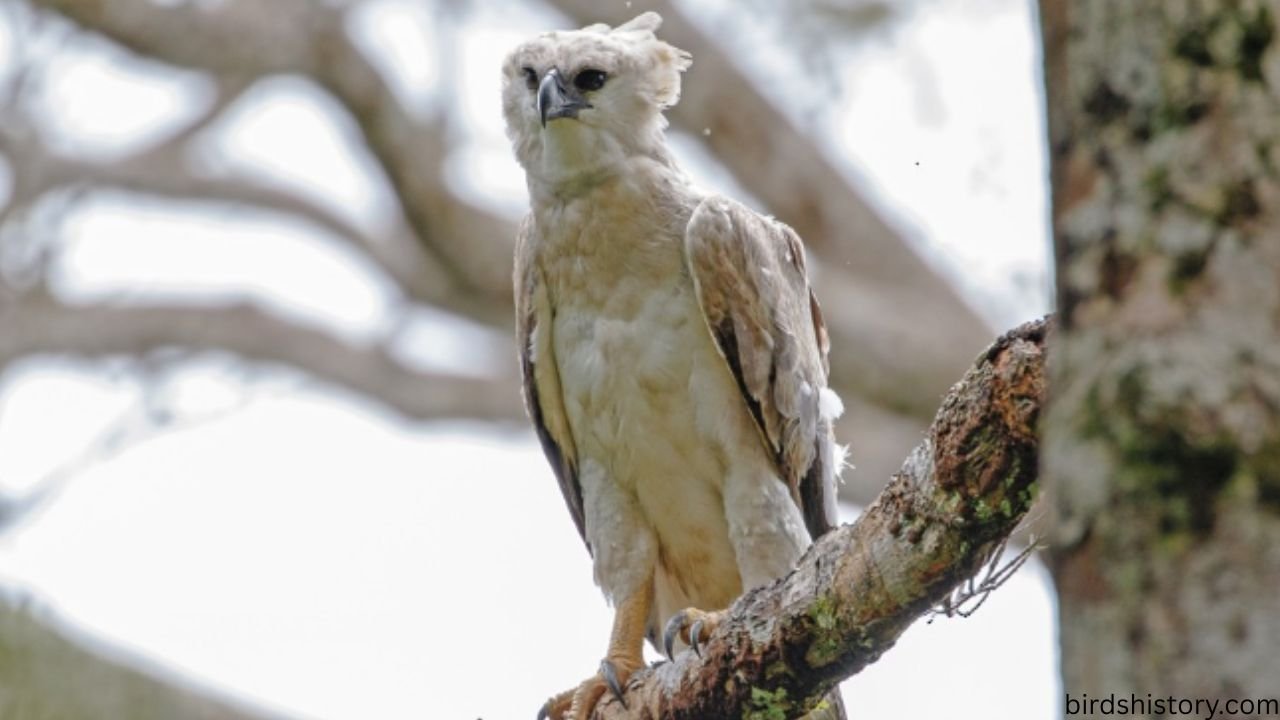
The Harpy Eagle (Harpia harpyja) is one of the largest and most powerful eagles in the world, often called the “king of the rainforest.” Found in the tropical forests of Central and South America, this striking bird of prey captures attention with its massive talons, piercing eyes, and bold crown of feathers.
What makes the Harpy Eagle especially fascinating is its hunting style. With talons as large as a grizzly bear’s claws, it can snatch monkeys, sloths, and other medium-sized mammals straight from the trees. Despite its fierce reputation, the Harpy Eagle is elusive and rarely seen in the wild, making encounters with it both rare and unforgettable.
Let’s explore the life of this incredible raptor—from its classification to its role in culture and conservation.
Harpy Eagle Taxonomy / Classification
- Common Name: Harpy Eagle
- Scientific Name: Harpia harpyja
- Family: Accipitridae (hawks, eagles, and kites)
- Order: Accipitriformes
- Class: Aves
Also read: /spixs-guan/
The Harpy Eagle is the sole species within its genus, Harpia. Its closest relatives are other large eagles like the crested and ornate hawk-eagles, but the Harpy Eagle stands apart because of its sheer size and power.
Harpy Eagle Physical Description
The Harpy Eagle is a truly impressive bird and ranks among the largest raptors on Earth.
- Size:
- Height: 86–107 cm (2.8–3.5 feet)
- Weight: Females 6–9 kg (13–20 lbs); Males 4–6 kg (9–13 lbs)
- With a wingspan of approximately 2 meters (6.5 feet), the Harpy Eagle’s wings are quite short for a bird of its size, which allows it to navigate through the thick forest with greater ease.
- Plumage:
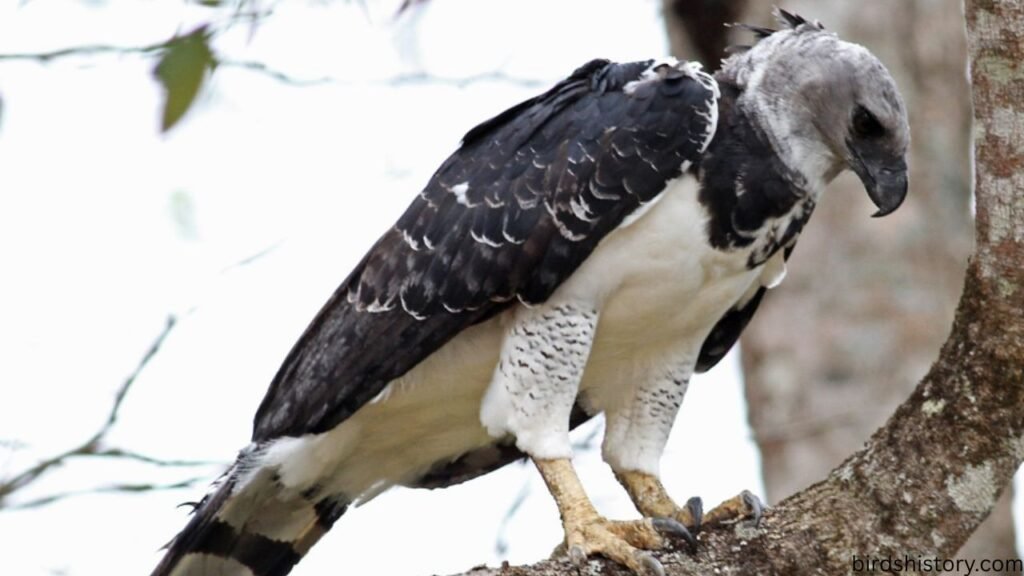
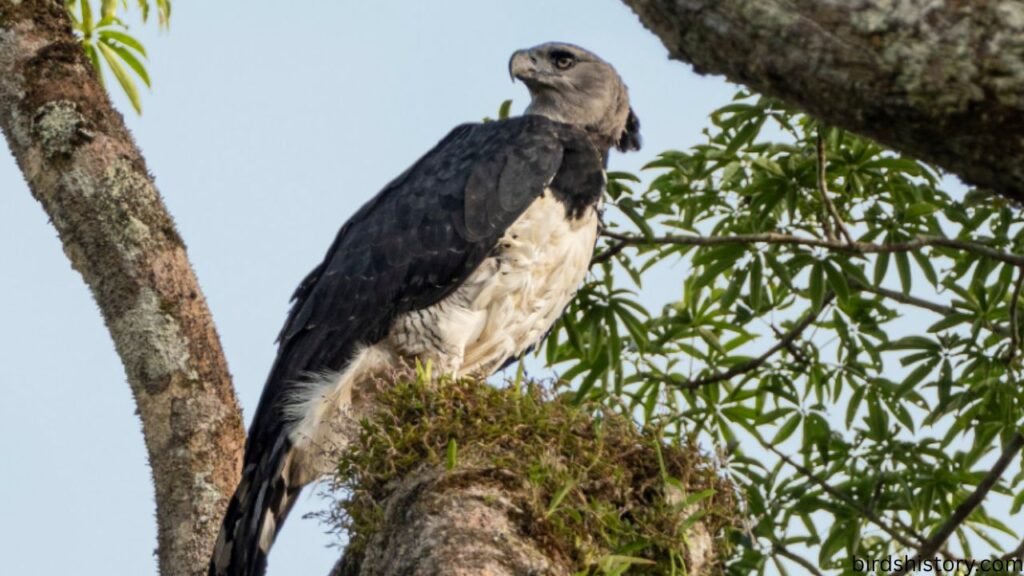
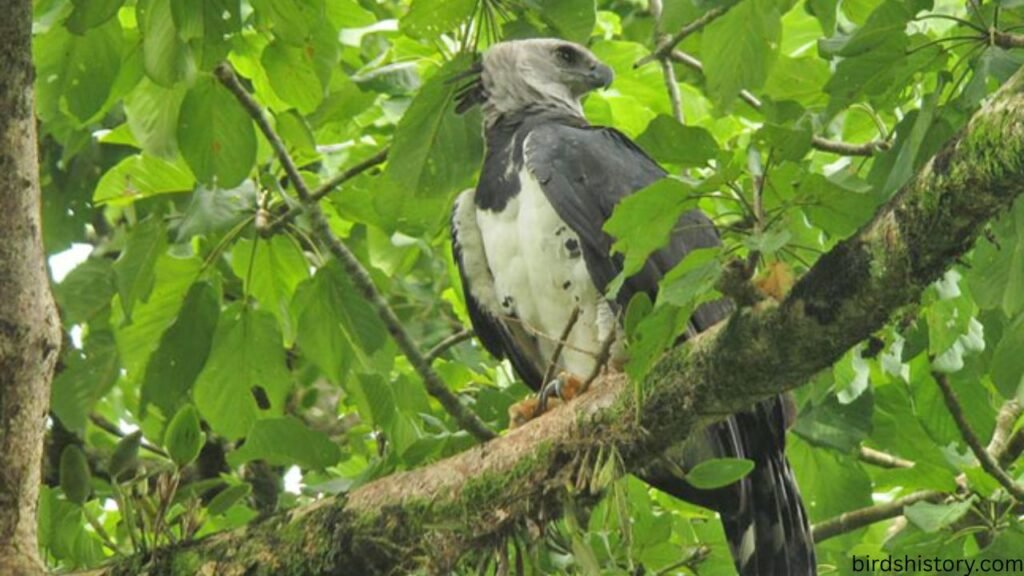
- Upper parts: Dark gray to black
- Underparts: White with a black band across the chest
- Head: Pale gray with a dramatic double crest of feathers that raises when alert
- Beak: Large, hooked, and black, perfect for tearing flesh.
- Eyes: Dark brown and intense, giving it a piercing gaze.
- Its talons are enormous, with claws reaching up to 13 cm (5 inches) in length, which are even bigger than those of a grizzly bear.
Sexual dimorphism: Females are much larger than males, a common trait among raptors.
Its crown of feathers, immense claws, and muscular build give the Harpy Eagle a fierce and almost mythical appearance.
Habitat and Range Of Harpy Eagle
- The Harpy Eagle’s habitat spans Central and South America, stretching from southern Mexico all the way to Brazil, Peru, and northern Argentina.
- Preferred habitats:
- Tropical lowland rainforests
- Prefers areas with tall, mature trees for nesting
- Found at elevations up to 600 meters (2,000 feet), though most common in lowlands
- Migration: Harpy Eagles are non-migratory. They remain in established territories as long as prey is available.
Unfortunately, habitat destruction has caused them to disappear from many parts of Central America.
Harpy Eagle Diet and Feeding Habits
The Harpy Eagle is an apex predator, meaning it sits at the very top of the food chain in its habitat.
- Main diet:
- Sloths
- Monkeys (howler monkeys, capuchins, spider monkeys)
- Large birds such as macaws
- Other prey: Opossums, iguanas, porcupines, and even young deer.
- Hunting technique:
- Harpy Eagles perch silently and wait for movement.
- Using their short, powerful wings, they swoop through trees with surprising agility.
- They strike prey with their talons, delivering instant fatal force.
- Feeding:
- They often carry prey back to their nest, sometimes animals as heavy as themselves.
This hunting power makes the Harpy Eagle one of the most formidable raptors in the world.
Behavior and Lifestyle
- Social structure: Harpy Eagles are generally solitary or live as mated pairs within large territories.
- Territoriality: They defend vast hunting grounds, sometimes up to 20 square miles.
- Flight: Surprisingly quiet and agile despite their size. Instead of pursuing prey over long distances, they prefer to hunt by surprise.
- Vocalizations: High-pitched whistles and screams, used for communication between mates and with chicks.
- Mating rituals: Courtship includes aerial displays, mutual preening, and nest building.
Their shy nature makes them rarely seen, even in regions where they are present.
Harpy Eagle Reproduction and Lifespan
- Breeding season: Varies by region but often coincides with prey abundance.
- Nesting:
- Nests are massive platforms built high in tall trees, often in Kapok or Brazil nut trees.
- Nests measure up to 1.5 meters (5 feet) across and are reused for many years.
- Eggs:
- Typically 1–2 eggs are laid.
- Only one chick usually survives because the stronger chick outcompetes the weaker, or parents focus on raising just one.
- Incubation: About 56 days, mainly by the female, while the male hunts.
- Chick rearing:
- Chicks fledge after 6 months but remain dependent for up to 1–2 years.
- Lifespan:
- In the wild: 25–35 years
- In captivity: Up to 40 years
Because they reproduce slowly, losing even a few adults from a population can have serious impacts.
Predators and Threats
- Because of their large size and strength, adult Harpy Eagles have no natural predators. Eggs and chicks may be vulnerable to large snakes or other raptors.
- Human impact:
- Deforestation: The greatest threat, as they need large territories with old-growth trees for nesting.
- Hunting: Sometimes shot by farmers who mistakenly view them as threats to livestock.
- Captivity and trade: Rare, but they have been captured illegally.
Their slow reproductive rate makes them especially vulnerable to population decline.
Harpy Eagle Conservation Status
- IUCN Red List: Near Threatened
- Population trend: Declining, with fewer than 50,000 mature individuals estimated.
- Conservation efforts:
- Protection of rainforests in the Amazon Basin
- Captive breeding and reintroduction programs in Central America
- Awareness campaigns to reduce hunting
- Protected areas: Found in several national parks and reserves across South America.
Preserving the Harpy Eagle is directly connected to protecting its habitat.
Interesting Facts About Harpy Eagles
- The size of their talons exceeds that of a grizzly bear’s claws.
- These birds are capable of carrying off prey that weighs as much as they do.
- Harpy Eagles inspired legends in many cultures and are sometimes mistaken for mythical creatures because of their striking appearance.
- They are national symbols of Panama and appear on the country’s coat of arms.
- Unlike many eagles, they rarely soar in open skies, preferring the cover of dense forests.
Conclusion
The Harpy Eagle is a true symbol of power, resilience, and wilderness. From its massive talons to its impressive crown of feathers, it represents the untamed spirit of the tropical rainforests. Yet, despite its dominance as a predator, it remains vulnerable to deforestation and human interference.
Saving this incredible bird is crucial for the preservation of huge rainforests, which in turn safeguards not only the Harpy Eagle but also countless other species. The Harpy Eagle reminds us that the natural world is filled with wonders worth safeguarding.
FAQs About Harpy Eagle
1. What is the scientific name of the Harpy Eagle?
Harpia harpyja.
2. Where do Harpy Eagles live?
They inhabit the rainforests of Central and South America, from Mexico to Argentina.
3. How big is a Harpy Eagle?
They can reach up to 3.5 feet tall, with a wingspan of 6.5 feet.
4. What do Harpy Eagles eat?
Mainly monkeys, sloths, and other medium-sized mammals.
5. Why is the Harpy Eagle called “Harpy”?
Its name comes from Greek mythology’s harpies, winged spirits known for their fearsome power.
6. Are Harpy Eagles dangerous to humans?
They are not typically dangerous but can defend themselves fiercely if threatened.
7. How long do Harpy Eagles live?
Around 25–35 years in the wild, and up to 40 in captivity.
8. Are Harpy Eagles endangered?
They are Near Threatened due to habitat loss and hunting.
9. Do Harpy Eagles mate for life?
Yes, they form monogamous pairs that stay together for years.
10. Why are Harpy Eagles important?
They control populations of arboreal mammals and serve as indicators of healthy rainforest ecosystems.