
Lettered Aracari: The Colorful Jewel of the Amazon
The Lettered Aracari is one of the Amazon’s most striking birds, known for its vibrant plumage and unique bill markings that resemble ancient letters. A member of the toucan family, this bird stands out with its brilliant mix of green, red, and yellow feathers.
The Lettered Aracari, a bird primarily found in South America, is both captivating and holds significant ecological value. Its large bill, while beautiful, isn’t just for show—it’s a tool that helps the bird forage for fruit and insects. Bird enthusiasts and scientists alike admire this aracari for its role in seed dispersal, ensuring the rainforest remains lush and diverse.
One fun fact: this species is sometimes called the “living paintbrush of the forest” because its feathers display such a dazzling spectrum of colors.
Taxonomy / Classification
- Common Name: Lettered Aracari
- Scientific Name: Pteroglossus inscriptus
- Family: Ramphastidae
- Order: Piciformes
- Class: Aves
Also read: /the-great-spotted-kiwi/
This bird belongs to the toucan family (Ramphastidae), which is famous for bright, oversized bills. The Lettered Aracari is one of the smaller toucans, yet it is no less remarkable in appearance and behavior.
Physical Description
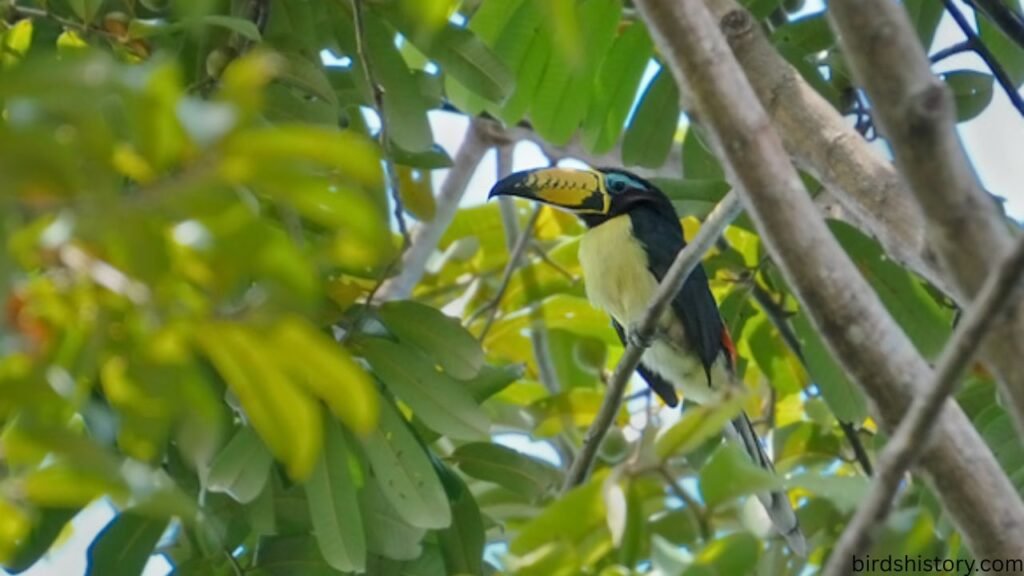
The Lettered Aracari is a small toucan, measuring about 34–37 cm (13–15 inches) in length and weighing 130–160 grams.
Plumage and Features:
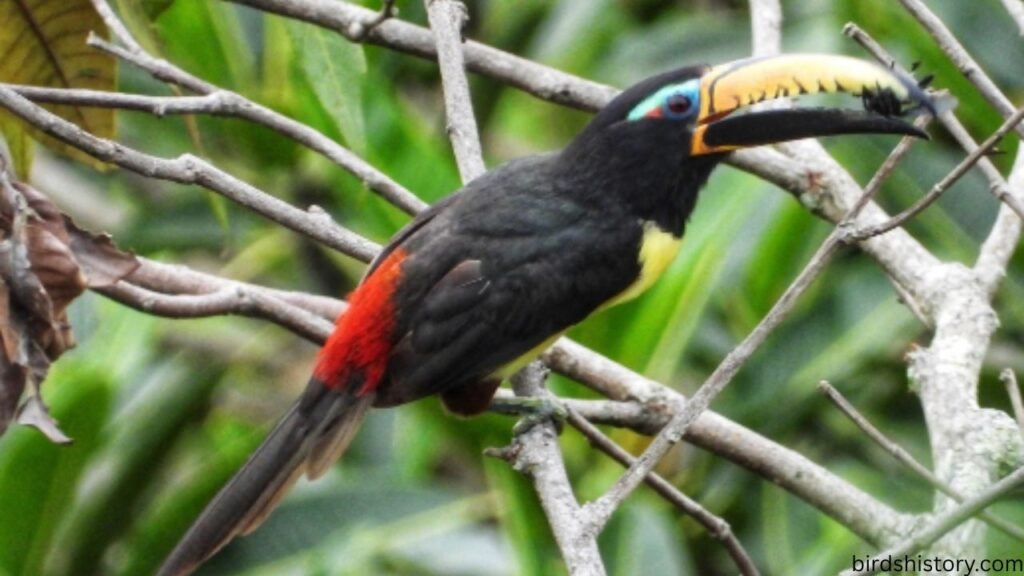
- Head and Back: Deep green, blending into the canopy.
- Breast and Belly: Bright yellow with a bold red band across the chest.
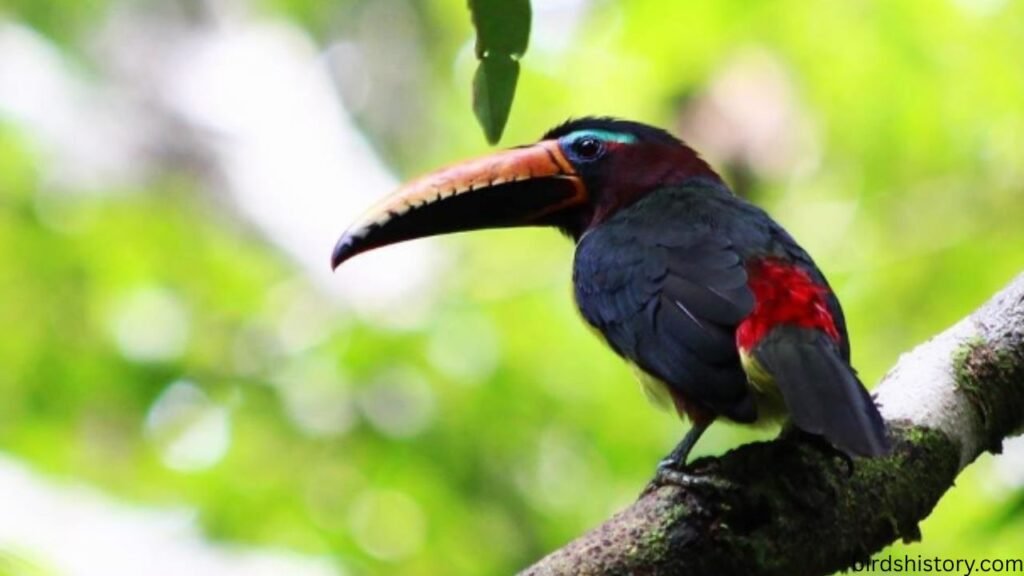
- Bill: The most distinctive feature—black with pale lines and markings that resemble script or “letters,” giving the species its name.
- Tail: Long, dark, and slightly rounded.
- Eyes: Surrounded by bare skin patches, often pale blue or green.
Male vs. Female:
- Males tend to have slightly larger bills.
- Females are generally similar in coloration but may be slightly duller.
This bird is a visual masterpiece. Its combination of emerald green, vivid red, golden yellow, and the “written” look of its beak makes it unmistakable in the wild.
Habitat and Range
The Lettered Aracari is widely distributed across northern South America.
- Countries: Brazil, Colombia, Ecuador, Peru, Venezuela, and Bolivia.
- Preferred Habitat:
- Lowland rainforests
- Floodplain forests
- River-edge woodlands
- Occasionally found in secondary forests
- Altitude: Generally below 1,000 meters, though it can be seen at slightly higher elevations in some areas.
- Migration: Non-migratory; it stays in the Amazon and adjacent forests year-round.
This species is most active in the Amazon Basin, making it a familiar sight to those exploring South America’s vast rainforests.
Diet and Feeding Habits
Like other toucans, the Lettered Aracari is primarily a frugivore, though it also eats animal matter.
Diet Includes:
- Fruits (figs, berries, and rainforest fruits)
- Insects
- Small reptiles or frogs (occasionally)
- Bird eggs and nestlings (rarely, but it has been observed)
Feeding Behavior:
- Uses its large bill to pluck fruits from branches, often swallowing them whole.
- Plays a vital role as a seed disperser, helping maintain forest biodiversity.
- Joins mixed-species flocks, especially when fruiting trees attract other birds.
- This bird is a skilled climber, as it nimbly hops between branches while foraging for food.
The aracari’s diet makes it an ecological gardener, spreading seeds that grow into future trees.
Behavior and Lifestyle
The Lettered Aracari is a social bird, often seen in small groups of 2–6 individuals.
- Activity: Active during the day, spending mornings and late afternoons feeding.
- Flight: Quick and direct, though usually limited to short bursts between trees.
- Calls: High-pitched, squeaky, and repetitive calls. These vocalizations serve the purpose of keeping the flock in touch with one another.
- Roosting: Roosts in tree cavities, often squeezing together in tight spaces.
- Mating Behavior: Courtship may involve mutual feeding and bill-touching displays.
This aracari is curious but often shy around humans. Its calls, however, give away its presence in the dense canopy.
Reproduction and Lifespan
Breeding Season:
- Varies by region but often coincides with the rainy season when food is plentiful.
Nesting:
- Nests in tree cavities, often abandoned by woodpeckers.
- Both parents participate in nest excavation or cleaning.
Eggs:
- Typically 2–4 white eggs.
- Incubation period lasts about 16 days, shared by both parents.
Chick Care:
- Chicks are born blind and naked.
- Fed regurgitated fruit and insects by both parents.
- Fledge after about 6 weeks but may stay with parents for longer.
Lifespan:
- In the wild: Around 12–15 years.
- In captivity: Can live longer, sometimes up to 20 years.
Predators and Threats
Natural Predators:
- Raptors (hawks, eagles)
- Large snakes
- Arboreal mammals (monkeys, ocelots) that may raid nests
Environmental Threats:
- Deforestation: Amazon logging and land clearing reduce habitat.
- Fragmentation: Smaller forest patches mean fewer resources and nesting sites.
Human Impact:
- Occasionally captured for the pet trade due to its beauty.
- Vulnerable to habitat destruction caused by agriculture and mining.
Conservation Status
- According to the IUCN Red List, the Lettered Aracari is currently listed as Least Concern (LC).
- Population is considered stable, but localized declines occur in heavily deforested areas.
- Conservation depends largely on protecting large tracts of the Amazon rainforest.
Though not endangered, habitat protection is essential to keep populations healthy.
Interesting Facts about the Lettered Aracari
- Its bill markings look like carved letters, which inspired its name.
- Despite its large bill, the aracari is a small member of the toucan family.
- Plays a crucial role in rainforest regeneration as a seed disperser.
- It can swallow fruits larger than its head thanks to its elastic throat.
- Known to roost in groups, squeezing multiple birds into one small cavity.
- Its call is described as squeaky and nasal, resembling a “toy trumpet.”
- Unlike larger toucans, aracaris are more agile in the canopy.
- Has been spotted raiding nests, though fruit makes up most of its diet.
- Its beak is lightweight, made of keratin with air pockets inside.
- It is one of the most colorful aracaris, often photographed by ecotourists.
Conclusion
The Lettered Aracari is a dazzling bird that brings color and energy to the Amazon rainforest. With its vibrant feathers, letter-marked bill, and vital ecological role, it is a species worth celebrating and protecting.
Though not endangered, this bird relies on the survival of the Amazon, one of the most threatened ecosystems in the world. Learning about species like the Lettered Aracari reminds us how interconnected life is—and how each bird, no matter how small, contributes to the health of the planet.
Safeguarding these birds is essential for preserving the rainforest, thereby ensuring that future generations will also have the opportunity to see the living gems of South America.
FAQs
1. What is the scientific name of the Lettered Aracari?
Its scientific name is Pteroglossus inscriptus.
2. Where does the Lettered Aracari live?
The range of this species includes the Amazon Basin, with a presence in countries like Brazil, Peru, Ecuador, Colombia, and their bordering regions.
3. Why is it called the Lettered Aracari?
Its bill has pale markings that resemble written letters.
4. What does the Lettered Aracari eat?
While its diet consists mostly of fruit, it also feeds on insects, small reptiles, and occasionally on the eggs of other birds.
5. How big is the Lettered Aracari?
It measures 34–37 cm long and weighs 130–160 grams.
6. Is the Lettered Aracari endangered?
No, it is listed as Least Concern, but it is threatened by habitat loss.
7. What role does Lettered Aracari play in the ecosystem?
It disperses seeds, helping regenerate forests.
8. How does Lettered Aracari reproduce?
It nests in tree cavities, laying 2–4 eggs, with both parents incubating.
9. How long does the Lettered Aracari live?
In the wild, this animal can live for 12 to 15 years, and its lifespan is even longer when kept in captivity.
10. What is unique about its bill?
The bill has distinctive patterns that look like ancient script, making it one of the most recognizable toucans.