
The Philippine Eagle: Guardian of the Rainforest and a National Treasure
Introduction
The Philippine Eagle (Pithecophaga jefferyi), also known as the “King of Birds” in the Philippines, is one of the rarest and most powerful raptors in the world. Endemic to the lush rainforests of the Philippines, this critically endangered species is not only a symbol of national pride but also a vital indicator of forest health. With a wingspan stretching up to 7 feet and a fierce, shaggy crest, this apex predator reigns supreme in its ecosystem.
Fun Fact: Despite its former nickname, the “Monkey-eating Eagle,” this bird actually has a diverse diet that includes flying lemurs, snakes, and even small deer!
Philippine Eagle Taxonomy / Classification
- Common Name: Philippine Eagle (also called Great Philippine Eagle or Monkey-eating Eagle)
- Scientific Name: Pithecophaga jefferyi
- Family: Accipitridae (Hawks, Eagles, and Kites)
- Order: Accipitriformes
- Class: Aves
Also read: /the-kakapo/
Philippine Eagle is the only member of its genus, Pithecophaga, and was once thought to be closely related to harpy eagles before DNA studies placed it in the snake eagle subfamily, Circaetinae.
The Philippine Eagle Physical Description
Philippine Eagle is a striking bird with:
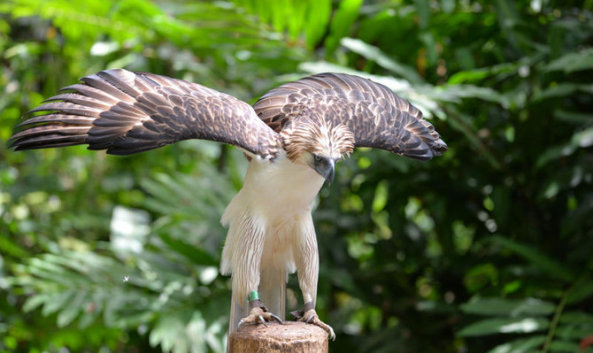
- Size: One of the world’s largest eagles—females reach up to 3.5 ft (105 cm) in length, while males are slightly smaller .
- Weight: 9.9 to 17.6 lbs (4.5 to 8 kg), with females being heavier.
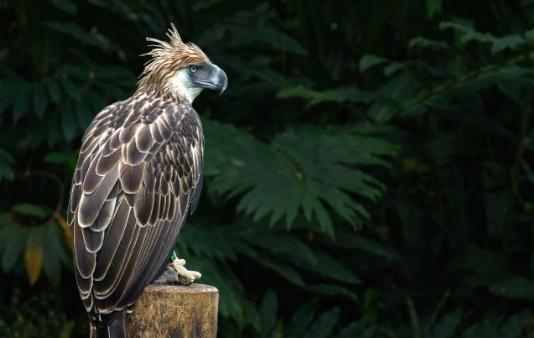
- Plumage: Dark brown back, white underparts, and a distinctive shaggy crest of long brown feathers .
- Eyes & Beak: Pale blue-gray eyes and a massive, hooked bluish-gray beak, one of the largest among eagles .
- Talons: Powerful yellow feet with dagger-like claws for gripping prey.
The Philippine Eagle Habitat and Range
- Location: Endemic to the Philippines, found only on four major islands—Luzon, Samar, Leyte, and Mindanao (most populous here).
- Preferred Habitat: Dense tropical rainforests, often in steep, mountainous terrain up to 5,900 ft (1,800 m) elevation.
- Threats: Deforestation has reduced its habitat to less than 10% of original old-growth forests.
Also Read About: https://birdshistory.com/society-finch/
Philippine Eagle Diet and Feeding Habits
- Primary Prey: Monkeys, flying lemurs, civets, snakes, large birds (e.g., hornbills), and even young deer.
- Hunting Style: A stealthy ambush predator; sometimes hunts in pairs, with one eagle distracting prey while the other strikes.
- Adaptations: Agile flight through dense forests despite its size, aided by broad wings and a long tail for maneuverability.
Philippine Eagle Behavior and Lifestyle
- Social Structure: Solitary or in monogamous breeding pairs that may mate for life.
- Flight: Surprisingly fast and nimble, resembling hawks more than other large eagles.
- Vocalizations: Loud, high-pitched whistles (“weeuuuu!”) used for communication.
- Playful Juveniles: Young eagles practice hunting by attacking inanimate objects and hanging upside down.
The Philippine Eagle Reproduction and Lifespan
- Breeding Cycle: Slow—only one egg laid every two years.
- Nesting: Massive stick nests built high in tall trees, lined with ferns and orchids.
- Parental Care: Chicks fledge at 4–5 months but depend on parents for up to 17 months.
- Lifespan: Up to 30–60 years in the wild; captive eagles have lived over 40 years.
Philippine Eagle Predators and Threats
- Natural Predators: None (apex predator), but chicks may fall prey to snakes or other raptors.
- Human Threats:
- Deforestation (logging, agriculture) destroys nesting sites.
- Hunting & Trapping—shot as pests or caught in snares meant for other animals.
- Illegal Wildlife Trade—captured for private collections.
The Philippine Eagle Conservation Status
- IUCN Status: Critically Endangered—fewer than 800 individuals remain.
- Protection Laws: Killing a Philippine Eagle carries 12 years’ imprisonment and heavy fines.
- Conservation Efforts:
- Philippine Eagle Foundation leads captive breeding and forest protection.
- Rainforest Trust supports habitat preservation in Luzon’s Sierra Madre.
Interesting Facts
- National Symbol: Featured on the Philippine 1,000-peso bill and declared the national bird in 1995.
- Cultural Significance: Indigenous tribes revere it as a spiritual guardian .
- Misnamed Diet: Early settlers believed it ate only monkeys, but it’s an opportunistic hunter.
Conclusion
The Philippine Eagle is a majestic yet critically endangered icon of biodiversity. Protecting it means safeguarding the Philippines’ rainforests—an ecosystem vital for countless species and human communities. Through conservation efforts and awareness, we can ensure this “King of Birds” continues to soar for generations.
Read About This Interesting Bird: /canary-diamond-dove/
FAQs
1. Why is the Philippine Eagle critically endangered?
Due to deforestation, hunting, and slow reproduction—only one chick every two years.
2. How big is the Philippine Eagle compared to other eagles?
It’s the longest eagle in the world (up to 3.5 ft), but Steller’s sea eagle is heavier.
3. What’s being done to save the Philippine Eagle?
Breeding programs, anti-poaching patrols, and reforestation projects.
4. Can Philippine Eagles be kept as pets?
No—capturing them is illegal and punishable by law.
5. How can I help protect the Philippine Eagle?
Support conservation groups like the Philippine Eagle Foundation and spread awareness.