Which Bird Can Fly Backward- The Hummingbird’s Unique Ability
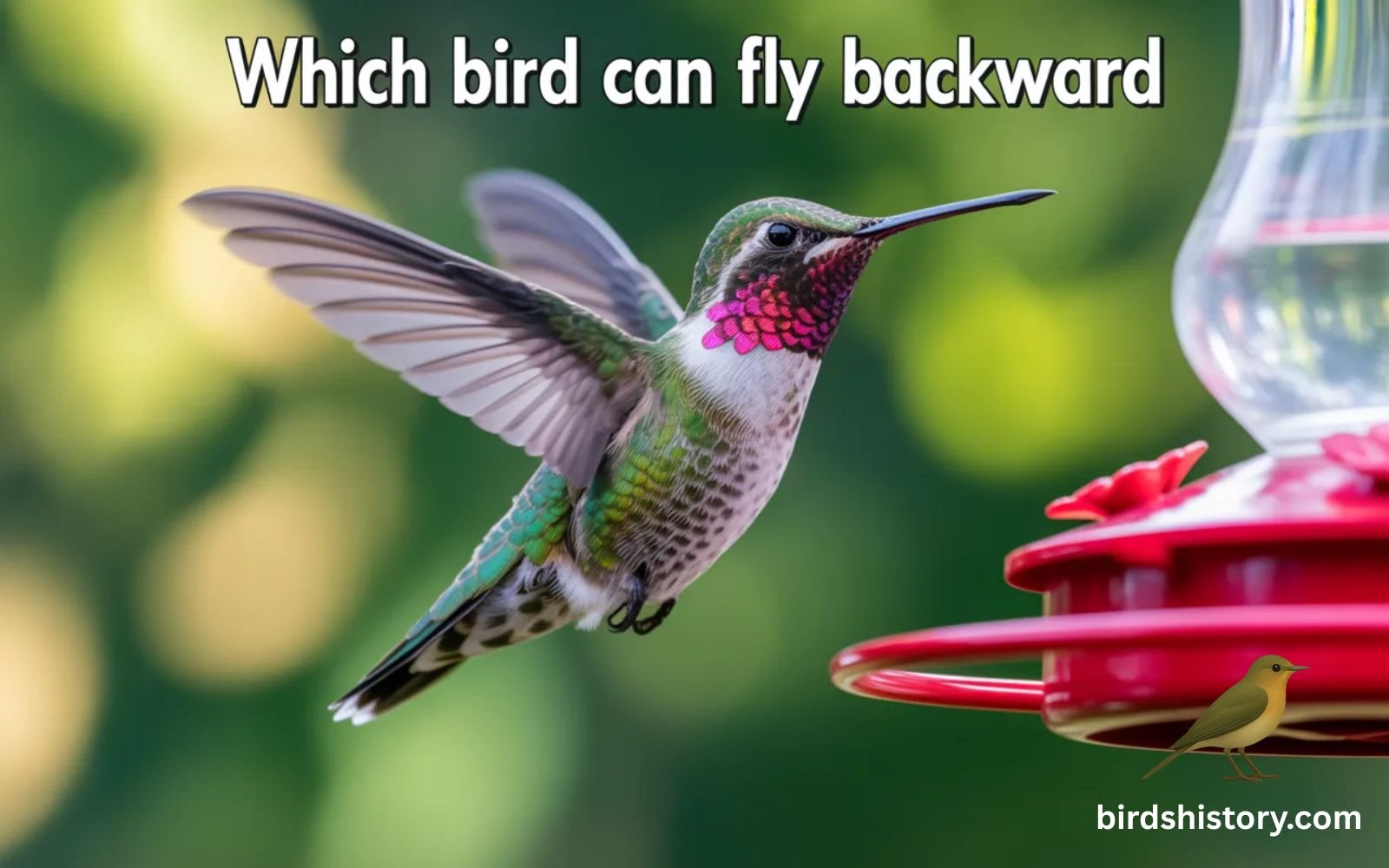
The question of which bird can fly backward often surprises many people. While most birds move only forward or hover briefly, the hummingbird defies this rule with its astonishing ability to fly backward. This remarkable skill is not just a trick; it is a vital part of their survival. The hummingbird achieves this through highly specialized hummingbird flight mechanics that allow it to perform multidirectional flight with precision and grace. Its small size, paired with tiny birds with fast wings, gives it unparalleled agility among all bird species.
Watching a hummingbird dart backward, hover in place, and swerve around flowers can feel almost magical. These nectar-feeding birds rely on this skill to access flowers efficiently while avoiding predators. The energy-intensive bird flight they perform requires extraordinary flight mechanics and bird wing anatomy. Even baby hummingbirds gradually develop this skill after fledging, showing that bird evolution and flight are fine-tuned for survival in dense and competitive habitats.
Introduction to Backward Flight in Birds
Few creatures in the avian world are as fascinating as the hummingbird, the only bird capable of true backward flight. Unlike other hovering birds, which rely on wind currents or brief hovering for stability, the hummingbird actively generates reverse thrust in birds using its wings. Its ability to move backward is a result of evolution meeting necessity: nectar-feeding birds need to approach and exit flowers without wasting energy or risking injury.
This capability also illustrates the incredible bird maneuverability that hummingbirds possess. While most birds must turn their bodies or glide in arcs to change direction, the hummingbird can reverse midair seamlessly, thanks to bird acrobatics in flight. For bird enthusiasts and scientists alike, observing a hummingbird flying backward highlights a combination of beauty, precision, and sophisticated flight mechanics rarely seen in the natural world.
The Science Behind Backward Flight
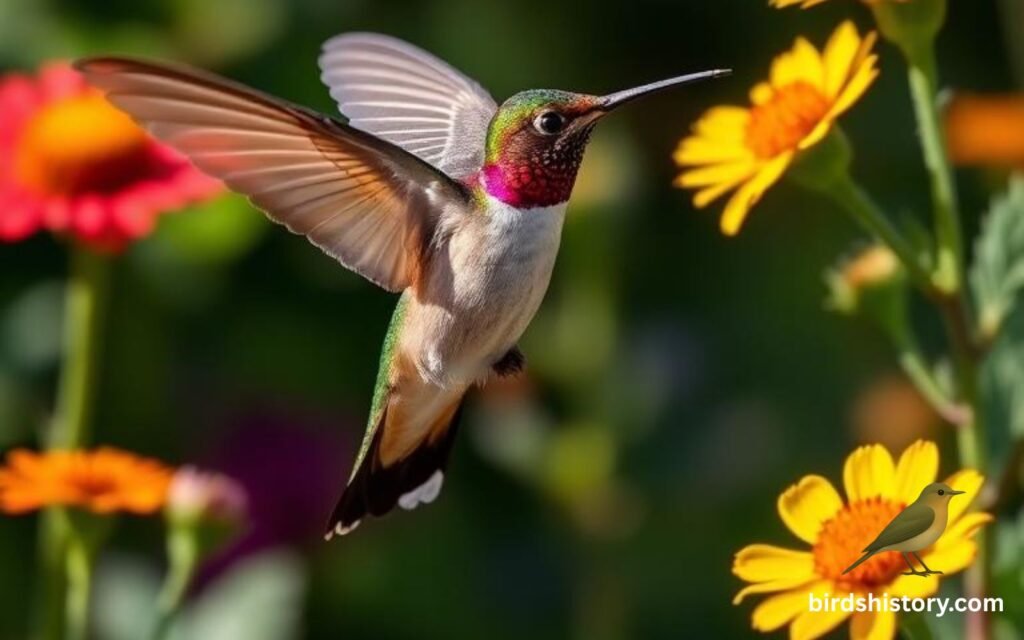
The science behind which bird can fly backward revolves around its flight mechanics and unique bird wing anatomy. The hummingbird uses a figure-eight wing motion to generate lift during both the upstroke and downstroke. This continuous generation of lift allows hovering and backward movement without relying on momentum from forward flight. High-speed cameras have confirmed that these rapid wingbeats reach up to 80 times per second in some species, a feat unmatched by any other tiny birds with fast wings.
The ability to fly backward also depends heavily on the pectoral muscles of hummingbirds, which account for a substantial portion of their body weight. These muscles, combined with flexible shoulder joints and a ball-and-socket joint, allow extreme wing rotation and fine control during flight. By tilting their bodies slightly and adjusting wing angles, hummingbirds can produce reverse thrust in birds, making backward flight both efficient and sustainable despite the high energy consumption required for bird acrobatics in flight.
Unique Wing Structure of Hummingbirds
Ball-and-Socket Joint
The ball-and-socket joint in a hummingbird’s shoulder joint is the cornerstone of its backward flight. Unlike most birds, whose wings pivot only up and down, this joint allows nearly 180-degree rotation in all directions. This flexibility enables multidirectional flight, giving the hummingbird unmatched control while hovering or darting backward among flowers. Without this adaptation, backward flight would be physically impossible.

Wing Flexibility
In addition to the ball-and-socket joint, hummingbirds possess extraordinary bird wing flexibility. The wings move in a figure-eight motion, generating lift on both strokes of the wingbeat. This motion makes hovering birds and backward flight possible, even at high flight speeds of hummingbirds. Tiny birds with fast wings like the bee hummingbird rely on this flexibility for accessing nectar in deep flower corollas, highlighting the close relationship between bird evolution and flight adaptations and feeding efficiency.
Muscle Adaptations That Enable Backward Flight
The pectoral muscles in birds are among the most powerful adaptations in hummingbirds, constituting up to 30% of their total body weight. These muscles provide the raw power for rapid wingbeats, allowing the bird to hover in midair, fly forward, or dart backward seamlessly. Without such muscle development, the energy-intensive maneuvers required for backward flight would be impossible.
Hummingbirds also rely on energy-intensive bird flight for survival. Their high metabolism supports frequent feeding and nectar-feeding behavior, which fuels the continuous motion needed for bird acrobatics in flight. Observing hummingbirds demonstrates how muscle power, bird wing anatomy, and metabolic adaptations combine to create a flying marvel that dwarfs the aerial agility of many other bird species.
Aerodynamic Forces at Play
The aerodynamics of hummingbirds are essential for understanding which bird can fly backward. By tilting their body slightly upward and adjusting the angle of attack of each wing stroke, hummingbirds produce reverse thrust in birds while maintaining stability. This precise manipulation of airflows demonstrates advanced hummingbird flight mechanics rarely seen in birds that hover.

Hovering requires generating lift equal to body weight, while backward flight adds a lateral component. This is why energy-intensive bird flight is necessary: each rapid wingbeat consumes a significant portion of the bird’s daily energy consumption. The result is a small, agile bird capable of feats of bird acrobatics in flight that rival larger predators and make hummingbirds masters of multidirectional flight.
Behavioral Adaptations Supporting Backward Flight
Backward flight is not just a physical ability; it is also a behavioral adaptation crucial for survival. Hummingbirds use this skill to retreat from predators quickly, maneuver through tight spaces in dense foliage, and efficiently feed on nectar without wasting time turning around. Their bird maneuverability is enhanced by instinctive movements that optimize both speed and safety.
Nectar-feeding birds like hummingbirds often approach flowers at high speed and exit backward to reduce the risk of predation or to defend territory from rivals. Their hummingbird feeding behavior combines precision, energy efficiency, and reflexive agility. This synergy of bird flight adaptations and instinctual behavior makes hummingbirds unique among birds that hover, highlighting why no other bird can achieve true backward flight.
Hummingbird Species Known for Backward Flight
Several hummingbird species are particularly known for their backward flight skills. The Rufous Hummingbird (Selasphorus rufus) is famous for aggressive territorial displays and rapid retreats. Anna’s Hummingbird (Calypte anna), commonly found along the Pacific Coast, frequently hovers and moves backward while feeding from garden flowers. The Broad-tailed Hummingbird (Selasphorus platycercus) inhabits mountainous regions and often uses backward flight to exit deep flower corollas efficiently. The Calliope Hummingbird (Selasphorus calliope), the smallest breeding bird in North America, performs complex aerial maneuvers, including extended backward flight, demonstrating unmatched agility among tiny birds with fast wings.

Even the Bee Hummingbird, the smallest bird in the world, exhibits extraordinary flight mechanics. Despite weighing less than a dime, it achieves incredible flight speed of hummingbirds and maintains stability while executing multidirectional flight. Observing these species highlights the diversity of hummingbird species and shows how evolution and bird acrobatics in flight work together to create an efficient and highly adaptable nectar-feeding bird.
Here is a flight comparison table for clarity:
| Hummingbird Species | Hover Capability | Backward Flight | Notable Feature |
|---|---|---|---|
| Rufous Hummingbird | Yes | Yes | Territorial defense |
| Anna’s Hummingbird | Yes | Yes | Common in gardens |
| Broad-tailed Hummingbird | Yes | Yes | Mountain habitats |
| Calliope Hummingbird | Yes | Yes | Smallest in North America |
| Bee Hummingbird | Yes | Yes | World’s smallest bird |
Comparative Flight Capabilities Across Birds
To truly appreciate which bird can fly backward, it helps to compare hummingbirds with other birds that hover or display acrobatic flight. While falcons and swallows can glide or dart rapidly, none can sustain multidirectional flight like a hummingbird. The flight mechanics of hummingbirds allow them to hover, dart sideways, and even retreat in reverse—maneuvers impossible for most other bird species. Their bird wing anatomy and figure-eight motion set them apart in the avian world.
A simple comparison illustrates this uniqueness:
| Bird Species | Hover Capability | Backward Flight | Wing Motion | Notes |
|---|---|---|---|---|
| Hummingbird | Yes (powered) | Yes | Figure-eight | True reverse thrust in birds |
| Barn Swallow | Limited | No | Continuous flapping | Can hover briefly against wind |
| American Kestrel | Wind-assisted | No | Flap-glide | Relies on air currents for hovering |
| Great Blue Heron | No | No | Slow deep flaps | Large wingspan limits agility |
| Peregrine Falcon | No | No | Diving glide | Extremely fast forward flight |
This table highlights that while other birds display impressive speed or wind-assisted hovering, the hummingbird remains unrivaled in bird acrobatics in flight and energy-intensive bird flight. The ability to reverse midair is tightly linked to their pectoral muscles, ball-and-socket joint, and wing flexibility, showcasing the synergy of bird evolution and flight adaptations.
Why Evolution Favored Backward Flight
Backward flight in hummingbirds did not emerge randomly; it is a result of evolutionary adaptation that allowed these nectar-feeding birds to exploit deep flower corollas efficiently. As tubular flowers evolved to specialize for certain pollinators, hummingbirds adapted by developing wings capable of reverse thrust in birds. This evolutionary arms race highlights the close relationship between pollinator birds, bird wing flexibility, and bird feeding behavior.
Fossil evidence suggests that early hummingbirds diverged from swifts around 42 million years ago. Over time, natural selection favored individuals with stronger pectoral muscles in birds, faster rapid wingbeats, and superior bird maneuverability. These adaptations enabled tiny birds with fast wings to access food more efficiently, evade predators, and thrive in competitive habitats. Today, hummingbirds consume more than twice their body weight in nectar daily, demonstrating how energy-intensive bird flight supports their high metabolism and complex flight mechanics.
Cultural and Symbolic Significance of Hummingbirds
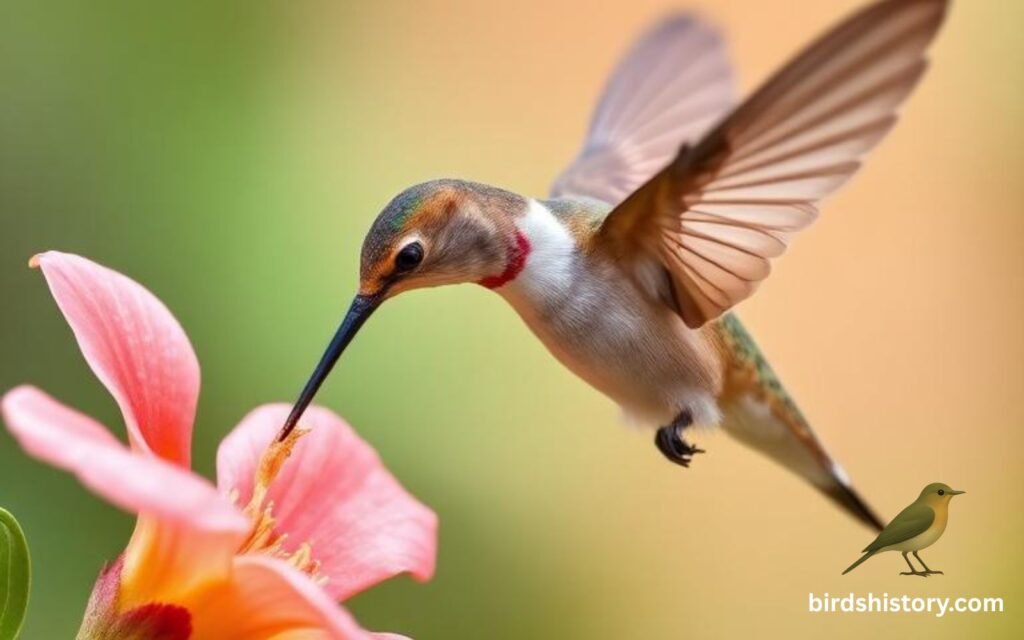
The backward flight of hummingbirds has fascinated humans for centuries. In many Native American cultures, hummingbirds symbolize joy, resilience, and adaptability. Some tribes view them as messengers between worlds, capable of moving backward to revisit the past, reflecting lessons learned, much like their multidirectional flight in nature.
Aztec mythology also celebrates hummingbirds, particularly associating them with Huitzilopochtli, the god of war. Warriors believed the spirit of the hummingbird could guide them with agility and speed. In modern symbolism, artists and writers often depict hummingbirds as icons of emotional intelligence, persistence, and freedom. Their ability to hover and fly backward inspires stories and metaphors for reflection, foresight, and graceful bird acrobatics in flight.
Observing and Photographing Backward Flight in the Wild
Witnessing a hummingbird perform backward flight is a thrill for birdwatchers and photographers alike. Setting up a nectar feeder with a 4:1 sugar-to-water solution in shaded areas attracts these nectar-feeding birds. Using binoculars or cameras with rapid wingbeats in focus allows you to capture the subtle figure-eight motion of their wings.
Early morning and late afternoon are prime times, as hummingbirds replenish energy after cool nights or prepare to roost. Some photographers use slow-motion video to capture the incredible bird acrobatics in flight. Observing them in mountainous regions, gardens, or national parks such as Yosemite and Rocky Mountain helps you see hummingbird species in action. Understanding their hummingbird feeding behavior and predator evasion in birds improves the chances of witnessing backward flight naturally.
Common Misconceptions About Birds and Flight
Many myths exist regarding which bird can fly backward. Some believe that swallows, kingfishers, or owls can perform this maneuver, but these birds that hover only appear to move backward under certain wind conditions. Only hummingbirds generate true reverse thrust in birds with precise flight mechanics.
Another misconception is that all small birds can hover or fly backward. In reality, backward flight requires advanced bird wing anatomy, strong pectoral muscles, and mastery of figure-eight motion, traits exclusive to tiny birds with fast wings. Clarifying these myths emphasizes the unique flight mechanics and agility that make hummingbirds the only bird capable of sustained backward flight.
FAQs About Birds That Fly Backward
Can any bird besides the hummingbird fly backward?
No other bird can perform true backward flight. Only the hummingbird, with its unique bird wing flexibility and ball-and-socket joint, can generate reverse thrust in birds and hover in place while moving backward.
Do hummingbirds fly backward to escape predators?
Yes, although it is primarily a maneuver for feeding. Hummingbirds use backward flight to quickly retreat from threats, combining bird acrobatics in flight with their predator evasion in birds strategies.
How fast can a hummingbird fly backward?
Observations suggest backward flight can reach up to flight speed of hummingbirds around 25–30 mph in short bursts, nearly matching forward flight. Rapid wingbeats make this remarkable agility possible.
Is backward flight tiring for hummingbirds?
Absolutely. Energy-intensive bird flight requires frequent feeding. Their pectoral muscles work tirelessly, and sustaining multidirectional flight consumes a large portion of their daily energy consumption.
Can baby hummingbirds fly backward?
Not immediately. Juvenile hummingbirds develop backward flight skills over several weeks after fledging, as their bird wing anatomy, pectoral muscles, and coordination mature.
Conclusion
The question of which bird can fly backward is answered simply yet profoundly: the hummingbird. Its exceptional hummingbird flight mechanics, figure-eight motion, and strong pectoral muscles allow it to hover, retreat, and maneuver with unmatched precision. Observing hummingbird species like the Rufous Hummingbird (Selasphorus rufus), Anna’s Hummingbird (Calypte anna), Broad-tailed Hummingbird (Selasphorus platycercus), Calliope Hummingbird (Selasphorus calliope), and even the Bee Hummingbird highlights the marvel of bird acrobatics in flight.
This rare skill is not just a curiosity; it is a testament to bird evolution and flight, optimized for feeding, survival, and predator evasion in birds. Whether viewed in the wild, captured on camera, or studied scientifically, the hummingbird continues to captivate and inspire, proving that sometimes, nature’s smallest creatures hold the most extraordinary abilities.