Which Birds Eat Tomatoes? Complete Guide to Safety, Damage & Protection 2026
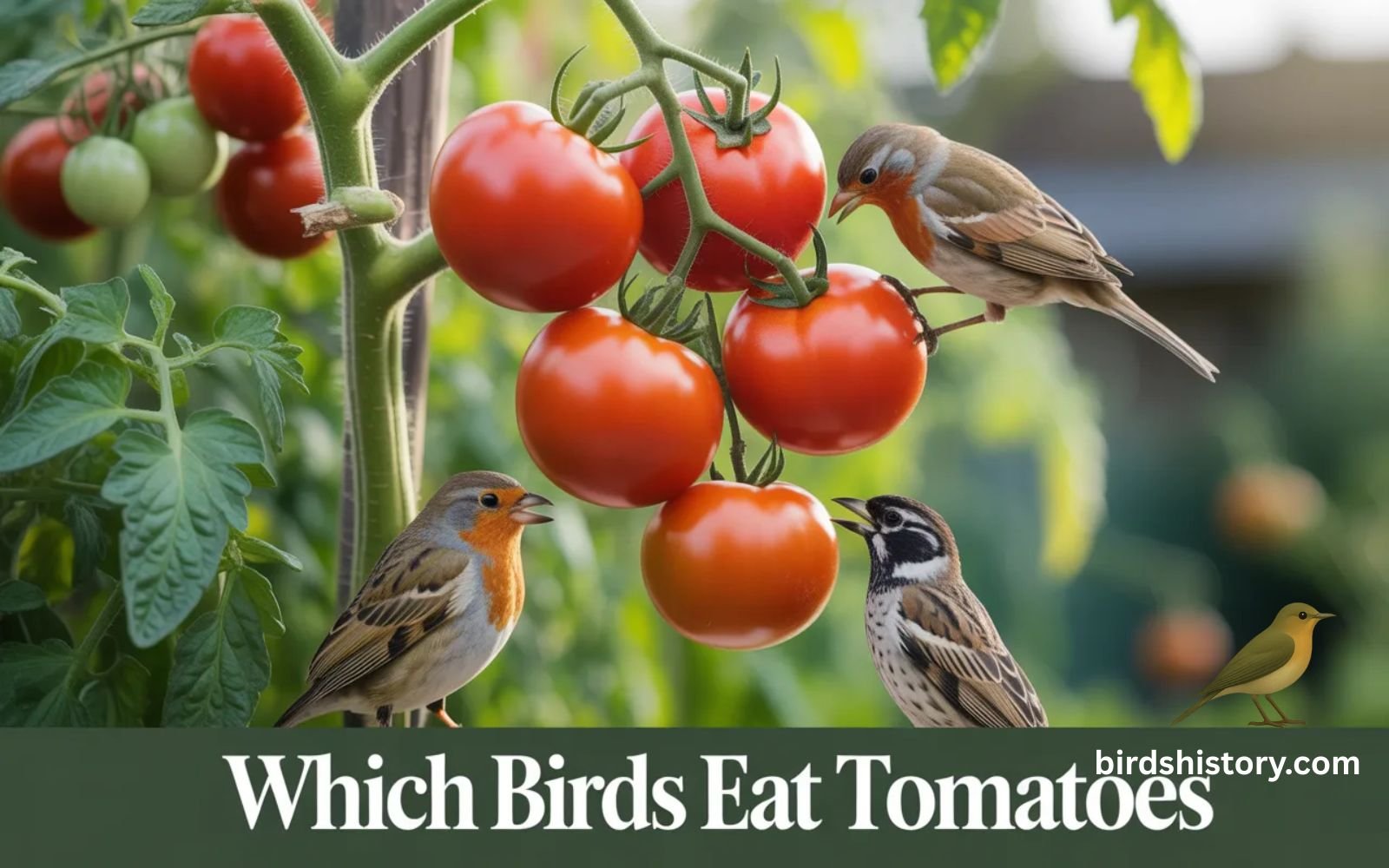
Tomatoes are a pride of many American gardens, yet few things feel more frustrating than spotting damaged fruit just before harvest. Many gardeners ask do birds eat tomatoes and wonder which species cause the most trouble. In reality, which birds eat tomatoes depends on location, season, and garden setup. Across the United States, birds eating tomatoes is a common issue during warm months when food and water become scarce. Birds don’t usually destroy entire plants, but their pecking can quickly ruin ripening fruit and invite decay.
Understanding why this happens helps you respond with confidence instead of guesswork. When you learn how birds behave, what attracts them, and how to discourage them safely, protecting your harvest becomes much easier. This guide explains bird behavior in simple terms and shows practical ways to reduce damage while respecting the balance of nature in your backyard.
Do Birds Really Eat Tomatoes?
Yes, do birds eat tomatoes is not a myth. Across the U.S., many gardeners observe backyard birds eating tomatoes once fruits soften and change color. Birds don’t usually consume the entire tomato. Instead, they take repeated pecks, creating visible wounds that invite decay. This pattern leads many people to blame insects or rodents when the real cause is avian curiosity and thirst.

Understanding when birds eat tomatoes matters. Damage often appears during warm mornings when food and water run low. You’ll usually find fruit left on the vine with surface damage rather than missing tomatoes. This behavior explains why garden bird damage looks different from other pests and why identifying the culprit early saves time and frustration.
Why Birds Are Attracted to Tomatoes
The main reason behind why birds eat tomatoes isn’t hunger alone. Tomatoes act as a powerful hydration source for birds, especially during dry American summers. When rainfall drops and natural water sources disappear, ripe tomatoes become living water balloons. That moisture draws birds into gardens filled with soft, colorful fruit.
Color also plays a role. Tomato ripening attracting birds happens because red and orange shades signal food availability. During nesting season, adult birds search relentlessly for easy energy. Tomatoes offer convenience. Soft skins, visible fruit, and open access turn gardens into irresistible stops for birds in vegetable garden spaces.
What Parts of Tomato Plants Do Birds Eat (Fruit vs Plant)?
Many gardeners panic after spotting damage and assume birds eating tomato plants are destroying everything. In reality, birds almost always target the fruit. The tomato leaves and stems contain defensive compounds that birds instinctively avoid. These natural chemicals explain why foliage usually remains untouched.
The science behind this avoidance comes down to solanine toxicity and other alkaloids in tomato plants. These substances protect plants from herbivores. Birds sense this risk and stick to the ripe tomato fruit instead. If leaves appear shredded, the cause likely involves insects or mammals rather than birds.
Types of Birds That Commonly Eat Tomatoes
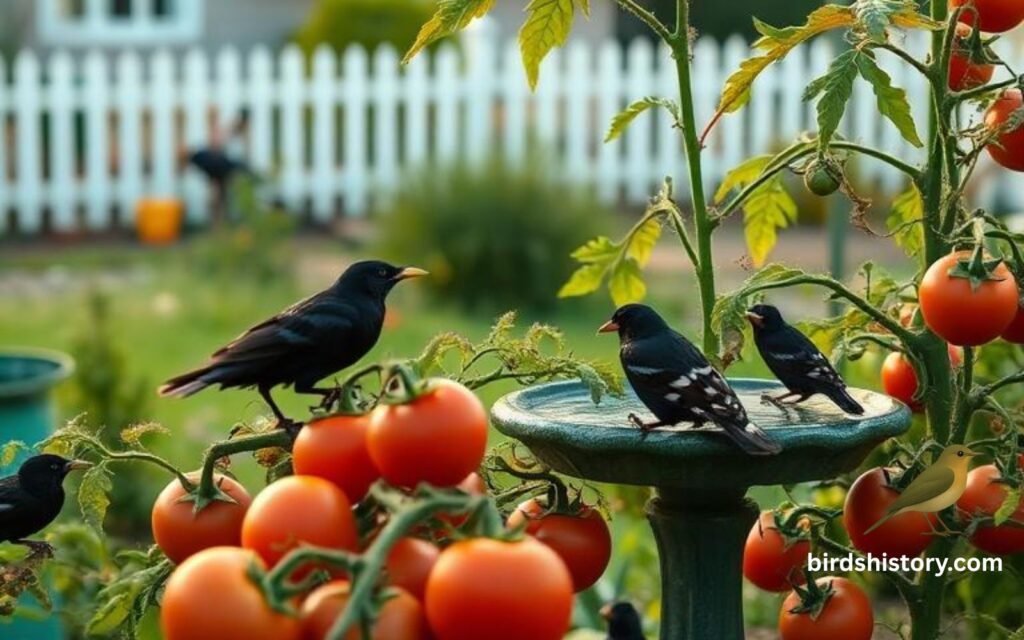
Understanding which birds eat tomatoes helps you choose the right protection strategy. In U.S. gardens, robins often top the list. They love soft fruit and frequently leave half-eaten tomatoes behind. Sparrows and starlings also contribute, especially in suburban areas with limited natural forage.
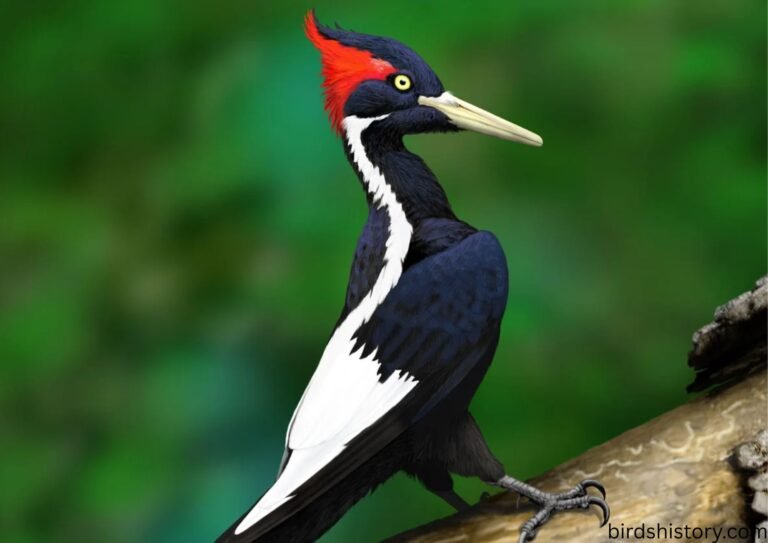
Larger birds like blue jays and cardinals peck tomatoes opportunistically, while mockingbirds may repeatedly return once they discover a reliable food source. Thrushes behave similarly to robins, focusing on ripened fruit. Hummingbirds rarely cause damage but may sample juice. Woodpeckers occasionally peck fruit when moisture is scarce. This variety explains why birds targeting tomato fruit differs by region and season across the United States.
| Bird Species | Tomato Damage Behavior | Activity Time | Damage Severity |
|---|---|---|---|
| Robins | Peck soft, ripe tomatoes repeatedly | Early morning | High |
| Sparrows | Small peck holes on exposed fruit | Morning to afternoon | Medium |
| Starlings | Group feeding on ripe tomatoes | Mid-morning | High |
| Mockingbirds | Revisit same tomato plants daily | Dawn | High |
| Blue jays | Large peck marks on cherry tomatoes | Midday | Medium |
| Cardinals | Light surface pecking only | Morning | Low |
| Thrushes | Peck ripe fruit left on vine | Early morning | Medium |
| Woodpeckers | Occasional pecking for moisture | Hot afternoons | Low |
Can Birds Eat Tomatoes Safely?
Many people ask whether tomatoes harm birds. The answer depends on quantity and ripeness. Birds can digest small amounts of ripe tomatoes, but excess intake causes problems. Acidic flesh may upset digestion, especially if tomatoes replace a balanced diet. This raises questions like can birds digest tomatoes safely over time.

Safety also depends on preparation. Birds should never access plant debris or green portions. While wild birds regulate intake naturally, gardens with heavy fruit availability increase risk. This is why understanding are tomato plants poisonous to birds matters. The plant itself poses more danger than the ripe fruit.
Are Red or Green Tomatoes Better (or Safer) for Birds?
The difference between birds eating green vs red tomatoes is critical. Green tomatoes contain higher concentrations of solanine, making them unsafe. Birds instinctively avoid them most of the time, but accidental exposure can cause harm. Symptoms include weakness and disorientation.
Ripe red tomatoes are less toxic but still should remain limited. This explains why do birds eat green tomatoes usually has a reassuring answer. They rarely do. Gardeners should still remove fallen green fruit to reduce risk and limit unwanted bird attention.
Are Tomatoes Nutritious or Harmful for Birds?
Tomatoes offer hydration and small nutritional benefits. Vitamins and antioxidants support general health, but tomatoes shouldn’t dominate avian diets. Overconsumption leads to imbalance, making birds vulnerable. This fine line explains why tomatoes attract birds without serving as ideal food.
Balancing benefits and risks supports maintain garden balance. When birds sample fruit naturally, problems stay minimal. Trouble starts when gardens become primary food sources. That shift increases tomato crop damage by birds and encourages repeated visits.
How to Tell If Birds Are Eating Your Tomatoes
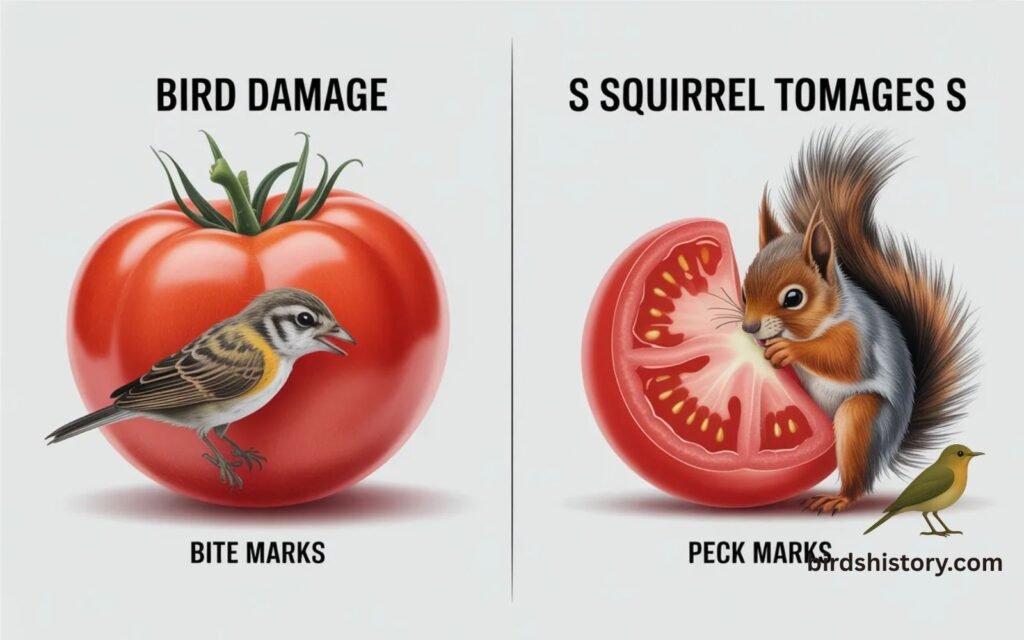
Recognizing avian damage saves guesswork. Bird peck marks appear as small holes or shallow gouges on tomatoes. The tomato usually stays attached, confirming bird involvement. Unlike rodents, birds don’t drag fruit away.
| Damage Type | Likely Cause | Visual Indicators | Time of Occurrence |
|---|---|---|---|
| Small round holes | Birds | Bird peck marks, shallow gouges on tomatoes, fruit left on the vine | Morning |
| Entire fruit missing | Squirrels | Tomato gone, pieces nearby | Daytime |
| Torn leaves | Insects | Chewed leaf edges | Night |
| Soft hollowed fruit | Slugs | Slimy residue | Night |
Understanding bird damage vs squirrel damage helps narrow suspects. Squirrels remove entire tomatoes or leave messy debris. Birds create neat wounds, often during early morning bird activity. Spotting these patterns answers how to tell if birds are eating tomatoes quickly.

When Should You Protect Tomatoes (and When You Shouldn’t)?
Timing protection makes all the difference. Barriers matter most once fruit begins ripening. Before that stage, birds show little interest. Acting too early wastes effort and interferes with pollination.
Knowing when birds eat tomatoes lets you respond strategically. Protection during peak ripening reduces losses while allowing natural garden activity earlier in the season. This timing approach supports practical garden protection without overcorrecting.
Best Physical Barriers to Protect Tomatoes from Birds
Physical barriers remain the most reliable option to protect tomatoes from birds. Properly installed bird netting for tomato plants prevents access while allowing airflow and sunlight. Netting works best when pulled tight and supported by frames.
Using tomato cages and garden mesh adds structure and durability. When installed correctly, barriers answer common concerns like is bird netting safe. Tight mesh prevents entanglement and supports humane wildlife control.
| Protection Method | Effectiveness | Safety for Birds | Ideal Use |
|---|---|---|---|
| Bird netting | Very high | Safe when tightly secured | Raised beds and rows |
| Garden mesh | High | Safe | Backyard gardens |
| Tomato cages | Medium | Safe | Single plants |
| Row covers | Medium | Safe | Early ripening stage |
Natural & Non-Harmful Bird Deterrents That Actually Work
Visual deterrents disrupt comfort zones. Reflective objects create flashes that birds dislike. Reflective tape for birds works best when moved frequently. Static deterrents lose effectiveness as birds adapt.

Adding predatory bird decoys introduces perceived risk. Movement matters more than realism. These methods align with natural bird control and reduce reliance on chemicals while supporting wildlife-friendly solutions.
Smart Distraction Methods: Food & Water Alternatives
Sometimes birds target tomatoes for moisture. Installing a birdbath water source away from crops redirects attention. Clean water often reduces pecking significantly during dry spells.
Distraction supports prevent bird damage naturally. When birds meet hydration needs elsewhere, tomatoes lose appeal. This method encourages coexistence rather than conflict within your backyard ecosystem.
Common Mistakes Gardeners Make When Protecting Tomatoes
Many gardeners unintentionally increase losses by misunderstanding why do birds peck tomatoes in the first place. One common mistake involves assuming all damage comes from birds, when in reality pests eating tomatoes such as squirrels or insects may be responsible. This confusion delays effective action and worsens garden bird damage over time.
Another frequent error is relying on gimmicks instead of proven effective bird deterrents. Static scarecrows, noise devices, or spicy sprays lose impact quickly. Birds adapt faster than expected. Skipping regular adjustments undermines tomato garden protection and leads to recurring frustration during peak harvest weeks.
Frequently Asked Questions About Birds and Tomatoes
What bird eats tomatoes?
Birds like robins, sparrows, starlings, mockingbirds, blue jays, and cardinals are the most common species that peck at ripe tomato fruit in gardens.
Are tomatoes good for birds?
Ripe tomatoes can be a healthy treat in small amounts for birds, providing vitamins and hydration, but green tomatoes should be avoided due to solanine toxicity.
Which animal will eat tomatoes?
Tomatoes attract birds, squirrels, rabbits, and some insects. Birds usually peck the fruit, while squirrels and rabbits may remove it completely.
Can doves eat tomatoes?
Yes, doves can eat small amounts of ripe tomatoes, but green fruit should never be offered because it contains toxic alkaloids in tomato plants.
What animal eats the most tomatoes?
In most gardens, birds such as robins and starlings consume large amounts, especially during ripening season, though squirrels also cause significant damage.
Do love birds eat tomatoes?
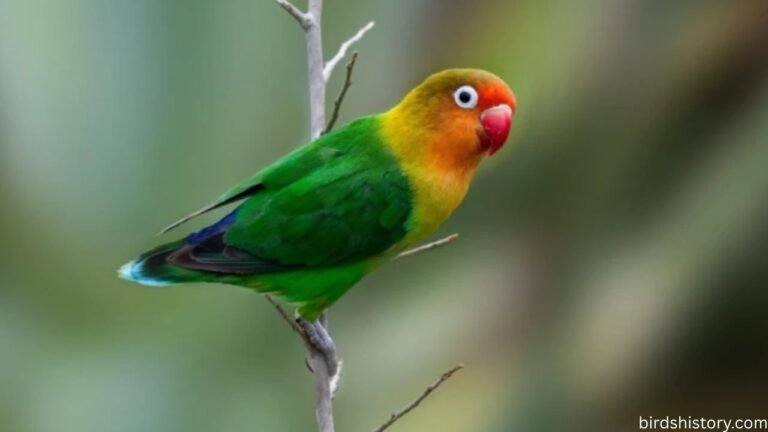
Yes, lovebirds can eat small pieces of ripe tomatoes, but too much acidity may upset their digestive system, so moderation is key.
Will squirrels eat tomatoes?
Absolutely. Squirrels often remove entire fruits, leaving scattered debris, unlike birds which leave bird peck marks on the vine.
Can chickens eat tomatoes?
Yes, chickens enjoy ripe tomatoes as a treat, but green tomatoes and leaves are unsafe due to solanine toxicity.
Who eats the most tomatoes?
Typically, backyard birds like robins and starlings eat the most in suburban gardens, especially when tomatoes are ripe and juicy, followed by squirrels.
Final Tips & Best Practices for Long-Term Tomato Protection
Sharing your garden with wildlife doesn’t mean sacrificing your tomato harvest. Once you understand why birds eat tomatoes and recognize the signs of bird damage, protecting your plants becomes far less stressful. Simple steps like timely netting, proper identification, and humane deterrents can greatly reduce losses without harming birds. Knowing which birds eat tomatoes also helps you choose smarter solutions instead of wasting time on methods that don’t work.
Gardens thrive when balance is maintained, not when nature is fought. With thoughtful planning, you can enjoy healthy tomatoes while allowing birds to remain part of your outdoor space. A well-protected garden supports both productivity and biodiversity, proving that smart strategies, patience, and awareness are the keys to long-term success.