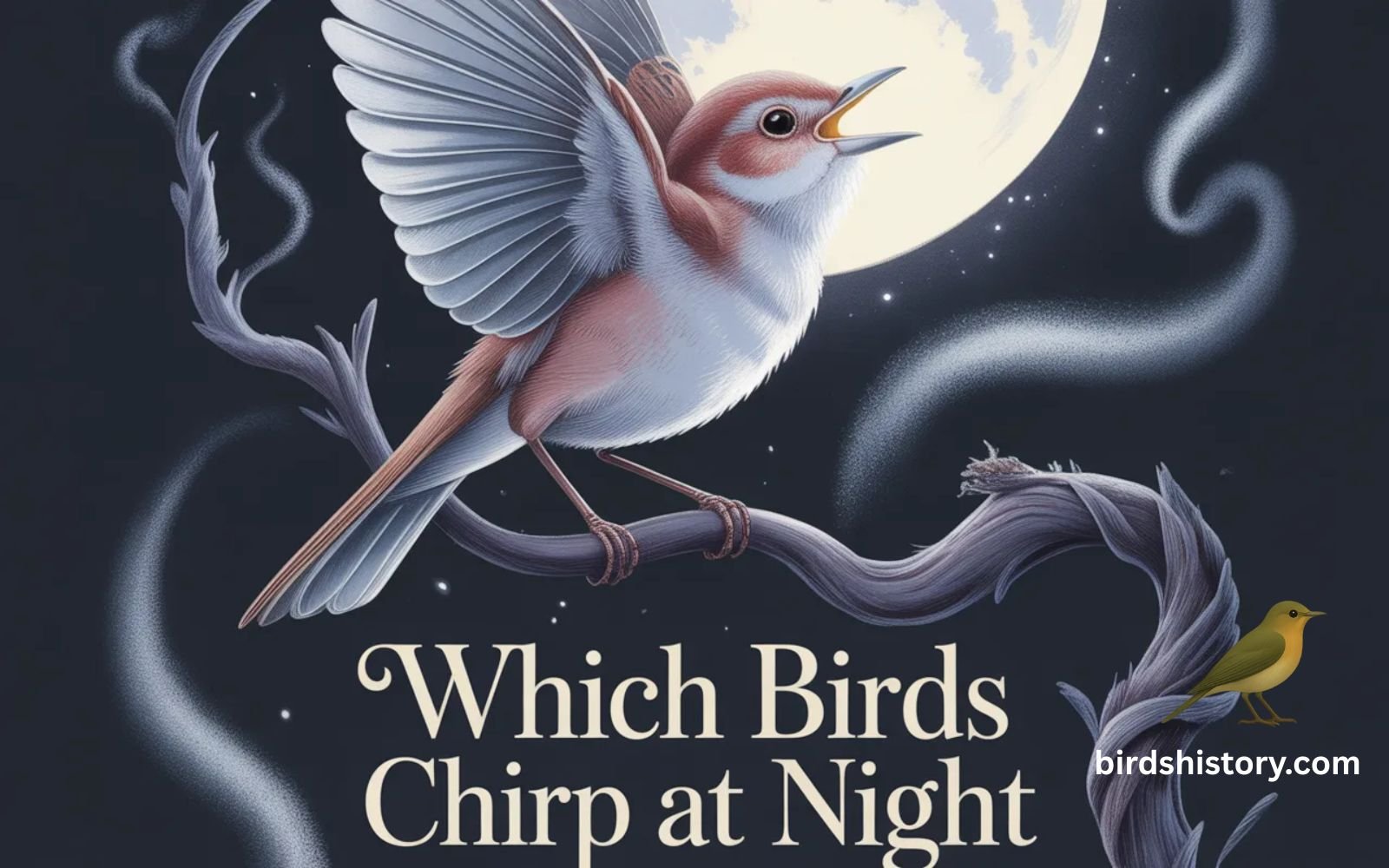
Which Birds Chirp at Night? Birds That Sing and Chirp at Night- Complete Guide 2026
Have you ever been lying awake at night, listening to mysterious sounds outside, and wondered which birds chirp at night? You’re not imagining things. Across the United States, many people hear unexpected nighttime chirping sounds coming from trees, rooftops, and nearby parks. These sounds are part of a hidden world of birds singing after dark, a world most people rarely stop to understand.
While daytime birdsong feels familiar, bird calls at night often sound louder, stranger, and sometimes unsettling. However, these sounds serve real purposes tied to survival, mating, and communication. Some night birds are naturally active after sunset, while others adapt to artificial lights and quieter evenings. By learning why birds sing at night, you gain clarity instead of confusion. This guide helps you recognize common species, understand their behavior, and appreciate the unique rhythm of birdsong at night happening all around you.
What Does It Mean When Birds Sing or Chirp at Night?
When you hear birds vocalizing at night, it usually signals purposeful communication rather than confusion. Birds rely on sound more than sight after dark. These midnight bird calls often relate to mating, warning nearby birds, or defending territory. In quieter nighttime hours, sound travels farther, making nighttime communication more effective.
In many cases, birds chirping after sunset are reacting to changes in their environment. Artificial lights, temperature shifts, and seasonal hormones all play roles. Instead of silence, night becomes a strategic window for loud bird calls that help birds survive and reproduce while avoiding daytime competition.
Nocturnal, Diurnal, and Crepuscular Birds Explained
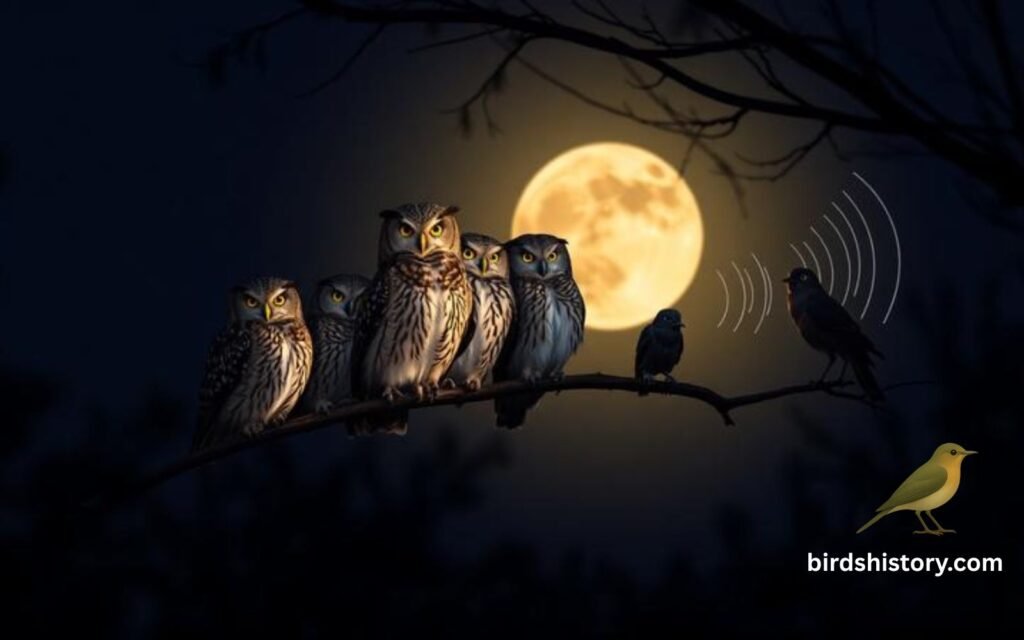
To understand which birds chirp at night, you need to know how birds divide their active hours. Nocturnal birds are built for darkness and rely on night activity to hunt or communicate. Diurnal birds are daytime species, yet some still produce bird calls at night when conditions allow. Crepuscular birds thrive at dawn and dusk, often bridging both worlds.
These categories explain why night birds are not the only ones making noise after dark. Urban lighting and quieter evenings blur natural schedules. As a result, birds making noise at night may include species you normally associate with daytime gardens and parks.
Why Do Birds Sing at Night Instead of Daytime?
One major reason why birds sing at night is reduced noise. Traffic, construction, and human activity fade after sunset. This allows nighttime birdsong to travel farther without interference. For birds competing for attention, nighttime offers a clearer acoustic stage.
Hormones also influence birds singing after dark, especially during mating periods. Elevated hormone levels increase vocal activity, sometimes overriding normal sleep cycles. This explains why even diurnal birds may join nighttime choruses during peak reproductive months.
Main Reasons Birds Chirp or Sing at Night
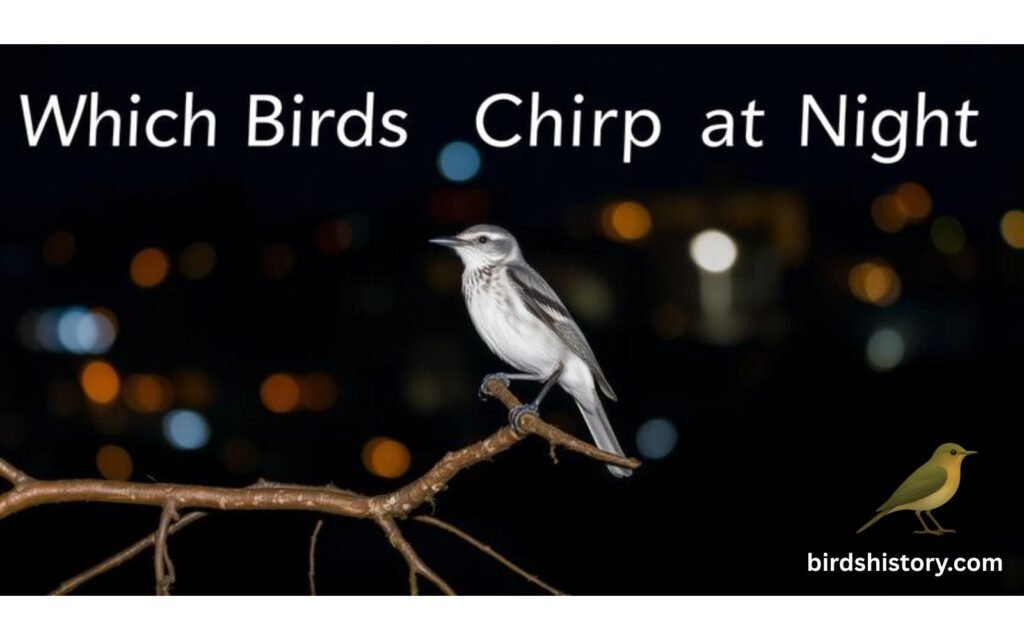
The strongest driver of nocturnal vocalizations is mating behavior. During breeding season, males increase singing to attract partners. Another reason is territorial communication, where birds warn rivals to stay away. Nighttime reduces visual cues, so sound becomes essential.
Stress and disturbance can also trigger birds vocalizing at night. Predators, sudden lights, or unfamiliar sounds may cause alarm calls. These reactions contribute to the broader mix of nighttime animal sounds people hear in American neighborhoods.
How Artificial Lights and Urban Noise Affect Night Singing
Artificial lighting has reshaped bird communication across the USA. Streetlights, billboards, and porch lights confuse internal clocks. Birds exposed to constant light may begin birdsong at night, mistaking darkness for extended daylight. This is common in cities where nighttime chirping sounds feel nonstop.
Urban noise plays a surprising role too. Birds adapt by shifting vocal activity to quieter hours. As a result, birds making noise at night are more common in cities than rural areas. This adaptation shows how flexible and resilient birds active at night can be.

Are Birds Singing at Night a Seasonal Behavior?
Yes, season matters greatly when it comes to birds chirping after sunset. Spring and early summer trigger the most intense night singing birds activity. Longer daylight hours stimulate hormones, leading to increased vocal output even after dark.
Migration also influences bird calls at night. Many species travel overnight and use sound to stay connected. During these periods, evening bird sounds become more frequent, especially near forests, wetlands, and suburban green spaces.
Most Common Birds That Sing or Chirp at Night
Across the United States, several species are famous for birds singing after dark. These include songbirds, wading birds, and owls, each contributing distinct tones. Understanding species patterns helps narrow down which birds chirp at night near your home.
Below is a simple table highlighting common night birds and their typical sounds.
| Bird Name | Type of Night Sound | Common Habitat | Main Reason for Night Singing |
|---|---|---|---|
| Northern Mockingbird | Repetitive mimicry songs | Urban and suburban areas | Breeding season behavior and territorial communication |
| Eastern Whip-poor-will | Rhythmic repeated call | Forest edges and rural woodlands | Mate attraction and nighttime navigation |
| Barred Owl | Deep hooting calls | Dense forests and wooded neighborhoods | Territory defense and partner contact |
| Yellow-breasted Chat | Sharp whistles and chatter | Shrubby areas and open woodlands | Courtship displays and territorial signaling |
Northern Mockingbird
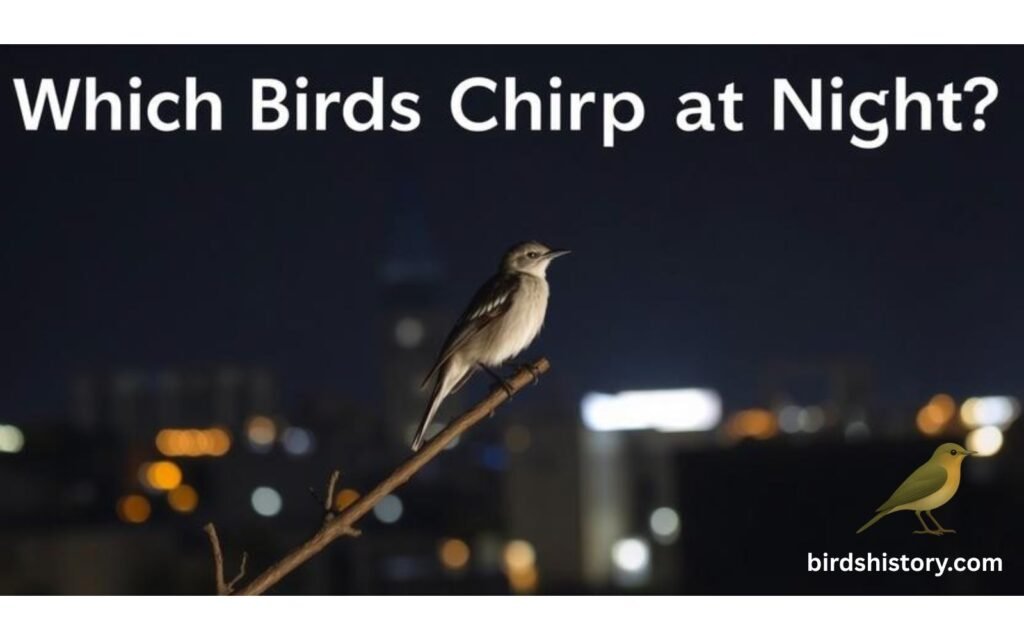
The northern mockingbird is one of the most recognizable night singing birds in America. Known for endless variety, it mimics other birds, car alarms, and even phones. Its loud bird calls often echo through neighborhoods late at night.
This species sings aggressively during breeding season, using sound to claim territory and attract mates. Artificial lighting encourages extended performances. When people ask which birds chirp at night, the northern mockingbird is often the answer.
Nightingales, Whip-poor-wills, and Nightjars
The nightingale (Luscinia megarhynchos) is legendary for melodic nighttime birdsong, though it is rare in the USA. More common is the eastern whip-poor-will, whose repetitive calls dominate forested areas after dark. These sounds define classic midnight bird calls.
Nightjars, including the Eurasian nightjar and chuck-will’s-widow, specialize in dusk and nighttime singing. Their calls feel haunting yet rhythmic. These birds active at night rely heavily on sound for navigation and mating.
Owls and Other Nocturnal Birds You Hear at Night
Owls dominate the soundscape when people think about birds making noise at night. Species like the barred owl, barn owl, eastern screech owl, and great horned owl are true nocturnal birds. Their calls are not songs but powerful communication tools used for hunting coordination and territory defense. These bird calls at night often sound eerie because they echo through quiet forests and suburban tree lines.
Unlike songbirds, owls rely on deep hoots, trills, and screeches rather than melodic tunes. The barred owl is famous for its “who cooks for you” call, while the eastern screech owl produces high-pitched whinnies that surprise many listeners. These nocturnal vocalizations help owls locate mates and warn rivals without revealing their exact position to prey.
Do Birds That Sing at Night Sleep During the Day?
Many people assume birds vocalizing at night must sacrifice sleep. In reality, birds use flexible sleep cycles. Instead of one long rest, they nap in short bursts throughout the day and night. This allows night singing birds to remain alert without exhaustion.
Some species, especially crepuscular birds, rest during midday heat and become active again at dusk. Even diurnal birds that sing after dark compensate by resting more during daylight hours. This balance explains how birds active at night maintain energy while continuing complex bird communication behaviors.

Is Hearing Birds Chirping at Night a Bad Omen or Myth?
Throughout American folklore, birds chirping after sunset have been linked to superstition. Some cultures viewed midnight bird calls as warnings or signs of change. Science tells a different story. These sounds are natural responses to environment, light, and biology rather than omens.
In reality, why birds sing at night has nothing to do with luck or danger. When you hear nighttime chirping sounds, it simply means birds are adapting. Urban growth has reshaped how wildlife behaves. What once felt mysterious is now understood as survival-driven birdsong at night.
How to Identify Birds by Their Night Sounds
Identifying which birds chirp at night starts with listening carefully. Rhythm, repetition, pitch, and volume offer strong clues. Songbirds repeat complex patterns, while owls use spaced, resonant calls. Over time, your ear learns to separate evening bird sounds from insects and frogs.
Technology helps too. Sound identification apps and online audio libraries allow you to compare recordings. Paying attention to habitat also matters. Wetlands attract herons, forests host owls, and suburbs often feature mockingbirds and even escaped parakeet flocks contributing to unexpected nighttime animal sounds.
Below is a comparison table to help recognize common nighttime sounds.
Bird Species | Sound Pattern | Time Most Active | Helpful Identification Clue |
|---|---|---|---|
| Northern Mockingbird | Rapid sequence of copied sounds | Late night to early morning | Constantly changes song patterns |
| Barred Owl | Loud “who cooks for you” hoots | Around midnight | Call carries far and echoes |
| Eastern Whip-poor-will | Continuous repeated phrase | Dusk through late night | Call repeats without long pauses |
| Black-crowned Night Heron | Harsh squawks and croaks | After sunset | Usually heard near water bodies |
FAQs
What is that chirping sound at night?
The chirping sound at night is usually from nocturnal birds like northern mockingbirds, nightingales, and owls, communicating through nighttime vocalizations for mating, territory, or alerting others.
Why is a bird chirping at 3am?
Birds chirp at 3am as part of territorial communication or breeding season activity. Night birds may also respond to artificial lights or disturbances in their environment.
Does God send birds as signs?
Many believe that birds can be spiritual messengers, signaling guidance, protection, or blessings. In Christianity and Islam, birds are sometimes seen as symbols of hope and divine communication.
What are the signs of a bird trying to tell you?
Birds may signal new beginnings, warnings, or spiritual messages through their birdsong at night or unusual behavior, especially during breeding or migration seasons.
What does it mean if I hear birds chirping at night?
Hearing birds chirping at night can indicate territorial activity, mating calls, or nocturnal activity. Spiritually, it may symbolize alertness, guidance, or messages from a higher power.
What animal makes a high pitched chirp at night?
High-pitched chirps at night are usually made by birds like the eastern whip-poor-will, nightingales, or parakeets, although some insects can also produce similar sounds.
Is it good luck when a bird chirps at night?
In many cultures, birds singing at night are considered good omens, symbolizing protection, spiritual messages, or positive changes in life.
What is the bird that chirps all night?
The northern mockingbird is famous for chirping continuously at night, often performing territorial or mating calls. Other night singers include nightingales and eastern whip-poor-wills.
Why do I hear a bird screaming at night?
A bird screaming at night may be a nocturnal species like owls or nightjars, using loud bird calls to defend territory, attract mates, or warn others of danger.
What is the bird that chirps all night?
Repeated for emphasis: northern mockingbirds, nightingales, and whip-poor-wills are the main night singing birds, known for birds active at night and continuous vocalizations.
Final Thoughts on Nighttime Birdsong
Once you understand which birds chirp at night, those late-night sounds no longer feel random or alarming. They become signs of life continuing quietly while most of the world sleeps. From the energetic northern mockingbird to the haunting calls of owls and nightjars, birds vocalizing at night are responding to nature, seasons, and modern environments.
These evening bird sounds often increase during breeding months or in areas with artificial lighting, proving how adaptable birds truly are. Rather than bad omens, midnight bird calls reflect communication, territory defense, and survival instincts. Paying attention to rhythm, tone, and timing helps you identify species and feel more connected to your surroundings.
The next time you hear birds chirping after sunset, pause and listen. That sound is part of a complex nighttime ecosystem. Understanding bird communication sounds turns curiosity into appreciation and transforms restless nights into moments of quiet discovery.