
Do All Birds Migrate? A Complete Guide to Resident and Migratory Birds 2026
Many people grow up believing do all birds migrate every winter, yet nature tells a more complex story. Across the United States, some birds vanish with the cold while others remain visible even during snowstorms. This contrast reveals a fascinating divide between travelers and stay-at-homes, shaping how migratory vs non-migratory birds survive changing seasons. Understanding this difference helps explain why birds that don’t migrate continue singing when others fly south.
At the heart of this topic lies adaptation. While migration looks dramatic, staying put can be just as effective. Resident birds rely on memory, flexibility, and resilience. These year-round birds know their land intimately, mastering food sources and shelter. Exploring this balance answers not only what birds don’t migrate, but also why remaining local can be the smarter choice.
What Is Bird Migration?
Bird migration describes the seasonal movement of birds between breeding and wintering areas. Many species travel thousands of miles to follow food and safer nesting conditions. However, migration isn’t random. It follows ancient routes shaped by climate, geography, and survival pressure, explaining why the question do all birds migrate continues to intrigue scientists.
In contrast, birds that stay in one location reject this journey. These birds that live year-round in one habitat rely on learned behavior and physical traits. Their existence proves migration is one of many bird migration alternatives, not a universal rule across bird species.

Do All Birds Migrate? The Short and Clear Answer
The short answer to do all birds migrate is no. Many species remain where they are born, becoming permanent resident bird species. These birds do not fly south because they already possess everything needed to survive winter, from food access to shelter knowledge.
This difference explains why some birds don’t migrate. Birds that remain in one place all year conserve energy and reduce risk. By avoiding long flights, these birds that do not need migration invest more effort into territory defense and survival.
Why Birds Migrate?
Migration exists because food disappears and temperatures drop. Insects vanish, water freezes, and nesting sites become hostile. Birds that rely heavily on insects often must move or starve. Migration allows access to richer feeding grounds and safer breeding zones.
Yet seed-eating birds and berry-eating birds face fewer limits. Because seeds remain available even in winter, these species often become birds that overwinter locally. This explains why seed-eating birds don’t migrate and why diet shapes migration decisions.
When Do Birds Migrate?
Timing matters as much as distance. Birds usually migrate during spring and fall, guided by daylight length rather than temperature alone. Hormonal changes trigger restlessness, signaling when it’s time to move. Weather patterns refine the schedule but rarely control it.
Meanwhile, winter resident birds ignore this clock. These birds that stay all year rely on experience instead of timing cues. Knowing where food hides beneath snow helps them survive when others leave.
Where Do Birds Migrate?
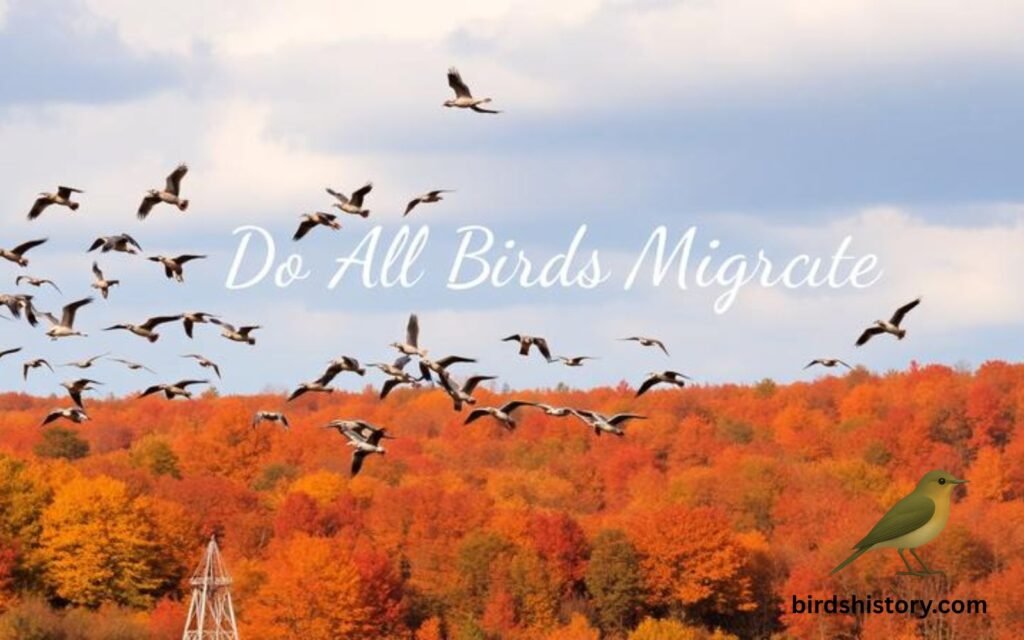
In the United States, migration follows major flyways stretching north to south. Birds move along coastlines, river valleys, and mountain corridors. Wetlands and forests act as rest stops, supporting millions of travelers each year.
Some birds fly from Canada to South America. Others move only a few states south. This range contrasts sharply with backyard birds that don’t migrate, which remain within familiar neighborhoods and parks.
Table: Migration vs Residency in North American Birds
| Bird Type | Seasonal Movement | Survival Strategy |
|---|---|---|
| Migratory birds | Long or short-distance travel | Follow food and climate |
| Non-migratory birds | No seasonal movement | Habitat adaptation in birds |
| Partial migrants | Mixed behavior | Flexible response |
Which Birds Migrate and Which Do Not
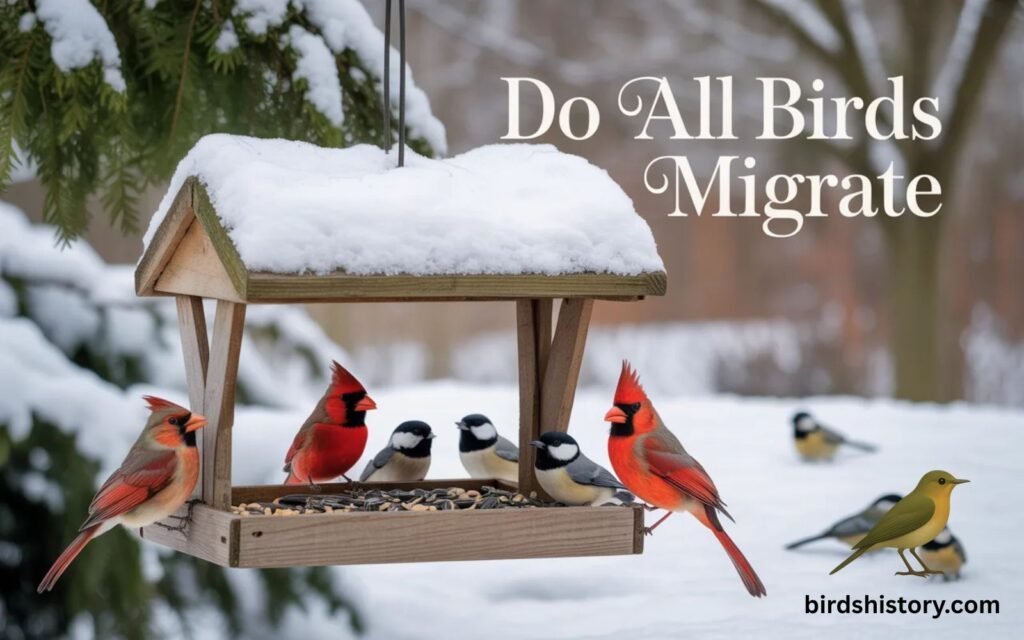
Many well-known birds highlight this divide. Warblers, swallows, and shorebirds migrate far. Meanwhile, Northern Cardinal, Blue Jay, and Mourning Dove remain visible all year. These examples clarify which birds stay all year across the USA.
Species like House Sparrow and Rock Pigeon thrive near people and do not migrate. These backyard birds that stay year-round succeed because human environments offer steady food and shelter, reducing the need to migrate.

Types of Bird Migration
Migration takes many forms. Some birds travel continents. Others move short distances or only change elevation. Partial migration occurs when only part of a population leaves.
| Type of Migration | Description | Common Examples |
|---|---|---|
| Long-distance migration | Birds travel thousands of miles between breeding and wintering areas | Arctic Tern, Swallows, Shorebirds |
| Short-distance migration | Birds move within regions or states based on food availability | American Robin, Bluebirds |
| Altitudinal migration | Birds move up or down mountains with seasonal changes | Mountain Bluebird, Rosy Finch |
| Partial migration | Only some individuals migrate while others stay | Blue Jay, Dark-eyed Junco |
| Irruptive migration | Movement occurs only when food becomes scarce | Red Crossbill, Snowy Owl |
Birds That Migrate Long Distances
Long-distance migrants perform astonishing feats. Arctic Terns cross oceans. Swallows chase endless summers. These journeys demand endurance, precision, and luck.
Despite their success, migration carries risks. Storms, predators, and exhaustion claim many lives. That danger explains why birds that conserve energy by not migrating often enjoy higher survival rates.
Birds That Do Not Migrate
Some birds stay no matter how cold it gets. Carolina Chickadee, Tufted Titmouse, Downy Woodpecker, Pileated Woodpecker, and Red-tailed Hawk survive through intelligence and flexibility. These are classic non-migratory birds examples.
They show how non-migratory birds survive winter by caching food, fluffing feathers, and choosing protected roosts. These birds that survive winter demonstrate remarkable resilience even during harsh seasons.
| Bird Species | Migration Status | Key Survival Adaptation |
|---|---|---|
| Northern Cardinal | Resident | Seed-eating birds with strong beaks |
| Carolina Chickadee | Resident | Birds that store food for winter |
| Tufted Titmouse | Resident | Flexible diet and flocking behavior |
| Mourning Dove | Resident | Birds that rely on seeds and berries |
| Pileated Woodpecker | Resident | Cavity-nesting birds for warmth |
| Rock Pigeon | Resident | Urban adaptation and food access |
How Do Birds Know When to Migrate?
Birds rely on internal clocks linked to daylight length. As days shorten, hormones trigger restlessness and fat storage. This biological timing ensures departure before conditions worsen.
In contrast, birds that adapt to seasonal changes learn rather than travel. Their knowledge replaces instinct, showing how resident birds find food in winter without leaving home.
How Birds Navigate During Migration
Migration would fail without navigation. Birds rely on a mix of natural tools that work together like a living compass. The sun guides daytime travelers, while stars help night migrants stay on course. Earth’s magnetic field plays a quiet role, allowing birds to sense direction even on cloudy days.
By contrast, birds that remain in one place all year don’t need these tools. These birds that stay year-round in their habitat depend on memory instead. Familiar trees, rooftops, and feeding spots become permanent landmarks, reducing risk and confusion.
Challenges and Dangers of Bird Migration
Migration looks graceful, yet danger shadows every mile. Sudden storms, hunger, exhaustion, and predators claim millions of birds each year. Urban threats such as glass buildings and bright lights add new hazards, especially during nighttime flights.
This danger explains why don’t some birds migrate. Birds that conserve energy by not migrating avoid these risks entirely. Remaining local allows them to focus on survival rather than endurance, proving migration is not always the safer option.

Why Bird Migration Matters for Biodiversity and Conservation
Bird migration supports entire ecosystems. Migratory birds spread seeds, control insects, and signal environmental health. When migration patterns shift, it often warns scientists of deeper problems.
However, climate impact on resident birds matters just as much. Resident birds and climate change are closely linked because these species cannot escape warming winters or habitat loss. Protecting bird conservation for resident species is now as urgent as protecting migrants.
Table: Migratory Birds vs Resident Birds and Climate Pressure
| Bird Group | Climate Risk | Adaptation Ability |
|---|---|---|
| Migratory birds | Route disruption | Moderate |
| Resident birds | Habitat loss | High but limited |
| Partial migrants | Unstable patterns | Variable |
How Non-Migratory Birds Survive Harsh Winters
Winter survival demands creativity. Birds that survive harsh winters fluff feathers to trap heat, lower activity levels, and seek shelter in cavities. Many are cavity-nesting birds, using tree holes and buildings as insulation against cold winds.
Food matters most. Birds that rely on seeds and berries thrive because these resources persist through snow. Birds that store food for winter like chickadees cache supplies, proving how birds survive cold temperatures without migration.
Backyard Birds That Stay All Year
Neighborhoods host some of the most adaptable species. Backyard birds that don’t migrate include sparrows, pigeons, and cardinals. These birds quickly learn feeding routines and shelter locations.
Adding backyard bird feeders and bird seed feeders helps support backyard birds that stay in winter. This simple act strengthens local populations and encourages creating bird-friendly habitats year-round.
Climate Change and Non-Migratory Birds
Climate change disrupts familiar rhythms. Warmer winters confuse breeding cycles and reduce food timing accuracy. How climate change affects resident birds depends on flexibility, yet limits exist.
The impact of climate change on non-migratory birds appears strongest in habitat loss and food mismatch. Supporting bird conservation efforts ensures these species can adjust rather than disappear.
FAQs About Do All Birds Migrate
Many readers still ask do all birds migrate, especially during winter. The answer remains no, because many birds that don’t migrate in winter USA have adaptations that allow year-round survival.
Questions like are cardinals migratory and do chickadees migrate come up often. Both species are classic common non-migratory birds in North America and stay local throughout the year.
Others wonder how do birds survive winter without migrating. The answer lies in food choice, shelter, and learned behavior, proving birds that thrive without migration exist across the country.
Conclusion
So, do all birds migrate? Clearly, they do not. Some birds migrate to escape harsh conditions, while many others remain year-round, proving that survival takes different paths. Resident birds succeed by adapting to local habitats, finding reliable food sources, and conserving energy. Their ability to survive winter without migration shows how powerful adaptation can be. Understanding this balance between migratory and non-migratory birds helps you see nature as a system built on flexibility, not rules.
It also reminds us that both groups face growing challenges from habitat loss and climate change. Protecting local environments supports birds that stay as well as those that pass through. By learning why some birds migrate and others don’t, you develop a stronger connection to the wildlife around you. Each bird, whether traveling far or staying close, plays a vital role in maintaining healthy ecosystems.