Cracked Corn Bird Food Explained Benefits Risks and Best Use 2026
Cracked corn remains a popular choice among backyard bird lovers across the United States, yet many people misunderstand its role in bird feeding. Cracked corn bird food works best as a supporting player, not the main attraction. When offered correctly, it delivers quick energy and attracts a wide range of birds that naturally forage on the ground. Its low cost and easy availability make it appealing for anyone feeding birds on a budget.
Still, success depends on timing, portion size, and proper placement. Understanding how cracked corn for birds fits into a balanced feeding routine helps you avoid common mistakes while making your yard welcoming to ground-feeding birds, larger species, and seasonal visitors that rely on simple, reliable energy sources
What Is Cracked Corn Bird Food?
At its core, cracked corn bird food comes from dried corn kernels removed from the cob and broken into smaller pieces. This drying process allows long storage without spoilage when handled correctly. Unlike fresh corn, cracked corn stays shelf-stable and easy to portion.
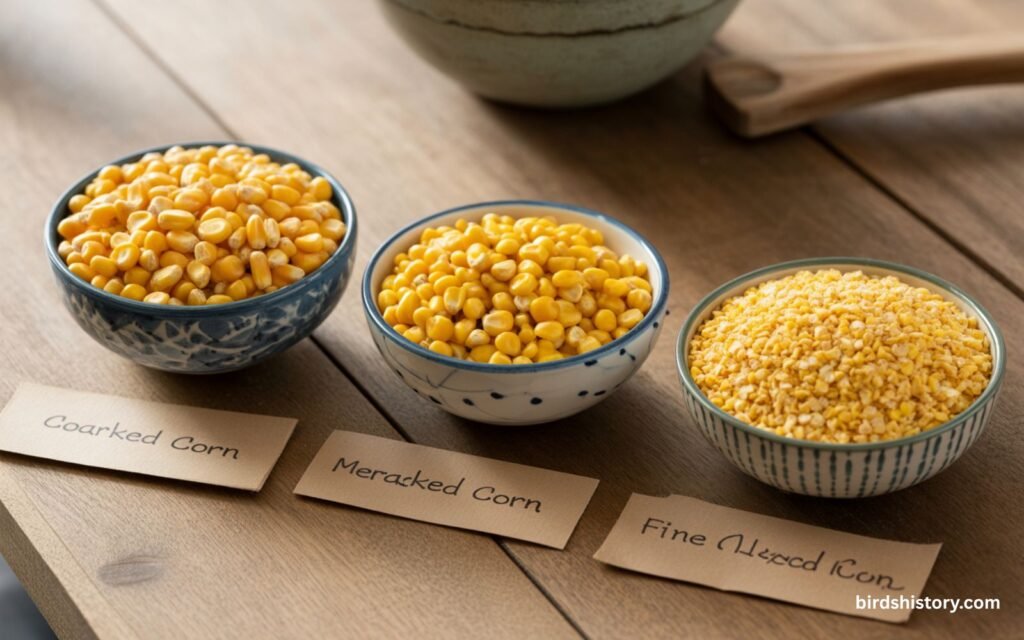
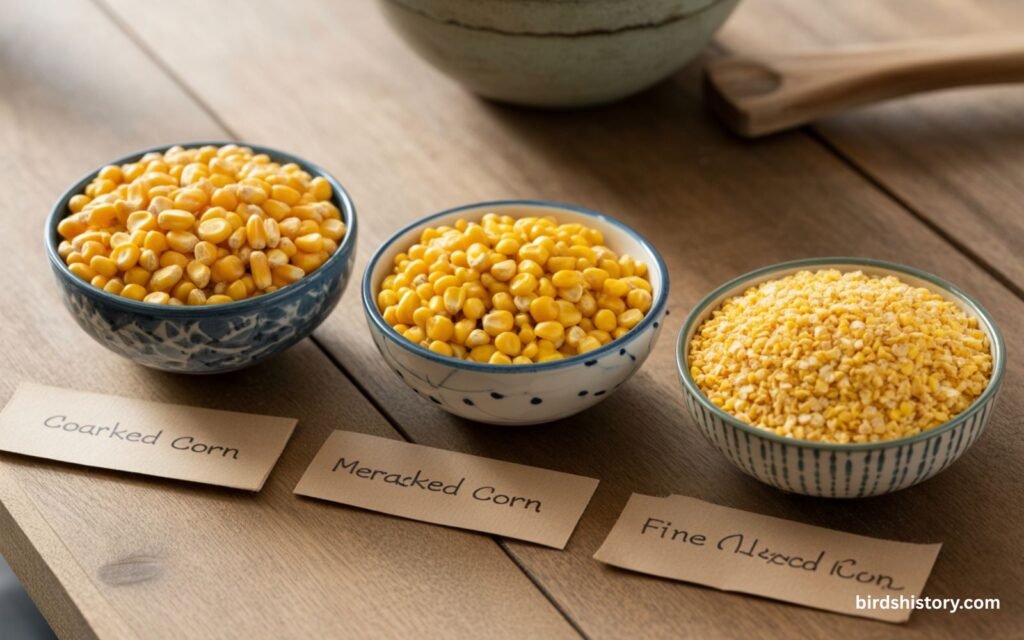
Several cracked corn varieties exist. Coarse cracked corn suits large birds with strong beaks. Medium cracked corn attracts mixed flocks. Fine cracked corn works best for smaller ground-feeding birds. Understanding these textures helps you match food size to the birds visiting your yard.
Is Cracked Corn Good for Birds?
The answer depends on balance. Corn as bird food offers fast energy through carbohydrates. Birds burn these calories quickly, especially during cold spells or migration. That makes cracked corn for birds useful during winter and fall.
However, corn lacks the fats found in oil-rich seeds. Because of that, experts treat it as supplemental bird food, not a complete diet. When paired with sunflower seeds or peanuts, bird seed cracked corn supports birds without replacing more nutritious options.
Nutritional Value of Cracked Corn for Birds
From a nutritional view, cracked corn works as starchy bird food. It fuels activity rather than building fat reserves. Birds rely on it like humans rely on bread. It fills energy gaps but cannot stand alone.
Despite its simple makeup, cracked corn contains small amounts of essential nutrients such as vitamin B6 for birds, vitamin B12 for birds, phosphorus for birds, calcium for birds, and trace minerals like zinc and selenium. These nutrients support nerve function, bone health, and metabolism when combined with diverse foods.
| Nutrient | Role in Bird Health |
|---|---|
| Carbohydrates | Quick energy source |
| Vitamin B6 | Supports metabolism |
| Vitamin B12 | Aids nerve health |
| Calcium | Helps bone strength |
| Phosphorus | Supports muscle movement |
Types of Birds That Eat Cracked Corn
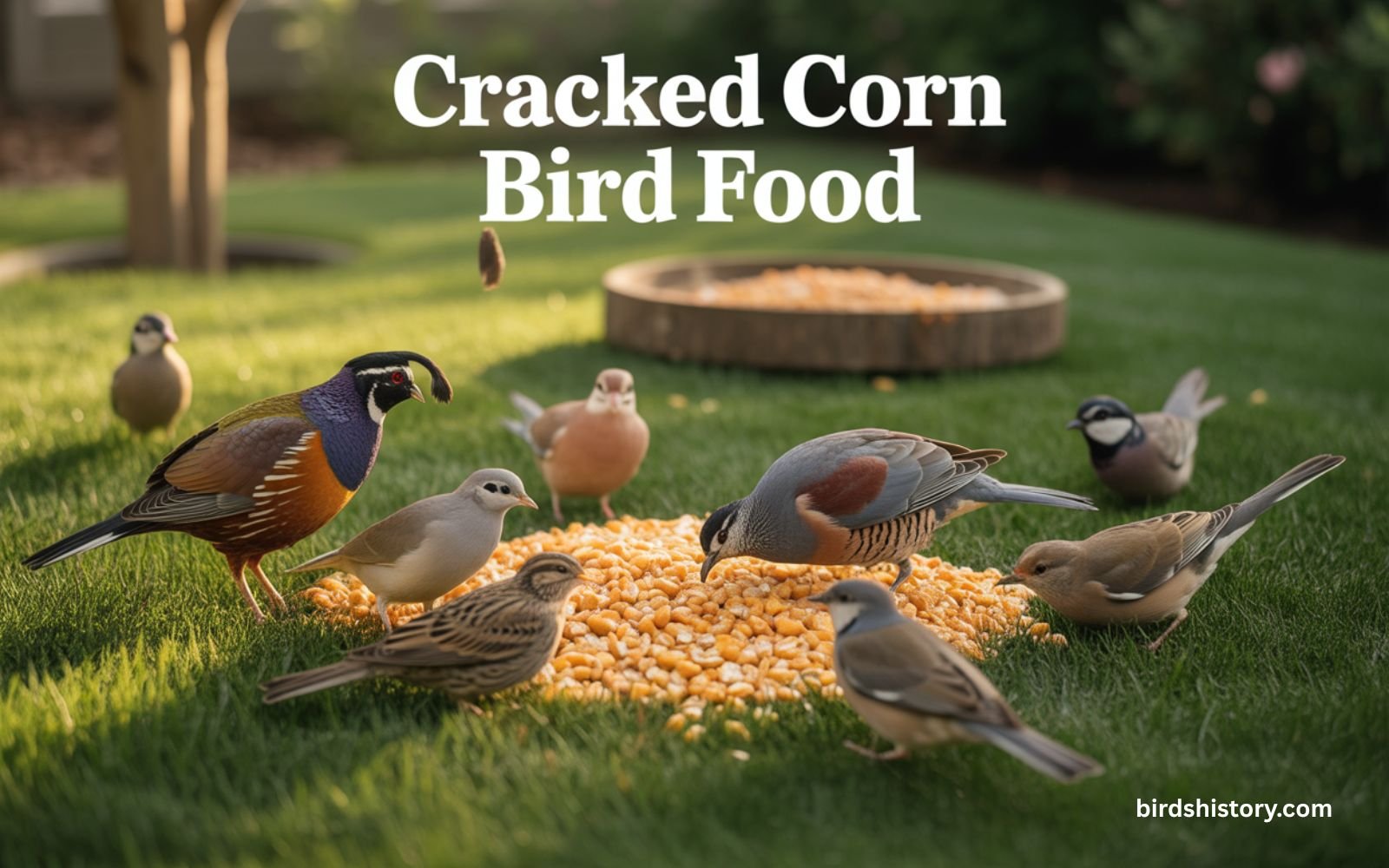
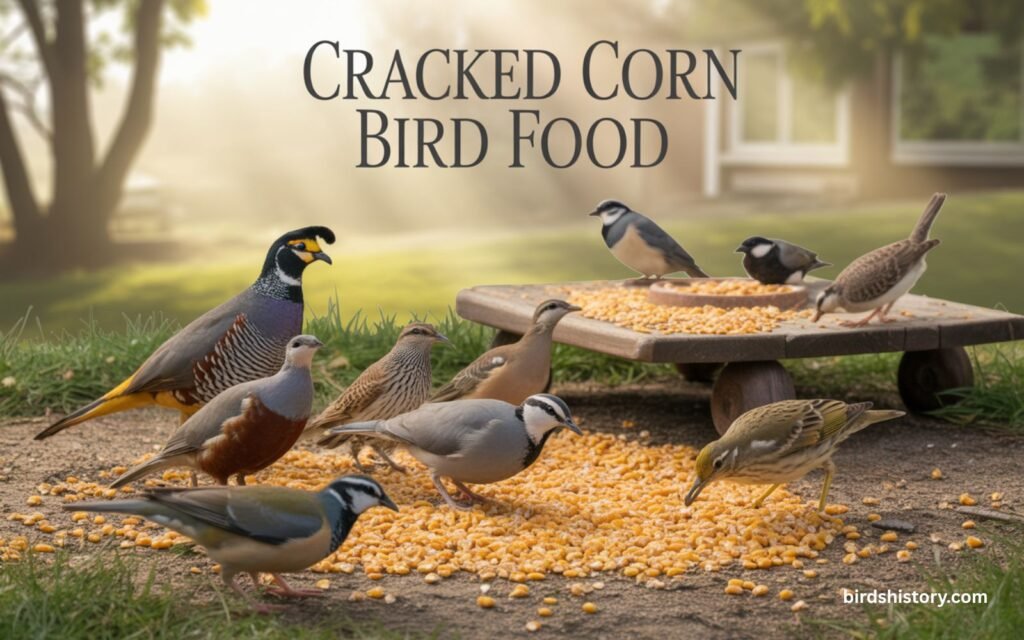
Many American birds actively seek cracked corn. Game birds benefit most, including pheasants, quail, grouse, and wild turkeys. These species forage naturally on the ground and digest corn easily.
Backyard favorites also enjoy it. Doves and pigeons, juncos, towhees, native sparrows, and southwestern thrashers scratch through leaf litter searching for kernels. Larger birds such as blue jays and crows visit trays and platforms when corn appears.
Birds That Do Not Prefer Cracked Corn
Not every bird appreciates corn. Insect eaters usually ignore it. Nectar feeders fly past it. Many finches prefer smaller, oil-rich seeds instead of corn’s hard texture.
Some birders avoid corn because it attracts starlings, blackbirds, grackles, cowbirds, and house sparrows. These flocking species dominate feeding areas. Understanding preferences helps manage who visits your yard and keeps feeding peaceful.
How to Serve Cracked Corn to Birds Safely
Serving corn safely begins with portion control. Small daily amounts prevent waste and spoilage. Damp corn develops mold quickly, creating toxins harmful to birds and mammals alike. Keeping corn dry protects bird health.
Weather matters too. Rain and snow soak exposed feed. Elevating corn on feeders improves airflow and reduces moisture. Following smart cracked corn feeding tips ensures feeding cracked corn to birds stays safe throughout the year.
Best Bird Feeders for Cracked Corn
Feeder choice influences which birds eat comfortably. Platform feeders and tray feeders suit mixed species. These open designs allow larger birds to land easily while still welcoming smaller visitors.
For whole cobs, an ear corn feeder secures corn on the cob for birds safely. Many yards benefit from squirrel-proof feeders that limit theft while still offering bird feeder corn to birds that need it most.
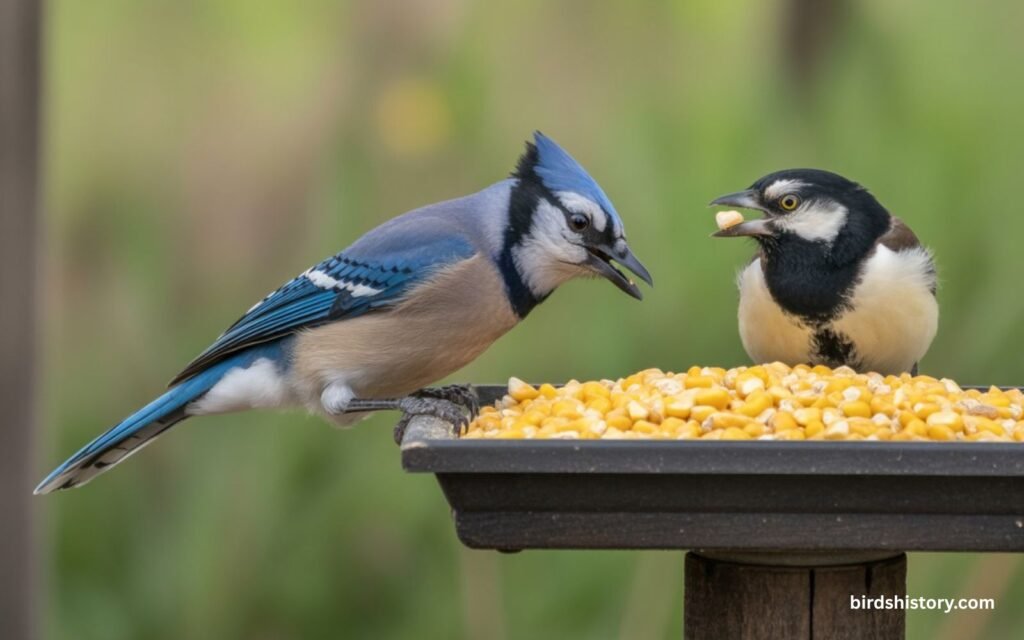
Feeding Cracked Corn on the Ground vs Feeders
Some birds prefer natural feeding styles. Ground feeding mimics wild foraging and suits ground feeding birds corn habits. Birds scratch, peck, and move freely while eating.
However, ground feeding also attracts rodents and wildlife. Elevated feeders reduce this risk and help manage portions. Choosing between ground and feeder placement depends on yard size, bird species, and tolerance for non-avian visitors.
When Is the Best Time to Feed Cracked Corn?
Timing changes everything in bird feeding. Cold months increase energy demands, making cracked corn for birds more helpful in late fall and winter. Birds burn calories faster when temperatures drop. Corn supplies quick fuel during frosty mornings and short daylight hours.
Spring and summer require restraint. Natural food becomes abundant, and excess corn bird feed may spoil faster in heat. Many experienced birders reduce portions during warm months. This seasonal rhythm keeps feeding cracked corn to birds safe and aligned with natural cycles.
Cracked Corn vs Whole Corn for Birds
Texture shapes who eats what. Cracked corn breaks easily, making it suitable for smaller beaks. Whole kernels, also called kernel corn or shelled corn, require stronger bills and more effort. That difference influences which species show up.
Larger birds prefer whole pieces. Smaller birds favor cracked forms. Corn as bird food works best when texture matches the eater. In mixed yards, offering both allows diversity without competition overwhelming the feeding area.
| Corn Type | Best For |
|---|---|
| Cracked Corn | Mixed backyard birds |
| Shelled Corn | Larger birds |
| Ear Corn | Wildlife and large birds |
Common Problems With Feeding Cracked Corn
Most problems stem from moisture. Wet corn molds quickly and may develop toxins. These toxins threaten birds, pets, and wildlife. Limiting portions reduces this risk and keeps feeding areas clean.
Another issue involves crowd control. Corn attracts flocks of starlings, blackbirds, and grackles. These birds can push out others. Strategic placement and smaller servings help balance the yard and protect more timid species.
How to Store Cracked Corn to Prevent Mold
Proper storage protects both birds and investment. Keep corn in airtight containers placed in cool, dry locations. Avoid damp sheds or open bags exposed to humidity. Dry storage preserves freshness longer.
Check corn before each refill. A sour smell or clumping signals spoilage. Discard questionable feed immediately. Clean storage habits ensure bird seed cracked corn remains safe throughout the year.
Can Other Wildlife Eat Cracked Corn?
Bird feeders rarely stay bird-only. Waterfowl such as ducks sometimes eat corn where feeding laws allow. Corn offers better nutrition than bread, though moderation remains essential.
Other animals join in too. Squirrels, raccoons, and deer consume corn readily. While some enjoy watching wildlife, others prefer limits. Choosing feeder styles wisely helps manage who shares your corn for backyard birds.
Final Thoughts on Cracked Corn Bird Food
Used wisely, cracked corn bird food supports many species across the United States. It feeds ground-feeding birds, energizes winter visitors, and stretches feeding budgets. Its value lies in moderation and pairing with richer foods.
When balanced with seeds and good hygiene, cracked corn feeding tips turn simple grain into a helpful resource. Your backyard becomes livelier, healthier, and more diverse. Birds notice thoughtful care. They return because of it.
FAQs About Cracked Corn Bird Food
Is cracked corn good for birds?
Yes, cracked corn is good for birds when offered in small amounts. It provides quick energy, especially in cold weather, but works best as a supplement alongside more nutritious seeds.
What is cracked corn feed?
Cracked corn feed is dried corn that has been broken into smaller pieces. It is commonly used as an affordable bird food and attracts many ground-feeding and larger bird species.
When to feed cracked corn?
Cracked corn is best fed in fall and winter when birds need extra energy. During warm months, offer smaller portions to prevent spoilage and mold.
Is corn meal good for birds?
Corn meal is not recommended for birds. It spoils quickly when wet and can harden, which may cause digestive problems for birds.
What are the benefits of cracked corn?
Cracked corn provides fast energy, attracts a wide variety of birds, and is budget-friendly. It also works well when mixed with other seeds for a balanced diet.
Is raw corn safe for birds?
Raw, dried corn is safe for birds when clean and mold-free. Fresh or cooked corn should be avoided, as it can spoil quickly outdoors.
How to make cracked corn for birds?
You can make cracked corn by drying whole corn kernels and lightly crushing them using a grain mill or sturdy blender. Ensure the pieces are not too fine.
What is the healthiest thing to feed birds?
The healthiest foods for birds include black oil sunflower seeds, peanuts, and suet. These provide essential fats and nutrients birds need year-round.
Can I mix cracked corn with chicken feed?
Yes, cracked corn can be mixed with chicken feed for birds. Make sure the mix is dry, fresh, and does not contain medications meant only for poultry.
What is the 5 7 9 rule for bird feeders?
The 5-7-9 rule means cleaning bird feeders every 5 days in cool weather, every 7 days in mild weather, and every 9 days in cold weather to keep birds safe.