
10 Birds That Lay Blue Eggs- A Complete Guide to Colorful Avian Nests
Birds have fascinated humans for centuries, not only with their vibrant bird plumage and melodious songs but also with the extraordinary colors of their eggs. Among these, blue eggs are especially captivating, and learning about birds that lay blue eggs unveils a world of remarkable diversity. From the soft robin’s egg blue of the American Robin to the deeper, jewel-like tones of species such as the Chilean Tinamou, each clutch demonstrates unique bird nesting habits and evolutionary strategies.
The blue color comes from the biliverdin pigment, which can provide UV protection for eggs, aid in nest camouflage, and signal maternal health to mates. These birds create a variety of nests, including cup-shaped nests, tree cavity nests, and ground nests, and carefully tend to their hatchlings. This guide explores which bird lays blue eggs, their nesting behaviors, seasonal patterns, and tips for ethical birdwatching, offering a comprehensive view of these fascinating avian treasures.
Why Are Some Bird Eggs Blue?
The blue color of certain bird eggs is primarily due to a biliverdin pigment. This pigment is deposited into the eggshell during its formation and interacts with calcium to create vibrant blue, turquoise, or greenish hues. In species like the American Robin (Turdus migratorius), the depth of color can indicate the health and vitality of the female. Brighter eggs are often a sign that the mother bird is well-fed and genetically robust, which can influence male parental care in birds and increase the chances of hatchling survival.
Blue eggs serve more than just aesthetic purposes. They can act as nest camouflage, blending into dappled sunlight or leafy environments to avoid predators. Additionally, the egg pigmentation provides UV protection for eggs, shielding delicate embryos from harmful radiation. Other benefits include contributing to eggshell strength, making them less prone to breakage, and helping birds detect brood parasitism, where foreign eggs are laid in their nests. These evolutionary advantages explain why blue eggs persist across so many species.
Camouflage
In many forested or grassy areas, the subtle blue of eggs can make them nearly invisible to predators. Birds that build cup-shaped nests in low shrubs or ground-nesting birds rely heavily on the natural ability of blue eggs to blend with shadows and foliage. Even in open environments, the reflection of sky and light on the eggs can confuse predators. This natural defense ensures higher survival rates for both the eggs and the resulting chicks.
Signal of Female Quality
The intensity of blue in songbird eggs often signals maternal fitness. Researchers studying American Robin eggs have observed that males invest more time and energy in caring for clutches with brighter eggs. The vivid hue, produced by biliverdin pigment, indicates proper nutrition, low stress, and strong genetics. Consequently, nests with more vibrant eggs are more likely to survive and produce healthy hatchlings.
Protection from UV Radiation
Eggs exposed to sunlight are vulnerable to ultraviolet rays, which can damage the developing embryo. Bluebird eggs and Eastern Bluebird eggs often contain higher levels of biliverdin pigment, which acts as a natural sunscreen. This adaptation is particularly important in species that nest in open woodlands or wetlands, ensuring that embryos remain protected throughout the egg incubation period.
Eggshell Strength
Some studies suggest that egg pigmentation may enhance the structural integrity of the shell. In Dunnocks and House Finch eggs, thicker shells correlate with higher levels of blue pigmentation. This added strength is critical for species that nest on the ground or in precarious locations, helping prevent breakage during parental activity or environmental disturbances.
Brood Parasitism Avoidance
Distinctive egg colors allow birds to identify intruder eggs. In habitats where brood parasitism is common, such as areas with Starlings or Common Myna, parents can reject eggs that do not match the characteristic blue of their own clutch. This natural discrimination protects their offspring and ensures resources are allocated only to their genetic lineage.
Common Birds That Lay Blue Eggs in the U.S.
Several iconic U.S. birds are famous for their blue eggs. American Robins lay eggs that are a soft, almost perfect robin’s egg blue, typically in cup-shaped nests high in trees or shrubs. Their clutches contain three to five eggs, and the incubation duration lasts about 12 to 14 days. Eastern Bluebirds are closely related, producing slightly smaller Bluebird eggs in tree cavities or nest boxes. Both species display remarkable male parental care in birds, with males often feeding the female during incubation.

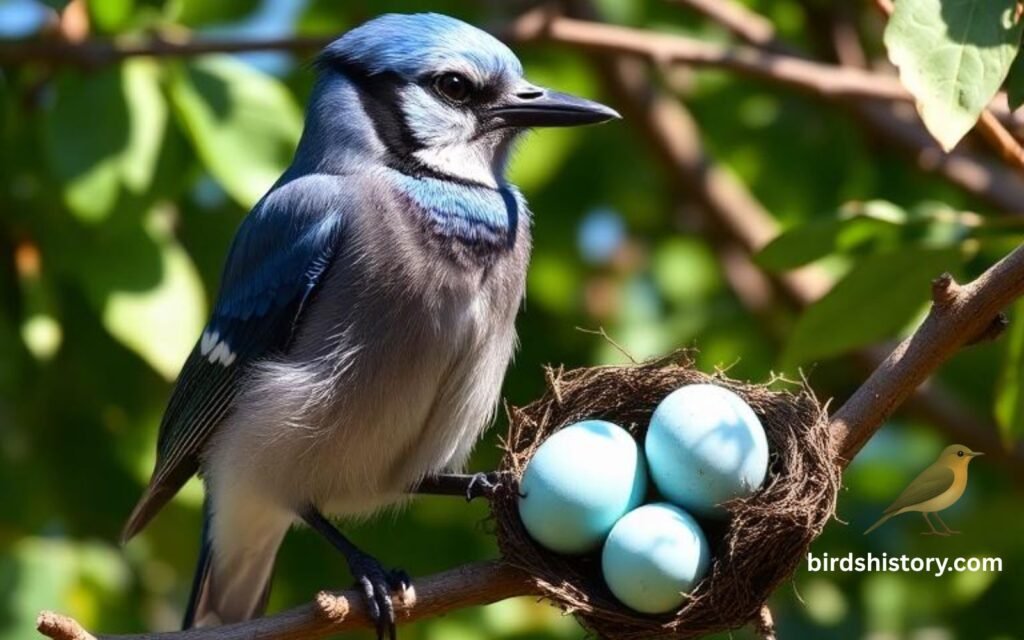
Other common species include Blue Jays, which lay two to seven eggs that are often spotted with brown marks. Their nests are placed 10 to 25 feet above ground, offering both safety and a panoramic view of potential predators. Red-Winged Blackbirds prefer marshes and wetlands, laying blue-green eggs with subtle eggshell markings in nests hidden among reeds. House Finch, Gray Catbirds, Cedar Waxwing, Thrushes, Linnets, and Blackbirds also contribute to the vibrant palette of songbird eggs in North America. Observing these birds provides a rare window into bird nesting habits, hatchling care, and the intricate balance of nature.
Table: Common U.S. Birds With Blue Eggs
| Bird Species | Egg Color | Nest Type | Clutch Size | Incubation Duration |
|---|---|---|---|---|
| American Robin (Turdus migratorius) | Robin’s egg blue | Cup-shaped nest | 3-5 | 12-14 days |
| Eastern Bluebird | Sky blue | Tree cavity or nest box | 4-6 | 12-16 days |
| Blue Jay | Blue with brown spots | Tree branches | 2-7 | 16-18 days |
| Red-Winged Blackbird | Blue-green with markings | Marsh reed nests | 2-4 | 11-13 days |
| House Finch | Pale blue with speckles | Trees or shrubs | 4-5 | 13-14 days |
| Gray Catbird | Turquoise green with red speckles | Dense shrubs | 1-6 | 12-15 days |
Birds Outside the U.S. That Lay Blue Eggs
Blue eggs are not exclusive to North America. Across the globe, several remarkable species lay eggs in captivating shades of blue. The Blue-footed Booby, native to coastal regions from Mexico to Peru, lays pale blue seabird eggs directly on the ground. These eggs are incubated using the parents’ feet, and both male and female share hatchling care, a rare behavior among birds. Similarly, the Black Tinamou, found in the dense forests of Central and South America, produces glossy blue eggs in simple ground nests, relying on concealment rather than height for protection.
Other fascinating examples include the Snowy Egrets, which build platform nests in colonies, laying greenish-blue eggs with eggshell markings. In Europe, the Eurasian Jackdaw and Eurasian Magpie produce blue-green eggs with speckles in tree cavity nests, while the Chilean Tinamou lays dark purple-blue eggs, a striking contrast to the more common robin’s egg hues. Even Emus in Australia, despite being flightless, produce rich dark green to blue eggs with rough shells, incubated solely by the male for eight weeks. These species illustrate how egg pigmentation and nesting strategies have evolved globally to enhance survival.
Global Birds With Notable Blue Eggs
| Bird Species | Egg Color | Nest Type | Incubation Duration | Unique Traits |
|---|---|---|---|---|
| Blue-footed Booby | Pale blue | Ground scrape | 45 days | Uses feet to incubate eggs |
| Black Tinamou | Glossy blue | Ground nest | 14-16 days | Elusive, forest-dwelling |
| Snowy Egret | Greenish-blue | Platform nest | 24-25 days | Colonial nesting in wetlands |
| Chilean Tinamou | Purple-blue | Ground nest | 16-18 days | Rare jewel-like eggs |
| Emu | Dark green-blue | Ground nest | 8 weeks | Male incubates eggs exclusively |
The Shades of Blue – Are All Blue Eggs the Same?
Blue eggs are far from uniform in shade. In species like the American Robin, the eggs are often called robin’s egg blue, a soft and almost iconic hue. Eastern Bluebird eggs show a slightly deeper sky-blue tone, while Blue Jay eggs may have speckled patterns that create a mix of blue-green shades. The concentration of biliverdin pigment in the eggshell largely determines the depth and intensity of color, influenced by maternal diet and health.

Egg color variations can serve practical purposes as well. Pale blue eggs often appear in exposed nests, reducing heat absorption, while more intense blue-green eggs provide better nest camouflage in shaded environments. Even slight differences in color can aid birds in recognizing their own eggs among potential brood parasitism attempts. Cultural references, such as Tiffany Blue for American Robin eggs, have immortalized these shades in art, fashion, and home décor, underscoring the universal appeal of blue eggs beyond biology.
Seasonal Patterns – When Do Birds Lay Blue Eggs?
Timing plays a crucial role in egg-laying. Most blue-egg-laying species have specific nesting seasons influenced by climate, food availability, and daylight hours. American Robins typically begin laying eggs in early spring, with a second clutch possible in late spring or early summer. Eastern Bluebirds and Mountain Bluebirds follow similar patterns, nesting in open woodlands or fields, often in tree cavity nests or man-made nest boxes.
Wetland species, like Red-Winged Blackbirds, coordinate egg-laying with rising water levels to ensure safe hatchling care and minimize predation. Songbirds eggs, such as those of Gray Catbirds or House Finches, reflect precise timing, as the female’s physiology and environmental cues dictate egg clutch size and incubation duration. Understanding these seasonal patterns is essential for birdwatching and for protecting vulnerable nests during peak breeding periods.
Where to Spot Birds With Blue Eggs
Spotting blue eggs requires knowing the habitats of their parent birds. Forest edges, open woodlands, and suburban gardens are ideal for American Robins and Eastern Bluebirds. Cedar Waxwing and Gray Catbirds favor dense shrubs, while marshes and wetlands host Red-Winged Blackbirds. Observing from a distance with binoculars allows enthusiasts to see nests in cup-shaped nests or tree cavity nests without disturbing the birds.

In addition, urban areas provide opportunities to watch adaptable species such as Starlings and Common Myna, which often utilize man-made structures for nesting. Even simple backyard feeders can attract House Finches or Blue Jays, providing a glimpse into bird migration patterns, bird plumage, and egg incubation periods. Seasonal timing and patience are key to spotting these blue treasures safely.
How to Safely Observe Blue Eggs
Respecting bird nests is crucial. Handling eggs can damage the embryo, disrupt male parental care in birds, or attract predators. Using binoculars or nest cameras allows safe observation while preserving the natural environment. Technology like nest cams can reveal fascinating insights into hatchling care, bird nesting habits, and parental feeding routines.
Natural camouflage is another factor to consider. Many species, including Dunnocks and Thrushes, rely on nest concealment for survival. Avoiding repeated disturbances and approaching nests quietly ensures both bird safety and optimal viewing. Ethical birdwatching practices not only protect the eggs but also allow researchers and enthusiasts to study bird species that lay colored eggs without harm.
Unique Birds With Notable Blue Eggs
Some birds stand out for their extraordinary eggs and nesting behaviors. The Blue-footed Booby uses its blue webbed feet to incubate eggs directly on rocky islands, demonstrating a rare adaptation among ground-nesting birds. Little Blue Heron builds platform nests in colonies, laying pale blue eggs that are highly visible yet protected by group nesting strategies.

Other remarkable examples include Great Blue Heron, which lays large pale blue eggs in tree cavity nests, and the Chilean Tinamou, whose dark purple-blue eggs are almost jewel-like. Even Emus showcase unusual egg coloration combined with male-exclusive incubation. These examples highlight how egg pigmentation, nest materials, and unique bird habitats contribute to the diversity of blue eggs worldwide.
FAQs About Birds That Lay Blue Eggs
What bird comes out of a blue egg?
Many birds hatch from blue eggs, including the American Robin, Eastern Bluebird, and House Finch. The egg’s color does not affect the chick’s development but often indicates maternal health and species.
What breed lays blue eggs?
Several chicken breeds lay blue eggs, such as Araucana, Ameraucana, and Easter Egger. These breeds are popular for their unique egg coloration and backyard flocks.
Can sparrow eggs be blue?
Yes, some sparrows like Dunnocks (hedge sparrows) lay small glossy blue eggs, usually in hidden cup-shaped nests to protect them from predators.

What British bird lays blue eggs?
The European Robin and Dunnock are common British birds known for laying blue eggs, often seen in hedgerows and woodland edges.
Which bird’s eggs are blue?
Eggs of the American Robin, Eastern Bluebird, Blue Jay, and House Finch are blue, ranging from pale sky-blue to deep turquoise shades.
Should you remove a bluebird nest?
No, nests should never be removed while active. Disturbing a Bluebird nest can harm eggs or chicks and disrupt male parental care and hatchling care.
Who lays true blue eggs?
Species like the American Robin, Eastern Bluebird, and Dunnock lay true blue eggs due to the biliverdin pigment in the shell.
What is special about blue eggs?
Blue eggs are unique because the color comes from biliverdin pigment, which provides UV protection for eggs, helps with nest camouflage, and can signal female quality.
Which country has blue eggs?
Blue eggs can be found worldwide. The USA, Chile, Australia, and parts of Europe are home to birds that lay blue or turquoise eggs.
What color are pigeon eggs?
Pigeon eggs are typically white or pale bluish-white and are smooth with a slight gloss, usually laid in tree cavity nests or ledges.
What is the rarest egg color?
Purple eggs, like those of the Chilean Tinamou, are among the rarest in the bird world, while most birds lay white, brown, or blue eggs.
Summary and Final Thoughts
Birds that lay blue eggs showcase one of nature’s most enchanting phenomena, blending beauty, survival, and adaptation. From the delicate robin’s egg blue of American Robins and Eastern Bluebird eggs to the striking shades of the Blue-footed Booby and Snowy Egret, each egg is a testament to the diversity of egg pigmentation and nesting habits. These species carefully use egg coloration, eggshell markings, and nest camouflage to protect their young and communicate health to mates.
Whether in cup-shaped nests, tree cavity nests, or on the ground, these birds demonstrate fascinating strategies for egg incubation, hatchling care, and parental investment. Observing these eggs responsibly during birdwatching provides insights into the lives of these avian species without disturbing their natural behavior. Understanding the seasonal patterns, shades of blue, and global examples of birds that lay blue eggs deepens our appreciation for these remarkable creatures and the intricate rhythms of the natural world.